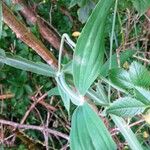
Lathyrus latifolius
Everlasting-pea · Perennial-pea · Broadleaf everlasting-pea · Broad-leaved Everlasting-pea · Perennial Sweet Pea
Description
Source: leafsnapLathyrus latifolius, commonly known as the perennial sweet pea, is a flowering plant that belongs to the Fabaceae family. It is a herbaceous perennial that can grow up to 2 meters in height and has a sprawling habit. From late spring to early autumn, the plant produces clusters of fragrant flowers in pink, white, or purple hues. The leaves are compound, each consisting of two leaflets. Perennial sweet pea is native to Europe and Asia but has been introduced to many other parts of the world as an ornamental plant. It prefers moist soils and can thrive in both full sun and partial shade. This plant is often used for ornamental purposes due to its attractive flowers and foliage. Additionally, it serves as a vital source of nectar for bees, butterflies, and other pollinators. While Lathyrus latifolius is generally safe for human consumption when cooked properly, it contains toxic amino acids that can cause neurological damage if consumed in large quantities over time. Overall, Lathyrus latifolius is a beautiful flowering plant with significant ecological importance. However, it should be consumed with caution due to its potential toxicity if not prepared correctly.
🌳 Don't be fooled by the everlasting pea's graceful appearance; it contains more than just beauty. Many people don't realize that its bright flowers provide a nectar source for numerous pollinators, including bees and butterflies. Beyond its appeal, the everlasting pea is practical — its sturdy vines make ideal supports for natural fences or attractive archways, effectively enhancing outdoor spaces. A surprising trait for a flowering plant!
🎭 Thankfulness and joy
Care Guide
💧 Water Every 7 days
Perennial pea thrives in temperate regions, where it prefers soil that is moderately moist and consistently watered, but not waterlogged. Although it can survive brief dry spells, it flourishes with weekly watering, particularly during its growing season. This ensures healthy foliage and vibrant flowering as an herbaceous perennial.
How should I water my Perennial pea plant in the best way?
To properly water the Perennial pea, it is recommended to use filtered water at room temperature. Tap water may contain harmful particles that could negatively affect the plant's health. The Perennial pea originates from a warm climate, so it is best to avoid using cold water, which could shock the plant. It is also important to avoid overhead watering as it can cause issues with the foliage. Instead, it is recommended to apply filtered room temperature water directly to the soil until it is completely soaked. This method benefits the plant by moistening the roots and facilitating their spread, allowing for better nutrient absorption.
What should I do if I give my Perennial pea too much water or not enough water?
Both overwatering and underwatering can harm the health of your Perennial pea, but overwatering is more common. When this plant receives excessive water, its stems and leaves may wilt and turn yellow. Overwatering for a long time can also lead to diseases like root rot, mold, and mildew, which can be fatal to your plant. Underwatering is less likely with the Perennial pea as it can tolerate drought. However, it is still possible, and when it happens, the leaves will become brittle and brown. It is important to notice signs of overwatering early to prevent irreversible damage, such as root rot. If you spot these signs, reduce your watering and assess the soil's drainage. If the soil drains poorly, replace it with well-draining potting mix. If your Perennial pea shows signs of insufficient water, simply increase your watering until the signs disappear.
How often should I give water to my Perennial pea plant?
If your Perennial pea is in a pot, you can determine if it needs water by checking the moisture level of the soil. Stick your finger into the soil about two to three inches deep. If it feels dry, it's time to water the plant. The same method can be used for Perennial peas grown outdoors in the ground. Check the top few inches of soil and if it's dried out, water the plant. Usually, watering once a week is sufficient during spring and early fall. In hotter weather, it may be necessary to water twice a week or more. However, mature Perennial peas that are well-established can endure drought conditions well.
How much water does my Perennial pea plant need?
When watering your Perennial pea, it's important not to hold back on the amount of water you give. Wait until the top two to three inches of soil are dry, then give the plant a deep watering, making sure to saturate the entire soil. You should add enough water to allow excess water to flow out of the drainage holes at the bottom of the pot. If you don't see any excess water draining, you have likely not watered the plant enough. However, be careful not to let the water accumulate inside the soil, as this can be harmful to the plant. On the other hand, if water doesn't drain through the pot, it might indicate poor soil drainage, which can negatively affect the plant's health. If the plant is outside, receiving 1 inch of rain per week should be sufficient.
How do I water my Perennial pea as it grows?
The water requirements of the Perennial pea can vary based on different growth stages. When your Perennial pea is young or has been recently transplanted, it will need more water than usual. This is because during these stages, the plant focuses on developing new roots that will support its future growth. To ensure optimal root performance, a slightly higher level of moisture is necessary. As the plant matures over a few seasons, its water needs will decrease. Another growth stage that may require increased watering is the bloom period. Flower development in the Perennial pea requires a significant amount of moisture, making it necessary to provide additional water during this time.
☀️ Light Full sun
The everlasting pea performs best with continuous sunlight, reaching peak health. It can tolerate some shade, but its growth is less vigorous. The plant originated in areas with strong sunlight. Both too much and too little light can harm its health, causing slower growth and poorly developed flowers.
What are the sunlight requirements for perennial pea (Lathyrus latifolius)?
Perennial pea requires full sun, defined as more than 6 hours of sunlight daily, for optimal health, though it can tolerate partial sun, which is about 3-6 hours of sunlight. The plant grows best in locations with constant exposure to sun and originates from habitats with considerable solar radiation. Insufficient or excessive light can negatively impact its health, leading to slower growth and underdeveloped blooms. It's important to watch how sunlight moves through your garden to choose spots that offer a perfect balance of light and shade, ensuring the plants' happiness.
How can indoor plants receive adequate lighting?
Indoor perennial pea plants require adequate lighting for optimal growth. When natural sunlight is insufficient, artificial lights can provide a vital solution. Choosing the right type of artificial light, such as LED lights, is crucial as they can be customized to provide specific wavelengths needed by your plants. Full sun plants need 30-50W/sq ft of artificial light, partial sun plants require 20-30W/sq ft, and full shade plants need 10-20W/sq ft. The light source should be placed 12-36 inches above the plant to mimic natural sunlight, and most plants need 8-12 hours of light per day.
What are the symptoms of light deficiency in perennial pea?
When perennial pea plants are placed in inadequate lighting conditions, several symptoms may occur. These include the growth of smaller leaves compared to previous ones, leggy or sparse growth due to elongated spaces between leaves or stems, faster leaf drop to conserve resources, slower or halted growth, lighter-colored new leaves indicating a lack of chlorophyll and nutrients, and chlorosis, where leaves lose their green color. Other symptoms include sunscald, leaf curling as a defense against excessive sunlight, wilting due to increased water loss, and leaf scorching characterized by brown, dry edges on leaves.
How can I ensure my perennial pea gets enough light?
To ensure your perennial pea gets enough light, gradually move plants to sunnier locations, aiming for at least 6 hours of direct sunlight daily. For plants near windows, use a south-facing window and keep curtains open during the day. If the plant is large or not easily movable, consider using artificial light, keeping a desk or ceiling lamp on for at least 8 hours daily, or invest in professional plant grow lights. Gradually moving your plants outdoors to the best sunny spot is important to avoid sunburn from sudden changes in light intensity. Additionally, reducing obstructions like pruning trees that block sunlight or transplanting smaller plants during their dormant period to a location with ample sunlight and good drainage can help.
🌡️ Temperature 5–35°C
Everlasting pea comes from temperate areas and can grow in temperatures between 5 and 35℉ (-15 to 2℃). It prefers cooler conditions in spring and fall, about 41 to 68℉ (5 to 20℃), and warmer conditions of 68 to 95℉ (20 to 35℃) in summer. In hotter weather, providing partial shade and watering more often is recommended.
What is the native climate for Perennial peas, and how does temperature affect their growth?
Perennial pea, or Lathyrus latifolius, thrives in temperate climate regions and is versatile in a range of temperatures from 5 to 35°C (41 to 95°F). It prefers cooler temperatures between 5 to 20°C (41 to 68°F) during the spring and fall, while warmer temperatures from 20 to 35°C (68 to 95°F) are more suitable during the summer months. In particularly hot conditions, it is advisable to ensure the plant has partial shade and is watered frequently to maintain good health. The plant exhibits strong cold resistance, so it generally does not require special frost protection measures during winter. However, if temperatures are expected to plummet below its cold tolerance threshold, it’s crucial to provide cold protection by wrapping the plant's trunk and branches with suitable materials. Additionally, watering the plant abundantly before the first freeze in autumn helps keep the soil moist throughout the winter and early spring, aiding in the prevention of drought and water scarcity.
How should I care for Perennial peas in low temperature conditions?
Perennial pea plants are notably cold-tolerant and manage best in temperatures above their minimum growth threshold. During winter, it’s important to keep them above this critical cold tolerance level. If temperatures fall below this limit, you might not observe any immediate damage during winter. However, by spring, the branches could become brittle and dry, failing to produce new shoots. To combat this, in spring, it's advisable to prune any dead branches to encourage new growth and maintain the plant's health.
What care do Perennial peas require in high temperature conditions?
During the summer months, it’s crucial to ensure that Perennial peas do not exceed their maximum suitable growth temperature. If temperatures climb above their tolerance, the plants may show signs of stress such as leaves lightening in color, tips becoming dry and withered, and increased susceptibility to sunburn. To alleviate these issues, trim away any sun-damaged or dried parts of the plant. Relocating the plant to a shaded area or using a shade cloth can protect it from the harsh midday and afternoon sun. Additionally, watering the plant in the cooler morning and evening hours can help keep the soil at an optimal moisture level, reducing stress on the plant.
💨 Humidity
🪴 Soil 6-7
🌱 Fertilizer
The best time to fertilize an Everlasting pea is in early spring, as it comes out of dormancy and begins active growth. Fertilizing supplies essential nutrients for healthy development. Although the Everlasting pea has relatively low fertilizer needs, yearly fertilization can improve its survival and encourage better, longer-lasting flowers.
Why should I add fertilizer to my Perennial pea?
Fertilization plays a crucial role in the growth of the Perennial pea and other plants. It provides essential nutrients that support both the above-ground and below-ground development of the plant. Although the Perennial pea has relatively low fertilization requirements and can sometimes survive without it, annual fertilization can greatly benefit the plant. Regular fertilization helps to ensure the plant's survival and may even enhance the quality and longevity of its flowers. Therefore, if you want your Perennial pea to thrive and look its best, it is recommended to practice annual fertilization.
When should I fertilize my Perennial pea for the best results?
The best time to fertilize a Perennial pea is in late winter to early spring when it is transitioning from dormancy to active growth. Fertilizing during this time promotes healthy growth and helps the plant start the season strong. Fertilizing in early spring is generally the most beneficial, but it is also okay to fertilize in the fall. Avoid fertilizing in summer and winter as these seasons are not suitable for feeding Perennial peas.
When should I not put fertilizer on my Perennial pea?
To properly care for your Perennial pea, it is best to only fertilize it once a year, specifically during late winter or early spring. Overfertilizing during spring, summer, and fall can cause problems, so it is important to avoid continuous fertilization during those seasons. However, if you missed fertilizing in spring, it is acceptable to feed the plant in the fall. It is also unnecessary to fertilize the plant during the winter, as it is in a dormant phase and does not experience new growth during that time.
What kind of fertilizer does my Perennial pea require?
When fertilizing a Perennial pea, any general-purpose fertilizer with balanced amounts of the three main plant nutrients will work well. However, there are specific nutrient blends that can be even more beneficial. For example, many gardeners believe that higher levels of phosphorus can lead to stronger roots and better flowers. As Perennial pea is a flowering plant, using a phosphorus-rich fertilizer may be the best approach. Granular or liquid forms of fertilizer can both be used, as long as they provide ample nutrients. In addition to manufactured fertilizers, you can also improve the soil for your Perennial pea using organic methods. Compost, manure, and similar materials can greatly enhance the growing medium for your Perennial pea.
How should I give my Perennial pea plant fertilizer?
To fertilize a Perennial pea, the most common method is to use granular or pellet fertilizer. It is important to fertilize when the plant transitions from winter dormant growth to active growth. In early spring, wait for shoots to emerge before applying the fertilizer. Alternatively, you can use a diluted liquid fertilizer instead. No matter which fertilizer you choose, make sure to moisten the soil before, during, and after application.
🪴 Pot & Repot 2-3 years
Repot the Everlasting pea in early spring into a pot only slightly larger than the current one, making sure it has adequate drainage. Use a well-draining potting mix and position the root ball at the same level as it was previously. Carefully loosen any root-bound roots. After repotting, water thoroughly and keep it in a warm, shady place. Regular pruning maintains size and encourages new growth.
✂️ Pruning
The perennial pea is a robust climbing plant that showcases beautiful pink, purple, or white flowers. Pruning should be done from early to late spring to encourage growth and improve flowering. When pruning, cut back the plant to just above healthy buds. Regular and clean pruning helps prevent tangling and promotes overall plant health.
🌿 Propagating
🐛 Diseases & pets
☠️ Toxicity
Characteristics
- Plant Type
- Vine, Herb
- Life Cycle
- Perennial
- Genus
- Lathyrus
- Family
- Fabaceae
- Hardiness Zone
- 5-9
- Mature Height
- 3.05 m
- Mature Spread
- 0.91 m to 1.83 m
- Leaf Color
- Green, Blue, Gray, Silver
- Leaf Type
- Deciduous
- Flower Color
- Pink, Purple, White
- Flower Size
- 2.54 cm
- Bloom Time
- Early summer, Mid summer
- Planting Time
- Spring
- Harvest Time
- Mid summer
- Native Area
- Southern Italy, Aegean Islands