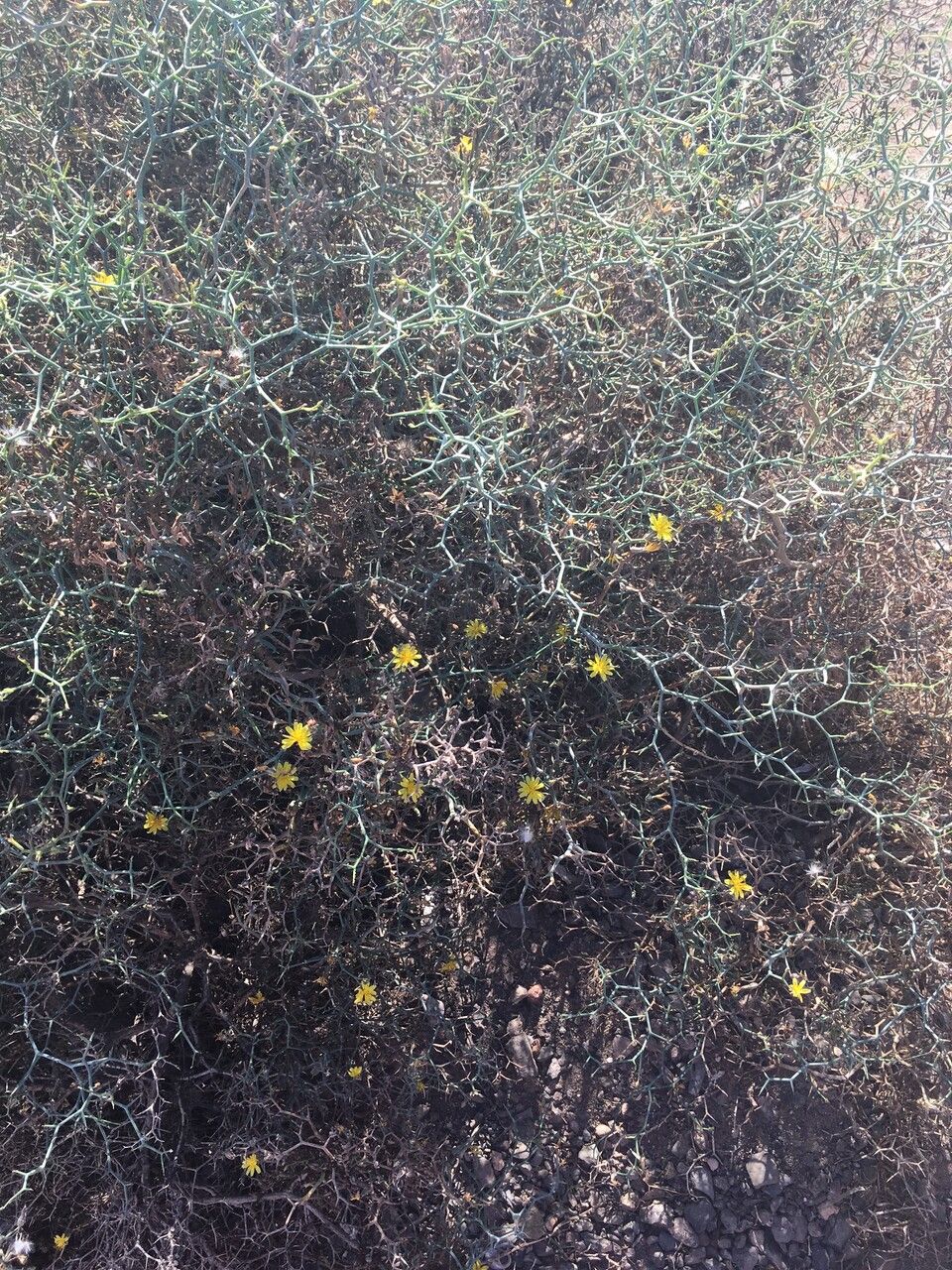
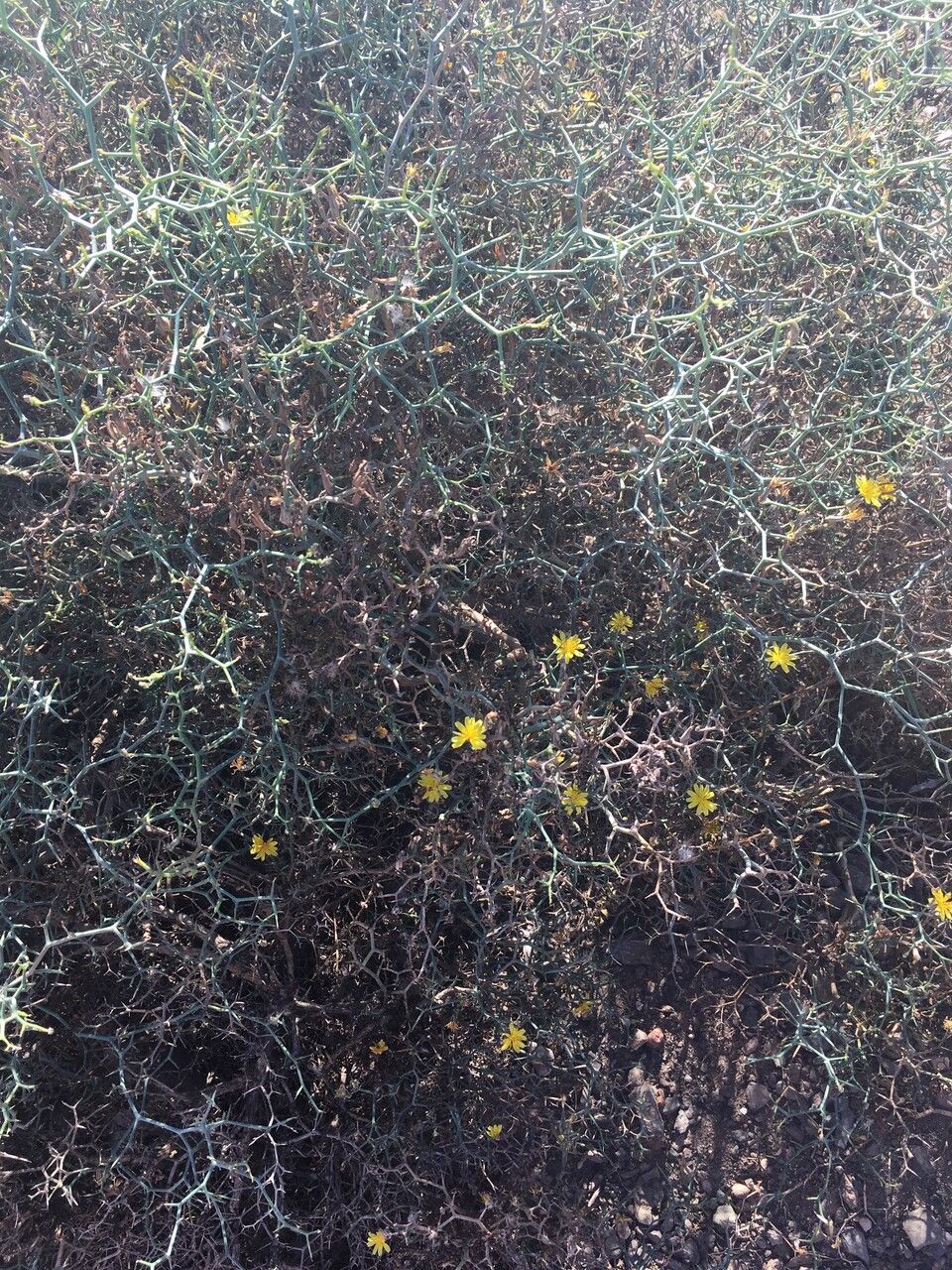
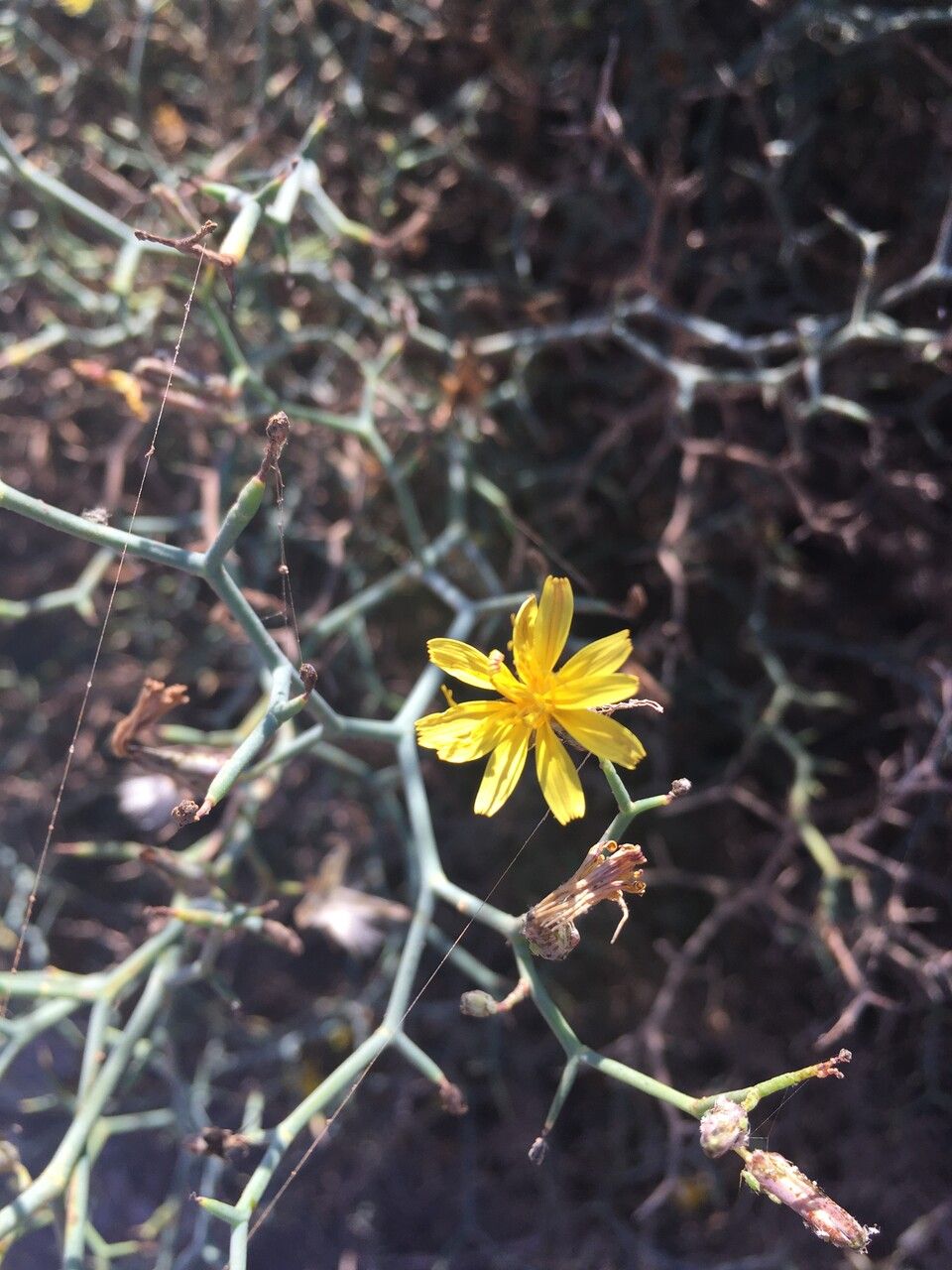
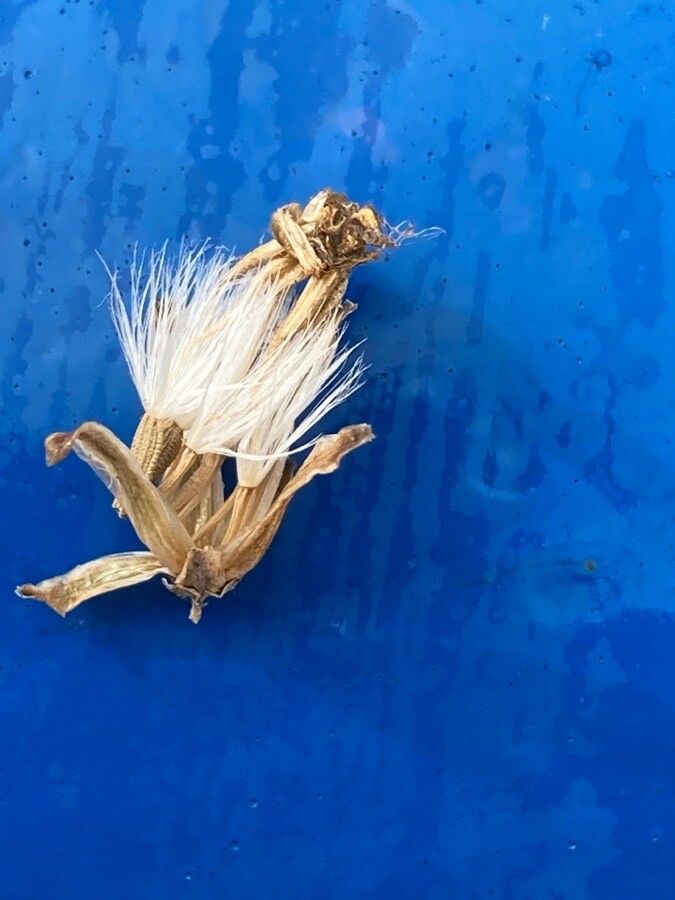
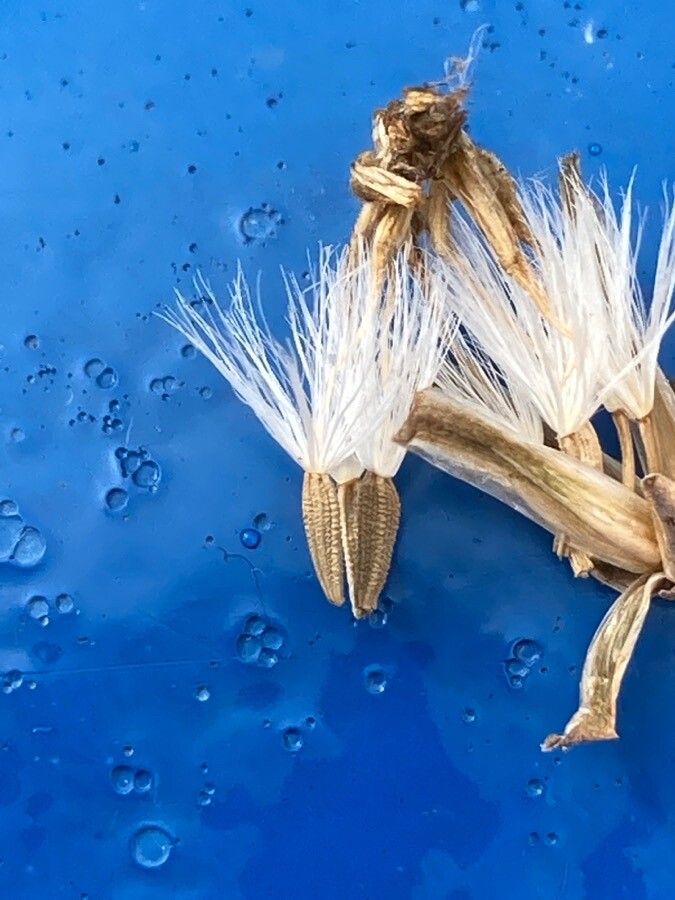
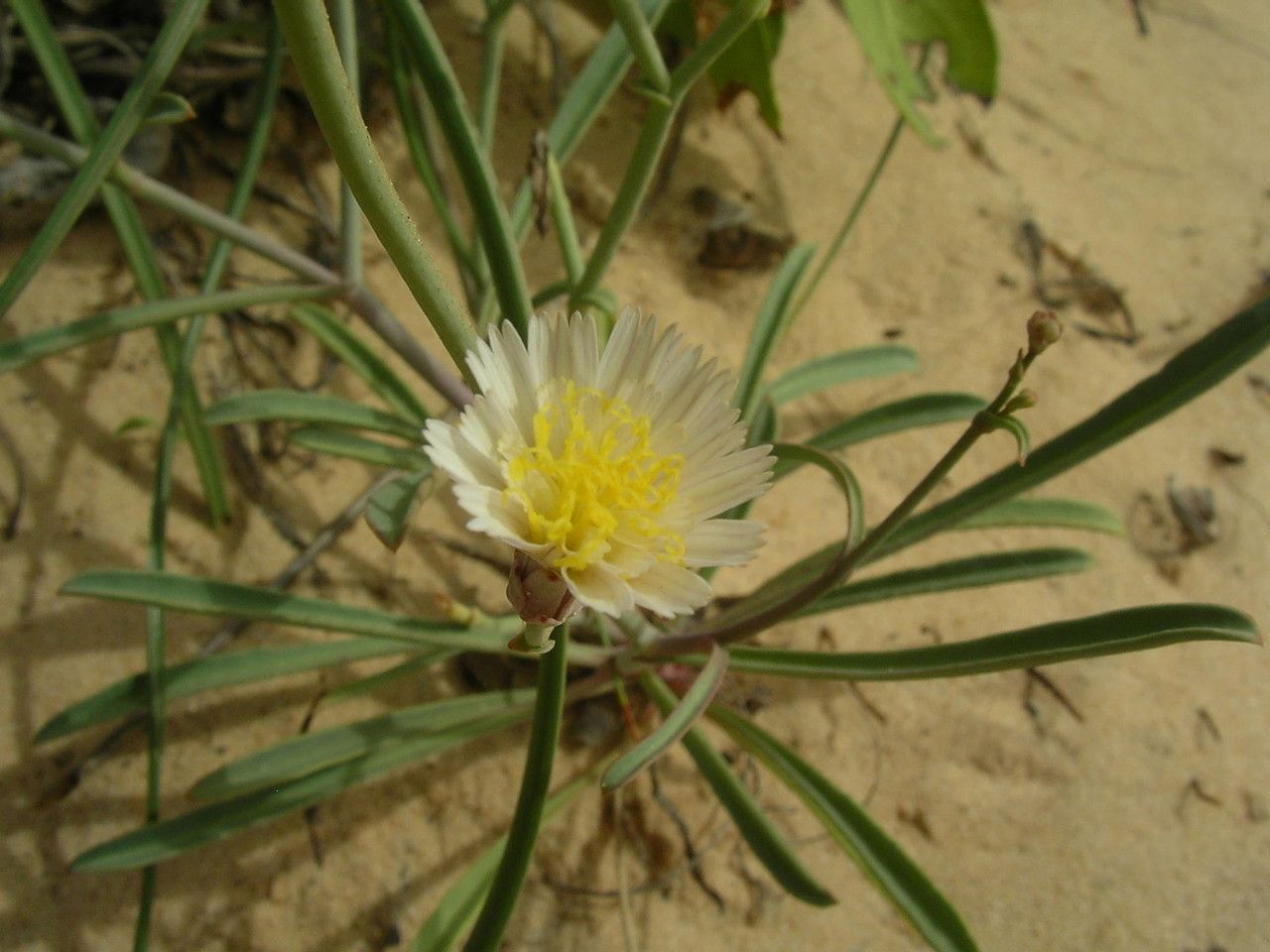
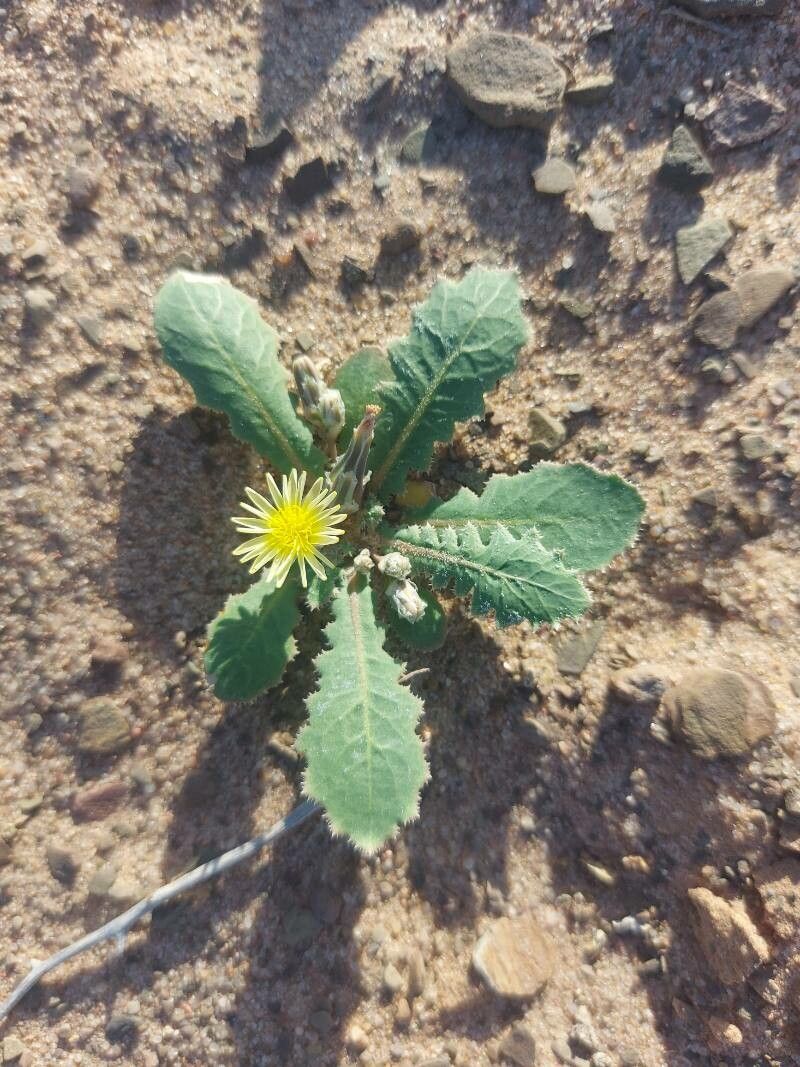
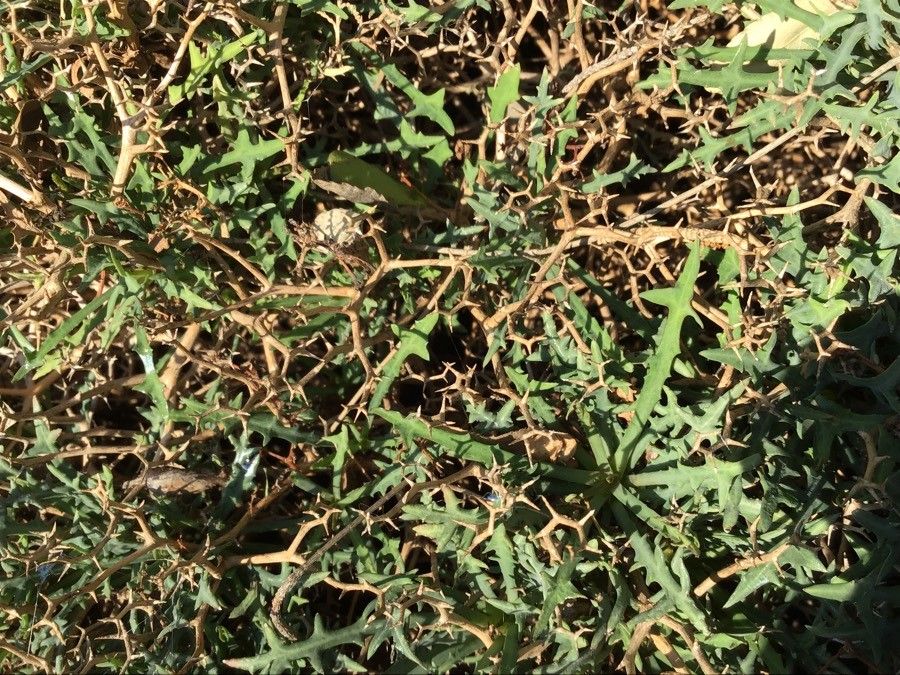
Launaea arborescens is a species of flowering plant in the family Asteraceae.
Bitter lettuce is highly resistant to disease and is generally not susceptible to illnesses. In terms of care, this plant is fairly low-maintenance. When grown outdoors it needs minimal watering, and larger plants typically do not require pruning. Smaller plants, however, should be pruned after they have bloomed. Bitter lettuce is suitable for anyone with an outdoor area, such as a garden or deck, and does not demand much care experience.
How to keep Launaea Arborescens.
Light
Bitter lettuce does best in direct, unshaded sunlight, reflecting the conditions of its natural habitat. Plentiful light promotes vigorous growth, though a lack of light does not necessarily damage the plant. It can tolerate different light levels as it develops, but too much exposure may cause wilting.
Water
Bitter lettuce flourishes in arid regions with minimal rainfall, making it highly drought-tolerant. It thrives in drier conditions and needs watering only every 2-3 weeks. Its deep root system allows it to use moisture efficiently, particularly during its active growing season.
Temperature
Bitter lettuce comes from tropical areas, where the climate is usually warm and humid. As such, it is adapted to high temperatures and humidity. It does not tolerate sudden temperature shifts and prefers a steady thermal environment, so it's important to avoid indoor temperature fluctuations. It generally cannot endure cold conditions and needs higher temperatures to grow. If the ambient temperature falls too low, the plant may stop growing or even die.
Fertilizer
Fertilization is essential for the care of Bitter lettuce. Regular feeding during the growing season maintains the energy required for its showy leaves and supports overall growth. Neglecting fertilization can lead to unhealthy leaves, reduced ornamental appeal, and stunted or weak growth that is prone to breaking.
Pruning
To promote growth and maintain the shape of bitter lettuce, prune it in early spring by removing dead branches above new buds. Light trimming throughout the year improves airflow and helps manage size, which prevents disease and ensures a robust structure with lush foliage.
Botanical profile.
- Plant Type
- Shrub
- Life Cycle
- Perennial
- Genus
- Launaea
- Family
- Asteraceae
- Hardiness Zone
- 13
- Mature Height
- 1.22 m
- Mature Spread
- 49 cm to 91 cm
- Leaf Color
- Green
- Leaf Type
- Semi-evergreen
- Flower Color
- Yellow
- Flower Size
- 1.02 cm to 2.03 cm
- Bloom Time
- Mid spring, Late spring, Early summer
- Planting Time
- Autumn
- Harvest Time
- Summer
Other names.
Reader questions.
How should I water my Bitter lettuce?
To ensure excellent root development, place a garden hose at the base of your plants. Avoid spraying the leaves directly, and keep in mind that leaves will need more water if they are outdoors and exposed to direct sunlight. Moistening the roots can be done by using bubblers or soaker hoses on each plant. When adding or removing plants, use soaker hoses that cover the entire garden or bed to help the roots grow deep. After watering, make sure to drain any excess water and wait for the soil to dry before watering again. Watering at ground level is best to prevent diseases. On a sunny day, consider spraying the entire bush with water. It's important to remember that whether your plants are potted or in the ground, Bitter lettuce prefers deep watering rather than light sprinkling.
What are the sunlight requirements for bitter lettuce?
Bitter lettuce requires above 6 hours of sunlight to thrive. It's vital to watch how sunlight moves through your garden to ensure plants receive a balance of light and shade, optimal for their growth. Despite bitter lettuce's resilience to varying light levels throughout its growth stages, excessive direct sunlight can be harmful, potentially leading to withering. It's a plant that reflects its native demand for an unobstructed presence of sunlight, whereby sufficient light exposure is key to robust growth.
What do I need to do if I give Bitter lettuce too much or too little water?
If a Bitter lettuce is overwatered, it may develop yellow, wilting leaves that eventually fall off. The plant may also appear dull and unhealthy with mushy stems. In these cases, it's a good idea to adjust your watering schedule. However, wilting can also be a sign of under watering, which is characterized by crispy, dry leaves. To determine if the soil needs water, check if it has become dry. If watering alone doesn't suffice, give the plant a thorough watering. While this will help the Bitter lettuce recover, it may still have dry, yellow leaves for a few days due to damage to the root system. Once it returns to normal, the yellowing of the leaves will cease. When growing Bitter lettuce indoors, always check the moisture levels in the pot and avoid overwatering. Look out for signs of black spots, and if present, allow the soil in the pot to dry out by refraining from watering for a few days. Overwatering can lead to root rot, so if you notice discolored and slimy roots, it's best to transfer the plant to a different pot and take measures to prevent root rot in the future. When planting Bitter lettuce outdoors, make sure to dig deep enough. If the soil feels too dry when you check with your fingers, it may indicate underwatering, and appropriate watering is necessary to help the plant recover.
How can artificial lighting support bitter lettuce growth indoors?
Indoor bitter lettuce plants benefit from adequate lighting, especially when natural sunlight is scarce, such as in winter or less sunny areas. Artificial lights, like LED lights, are crucial for promoting healthier, faster growth by mimicking natural sunlight conditions. For full sun plants, 30-50W/sq ft of artificial light is recommended; partial sun plants need 20-30W/sq ft, and full shade plants require 10-20W/sq ft. The light source should be placed 12-36 inches above the plant, ensuring the plant receives 8-12 hours of light per day to mimic natural daylight hours.
How frequently should I water my Bitter lettuce?
The Bitter lettuce prefers deep and infrequent watering. If planted in pots, it's important to soak them in a gallon of water each time, as the soil in pots tends to dry out faster. In cold regions, watering is needed every 3 to 5 days. It's best to water early in the morning when the soil is dry, both indoors and outdoors. You can check the soil moisture level by feeling the top 2-3 inches of soil - if it's dry, it's time to water the plant. On hot days, you may need to check the soil moisture daily as heat can quickly dry out the soil in pots. For gardens, irrigation of the soil is necessary, especially in hot climates where watering once a week may be required. Check the soil moisture level by observing if about 2 to 3 inches of soil has become too dry. Be mindful of the amount of rainfall the plant has received to avoid overwatering and causing root rot. Bitter lettuce generally grows during spring and fall, so adding mulch about 3 to 4 inches deep can help conserve water when they are planted outdoors. In sandy soil, more frequent watering is necessary due to its ability to drain water faster. On the other hand, clay soil requires less frequent watering, allowing the plant to dry out for 2-3 days without developing root rot. Keeping track of watering dates on a calendar can help ensure consistency, and if you notice the leaves starting to droop, it may be a sign that watering is overdue.
What are the key symptoms of light deficiency in bitter lettuce?
Light deficiency in bitter lettuce can lead to several symptoms indicating the plant's struggle. New leaves might grow smaller, and the plant may exhibit leggy or sparse growth due to longer spaces between leaves or stems. Early leaf drop and a halt in new growth suggest the plant is conserving resources due to inadequate light. Moreover, new leaves may appear lighter in color or develop chlorosis, indicating a lack of chlorophyll and essential nutrients. Under excessive sunlight, symptoms like sunscald, leaf curling, wilting, and leaf scorching can occur, reflecting the plant's response to stress.
How much water does my Bitter lettuce need?
The Bitter lettuce usually requires a gallon of water per watering session. For potted plants, it's best to water them deeply until the water starts to drip from the bottom of the pot. Then, allow the soil to dry out before watering again. To determine the amount of water you've given your plant in a week, you can use a water calculator or a moisture meter. During the flowering period, make sure to provide plenty of water but allow the excess moisture to evaporate to avoid root rot. If the Bitter lettuce is planted outdoors and there is sufficient rainfall, additional watering may not be necessary. However, when the Bitter lettuce is young or newly planted, ensure it receives 1-2 inches of rain per week. As it grows, it can rely on rainfall alone. Only when the weather is excessively hot or there has been no rainfall for 2-3 weeks should you consider giving the Bitter lettuce a thorough watering during the cooler part of the day to prevent damage from high heat. Additional watering will be needed during prolonged dry periods.
How can you manage bitter lettuce's light exposure effectively?
To manage bitter lettuce's light exposure effectively, gradually move plants to sunnier locations to receive at least 6 hours of direct sunlight daily. For indoor plants, using a south-facing window or artificial light can help ensure sufficient light exposure. Outdoor plants should be moved carefully to avoid sudden light intensity changes, preventing sunburn. If sunlight is blocked, consider pruning obstructions or transplant smaller plants during their dormant period to a sunnier spot with good drainage. It's important to note that parts of the plant affected by insufficient sunlight may not fully recover, but new growth should be healthy following improved light conditions.
Should I water my Bitter lettuce more or less often depending on the time of year or weather conditions?
Bitter lettuce prefers to be outdoors and rely on rain for watering, except during dry weather when you may need to water it. In the spring and fall, keep the soil moist but not soggy, alternating between dry and moist conditions. During hot summer months, water more frequently and deeply to compensate for evaporation. In winter, Bitter lettuce needs less water as it goes dormant, so use well-draining soil and allow moisture to evaporate. Skip watering when the plant is dormant and let it rely on natural rainfall. Ensure good drainage to prevent ponding or drought issues, especially in winter. When grown in pots, Bitter lettuce has limited root growth, so keep them well-watered, especially in summer. Deeply soak the entire root system once or twice a week, avoiding shallow sprinkling that reaches only the leaves. Avoid completely drying out the plants in fall and winter, even during dormancy. Prevent waterlogging, as Bitter lettuce doesn't tolerate sitting in water for too long. Use mulch to reduce stress, conserve water, and promote healthy blooms.
What do I need to watch out for when watering my Bitter lettuce in different seasons, climates, or growing periods?
Bitter lettuce relies mostly on rain when planted in the ground. However, if there is no rainfall for 2-3 weeks, you may need to water the plants deeply. It's best to water them in the morning during the summer to avoid stressing the roots with a large temperature difference between the water and the roots. Avoid watering the bushes when it's hot outside. Start mulching the plants in the spring when the ground is not too cold. Lack of water is a common reason why newly planted bitter lettuce fails to grow. Once the plants are established, gradually reduce the watering schedule. During fall and winter, especially if there's a water-retaining material in the soil, watering can be reduced. In winter, summer, and fall, the dry winds can cause drought risk for newly planted bitter lettuce, so they may require more watering. Bitter lettuce planted in pots tends to dry out faster, so they need more frequent watering. When the plants bloom less and the leaves start to dry up, it's a sign they need more water. Watering potted plants can be more complex and the frequency may vary. Avoid letting the potted plants sit in water by not using containers with saucers, bowls, or trays. Overwatering in the fall can result in mottled or yellowish foliage. It's important to prevent overwatering regardless of the climate or season. During the flowering months of bitter lettuce, you may want to increase watering frequency, but once they are fully grown, you can give them a rest. Water them adequately once every 3 to 5 days, but avoid sticking to a rigid watering schedule. Check the soil moisture by sticking your finger in the pot or using a moisture meter. Overwatering or underwatering can cause root rot and lead to the plants' death, so be cautious not to overdo it regardless of your area's climate or season.
Why is it important to water my Bitter lettuce?
To transport essential nutrients to the rest of the plant, it is important to water the Bitter lettuce. The amount of water required depends on the weather and soil conditions. While the plant thrives on moist soil, it does not tolerate waterlogging. When planting in the ground, use enough mulch and avoid watering too little. For potted plants, ensure the water moistens the base. If using Bitter lettuce for foliage, water up to a depth of 10 to 20 inches. During rainfall, refrain from watering to allow the plant to absorb nutrients from the rainwater.