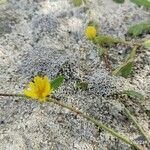
Launaea sarmentosa
Description
Source: leafsnapLaunaea sarmentosa is a perennial herb species in the family Asteraceae. It is native to coastal areas in Africa (east coast), Madagascar, the Seychelles, Mauritius, India, Sri Lanka, Maldives and Southeast Asia. It is naturalized in Western Australia.
Care Guide
💧 Water
Native to coastal areas, beach launaea flourishes in moist, salty environments. While it needs watering once a week, it can tolerate short periods of drought. It's best to grow beach launaea outdoors to benefit from natural rainfall. Use well-draining soil to prevent root rot, simulating its original sandy shore habitat.
How can I water my Beach launaea plant in the best way?
To properly water the Beach launaea, it is important to consider a few key factors. First, using filtered water is recommended as tap water may contain harmful particles for the plant's health. It is also important to use water at room temperature or slightly warmer since the Beach launaea is native to warm environments and cold water can be a shock to its system. Additionally, overhead watering should be avoided to prevent foliage complications. Instead, ensure that the soil is thoroughly soaked by applying your filtered room temperature water directly to the soil. This method helps to moisten the roots and support their spread through the soil, allowing them to effectively collect the necessary nutrients.
What should I do if I give my Beach launaea too much or too little water?
Both overwatering and underwatering can harm the health of your Beach launaea plant, but overwatering is more common and problematic. When the plant gets too much water, its stems and leaves may wilt and turn yellow. Over time, overwatering can also cause diseases like root rot, mold, and mildew, which can be fatal. Underwatering is less common because the Beach launaea can tolerate dry conditions fairly well. However, it is still possible, and when it happens, the leaves may become brittle and brown. It's crucial to recognize the signs of overwatering early on. Some diseases, such as root rot, may not be reversible if you delay taking action. If you notice early signs of overwatering, reduce your watering schedule immediately. Additionally, check the soil quality. If it doesn't drain well, replace it with loose, well-draining potting mix. On the other hand, if you see signs of underwatering, simply increase your watering frequency until the signs disappear.
How frequently should I water my Beach launaea plant?
If your Beach launaea plant is in a pot, the most precise way to determine if it needs water is to check the soil by sticking your finger into it. If the top two to three inches of soil feel dry, it is time to water the plant. For those who grow their Beach launaea outdoors in the ground, a similar method can be used to test the soil. Again, if the first few inches of soil have dried out, it is time to water the plant. Typically, during spring and early fall, watering once a week is sufficient. However, during extremely hot weather, watering may need to be increased to twice a week or more. Nevertheless, mature and well-established Beach launaea plants have a remarkable ability to withstand drought.
How much water does my Beach launaea plant need?
When watering your Beach launaea, don't be shy about how much water you give. Make sure the top two to three inches of soil are dry, then water thoroughly to soak the soil entirely. Add enough water to see excess water draining from the pot's drainage holes. If you don't see excess water draining, you may have underwatered the plant. However, avoid letting the water accumulate inside the soil, as this can harm the plant. Similarly, if water doesn't drain properly, it may indicate poorly draining soils, which should be avoided to maintain the plant's health. If the plant is outside, 1 inch of rain per week should be enough.
How do I water my Beach launaea at different times as it grows?
The water requirements of the Beach launaea can vary depending on different growth stages. If your Beach launaea is in the early years of its life or has recently been transplanted, you will need to water it more than normal. During these stages, the plant focuses on growing new roots to support future growth, so these roots require more moisture. As the plant matures, it will require less water. Additionally, during the blooming period, the plant may need extra water as flower development utilizes a significant amount of moisture.
☀️ Light Full sun
Beach launaea is native to bright, tropical habitats where it does well in direct sunlight. It prefers full sun but can tolerate partial sun, adapting readily to lightly shaded spots.
How much sunlight does Beach launaea need to grow?
Beach launaea requires six to eight hours of direct sunlight daily. If grown outdoors, choose a spot with full sunlight all day. Indoors, place it near a south-facing window or a sunny location. However, protect it from extreme heat and high temperatures above 35°C (95℉) or during hot summer afternoons. Intense sunlight can scorch or wilt the leaves, so use sheer curtains or blinds to filter the sunlight, or move the plant to a shadier area.
What happens if Beach launaea doesn't get enough sunlight?
Insufficient sunlight can be detrimental to your Beach launaea's growth, as it may become weak and leggy. You will notice that the leaves begin to turn yellow, which signifies a lack of sunlight for chlorophyll production. In severe cases, the plant may ultimately perish.
What happens if Beach launaea gets too much sunlight?
Beach launaea requires full sunlight, but excessive direct sunlight should be avoided. If the plant is exposed to intense sunlight for too long, it can develop signs of sunburn, like brown or scorched leaves. To prevent this, regularly check the plant and relocate it to a shady area if needed.
🌡️ Temperature 20–41.1°C
Beach launaea is a plant native to temperate areas. It grows best at temperatures from 68 to 105.8 °F (20 to 41 °C). In colder seasons, keep it warm and avoid letting temperatures fall below 68 °F (20 °C).
What temperature is best for Beach launaea?
To help your tropical plants thrive, it's best to maintain a temperature range of 75℉ to 90℉ (25-32℃). While different species can tolerate temperatures outside this range, sticking within a few degrees of these limits will ensure optimal growth. However, there are extreme temperature limits to be aware of. Anything below 50℉ (10℃) or above 95℉ (35℃) can hinder growth and cause issues with the leaves and stems. Low temperatures are particularly damaging, as even a light frost can lead to the death of your tropical plants. In fact, cellular death can occur rapidly, with some species dying within 12 to 24 hours.
Does Beach launaea need different temperatures for different stages of growth?
Beach launaea does not need temperature changes to go through different growing phases, but it is important to maintain a consistent temperature. Fluctuations in temperature can slow down its growth, regardless of the phase it is currently in, so it is best to keep it in a controlled environment. The ideal temperature range for this plant is between 75℉ and 90℉ (25-32℃), and it is especially important to stay above the lower limit. While temperatures above 90℉ (32℃) are not ideal, this tropical plant can tolerate them without too much harm. However, temperatures below 50℉ (10℃), and especially 40℉ (5℃), will directly damage this heat-loving plant species.
Does Beach launaea require different temperatures during different seasons?
Beach launaea is a plant that doesn't require different temperatures for different seasons. To properly care for it, the most crucial step is maintaining the environment within the optimal temperature range. That's why it's recommended to keep this plant indoors. By doing so, you can have control over the temperature regardless of the weather outside. In addition, light plays a significant role for tropical species like this one. It's best to provide these plants with partial side-level sun exposure. This means the light they receive should be dappled or filtered, and bright but indirect light is the ideal option when growing them indoors. Excessive direct sunlight can harm their leaves and hinder their growth potential.
What temperatures do you need to keep your Beach launaea healthy?
Here are three tips to help you take care of your plants: 1. Keep your plants away from windows during colder months: Cold air can leak into your home through cracks in the windows, and any plants placed near them will be affected. Move tropical plants to an area with bright but indirect light, while avoiding potential drafts. 2. Watch out for dry patches, which may indicate too much sunlight or heat: If you notice white or scorched leaves, your plant may be getting too much heat or sunlight. This can lead to dehydration and hinder growth. Dry spots can spread and eventually cause your plants to die if left unaddressed. 3. Be cautious of frost: Colder temperatures and frost can damage plants by disrupting their water circulation. This can lead to a lack of moisture in the stems and leaves. Look out for signs of hydrosis (a water-soaked appearance) and if the issue persists, the plant may shrivel and turn dark brown or black, eventually leading to death.
How can I keep my Beach launaea at the right temperature?
To maintain the right temperature range for Beach launaea, you need to consider both the climate and humidity. Ideally, you should keep each species in a room where you can control the temperature. This will mimic its natural habitat. You should also monitor the humidity levels, as they directly affect the temperature. Using a humidifier or misting the leaves with water can help increase humidity in your growing space. However, if you plan to grow this species outside, it may be challenging to maintain the ideal balance of temperature and humidity. If temperatures drop or the air becomes too dry, it is best to bring your plant indoors where you can better control the climate. Indoor growing spaces provide closer climate control and can help your plant thrive.
💨 Humidity
🪴 Soil 6-7
🌱 Fertilizer
Beach launaea needs the most fertilizer during its active growth period, which is mainly in spring, summer, and early fall. Fertilizing supplies essential nutrients the soil might lack, supporting healthy root and stem growth and producing attractive foliage, a notable characteristic of this plant.
🪴 Pot & Repot
✂️ Pruning
Beach launaea grows in a sprawling manner with yellow flowers and succulent leaves. To encourage growth, prune it from early to late spring by removing any overgrown stems and damaged leaves. Make sure your tools are sanitized to prevent disease, which will improve the plant's overall vitality and reduce the risk of pests.
🌿 Propagating
🐛 Diseases & pets
☠️ Toxicity
Characteristics
- Plant Type
- Herb
- Life Cycle
- Perennial
- Genus
- Launaea
- Family
- Asteraceae
- Hardiness Zone
- 13
- Mature Height
- 20 cm to 91 cm
- Mature Spread
- 30 cm to 61 cm
- Leaf Color
- Green
- Leaf Type
- Evergreen
- Flower Color
- Yellow
- Flower Size
- 1.02 cm to 1.52 cm
- Bloom Time
- Late spring, Summer
- Planting Time
- Spring, Summer, Autumn
- Harvest Time
- Mid summer, Late summer, Early fall, Mid fall
- Native Area
- Sri Lanka, India, Indonesia, Vietnam, Mozambique, Myanmar, South Africa, Madagascar, Bangladesh, Pakistan, Laos, Thailand, China