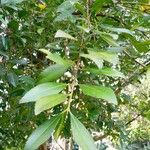
Laureliopsis philippiana
Tepa
Description
Source: leafsnapLaureliopsis is a genus of flowering plants with just one species, Laureliopsis philippiana, known as tepa and wawán, endemic to Chile and the narrow neighboring strip of Argentina (35 to 45°S). In Chile it is found from Maule to Aysén. It grows on humid and deep soils.
Care Guide
💧 Water Every 7 days
☀️ Light Partial sun
Tepa is indigenous to habitats like forest understories or rocky sites, where it grows under natural shade. It prefers partial sun but can tolerate both full sun and full shade, reflecting its versatile, hardy nature.
🌡️ Temperature 15–37.8°C
Tepa shows strong adaptability to a range of climate conditions, whether in scorching summers or chilly winters. Nevertheless, it has an ideal temperature range for growth. If temperatures become too high, the plant is vulnerable to heat and humidity stress, which can cause its death. In places where temperatures approach the lower limit of its cold tolerance, providing insulation to protect the plant is important.
💨 Humidity
🪴 Soil 6-7
🌱 Fertilizer
Fertilize your Tepa in early spring to support healthy growth. Ongoing fertilization boosts its overall health, producing vigorous growth, greater endurance in challenging conditions, and enhanced resistance to pests and diseases. Follow a consistent fertilization schedule for your Tepa to achieve foliage that is vivid, richly colored, and lush.
🪴 Pot & Repot
✂️ Pruning
🌿 Propagating
🐛 Diseases & pets
☠️ Toxicity
Characteristics
- Plant Type
- Tree
- Life Cycle
- Perennial
- Genus
- Laureliopsis
- Family
- Monimiaceae
- Hardiness Zone
- 8-11
- Mature Height
- 14.94 m to 29.87 m
- Mature Spread
- 4.88 m to 10.06 m
- Leaf Color
- Dark Green
- Leaf Type
- Evergreen
- Flower Color
- White, Cream
- Flower Size
- 0.51 cm to 1.02 cm
- Bloom Time
- Early spring, Mid spring
- Planting Time
- Spring, Summer, Autumn
- Harvest Time
- Summer