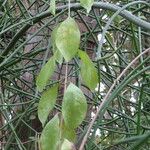
Lawsonia inermis
درخت حنا · Henna · Egyptian-privet · Mignonette-tree · Jamaica-mignonette
Description
Source: leafsnapLawsonia inermis, commonly known as henna, is a flowering plant in the family Lythraceae. Native to North Africa, the Middle East, and South Asia, this plant can grow up to 6 meters tall and features small, fragrant flowers that are either white or pink. The leaves of Lawsonia inermis are prized for their natural dyeing properties. They contain a red-orange pigment called lawsone, which binds to proteins and keratin in hair and skin, creating a temporary reddish-brown stain. For centuries, henna has been used as a cosmetic dye for hair, skin, and nails by various cultures around the world. It also has medicinal applications, such as treating headaches, fever, and skin disorders. Beyond its cosmetic and medicinal uses, henna has antimicrobial properties, making it effective against certain bacteria, including Staphylococcus aureus. Overall, the Lawsonia inermis plant, or henna, holds great cultural significance across many societies due to its natural dyeing properties and medicinal benefits. It remains an important part of traditional medicine practices even today.
Care Guide
💧 Water Every 7 days
Egyptian privet is a drought-tolerant plant well-suited for arid environments. It requires infrequent deep watering, typically every two weeks. This plant thrives outdoors, often satisfying its water needs through natural rainfall. As a deciduous species, its water requirements change with the seasons. During dormancy in cooler climates, it needs less water.
How should I water my Egyptian-privet?
You can water your Egyptian-privet plant with any common watering tool like watering cans, hoses, or even cups. It's important to apply the water directly to the soil and make sure all areas of the soil are evenly moistened to provide water to the entire root system. Using filtered water is recommended to avoid harmful particles found in tap water. Watering the plant with water that is at or slightly above room temperature is best, as very cold or hot water can be shocking to the plant. However, the Egyptian-privet generally does well with any type of water.
What should I do if I give too much or too little water to my Egyptian-privet plant?
When planting outdoor plants, especially newly planted ones or seedlings, it's important to water them sufficiently for a few months. This is because, in the beginning, their roots are not yet established and they rely on regular watering. Once the roots are established, these plants can mostly rely on rainwater. If you have Egyptian-privet plants in pots, overwatering is more likely. If you accidentally overwater them, you should act quickly to remedy the situation. First, stop watering the plant immediately to minimize the effects. Then, remove the Egyptian-privet from its pot to check its roots. If there are no signs of root rot, you can put the plant back in the pot. However, if root rot is present, trim away the affected roots and apply fungicide to prevent further damage. Finally, repot the Egyptian-privet in well-draining soil. On the other hand, if the Egyptian-privet is not getting enough water, you will notice drooping, drying, and falling leaves. Simply water the plant more frequently to rectify the situation. Adjust your watering frequency promptly if you notice signs of underwatering.
How much should I water my Egyptian-privet plant?
If you live in an area with sufficient rainfall, most outdoor plants can be left to grow naturally without additional watering. However, if your area lacks rainfall, you should water your plants adequately every 2 weeks in the spring and fall. During the summer, you'll need to water more frequently. In the winter, water sparingly as plants require less water during this time. Young or newly planted Egyptian-privet plants need more frequent watering to establish themselves and become more adaptable to drought conditions. For potted plants, there are two ways to determine how often to water Egyptian-privet. The first is to follow a predetermined watering schedule, such as once a week or once every other week. However, this may not always be accurate as it doesn't consider the specific conditions of your plant's environment. Watering frequency can also vary depending on the season. During summer, when the plant's water needs are highest, a predetermined schedule may not be sufficient. An alternative approach is to check the soil moisture before watering. Wait until the top two to four inches of soil have completely dried out before giving more water.
How much water does my Egyptian-privet plant need?
Watering your Egyptian-privet may not always require a high volume of water. If only a few inches of soil have dried since the last watering, giving it about five to ten ounces of water can support healthy growth. You can also gauge the water volume based on soil moisture. Take note of how many inches of soil have dried out between waterings. To ensure your Egyptian-privet receives the right amount of moisture, water until all dry soil layers are moistened. If more than half of the soil has dried out, provide more water than usual and continue until excess water drains from the pot's drainage holes. If your Egyptian-privet is planted in a rainy outdoor area, it may not require additional watering. For young or newly established plants, ensure they receive 1-2 inches of rain per week. As they grow and establish, they can rely solely on rainwater. Only when there is no rainfall for 2-3 weeks during hot weather should you consider giving them a full watering to prevent stress.
How do I know if I'm watering my Egyptian-privet plant enough?
The Egyptian-privet is often overwatered, and there are clear signs to watch for. An overwatered plant will have yellowing leaves, possibly shedding some. Overwatering can also cause a shriveled plant and root rot. In contrast, an underwatered plant will start to wilt and may have brown or brittle leaves. Regardless of whether you see signs of overwatering or underwatering, it's important to take action and restore your Egyptian-privet's health.
☀️ Light Full sun
Egyptian privet prospers with abundant sunlight, reflecting its native habitats that lack shade. Uninterrupted sun exposure is crucial for healthy growth and affects its photosynthetic efficiency. This may vary slightly at different growth stages. Excessive or insufficient sunlight can adversely affect its vitality.
What are the sun requirements for Egyptian-privet?
The Egyptian-privet needs full sun, defined as more than 6 hours of sunlight a day, to thrive. Understanding the way sunlight moves through your garden is crucial in selecting the perfect spot that offers a harmonious balance of light and shade, ensuring your plant's well-being. In its natural habitats, the Egyptian-privet is accustomed to abundant sunlight, which is essential for its healthy growth and photosynthetic efficiency. The amount of sunlight it requires can slightly vary at different stages of growth. Both excessive and insufficient sunlight can have adverse effects on its vitality.
How can artificial lighting benefit Egyptian-privet indoors?
For indoor Egyptian-privet plants, especially in areas with insufficient natural light or during the less sunny winter months, artificial lighting is a beneficial solution for optimal growth. Artificial lights, particularly LED, are recommended because they can be customized to provide specific wavelengths of light needed by plants. The intensity of artificial light should be adjusted based on the plant's requirements: full sun plants need 30-50W/sq ft, partial sun plants 20-30W/sq ft, and full shade plants 10-20W/sq ft. The light source should be placed 12-36 inches above the plant to mimic natural sunlight, ensuring that most plants get 8-12 hours of light per day.
What are the signs of insufficient light in Egyptian-privet?
Signs of insufficient light in Egyptian-privet include the development of smaller new leaves, leggy or sparse growth, faster leaf drop, slower or no new growth, paler new leaves, chlorosis (yellowing of leaves), sunscald, leaf curling, wilting, and leaf scorching. These symptoms indicate that the plant is not receiving enough sunlight, which is essential for its growth and health. Addressing these signs promptly by optimizing light exposure is key to reviving the plant's vigor.
How do you address light issues for Egyptian-privet?
To address light issues for Egyptian-privet, gradually adjust the plant's exposure to sunlight. For indoor plants, move them to a sunnier spot each week until they receive at least 6 hours of direct sunlight daily, or use artificial lighting if the plant is large. For outdoor plants, move them to a brighter location gradually to avoid sunburn. For ground plants, identify and reduce obstructions to sunlight, such as pruning obstructive branches, or transplant smaller plants to sunnier locations. It's important to make these changes gradually to avoid shocking the plant and to allow it to adapt to the new light conditions.
🌡️ Temperature 20–35°C
Egyptian-privet comes from areas that generally have temperatures between 68 and 95°F (20 to 35℃). This woody plant favors warm climates and may need adjustments during cooler seasons to stay within its comfortable temperature range.
What is the native climate for Egyptian-privet?
Egyptian-privet, or Lawsonia inermis, thrives in regions typically experiencing temperatures ranging from 68 to 95°F (20 to 35°C). This woody plant loves warm climates and may need some adjustments in cooler seasons to stay within its comfortable temperature range. It's extremely sensitive to cold temperatures, which can harm it.
How should Egyptian-privet be cared for in cooler seasons?
During the cooler months, it's recommended to bring outdoor-grown Egyptian-privet indoors to protect it from the cold. Placing it near a bright window while ensuring it's not too close to heaters helps maintain an ideal temperature. Keeping the temperature above 20°C (68°F) during winter is essential for the plant's health. Temperatures nearing 5°C (41°F) or lower are harmful to the plant, potentially causing damage.
What are the symptoms of low temperature exposure in Egyptian-privet?
Exposure to low temperatures can cause the leaves of Egyptian-privet to lighten in color. Should temperatures fall below 1°C, the leaves may gradually turn brown or black, accompanied by wilting and drooping. These are signs of frost damage indicating that the plant is not tolerating the cold well and prefers temperatures above 20°C, especially during winter months.
What are the suggested solutions for frost damage in Egyptian-privet?
To address frost damage in Egyptian-privet, it is recommended to trim off the affected parts and move the plant to a warmer environment immediately. Placing it near a south-facing window ensures it receives sufficient sunlight while avoiding placement near heaters or air conditioning vents to prevent the air from becoming excessively dry.
How does Egyptian-privet react to high temperatures and what are the solutions?
During summer, it's crucial to keep the Egyptian-privet's environment below 35°C (95°F). Temperatures exceeding 41°C (105.8°F) can cause the leaves to lighten and increase the plant's susceptibility to sunburn. To mitigate this, trim away sunburned and dried-up parts, and relocate the plant to a shaded location, especially from the midday and afternoon sun. Watering the plant in the morning and evening can also help keep the soil adequately moist.
💨 Humidity normal (40-60%)
This plant will thrive in moderate humidity, which is probably the level in your home. However, misting it a few times a week can be very beneficial. Make sure the room has good ventilation.
🪴 Soil 6-7
🌱 Fertilizer
The ideal time to fertilize an Egyptian-privet is in early spring, as it breaks dormancy. This encourages overall growth and flower development. Fertilizing enhances foliage, stems, and branches, while promoting large, vibrant, and long-lasting flowers. It helps move nutrients from the roots to the flowers and improves the plant’s health and resistance to disease.
Why do I need to add fertilizer to my Egyptian-privet plant?
Fertilization is crucial for the overall health and well-being of an Egyptian-privet. It helps the plant develop healthy foliage, strong stems, and branches. The flowers of the Egyptian-privet are particularly valuable to gardeners, and fertilization plays a key role in producing large, vibrant, and long-lasting blooms. The right fertilizer enables the plant to efficiently transfer energy from its roots to its flowers. Additionally, proper fertilization maintains the plant's overall health, enhancing its ability to resist diseases.
When should I fertilize my Egyptian-privet for the best results?
The best time to fertilize an Egyptian privet is in early spring when it is coming out of dormancy. This will provide the plant with the energy it needs to grow and develop flowers. However, you can also fertilize it at the end of the season in the fall, although this feeding doesn't have to be as big as the first one. Fertilizing while planting is optional.
When is it not a good idea to fertilize my Egyptian-privet?
During the winter, Egyptian-privet plants are in a dormant phase and do not require fertilization. Fertilizing during this time can lead to negative outcomes from overfertilization. The best times to feed Egyptian-privet plants are in early spring and fall. So, for most of spring and summer, fertilizer is not necessary. Additionally, if the plant is experiencing hot or dry conditions, it is advisable to refrain from feeding.
What kind of fertilizer does my Egyptian-privet plant need?
For Egyptian-privet plants, using a specific type of fertilizer is often recommended for optimal growth. In general, a fertilizer with equal amounts of nitrogen, phosphorus, and potassium works well. However, Egyptian-privet plants benefit from higher levels of nitrogen and phosphorus compared to potassium. A fertilizer with an N-P-K ratio of 10-10-8 would be suitable. Additionally, applying organic material like compost for one of your yearly feedings can be beneficial. Granular fertilizer is commonly used for Egyptian-privet plants.
How should I fertilize my Egyptian-privet plant?
Fertilizing your Egyptian-privet is a simple task that even inexperienced gardeners can handle. To feed your plant with granular fertilizer, just sprinkle it on the soil after moistening it with water. You can also improve the soil by adding organic materials like compost or manure. To do this, place the material on top of the soil and use a hand rake to gently work it into the top few inches without disturbing the roots.
🪴 Pot & Repot 2-3 years
Repot Egyptian privet every 2 to 3 years, preferably in early spring. Use a medium-sized pot with good drainage to avoid waterlogging. After repotting, place the plant in bright, indirect light and maintain consistent moisture levels to promote optimal growth.
✂️ Pruning
Egyptian privet benefits from pruning during the winter months. To promote an open structure, remove any dead or crossing branches. Prune moderately to shape the plant without causing stress. The ideal time for this is from early to late winter while the plant is dormant. Regular pruning enhances airflow and light, leading to more vigorous blooms.
🌿 Propagating
🐛 Diseases & pets
☠️ Toxicity
Characteristics
- Plant Type
- Tree, Shrub
- Life Cycle
- Perennial
- Genus
- Lawsonia
- Family
- Lythraceae
- Hardiness Zone
- 10
- Mature Height
- 2.13 m to 6.1 m
- Mature Spread
- 2.13 m to 3.96 m
- Leaf Color
- Green
- Leaf Type
- Evergreen
- Flower Color
- White, Pink
- Flower Size
- 0.51 cm to 1.02 cm
- Bloom Time
- Summer, Early fall, Mid fall
- Planting Time
- Spring, Autumn
- Harvest Time
- Late summer, Fall, Early winter
- Native Area
- Sri Lanka, Burkina Faso, Somalia, Turkey, Malaysia, India, Madagascar, Pakistan, Nigeria, Morocco, Yemen, Guinea-Bissau, Kenya, Niger, Benin, Mali, Iraq, Jordan, Sierra Leone, Indonesia, Cameroon, Liberia, Oman, Ethiopia, Qatar, Central African Republic, Nepal, Saudi Arabia, Tunisia, South Africa, Sudan, Philippines, Cyprus, Guinea, Lebanon, China, Syria, Myanmar, Togo, Senegal, Iran, Côte d'Ivoire, Algeria, Kuwait, Gambia