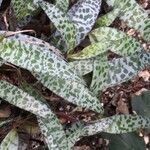
Ledebouria socialis
Leopard Plant · Silver Squill · Leopard lily · Forever Rich · Wood Hyacinth
Description
Source: leafsnapLedebouria socialis, the silver squill, wood hyacinth, or leopard lily, is a geophytic species of bulbous perennial plant native to the Eastern Cape Province of South Africa. It was first described by John Gilbert Baker as Scilla socialis in 1870. John Peter Jessop later revised the genus Scilla and split off several species, reclassifying Scilla socialis into the genus Ledebouria in 1970. It is often cultivated and grows well with minimal care.
🎭 Allegiance, faithfulness, steadfastness
Care Guide
💧 Water
The Silver Squill thrives in semi-arid conditions and typically requires minimal watering—about once every three weeks. To prevent root rot, it is important to plant it in well-draining soil. During its active growth period, the plant's water needs may increase slightly, so be sure to maintain an optimal moisture balance to support its development.
What should I do if I give my Silver squill too much or too little water?
The Silver squill is easily overwatered, so it's important to be cautious. Overwatering can result in bulb rot, which has several symptoms: mushy bulb, flopping stems with spots, droopy flowers, and a yellowed stalk. While it's normal for leaves to turn yellow at the end of the blooming period, if they turn yellow before the flowers have bloomed, it's a sign of overwatering. Unfortunately, bulb rot cannot be reversed, but catching it early allows for careful removal of the rotten parts and soil. For potted plants, thorough disinfection is necessary to prevent spreading the fungus. Outdoor plants should be planted elsewhere. On the other hand, underwatering is less problematic for the Silver squill. While the soil should not dry out completely, underwatering is easier to fix than overwatering. Signs of underwatering include no blooms, wilted stalks, and browning around the edges of the flower petals. If you realize you haven't given enough water, simply provide a good drink without saturating the surrounding soil. However, be cautious not to overwater the plant, as extended periods in water can lead to root rot and fungus growth on the bulb. This can cause spots on leaves and buds, as well as discoloration and death of leaf tips. Keep the soil moist, but avoid excessive watering.
How often should I water my Silver squill plant?
Silver squill is a hardy plant that doesn't require much attention. It grows best when planted directly into the ground in the hottest and brightest part of your garden, but you can also grow it in a pot. Be cautious not to overwater the plant as it can cause the bulb to rot. After planting, water the Silver squill well and then leave it. This initial watering will stimulate its growth, and you shouldn't water it again until you see shoots sprouting. To maintain the ideal moisture level, check the soil after the new leaves have grown. Insert your finger about 2-3 inches below the surface of the soil and if it feels wet, there's no need to water the plant. For potted plants, check the water collection tray for standing water and avoid watering if any is present. To obtain a more accurate moisture reading, use a moisture sensor inserted about 2-3 inches into the soil, aiming for a reading in the middle of the "moist" category. The recommended watering frequency for Silver squill is once per week.
How should I water my Silver squill in different conditions?
The Silver squill is a hardy plant that can withstand tough conditions both indoors and outdoors. When planting outdoors, you can rely on natural conditions for watering, as it doesn't need much maintenance and can survive dry spells. Just ensure that the soil has proper drainage. On the other hand, potted Silver squill requires more attention when it comes to watering. Being a bulb plant, overwatering can cause bulb rot, so be cautious. Watering less is generally fine for indoor plants and ensure the pots have drainage holes. Use good quality soil that drains well, and you can add sand or rocks for better drainage. During the plant's growing phase, you should water it about one inch per week to promote blooming. Start watering normally once the stalk appears. Keep in mind that the amount of watering during this phase depends on humidity and temperature. In hot, dry climates, water may evaporate faster, requiring more frequent watering. In humid climates, you can water less. Always check the soil moisture level and make sure it is not too wet, as these plants prefer well-drained, moist soil.
☀️ Light Partial sun
Silver squill favors a balance of sunlight and shade while tolerating extended periods of either sun or shade. Coming from habitats with varying light exposure, silver squill grows well and demonstrates adaptability to light. Nevertheless, prolonged exposure to extreme sunlight or deep shade can cause unhealthy growth.
What are the sunlight requirements for Silver Squill?
Silver squill thrives under conditions that offer a balance of sunlight and shade. It requires about 3-6 hours of sunlight daily, classified as partial sun, to maintain healthy growth. While it can withstand full sun exposure, which is above 6 hours of sunlight, and full shade conditions for extended periods, optimal growth is observed in locations that provide natural light with some periods of shade throughout the day. It's crucial to observe how sunlight moves through your garden or indoor space and select spots that ensure a mix of light and shade for the plant's well-being.
What are the essentials for growing Silver Squill indoors?
Growing Silver Squill indoors calls for attentive care regarding its light exposure. Originating from environments with varied light conditions, this plant shows remarkable adaptability to both sunlight and artificial lighting, making it capable of thriving in less sunny spaces. In situations where natural sunlight is scarce, such as during winter or in rooms with limited sunlight, providing sufficient artificial light becomes essential. LED lights are recommended due to their ability to mimic sunlight's spectrum, supporting the plant's growth. For artificial lighting, full sun plants require 30-50W/sq ft, partial sun plants 20-30W/sq ft, and full shade plants 10-20W/sq ft. Positioning the light source 12-36 inches from the plant and ensuring it receives 8-12 hours of light daily are vital steps to emulate the natural sunlight conditions and foster healthy indoor plant growth.
What are common symptoms of incorrect lighting for Silver Squill?
Silver Squill may exhibit several symptoms when subjected to unsuitable light conditions, whether due to insufficient or excessive exposure. Symptoms include leggy or sparse growth, characterized by elongated spaces between leaves or stems, indicating a stretch for light. Leaves may develop lighter colors or appear pale, signifying a deficiency in chlorophyll and essential nutrients. Growth may stall, or new leaf production may cease under poor lighting, signaling the plant's struggle to thrive. Conversely, excessive sunlight can lead to chlorosis, where leaves lose their green color, sunscald with damaged plant tissue, curling leaves as a defensive measure against light exposure, wilting from rapid water loss, and leaf scorching with dry, crispy edges. These symptoms can diminish the plant's health and aesthetic appeal.
How do you address light condition issues for Silver Squill?
To optimize Silver Squill's growth and mitigate light condition issues, a gradual approach to sunlight adaptation is key for both indoor and outdoor plants. Incrementally move the plant to areas with more sunlight each week, aiming for 3-6 hours of direct sunlight daily. For indoor plants that are large or not easily moved, consider supplementing with artificial lighting, utilizing desk or ceiling lamps or investing in professional plant grow lights for at least 8 hours daily. When adjusting outdoor plants, avoid abrupt changes to prevent sunburn, shifting them towards sunnier spots over time. If light obstruction is an issue, particularly outdoors, assess and minimize barriers like trees by pruning. For plants that can be moved, transplanting during their dormant period to sunnier locations with good drainage can be beneficial. It's essential to understand that parts of the plant damaged by inadequate lighting might not recover, but new growth will flourish under improved conditions.
🌡️ Temperature 20–37.8°C
When cultivating silver squill in its native habitat, a temperature range of 20 to 38 ℃ (68 to 100.4 ℉) is ideal. During spring and summer, maintain temperatures around 24 to 28 ℃ (75.2 to 82.4 ℉) for best growth. In fall and winter, lower the temperature to 16 to 20 ℃ (60.8 to 68 ℉) to encourage dormancy and prevent rot.
What are the ideal growing conditions for Silver Squill?
Silver Squill thrives in temperatures between 20 to 38°C (68 to 100.4°F) in its native environment, with optimal growth temperatures of 24 to 28°C (75.2 to 82.4°F) during spring and summer for optimal growth. In the fall and winter, temperatures should be adjusted to 16 to 20°C (60.8 to 68°F) to promote dormancy and prevent rot. It is a heat-loving plant that enters a dormant state in winter, requiring relocation indoors if outdoor temperatures drop below its tolerance level. It's best positioned near a south-facing window for maximal sunlight, utilizing supplemental lighting if natural light is insufficient. When temperatures fall below its minimal growth threshold, watering should be reduced or stopped to avoid root rot, and outdoor plants should not be watered in low temperatures. A temporary greenhouse or wrapping with materials like plastic film or fabric can offer additional insulation during cold periods.
How should you care for Silver Squill in low temperature conditions?
In low temperatures, Silver Squill's growth becomes stunted, making it vulnerable to weakness, wilt, and root rot. If the plant suffers mild frost damage, symptoms may not appear instantly but will manifest over a week with gradual wilting. To care for a plant in these conditions, trim away frostbitten areas, check for and remove any rotted roots, and propagate through cuttings if necessary. Then, move the plant to a warm indoor environment, preferably near a south-facing window to ensure it receives enough sunlight. If the sunlight is insufficient, consider using supplemental lighting to aid recovery. Keeping Silver Squill above its minimum tolerable and growth temperatures is crucial during winter to prevent damage.
What precautions should be taken for Silver Squill in high temperatures?
During high temperatures, particularly in summer, it is essential to keep Silver Squill below its maximum tolerable temperature to prevent cessation of growth, water loss, wilting, and susceptibility to sunburn. If a plant suffers from sunburn or starts to rot due to excessive heat, you should remove the damaged parts. To aid recovery and encourage growth, protect the plant from direct afternoon sunlight until it shows signs of recovery. In cases of root rot due to overwatering in high temperatures, cease watering until new healthy roots have developed. The goal is to balance sun exposure and watering to maintain the plant's health without overexposing it to harsh temperatures.
💨 Humidity normal (40-60%)
This plant will thrive in moderate humidity, which is probably the level in your home. However, misting it a few times a week can be very beneficial. Make sure the room has good ventilation.
🪴 Soil 6-7
🌱 Fertilizer
For Silver squill, light applications of fertilizer once or twice a year during the growing season are sufficient. Avoid fertilizing in winter or summer while it is dormant. Use less fertilizer for repotted plants and wait a couple of months after repotting before feeding. Fertilizing supports healthy growth and encourages blooms.
Why is it necessary to fertilize my Silver squill?
When fertilizing Silver squill, you add nutrients to the growing medium. Although it does store water and nutrients, applying plant food during the growing season helps promote healthy growth. Fertilizing can also stimulate mature specimens to produce blooms in the growing season.
When should I fertilize my Silver squill for the best results?
Silver squill, like all plants, benefits from extra nutrients, but it only requires a small amount of fertilizer during the growing season. It's recommended to fertilize it 1-2 times a year, specifically in the spring and autumn, while avoiding fertilization in the dormant winter and summer periods. If you have repotted your Silver squill, be cautious with the amount of fertilizer used, and it's best to wait a couple of months after repotting before starting to apply fertilizer.
When is it best not to fertilize my Silver squill?
Silver squill, like other plants, goes through a dormancy period during which you should avoid using fertilizer. This happens in both the summer and winter when the plant stops growing. It's also recommended to refrain from fertilizing for the first few months after repotting in the spring.
What kind of fertilizer should I use for my Silver squill?
To properly fertilize Silver squill, it is recommended to use a liquid plant food made specifically for succulents and cacti. Make sure to dilute the fertilizer with water, using half the recommended strength. This will prevent excessive buildup in the soil. Apply the fertilizer to the base of the plant and water it thoroughly, making sure any excess moisture drains away.
How should I make my Silver squill grow better?
When fertilizing Silver squill, you have the choice between liquid or granular plant food. If you opt for liquid, make sure you dilute it to half-strength as indicated on the packaging. Regardless of which option you choose, always apply the plant food to the soil. If using granules, cover them with a thin layer of soil and water.
🪴 Pot & Repot Every 2 years
When repotting Silver squill, choose a pot slightly larger than the existing one that has good drainage. Use a gritty, well-draining succulent or cactus mix. Carefully remove the plant from its old pot, brush off excess soil, and replant it at the same depth. Wait a few days before watering so any root damage can heal. Repot in spring or fall and position it in a brightly lit area.
✂️ Pruning
To help your Silver Squill grow better, remove yellow or decaying leaves as well as plant debris. To limit the risk of bacterial and fungal illnesses, always prune using clean scissors or shears. Always avoid cutting through yellowed tissue, as this might exacerbate illnesses or bacterial infections. Remember to create clean incisions since too-damaged wounds might shock the plant, resulting in slowed development and poor health. To extend the bloom duration of particular flowers, deadhead them as they fade.
🌿 Propagating
🐛 Diseases & pets
☠️ Toxicity
Characteristics
- Plant Type
- Succulent, Herb
- Life Cycle
- Perennial
- Genus
- Ledebouria
- Family
- Asparagaceae
- Hardiness Zone
- 9-12
- Mature Height
- 15 cm to 25 cm
- Mature Spread
- 15 cm to 25 cm
- Leaf Color
- Green
- Leaf Type
- Evergreen
- Flower Color
- Green, White, Purple
- Flower Size
- 2.54 cm
- Bloom Time
- Mid spring, Late spring, Early summer
- Planting Time
- Spring, Autumn
- Harvest Time
- Mid summer
- Native Area
- South Africa, Angola