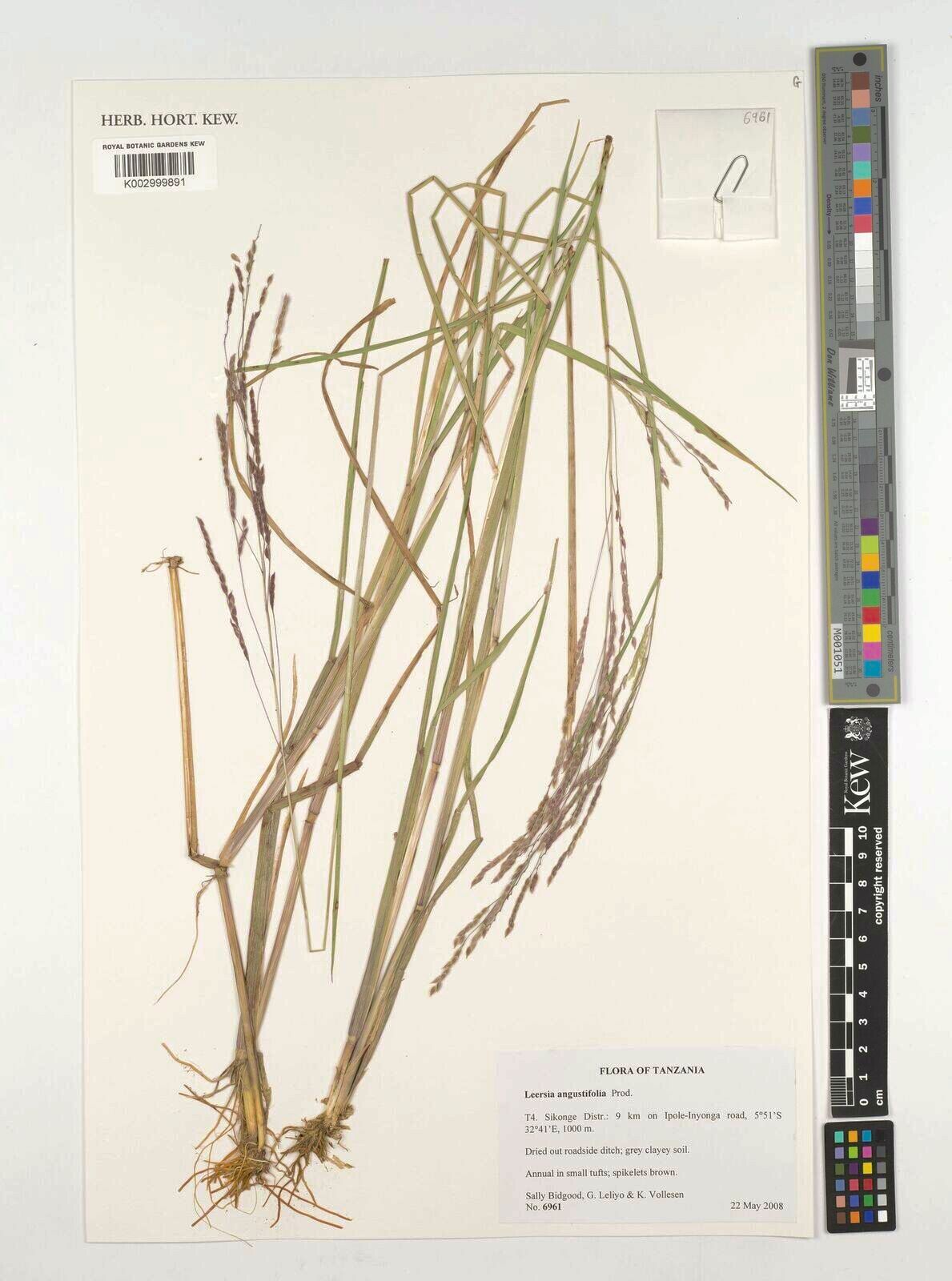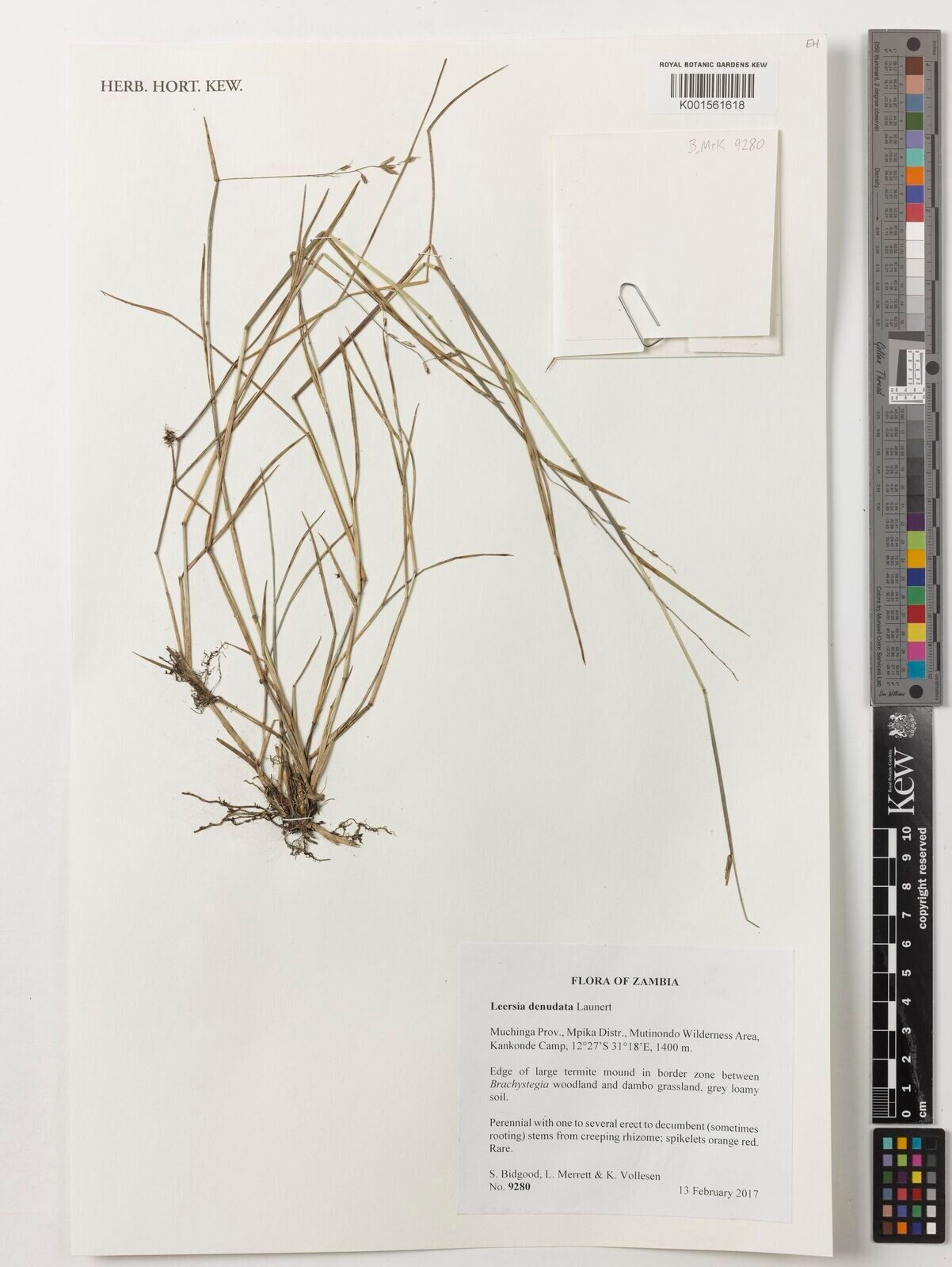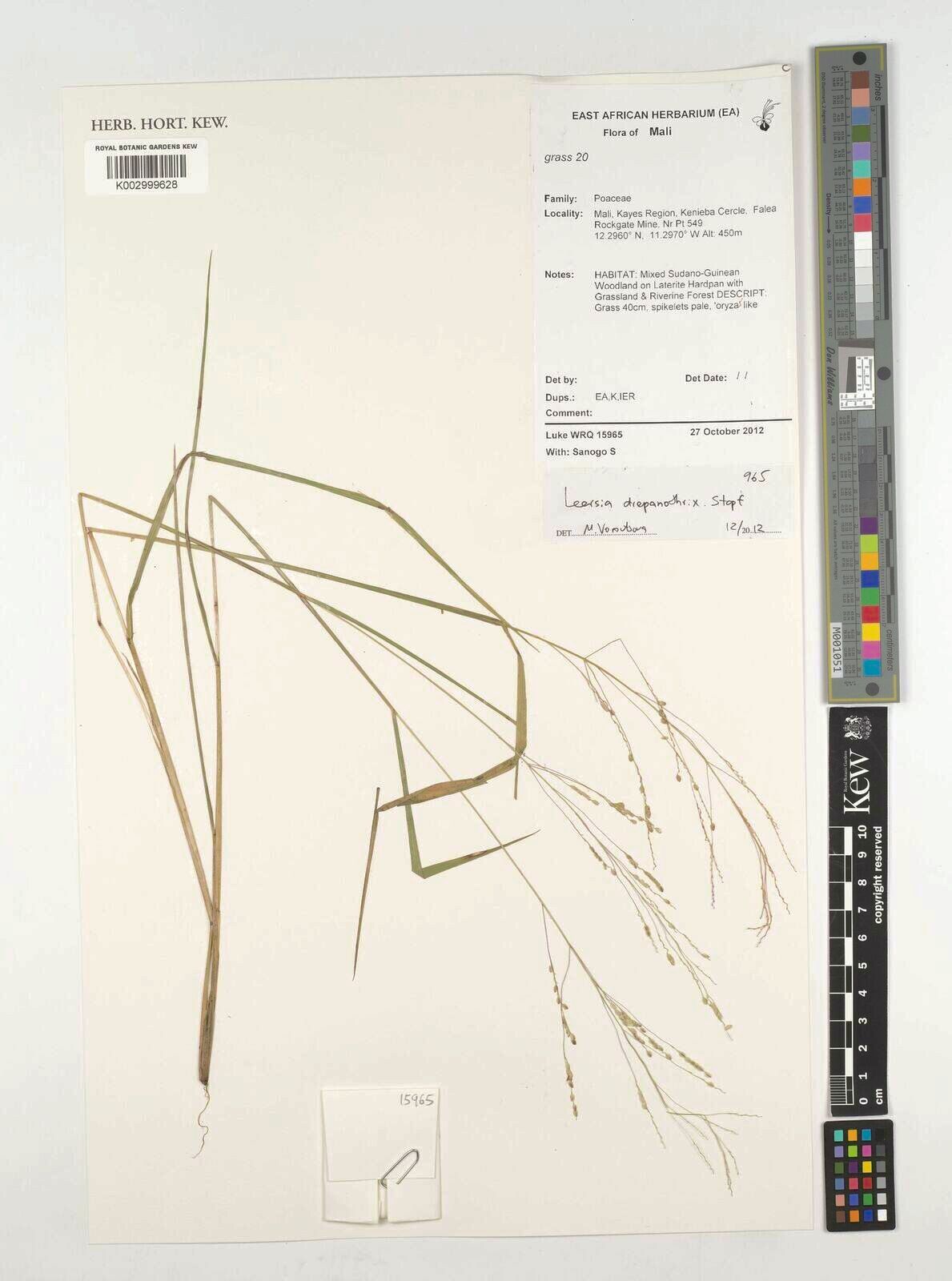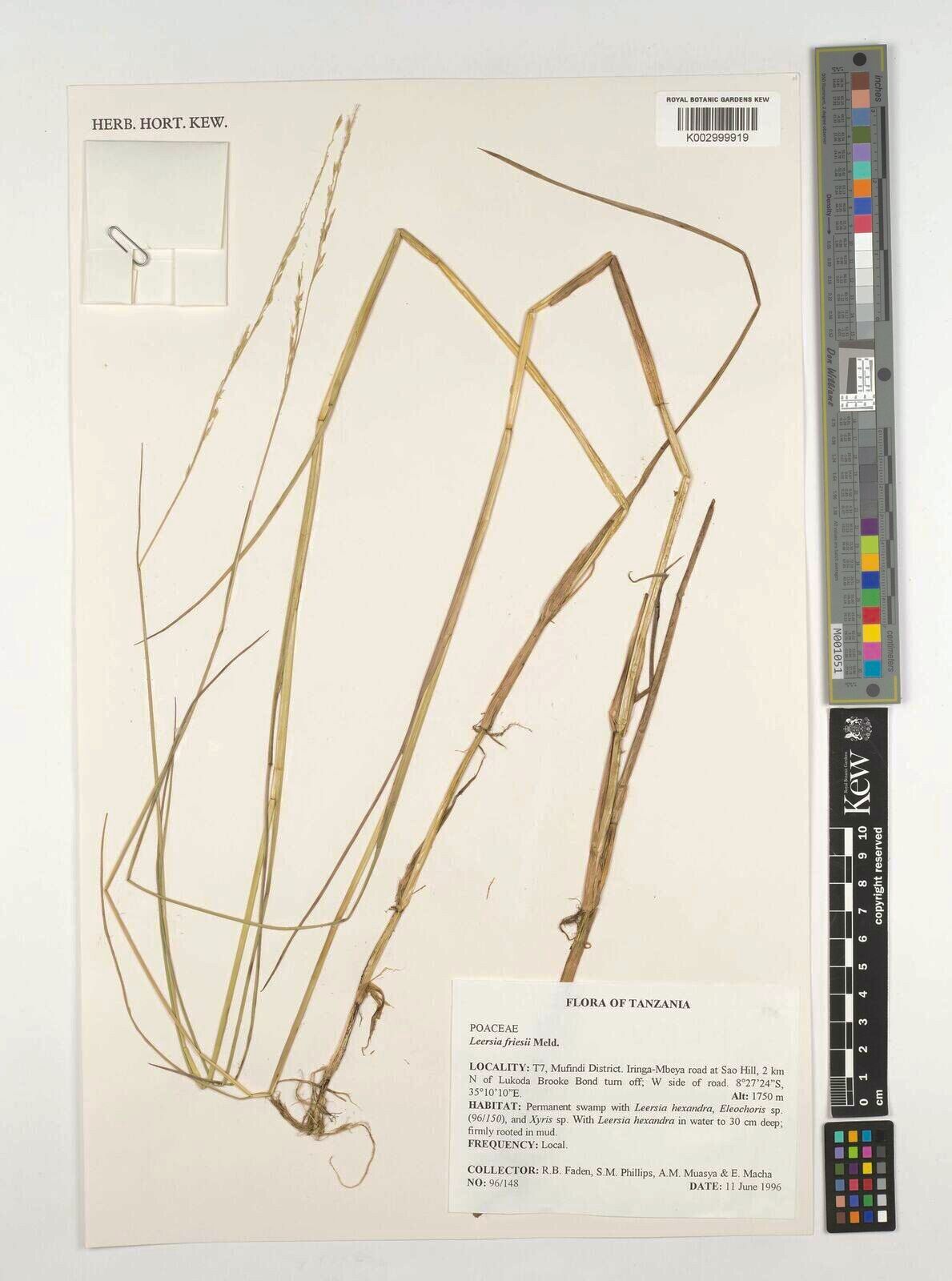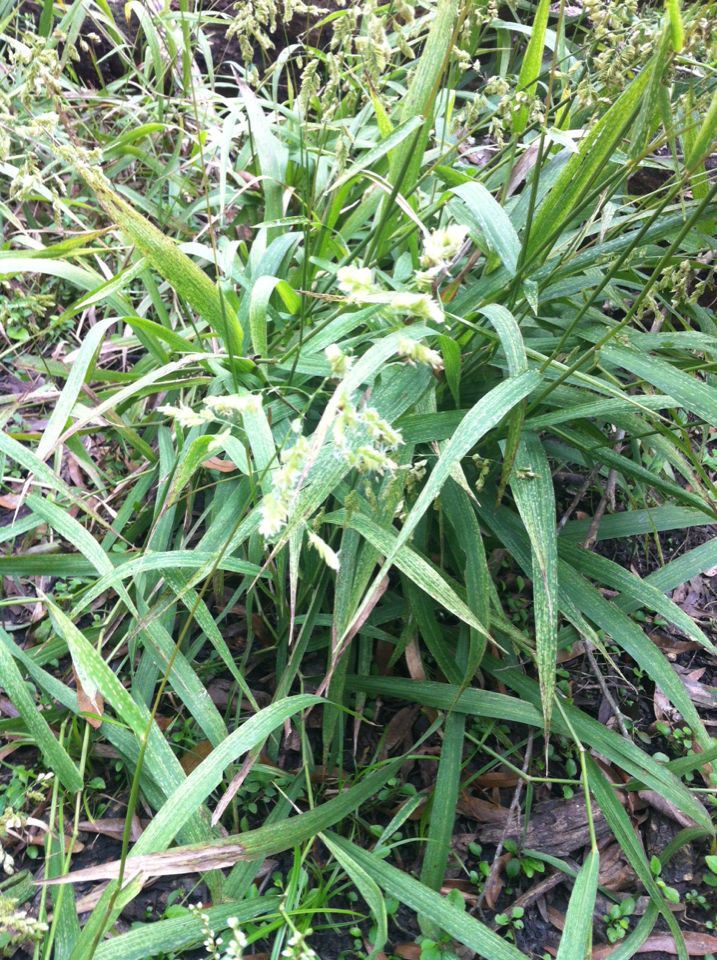
Leersia lenticularis, commonly known as Southern cutgrass, is a perennial grass species belonging to the Poaceae family. Native to North America, this plant thrives in the wetlands and marshes of the southeastern United States.
Characterized by its long, slender stems reaching up to 3 feet in height, Leersia lenticularis features narrow, pointed leaves with a distinctive bluish-green hue. The plant's inflorescences consist of small spikelets arranged in clusters at the tips of the stems.
Southern cutgrass plays a crucial role in wetland ecosystems, providing habitat for various bird, insect, and mammal species. Additionally, it helps prevent soil erosion by stabilizing riverbanks with its root system.
Historically, Native American tribes utilized Leersia lenticularis for medicinal purposes, treating ailments such as fever and diarrhea.
In summary, Leersia lenticularis is a significant plant species with unique characteristics that greatly contribute to its ecological niche in wetland ecosystems. It also holds cultural importance due to its traditional medicinal uses.
Catchflygrass is resistant to disease and is generally unlikely to develop illnesses. With regard to care, this plant is relatively low maintenance. When grown outdoors it needs only light watering, and larger plants typically do not require pruning. Smaller plants, however, should be pruned after they finish blooming. Catchflygrass is suitable for anyone with an outdoor area, such as a garden or a deck, and does not demand much care experience.
How to keep Leersia Lenticularis.
Fertilizer
Catchflygrass needs extra nutrients to encourage healthy new growth. In spring, placing a layer of compost around the plant's base can supply the nutrition it requires. Fertilizing supports vigorous growth and helps the plant withstand diseases and pests.