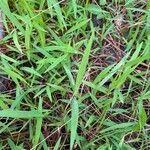
Leersia virginica
White cutgrass · Whitegrass · Virginia Cutgrass
Description
Source: leafsnapLeersia virginica, commonly known as whitegrass, white cutgrass, or Virginian cutgrass, is a perennial grass that is native to eastern North America, typically found in partially shaded low-lying wet areas. Its blooming period occurs from mid-summer to early fall. Whitegrass can be distinguished from rice cutgrass (Leersia oryzoides) by its smoother leaf sheaths, flowering heads with solitary lower branches in the flowering heads, smaller and more strongly overlapping spikelets, and short rhizomes with overlapping scales. Rice cutgrass, in contrast, has leaf sheaths round enough to cause painful scratches, flowering heads with two or more branches at the lowermost nodes, larger and barely overlapping spikelets, and more elongated rhizomes with the scales usually not overlapping.
Care Guide
💧 Water Every 7 days
Whitegrass grows best in consistently damp soils and is commonly found in wetland areas of Eastern North America. To mimic its natural, humid habitat, it needs to be watered weekly to maintain adequate soil moisture. Adapted to changes in water availability, whitegrass is resilient and can handle varying levels of hydration.
What should I do if I give too much or too little water to my Whitegrass?
This beautiful ornamental grass requires proper watering to perform well. When planted in the ground, watering issues can easily be resolved. However, in a container, excessive or inadequate water can quickly kill Whitegrass. Insufficient watering can cause the grass to stop growing, with symptoms like drooping leaves, weak seed head production, and browning. On the other hand, overwatering can result in yellow leaves with brown tips. If you suspect that your Whitegrass has been watered improperly, the first step is to determine if it's receiving too much or too little water. If it's being overwatered, immediately stop watering it and wait for the heavy soils to dry out. Once you observe new growth, test the soil's moisture and decide if more water is needed. If the grass is receiving too little water, simply give it a deep drink and monitor if it perks up. Remember, it is better to provide a long, deep watering session instead of frequent shallow waterings. This encourages Whitegrass to develop deep roots, enhancing drought resistance and reducing watering-related problems.
How frequently should I water my Whitegrass?
The watering needs of Whitegrass will vary depending on its location. Generally, it should be watered every week. In hot climates, watering once or twice a week in the summer may be necessary. In moderate climates, watering once every seven days or more may be enough. Grass in containers usually need more frequent watering than grass planted in the ground. However, the location also matters, as shaded grasses need less frequent watering than grass in the ground. Whitegrass should only be watered when the soil is dry. To determine if the soil is dry, you can press your finger a couple of inches into the soil or weigh the grass in a pot with a portable scale. Signs of insufficient water include folded and thinner blades. Despite being drought-tolerant, regular and deep waterings will result in beautiful color. Although Whitegrass can tolerate dry conditions, consistent watering is still beneficial. When first planted, Whitegrass requires more frequent watering until it establishes deep roots. For potted Whitegrass, the soil may dry out quickly, especially if the pot is in direct sunlight. Test the soil every 3 to 4 days and water only when it feels dry. Whitegrass in the ground generally requires less watering, but it depends on the soil type. Clay soil holds water for a long time and may feel dry at the surface while still retaining moisture below ground. Sandy soils that drain quickly will need more frequent watering.
What do I need to pay attention to when watering my Whitegrass in different seasons, climates, or during different stages of growth?
To determine if you are watering your grass enough, observe the rate of growth. Whitegrass tends to double in size during the hottest months of the year. If the weather is hot but the grass isn't growing vigorously, consider adjusting your watering schedule. In winter, watering once a month may suffice, but check the soil moisture by touching it. During the growth cycle (warmest months), the grass requires more water. In contrast, water needs decrease significantly during winter and cooler months. Remember to let the soil dry out completely before watering Whitegrass.
☀️ Light Partial sun
Whitegrass is indigenous to habitats like forest understories and rocky areas, where it grows in natural shade. It prefers partial sun but can tolerate full sun or full shade, reflecting its versatile and hardy nature.
🌡️ Temperature 0–37.8°C
Whitegrass is a plant adapted to temperate climates, preferring a temperature range of 32 to 100.4 °F (0 to 38 °C). Because of its natural adaptability, seasonal temperature adjustments are often unnecessary.
What is the ideal temperature range for Whitegrass?
Whitegrass, botanically known as Leersia virginica, is best suited to temperate climates, thriving in a temperature range from 32°F to 100.4°F (0°C to 38°C). Given its natural adaptability, seasonal temperature adjustments are often unnecessary. The plant exhibits strong cold resistance, indicating that special frost protection measures are generally not needed during the winter months.
What should be done if winter temperatures are expected to drop below -40°C?
In the event that winter temperatures are anticipated to fall below -40°C, it is important to provide cold protection for Whitegrass. This can be achieved by covering the plant with insulating materials such as soil or straw. Additionally, watering the plant abundantly before the first freeze of autumn is recommended to ensure the soil remains moist and enters a frozen state, which helps prevent drought and water scarcity for the plant during the winter and early spring months.
How does Whitegrass respond to low temperatures?
Whitegrass is notably cold-tolerant, flourishing best when the temperature remains above 0°C. Throughout the winter, it's crucial to maintain its environment above -35°C. However, when temperatures plummet below -40°C, one might not observe immediate changes during the winter, but there could be a reduction in sprouting or even a total absence of sprouting in the following spring. To manage this, it is advisable to remove any parts of the plant that have failed to sprout once spring arrives.
How does Whitegrass respond to high temperatures?
During the summer months, it's important to keep Whitegrass below 38°C. Exceeding temperatures of 43°C can lead to several issues such as the leaves becoming lighter in color, curling, and experiencing sunburn. In severe cases, the entire plant may wilt and dry out. To mitigate these problems, trim away the sunburned and dried-up parts of the plant. Relocating the plant to a shaded area or using a shade cloth to shield it from midday and afternoon sun can be beneficial. Additionally, watering the plant during the morning and evening hours will help maintain soil moisture.
💨 Humidity
🪴 Soil 5-7
🌱 Fertilizer
Whitegrass needs extra nutrients to encourage healthy new growth. In spring, applying compost around the base of the plant can effectively supply the nutrition it requires. Fertilizing helps support vigorous growth and improves the plant’s ability to resist diseases and pests.
🪴 Pot & Repot
✂️ Pruning
Whitegrass is a perennial grass known for its dense foliage and spreading habit. To encourage new growth and improve air circulation, prune it in early spring to remove any damaged stems. Regular maintenance is essential to manage its spread and enhance its appearance, which leads to healthier and more vigorous growth.
🌿 Propagating
🐛 Diseases & pets
☠️ Toxicity
Characteristics
- Plant Type
- Grass
- Life Cycle
- Perennial
- Genus
- Leersia
- Family
- Poaceae
- Hardiness Zone
- 2-11
- Mature Height
- 0.3 m to 1.22 m
- Mature Spread
- 30 cm
- Leaf Color
- Light Green
- Leaf Type
- Semi-evergreen
- Flower Color
- Yellow, Green
- Flower Size
- 0.10 cm to 0.15 cm
- Bloom Time
- Mid summer, Late summer, Early fall
- Planting Time
- Spring, Summer, Autumn
- Harvest Time
- Early fall, Mid fall
- Native Area
- Brazil