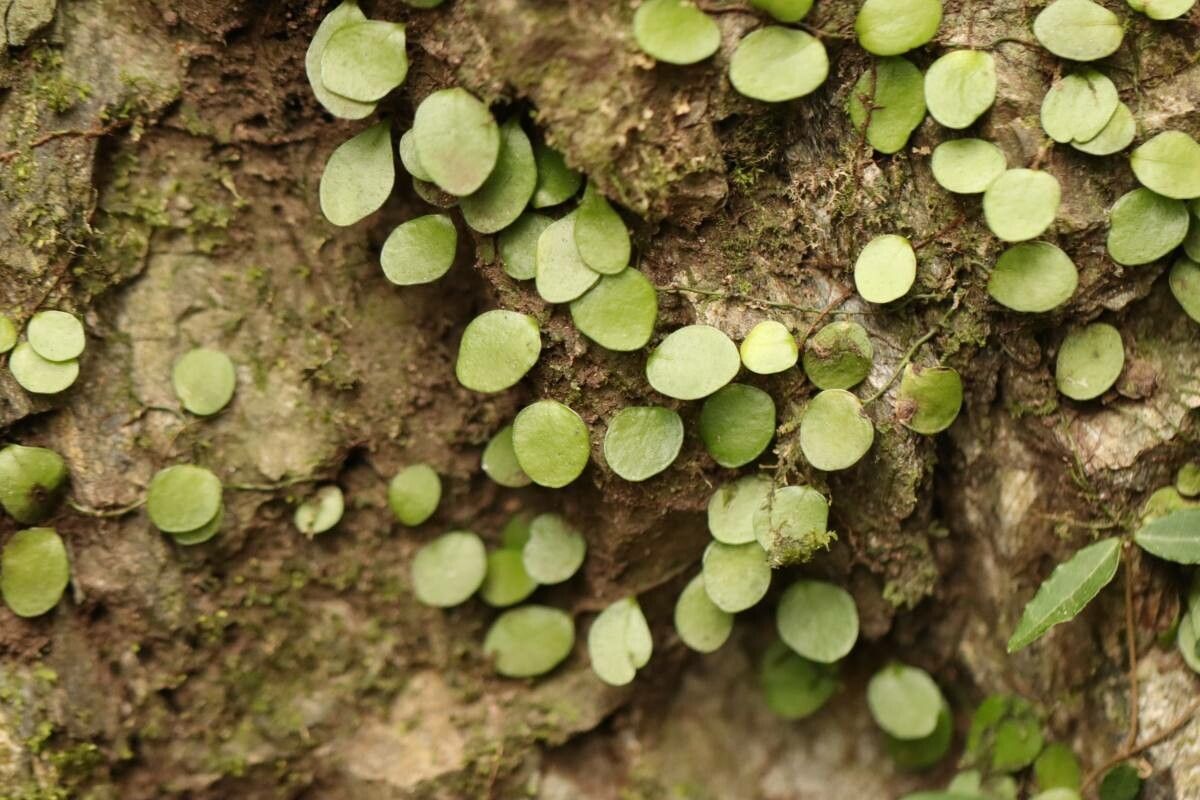
Lepisorus microphyllum, the green penny fern, is a semi-succulent species of fern in the family Polypodiaceae. It is native to parts of China, Japan, and the eastern Asian seaboard.
Japenese beard fern generally has good resistance to disease and relatively few insect pests. Its care is considered difficult, as it needs a moist environment and frequent watering. However, the roots are prone to rotting if overwatered or if the environment is not well ventilated. Japenese beard fern is suitable for people with some growing experience, since most people are able to keep it alive for a certain amount of time. However, it may have trouble thriving and its leaves can dry out and become less healthy over time.
How to keep Lemmaphyllum Microphyllum.
Light
Japanese beard fern grows best in moderate light but also shows a notable tolerance for lower-light spots, demonstrating its adaptability. Excessive light can stress the plant, while too little light may lead to wilting. It originally thrived in settings where light is often filtered, and that usually affects the plant’s form and health.
Water
The Japanese beard fern thrives in moist, shaded environments similar to its natural habitat in East Asian forests. To keep it healthy, water it weekly to maintain soil moisture, being careful not to oversaturate. It's ideal to keep the fern indoors where humidity levels can be controlled. During the growing season, ensure the soil remains evenly moist for the best growth results.
Temperature
Japanese beard fern originates from temperate regions and prefers temperatures of 68 to 100 °F (20 to 38 ℃). In cooler seasons it exhibits a slight drop in temperature as an adaptation, allowing growth to persist year-round.
Pruning
The Japanese beard fern thrives in shaded, humid environments and benefits from pruning in early spring to encourage growth. Removing dead fronds enhances air circulation and helps prevent disease. Regular maintenance preserves its aesthetic appeal, and it's important to sterilize tools to prevent infections. For more detailed care instructions, consult reliable horticultural sources.
Pot & Repot
Repot your Japanese beard fern every 2 to 3 years in early spring, using a shallow container. After repotting, make sure the fern receives bright, indirect light and is kept in a humid environment. It's important to provide proper drainage and maintain consistent moisture to support the growth of the Japanese beard fern and its delicate fronds.
Botanical profile.
- Plant Type
- Fern
- Life Cycle
- Perennial
- Genus
- Lemmaphyllum
- Family
- Polypodiaceae
- Hardiness Zone
- 9-11
- Mature Height
- 5 cm to 6 cm
- Mature Spread
- 40 cm
- Leaf Color
- Dark Green, Forest Green
- Leaf Type
- Evergreen
- Planting Time
- Spring, Summer, Autumn
Other names.
Reader questions.
What should I do if I give too much or not enough water to my Japanese beard fern?
The Japanese beard fern can be overwatered if it is left in standing water or if the planter lacks drainage holes. This can result in the roots not being able to absorb nutrients and moisture, as well as the development of fungal or bacterial diseases. Signs of overwatering include wilted and yellow leaves, drooping or soft stems, and mushiness. It's important to rule out other causes of these symptoms. On the other hand, underwatering can cause the fern to quickly turn brown and crispy. In extreme cases, it may appear completely dried up, but it may still be possible to save it if some roots are healthy. Trimming off dry and dead stems, thoroughly watering, and returning the plant to its usual spot can help revive it. Although it may take a few months, proper care can allow the fern to grow back to its original size.
Why should I add fertilizer to my Japenese beard fern?
Fertilizing is essential for Japanese beard fern because it provides the necessary nutrients for overall plant health. The extra nutrients promote healthy new growth and also strengthen the old growth, enabling the plant to better resist diseases and pests.
What kind of sunlight does the Japanese beard fern require?
To ensure the healthy growth of the Japanese beard fern, it is best to provide it with a small amount of indirect light daily. The most suitable conditions for its growth are often found under a tree canopy, where the filtered light is ideal. It is important to note that the maximum recommended daily light exposure for this plant is three hours. Exceeding this limit or exposing it to direct sunlight can result in the plant burning, drying out, and eventually dying.
What temperature is best for Japanese beard fern?
To help your tropical plants thrive, it's best to maintain a temperature range of 75℉ to 90℉ (25-32℃). While different species can tolerate temperatures outside this range, sticking within a few degrees of these limits will ensure optimal growth. However, there are extreme temperature limits to be aware of. Anything below 50℉ (10℃) or above 95℉ (35℃) can hinder growth and cause issues with the leaves and stems. Low temperatures are particularly damaging, as even a light frost can lead to the death of your tropical plants. In fact, cellular death can occur rapidly, with some species dying within 12 to 24 hours.
How do I water my Japanese beard fern correctly?
To keep your Japanese beard fern healthy, it needs consistently moist soil similar to its native environment. This means you may need to water it as frequently as every one or two days. It's crucial to prevent the soil from drying out, so when the top layer feels slightly dry, it's time to water again. Instead of just giving it a few drops of water, make sure to thoroughly soak the soil until water drains from the bottom of the pot. After the excess water has drained, discard it to avoid the pot sitting in a puddle. Following this method will help ensure that the soil never becomes too dry.
When should I fertilize my Japanese beard fern?
The feeding schedule of Japanese beard fern depends on its location. While it doesn't require a lot of nutrients, some additional feeding is needed. For outdoor plants, fertilizing once in the spring is enough. However, indoor specimens should be fed monthly from spring to summer.
Should I keep Japanese beard fern out of the sun?
To keep your Japanese beard fern healthy, it's important to avoid excessive sun exposure. This includes avoiding sudden transitions to direct sunlight. Japanese beard ferns tolerate morning and afternoon sunlight better than midday sun, which is the strongest and most likely to harm the plant quickly. If you have your Japanese beard fern indoors, don't place it where it can receive direct light from a window. Instead, choose a spot that receives a small amount of indirect light each day, similar to what it would get outdoors. It's best to find the right amount of sun exposure from the beginning, whether you're growing it indoors or outdoors. However, if you notice that your Japanese beard fern is getting too much light, promptly move its container or transplant it to a more shaded area if it's in the ground.
Does the Japanese beard fern need different temperatures during different stages of growth?
The Japanese beard fern doesn't need temperature changes to go through different growing phases, but it's important to maintain consistency. Fluctuating temperatures can slow down its growth, so it's best to keep it in a controlled environment. The optimal temperature range for this fern is between 75℉ and 90℉ (25-32℃), and it's crucial to stay above the lower limit. While temperatures above 90℉ (32℃) are not ideal, the fern can tolerate it to some extent because it is a tropical plant. However, temperatures below 50℉ (10℃), especially 40℉ (5℃), can directly damage this heat-loving plant.
What do I need to think about when watering my Japanese beard fern?
The frequency of watering your Japanese beard fern is influenced by the humidity level in the air. Higher humidity means you can water it less often. Avoid keeping the plant near heating or cooling vents as it will dry out quickly. Choose a draft-free location instead. These ferns prefer dappled and indirect sunlight with temperatures between 55-80 degrees F (13-27 degrees C). Placing them on a warm and sunny windowsill may dehydrate them quickly. Rainwater or distilled water is ideal, but tap water works fine in most places. Tap water, however, may cause brown leaf tips due to minerals and chemicals. Small pots can be problematic as they dry out quickly. Give this plant more space in the pot compared to other houseplants. Consider using a self-watering planter to maintain consistent moisture levels. This type of pot allows the soil to continually absorb water from a reservoir, benefiting the roots with a steady supply of water.
When is the best time to not fertilize my Japenese beard fern?
Avoid fertilizing in late autumn to prevent excessive growth just before winter. Additionally, refrain from fertilizing Japenese beard fern during hot and dry periods as dry soil does not effectively deliver fertilizer like moist soil does. Fertilizing at this time can promote growth, requiring more water that might not be accessible. It is advisable to apply fertilizer earlier in the season when temperatures are cooler. Lastly, be cautious of inadvertently giving the ferns a double-dose of fertilizer as they can absorb fertilizer that has been applied to neighboring plants or lawns.
What will happen if the Japanese beard fern doesn't get enough sunlight?
The Japanese beard fern doesn't need a lot of light, but it still requires a few hours of light to grow well. Without these few hours of indirect light, it may lose its color and experience stunted growth. However, the Japanese beard fern prefers shady conditions, so it is less likely to suffer from lack of sunlight compared to getting too much sunlight.
Does the Japenese beard fern require varying temperatures during different seasons?
The Japanese beard fern is not affected by different temperatures in different seasons. To ensure proper seasonal care, it is essential to maintain an optimal temperature range. Therefore, it is recommended to keep this plant indoors, allowing you to control the temperature regardless of the external climate. In terms of lighting, tropical species, including this fern, prefer partial side-level sun exposure. This means the light they receive should be dappled or filtered. Bright but indirect light is the ideal option when growing these plants indoors. Excessive direct sunlight can harm the plant's leaves and hinder its growth.