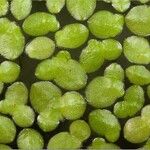
Lemna aequinoctialis
Duckweed · Lesser Duckweed · Minute duckweed · Three-nerved duckweed · Duckmeat
Description
Source: leafsnapLemna aequinoctialis, the lesser duckweed, is a tiny, floating aquatic plant found in quiet waters in tropical and subtropical regions. Fronds are generally 3-nerved, green, up to 6 mm long. Flowers are 1-ovulate, the small utricular scale open on one side. Seeds have 8–26 ribs.
Care Guide
💧 Water
Lesser duckweed thrives in slow-moving freshwater environments and prefers conditions with consistent moisture and high humidity. To recreate its natural habitat, it should be watered weekly. As an aquatic plant, lesser duckweed plays a crucial role in maintaining healthy aquatic ecosystems by oxygenating the water and providing habitat.
☀️ Light Full sun
Lesser duckweed thrives in steady, strong sunlight and comes from habitats where the sun is unobstructed. Sunlight intensity is vital for its healthy development and vigor. It tolerates both overexposure and underexposure to light, though extreme levels of either can harm the plant's health.
🌡️ Temperature 5–35°C
Lesser duckweed comes from tropical areas, where the weather is generally warm and humid. Therefore it is adapted to high heat and moisture. It does not tolerate abrupt temperature shifts and favors a steady thermal environment, so avoiding temperature swings indoors is important. It typically cannot withstand cold conditions and needs warmer temperatures to grow. If the surrounding temperature falls too far, the plant may stop growing or even die.
💨 Humidity
🪴 Soil
🌱 Fertilizer
🪴 Pot & Repot
✂️ Pruning
Lesser duckweed is a small floating aquatic plant that can quickly grow and multiply. To manage its growth, trim it regularly from early to late spring using a fine net. This practice helps prevent overcrowding, maintains water quality, and supports healthy plant growth. Be sure to dispose of the removed material properly to prevent it from spreading.
🌿 Propagating
🐛 Diseases & pets
☠️ Toxicity
Characteristics
- Plant Type
- Herb
- Life Cycle
- Perennial
- Genus
- Lemna
- Family
- Araceae
- Hardiness Zone
- 4-10
- Mature Height
- 15 cm
- Mature Spread
- 0 cm to 1 cm
- Leaf Color
- Green
- Leaf Type
- Evergreen
- Flower Color
- Yellow, Green
- Flower Size
- 0.05 cm to 0.10 cm
- Bloom Time
- All year round
- Planting Time
- Spring, Autumn
- Harvest Time
- All year round
- Native Area
- Burkina Faso, Sri Lanka, Belize, India, Mexico, Guatemala, Madagascar, Pakistan, Dominican Republic, Nigeria, Guinea-Bissau, Fiji, Uganda, Tanzania, Benin, Paraguay, Jordan, Sierra Leone, Indonesia, Haiti, Cameroon, Mozambique, Ethiopia, Suriname, Central African Republic, Malawi, Honduras, Peru, Philippines, Bangladesh, Laos, Panama, New Zealand, Chad, China, Colombia, Afghanistan, Lebanon, Italy, Japan, Togo, El Salvador, Papua New Guinea, Eswatini, Senegal, Côte d'Ivoire, Ecuador, Gambia, Costa Rica, Congo (DRC), Lesotho, Egypt, Angola, Malaysia, Namibia, Rwanda, Kenya, Niger, Jamaica, Zimbabwe, Russia, Mali, Iraq, Argentina, Cambodia, Equatorial Guinea, Liberia, Burundi, Venezuela, Brazil, Ghana, South Korea, Botswana, Congo, Nepal, South Africa, Sudan, Mauritania, Zambia, Guinea, Trinidad and Tobago, Bahamas, Spain, Bolivia, Vietnam, Myanmar, Guyana, Bhutan, Nicaragua, Singapore, Algeria, Thailand, Gabon