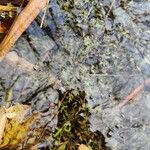
Lemna trisulca
Narrow-leaf duckweed · Ivy-leaf duckweed · Star duckweed · Ivy Duckweed · Duckweed
Description
Source: leafsnapLemna trisulca, commonly known as three-lobed duckweed, is a small aquatic plant in the Araceae family. This free-floating plant is typically found in freshwater bodies such as ponds, lakes, and slow-moving streams. It features three leaves or fronds arranged in a triangular shape, connected by a stem or stolon. The leaves of Lemna trisulca are green, oval-shaped with pointed tips, and measure about 1-2 cm in length. Small roots hang from the underside of these leaves, helping to anchor the plant to the water's surface while also absorbing nutrients. Lemna trisulca plays a vital role in aquatic ecosystems by providing food for various animals such as ducks, geese, fish, and insects. Additionally, it helps improve water quality by absorbing excess nutrients like nitrogen and phosphorus. Medicinally, Lemna trisulca has been used to treat skin diseases such as eczema, owing to its anti-inflammatory properties. It has also been traditionally used to treat digestive disorders like diarrhea. Overall, Lemna trisulca is a crucial component of freshwater ecosystems due to its ecological significance and medicinal properties, making it beneficial for both environmental health and human health.
Care Guide
💧 Water Every 7 days
Star duckweed flourishes in aquatic environments with high humidity, requiring weekly watering to replicate its natural habitat. It maintains balanced hydration, avoiding both drought and excessive moisture. Consistent water temperatures, especially in controlled indoor settings, support its continuous growth.
What's the difference between watering Star duckweed inside and outside?
There are a few reasons why watering an indoor Star duckweed more often may be necessary compared to one growing outside in the ground. Firstly, indoor settings tend to be drier due to factors such as air conditioning. The size of the pot and the soil type also determine how much water can be retained. Secondly, indoor plants rely solely on their owners for water, whereas outdoor plants can receive water from rain. If you live in an area with frequent rainfall, extra watering may not be necessary. However, during periods of low rainfall, additional watering is needed to prevent the soil from drying out completely.
How should I water my Star duckweed?
Here are some easier-to-follow instructions for supplying water to your Star duckweed: - If you have your Star duckweed in a small pot indoors, you can easily water it by taking the pot to your kitchen sink and using the faucet. Hold the pot in your hands and stop watering when the water starts running through the drainage holes. Avoid doing this in cold climates or during winter, as the cold temperature can harm the root system. - Most of the time, using your faucet to water the Star duckweed is fine. However, if your tap water has high levels of fluorine, chlorine, or salts, it's better to use rainwater or lake water. - The Star duckweed also responds well to overhead watering or watering directly into the soil. So, feel free to use a watering can, hose, or any other tool you prefer to water it.
What do I do if I give my Star duckweed too much or too little water?
If you realize that your Star duckweed doesn't have enough water, the first thing you should do is give it some water. Water it thoroughly until excess water flows out of the drainage hole in the container, or if it's growing outside, water it until the soil is completely moist. On the other hand, if your Star duckweed is getting too much water, start by reducing how often you water it. You should also consider the type of soil and container you're using for your Star duckweed. If the soil or container doesn't allow water to drain properly, your plant will likely become overwatered again. To solve this issue, switch to looser soil and/or a container with larger drainage holes or a more porous material. Additionally, check the location of your plant. If it's in a corner or poorly ventilated area, it's recommended to move it near a window or door to improve ventilation. Ensuring that your plants are in a well-ventilated location can help prevent overwatering to some extent.
How frequently should I give water to my Star duckweed?
The Star duckweed does not need constant soil moisture. It's actually better to let the soil dry out between waterings. If you're growing Star duckweeds in containers, you can tell when it's time to water by checking the dryness of the soil. If the top half of the soil is dry, it's time to add water. You can check this by feeling the soil with your fingers or using a soil moisture meter. For outdoor Star duckweed growers, watering once every other week is usually sufficient, unless it has rained recently.
How much water does my Star duckweed require?
To rehydrate the soil surrounding your Star duckweed's root, begin by allowing the top half of the soil to dry. Then, add water until the soil becomes moist again. The amount of water needed depends on the size of the container and the plant. For a small Star duckweed in a small to medium-sized container, one to two cups of water should be enough to dampen the soil adequately. If the plant is larger, increase the volume of water accordingly. You can confirm if the plant has received enough water by inserting your finger or a trowel into the soil and checking for moisture. Another option is to water until excess water drains from the bottom holes of the container.
☀️ Light Full sun
Star duckweed performs best with plentiful sunlight, which encourages vigorous, healthy growth. It originated in areas with prolonged sun exposure and is tolerant of light; however, too much or too little sunlight can hinder its growth and health. Changes in light do not substantially affect its various growth stages.
What are the sunlight requirements for Star duckweed?
Star duckweed (Lemna trisulca) requires above 6 hours of sunlight to thrive. It originates from habitats characterized by continuous exposure to sunlight, making it resilient to light. Ensuring a balance of light and shade by observing how sunlight moves through your garden can promote strong and healthy growth. However, both excessive and insufficient sunlight can interfere with its growth and health.
How can artificial lighting be used for indoor Star duckweed plants?
Indoor Star duckweed plants can benefit from artificial lighting, especially when natural sunlight is insufficient. Artificial lights, particularly LED lights customized to provide specific wavelengths, can promote faster and healthier growth. For full sun plants, 30-50W/sq ft of artificial light is recommended; partial sun plants need 20-30W/sq ft, and full shade plants require 10-20W/sq ft. The light source should be placed 12-36 inches above the plant and kept on for 8-12 hours per day to mimic natural daylight hours.
What are the common symptoms of incorrect lighting in Star duckweed?
Symptoms of incorrect lighting in Star duckweed include small and lighter-colored new leaves, leggy or sparse growth, faster leaf drop, and slower or no new growth. Excessive sunlight can cause chlorosis, sunscald, leaf curling, wilting, and leaf scorching. These symptoms indicate either a light deficiency or overexposure, affecting the plant's health and growth.
What solutions can be applied to correct lighting issues for indoor and outdoor Star duckweed plants?
To correct lighting issues for Star duckweed, gradually increase sunlight exposure for both indoor and outdoor plants. For indoors, move plants to a sunnier location or use artificial lighting for at least 8 hours daily. For outdoors, adapt plants to more sunlight gradually to avoid sunburn. Address obstructions by pruning trees or transplanting smaller plants to sunnier locations. Note that parts of the plant affected by sunlight deficiency may not recover, but new growth will be healthy with proper light exposure.
🌡️ Temperature 5–32.2°C
Star duckweed originates from habitats where temperatures generally range from 41 to 89.6°F (5 to 32 ℃). It prefers moderate climates and adapts well to seasonal changes, though temperatures should be monitored to remain within its favored range.
What is the native environment of Star duckweed?
Star duckweed, scientifically known as Lemna trisulca, is native to environments that experience a temperature range of 41 to 89.6°F (5 to 32°C). It prefers moderate climates and can adjust well to seasonal shifts. Ensuring that the temperature stays within its preferred range is crucial for its proper growth. Despite its strong cold resistance, during extremely cold winters where temperatures might drop below -30°C, protective measures such as covering the plant with soil or straw are recommended.
How should Star duckweed be cared for in winter?
Star duckweed possesses strong resistance to cold, which means special frost protection measures are usually not necessary. However, in anticipation of winter temperatures dropping below -30°C, it's important to provide cold protection by covering the plant with materials like soil or straw. Watering the plant abundantly before the first freeze in autumn is also advisable to ensure the soil remains moist and enters a frozen state. This precaution helps prevent drought and water scarcity for the plant during the winter and early spring period.
How does Star duckweed react to low temperatures?
Star duckweed is cold-tolerant and generally thrives best when the temperature stays above 5°C. For winter periods, keeping the temperature above -25°C is ideal. If temperatures fall below -30°C, there might not be immediate noticeable changes during winter; however, issues such as a decrease in sprouting or a complete lack of sprouting might occur by springtime. As a solution, it is recommended to remove any parts of the plant that have failed to sprout in spring.
What are the effects of high temperatures on Star duckweed, and how can they be mitigated?
During the summer, it's crucial to maintain temperatures below 32°C for Star duckweed. Exceeding 35°C can cause the leaves to lighten in color, become prone to curling, and be susceptible to sunburn. In severe cases, the plant may wilt and dry up. To mitigate these issues, trim away the sunburned and dried parts. Additionally, relocating the plant to a shaded area or using a shade cloth to protect it from the midday and afternoon sun can be beneficial. Ensuring the soil remains moist by watering the plant in the morning and evening is also recommended.
💨 Humidity high (>60%)
This plant needs special care because it loves high humidity levels of 60-80% or more. The best way to achieve this is by placing a humidifier near the plant. Daily misting is also essential! Make sure the room has good ventilation.
🪴 Soil
🌱 Fertilizer
For star duckweed, apply balanced fertilizers every two weeks or once a month during the spring and summer. In the winter, reduce the frequency of fertilization. Use a quarter-strength aquatic plant fertilizer and regularly check nutrient levels to maintain good water quality. By adapting your fertilization schedule to the seasons, you can support the growth of star duckweed while also preserving its ecosystem.
Why is it necessary to fertilize my Star duckweed?
The main structure of the Star duckweed consists mainly of its leaves. Fertilizing it is one of the most effective ways to ensure that the leaves both look great and function well. By properly fertilizing, you can help the Star duckweed maintain consistent color and a healthy texture in its leaves. Additionally, fertilization benefits the plant below the soil's surface by promoting the growth of new roots and maintaining the existing root system. This not only keeps the plant healthy in the present, but also improves its ability to absorb nutrients from the soil in the future.
When should I fertilize my Star duckweed for best results?
If you grow your Star duckweed outdoors, it will start growing new leaves in early spring as a signal to fertilize. Generally, one application of fertilizer is enough for the duckweed to thrive. But if you want maximum growth, you can fertilize it multiple times in the spring and early summer, with each feeding about once every month to a month and a half.
When is the right time to not add fertilizer to my Star duckweed?
During late fall and winter, your Star duckweed goes into a dormant phase and stops producing new growth. It is best to avoid fertilizing it during this time. In spring and summer, if you choose to fertilize, start reducing the rate as summer approaches, since the growth rate of your Star duckweed will also decrease. In general, it is not advisable to fertilize your Star duckweed during extremely hot weather or when the soil is very dry, as this can cause stress and premature death for the plant.
What kind of fertilizer does my Star duckweed require?
Choosing the best fertilizer for a Star duckweed is actually quite simple. These plants do well with a general-purpose garden fertilizer that has equal amounts of nitrogen, phosphorus, and potassium. A fertilizer with a ratio of 10-10-10 or something similar will work effectively. Avoid fertilizers with high nitrogen content if you're unsure. The top choices for Star duckweed fertilizer typically come in granular form and are slow-release, making them easy to apply to the soil. Additionally, feeding your Star duckweed with organic soil amendment like compost can be beneficial.
How can I make my Star duckweed grow better?
To ensure proper growth of your Star duckweed, wait until its first leaves emerge from the soil in early spring. Once you spot this sign, apply a balanced slow-release fertilizer to the soil around the base of the plant. If needed, repeat this process later in the season. Remember to apply the fertilizer to the soil rather than directly to the plant, which may require moving some leaves aside. Additionally, it is beneficial to water your Star duckweed before and after fertilizing.
🪴 Pot & Repot
✂️ Pruning
Star duckweed is a floating aquatic plant known for its slender, translucent fronds. To encourage healthy growth and avoid overcrowding, it's important to prune from early to late spring. Regular pruning helps enhance water circulation and allows more light to penetrate the water. Be sure to use clean, sharp tools to reduce the risk of damage and disease. For more detailed information, consult horticultural resources or experts.
🌿 Propagating
🐛 Diseases & pets
☠️ Toxicity
Characteristics
- Plant Type
- Herb
- Life Cycle
- Perennial
- Genus
- Lemna
- Family
- Araceae
- Hardiness Zone
- 4-8
- Mature Height
- 9 cm
- Mature Spread
- 1 cm to 1 cm
- Leaf Color
- Light Green, Pale Green
- Leaf Type
- Evergreen
- Flower Size
- 0.10 cm
- Bloom Time
- Late spring, Summer, Early fall
- Planting Time
- Spring, Summer, Autumn
- Harvest Time
- Summer, Early fall, Mid fall
- Native Area
- Turkey, Sweden, Malaysia, India, Austria, Mexico, Slovakia, Pakistan, Slovenia, Morocco, Croatia, Kenya, Uganda, Tanzania, Belarus, Uzbekistan, Russia, Iraq, Germany, Indonesia, Estonia, Ethiopia, Romania, Latvia, Belgium, Portugal, Netherlands, France, Tajikistan, Czech Republic, Philippines, Bulgaria, Armenia, Poland, Greece, Ukraine, Serbia, Lebanon, Lithuania, Norway, China, Afghanistan, Kyrgyzstan, Kazakhstan, Italy, Spain, Switzerland, Denmark, Myanmar, Mongolia, Japan, Finland, Iran, Albania, Ireland, United Kingdom, Hungary, Algeria, Azerbaijan, Congo (DRC)