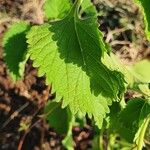
Leonotis nepetifolia
Klipp Dagga · Lion's Ear · Lion's Tail · Christmas candlestick · Ball-bush
Description
Source: leafsnapLeonotis nepetifolia, (also known as klip dagga, Christmas candlestick, or lion's ear), is a species of plant in the genus Leonotis and the family Lamiaceae (mint). It is native to tropical Africa and southern India. It can also be found growing abundantly in much of Latin America, the West Indies, and the Southeastern United States. It grows to a height of 3 metres (9 ft 10 in) and has whorls of striking lipped flowers, that are most commonly orange, but can vary to red, white, and purple. It has drooping dark green, very soft serrated leaves that can grow up to 10 centimetres (4 in) wide. Sunbirds and ants are attracted to the flowers. It has been found growing on road sides, rubbish heaps or waste land.L. nepetifolia is considered an invasive plant in Australia, Florida, and Hawaii, though its tendency to grow in disturbed areas led researchers in Hawaii to conclude it's not likely to be an ecological threat. VarietiesLeonotis nepetifolia var. africana (P.Beauv.) J.K.Morton - Indian Subcontinent, much of Africa (light orange flowers) Leonotis nepetifolia var. nepetifolia - much of Africa (dark solid orange flowers) Leonotis nepetifolia var. alba - (albino/white flowers)
Care Guide
💧 Water
Klip dagga is a plant native to tropical regions, and it thrives in high humidity with consistent moisture. For optimal health, it should be watered weekly, although it can withstand short periods of dryness. When grown outdoors, it benefits from rainwater during its active growing season.
How much should I water my Klip dagga plant?
Klip dagga, a plant that needs regular watering throughout the growing season, requires specific care depending on whether it is planted in the ground or in a pot. For ground-planted Klip dagga, watering once a week is recommended in the spring, but as the weather gets warmer, increasing the watering rate to two to three times per week may be necessary. However, exceeding this rate can be harmful to the plant, so be cautious. It is important to keep the soil consistently moist but not overly wet. On the other hand, potted Klip dagga requires more frequent watering due to the heat and faster drying of the soil. In most cases, watering a container-grown Klip dagga a few times per week is advised, compared to just once per week for ground-planted Klip dagga.
How do I know if I'm giving enough water to my Klip dagga plant?
It may be challenging to find the right balance when watering your Klip dagga plant. On one hand, these plants have deep roots that should be watered weekly to keep the soil moist. However, Klip dagga plants are highly prone to root rot, which can cause browning. While underwatering is less of a concern as these plants can survive without additional watering for some time, if you wait too long, the plant may begin to wilt and leaves may become dry.
What's the difference when watering Klip dagga inside and outside?
There are a few reasons why it's more common to grow Klip dagga plants outdoors rather than indoors. Firstly, these plants tend to grow quite tall. Secondly, they need more sunlight on a daily basis than most indoor growing spaces can offer. If you do manage to create a suitable indoor growing environment, you might find that you need to water your Klip dagga plants more frequently compared to growing them outdoors. This is partly because indoor spaces are typically drier due to HVAC units, and soil in containers can dry out faster than soil in the ground.
How should I water my Klip dagga plant?
To water Klip dagga, you have several options for watering tools such as a garden hose with a spray nozzle or a watering can. Klip dagga is not very particular about the type of water it receives, so rainwater, tap water, or filtered water will all suffice. It's important to avoid watering this plant from above as it can harm the leaves and flowers and even cause diseases. Instead, using a drip irrigation system is often the best method as it provides even and direct watering to the soil. If you have a container-grown Klip dagga, you can use a cup, watering can, or tap to directly water the soil.
What should I do if I give my Klip dagga plant too much or too little water?
One way to address underwatering Klip dagga is by watering it more regularly when you notice it lacks moisture. However, overwatering can be a more serious problem if not detected early. Overwatering can lead to diseases and the eventual decline and death of the plant. To prevent this, it is important to choose a suitable location for growing Klip dagga - one that receives ample sunlight to dry the soil and has good drainage to prevent waterlogging. If you overwater Klip dagga in a pot, you may need to transfer it to a new pot with better drainage. During the repotting process, ensure loose soil is added and use a pot that allows efficient drainage.
☀️ Light Full sun
Klip dagga flourishes in areas with abundant sunshine, so it requires plenty of sunlight for optimal growth. In its naturally sun-drenched habitat, a lack of adequate light can harm its health, while too much sun typically does not cause problems.
What are the sunlight requirements for Klip dagga?
Klip dagga, or Leonotis nepetifolia, thrives best in environments that receive ample sunlight. The plant requires full sun, which means it needs more than 6 hours of direct sunlight per day, to grow optimally. However, it can also tolerate partial sun conditions, which involve about 3-6 hours of sunlight daily. It's important to observe the movement of sunlight through your garden to choose the best spots that offer a perfect balance of light and shade, ensuring the health and happiness of your plants. In its natural habitat, which is also sun-drenched, Klip dagga's health may be compromised if it doesn't receive enough light, although it generally tolerates excessive sunlight well.
How can artificial lighting benefit Klip dagga grown indoors?
When natural sunlight is insufficient, especially during winter or in less sunny indoor spaces, artificial lighting can provide a vital solution for the optimal growth of Klip dagga. Adequate lighting encourages faster, healthier plant growth. LED lights are popular for indoor plant lighting due to their ability to be customized to deliver specific wavelengths needed by plants. Full sun plants require 30-50W/sq ft, partial sun plants 20-30W/sq ft, and full shade plants 10-20W/sq ft of artificial light. The artificial light source should be placed 12-36 inches above the plant to mimic natural sunlight conditions, and most plants will need 8-12 hours of light per day.
What symptoms indicate poor lighting conditions for Klip dagga?
When Klip dagga is grown under inadequate lighting conditions, several symptoms might appear as indicators. These include small, new leaves growing smaller than the previous ones, leggy or sparse growth where the spaces between leaves or stems elongate giving the plant a stretched-out appearance, early leaf drop to conserve resources, delayed or halted growth as the plant enters survival mode, leaves developing irregular color patterns or appearing pale due to insufficient chlorophyll, and symptoms of excessive sunlight exposure such as chlorosis, sunscald, leaf curling, wilting, and leaf scorching. These symptoms reflect the plant's struggle with light conditions, either too little or too much.
What solutions can improve light conditions for Klip dagga?
To ensure Klip dagga receives optimal light, gradually move plants to sunnier locations each week until they receive at least 6 hours of direct sunlight daily. For indoor plants, use a south-facing window, keep curtains open during the day, or consider artificial light if the plant is large or not easily movable. Outdoor plants should also be moved gradually to avoid sunburn. Minimizing obstructions like pruning obstructive branches helps increase sunlight exposure. For smaller plants, transplanting during their dormant period to a location with ample sunlight and good drainage is recommended. Although parts of the plant affected by insufficient light may not recover, new growth should be healthy after improving light conditions.
🌡️ Temperature 10–35°C
Klip dagga is native to tropical and subtropical areas and generally grows best in temperatures of 68 to 95 °F (20 to 35 ℃). It is recommended to keep klip dagga within this temperature band, altering conditions as the seasons change.
What is the native environment of Klip dagga?
Klip dagga, scientifically known as Leonotis nepetifolia, is native to the tropics and subtropics. It thrives in environments where temperatures range between 68 to 95 °F (20 to 35 °C). To ensure the healthy growth of klip dagga, it is advisable to maintain the temperature within this range throughout the year, adjusting care as necessary with the changing seasons.
How should Klip dagga be protected during winter?
Klip dagga possesses a strong resistance to cold, typically not requiring special frost protection measures during winter. However, in conditions where winter temperatures are expected to fall below -25°C, it becomes important to protect the plant from the cold. This can be achieved by covering the plant with materials such as soil or straw to insulate it. Additionally, it is recommended to water the plant abundantly before the first freeze in autumn to ensure the soil stays moist and does not enter a frozen state dry. This approach helps prevent drought and water scarcity for the plant during the cold months and early spring.
What are the symptoms and solutions for Klip dagga exposed to low temperatures?
Klip dagga is cold-tolerant and ideally should be kept at temperatures above 20°C. In winter, ensuring the temperature stays above 0°C is vital. Should temperatures dip below -25°C, the plant may not show noticeable changes initially but could experience a decrease in sprouting or completely fail to sprout by springtime. The solution for addressing this issue in spring involves removing any parts of the plant that have failed to sprout.
How does high temperature affect Klip dagga and what are the solutions?
During the summer months, it is advisable to keep Klip dagga's temperature below 35°C. Exposure to temperatures above 38°C can cause the plant's leaves to lighten in color, become prone to curling, and susceptible to sunburn. In severe cases, the plant may wilt and dry out completely. To mitigate these effects, trim away the sunburned and dried parts of the plant. Relocate the plant to a shaded area, especially from the midday and afternoon sun, or use a shade cloth. Ensuring the plant is watered in the morning and evening will help keep the soil adequately moist.
💨 Humidity
🪴 Soil 6-7
🌱 Fertilizer
When most of Klip dagga's flowers have opened fully, resume fertilizing. Around the time the blooms are at their peak, begin feeding every three to four weeks, weather permitting. Then, once Klip dagga starts producing fewer new flowers, stop fertilizing; there's no need to feed the plant when it can no longer produce more blooms.
🪴 Pot & Repot Every 12 months
✂️ Pruning
Klip dagga is known for its height and bright orange flowers. To maintain its health and appearance, prune the plant in early to late spring. Remove any dead stems and trim long branches to promote bushiness and improve air circulation. Be sure to use sterilized tools for clean cuts, which will help enhance the plant's health and ornamental appeal.
🌿 Propagating
🐛 Diseases & pets
☠️ Toxicity
Characteristics
- Plant Type
- Herb
- Life Cycle
- Annual, Perennial
- Genus
- Leonotis
- Family
- Lamiaceae
- Hardiness Zone
- 6-9
- Mature Height
- 3.05 m
- Mature Spread
- 1.22 m to 1.83 m
- Leaf Color
- Green, Blue
- Leaf Type
- Evergreen
- Flower Color
- Orange
- Flower Size
- 2.03 cm to 3.05 cm
- Bloom Time
- Summer, Early fall, Mid fall
- Planting Time
- Spring
- Harvest Time
- Mid summer, Late summer, Fall
- Native Area
- Burkina Faso, Angola, Namibia, Madagascar, Rwanda, Pakistan, Eritrea, Nigeria, Kenya, Niger, Uganda, Tanzania, Zimbabwe, Mali, Guinea-Bissau, Benin, Sierra Leone, Cameroon, Liberia, Mozambique, Burundi, Ghana, Ethiopia, Botswana, Congo, Central African Republic, Malawi, South Africa, Zambia, Sudan, Guinea, Chad, Togo, Senegal, Eswatini, Côte d'Ivoire, Gambia, Congo (DRC), Gabon