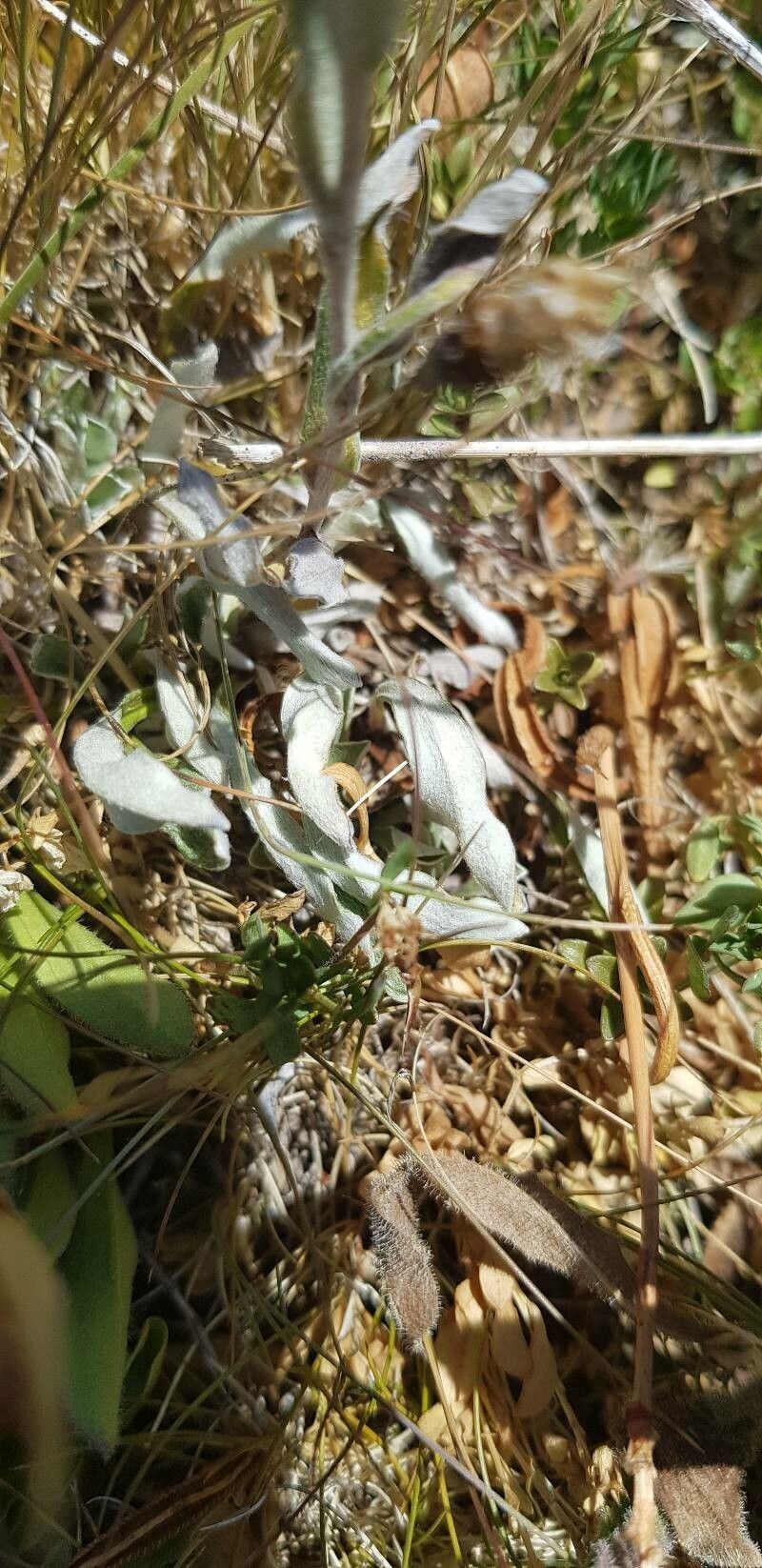
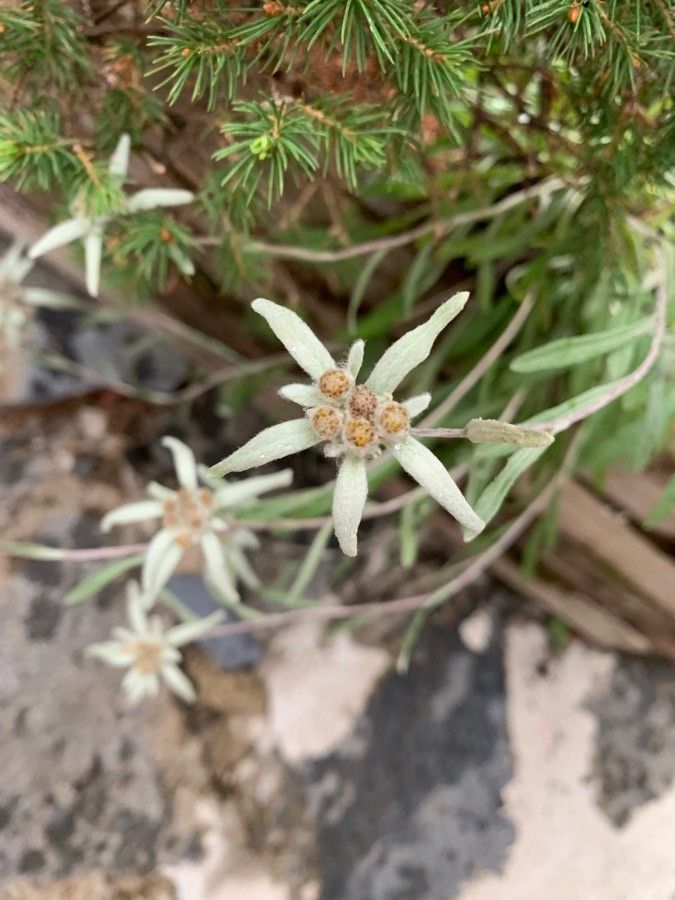
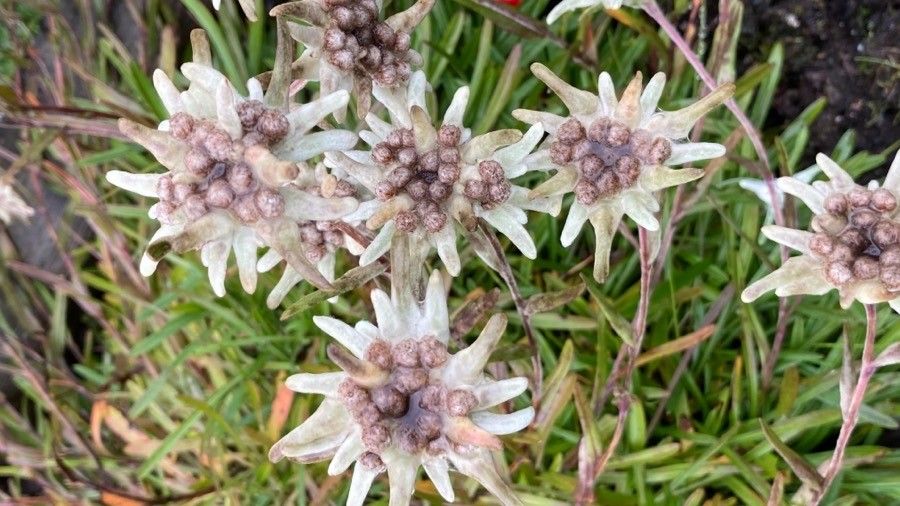
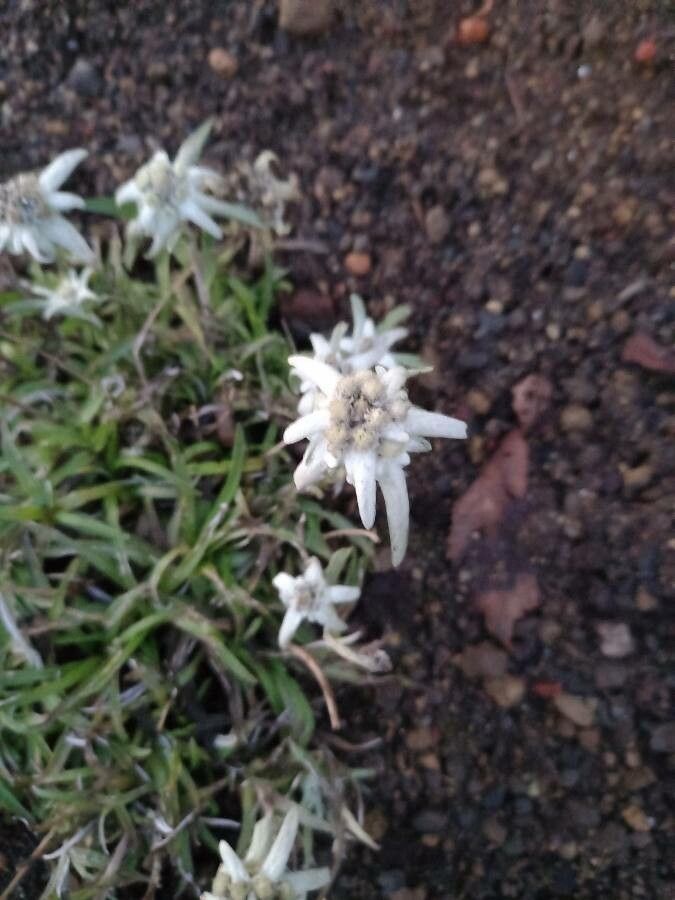
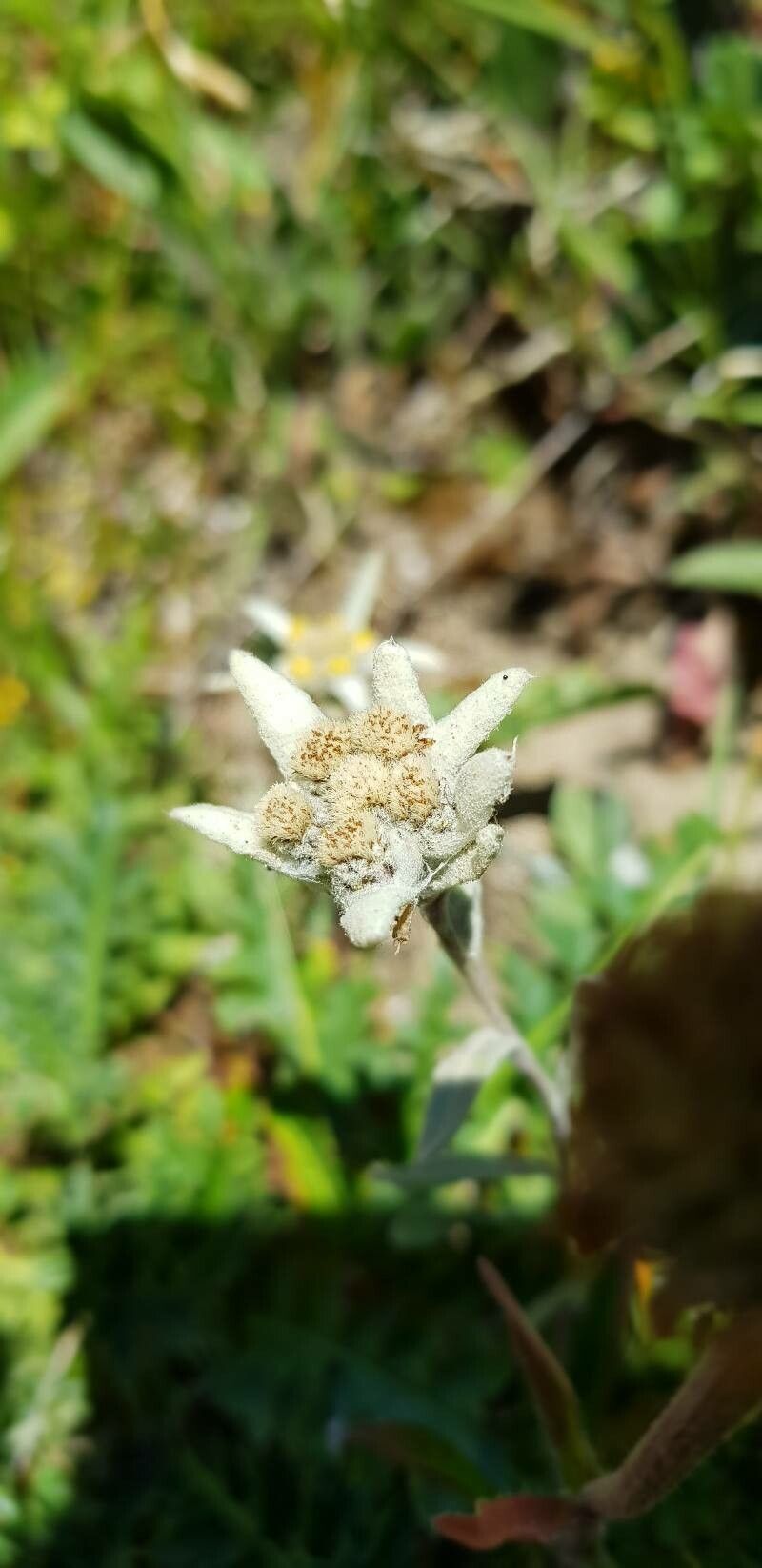
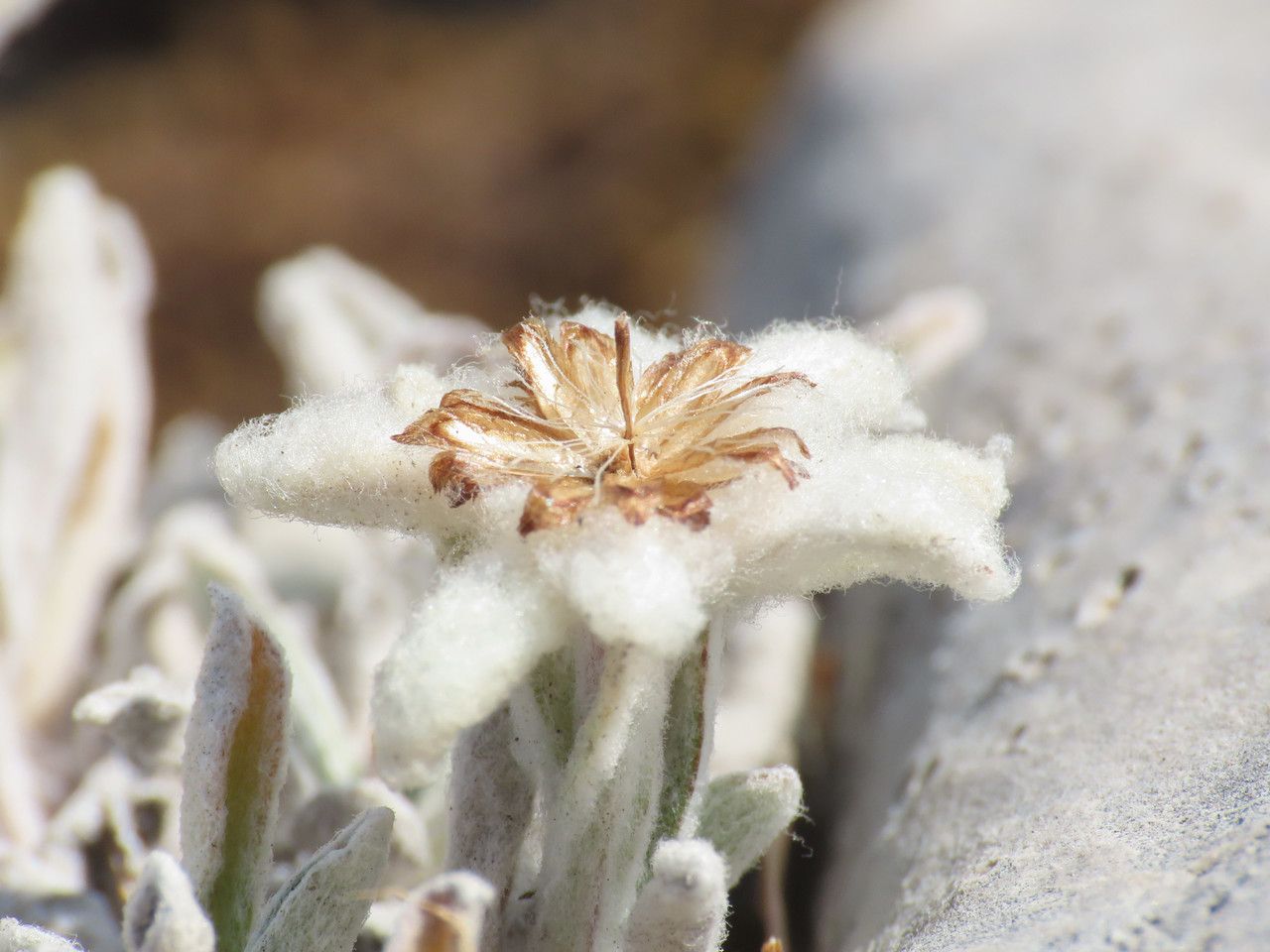
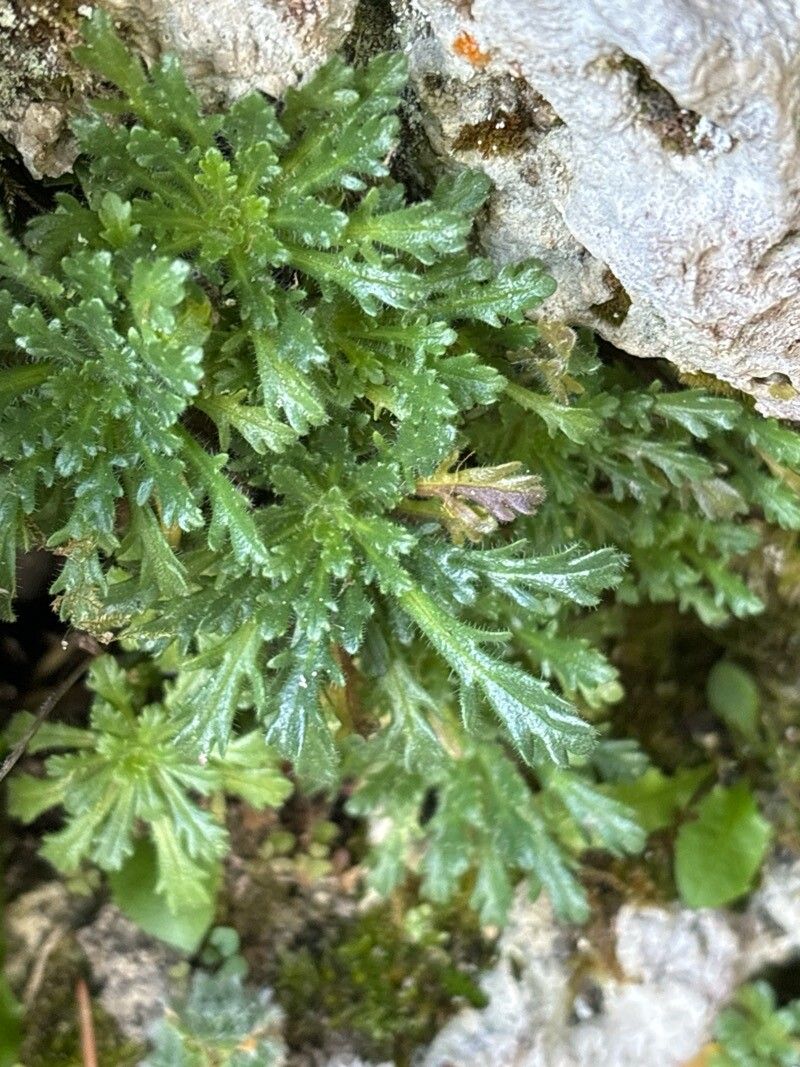
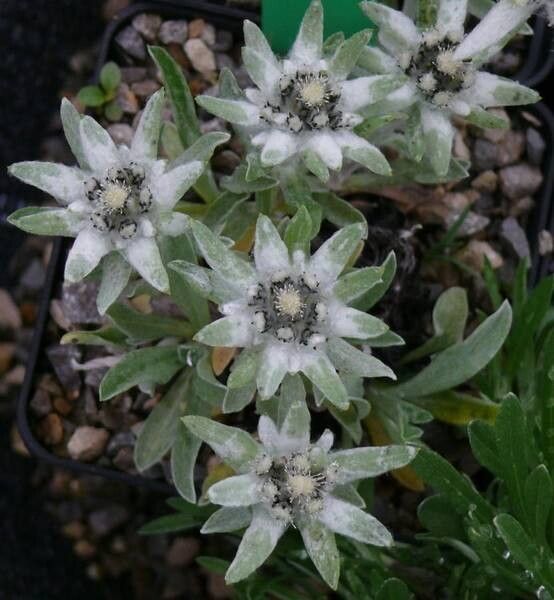
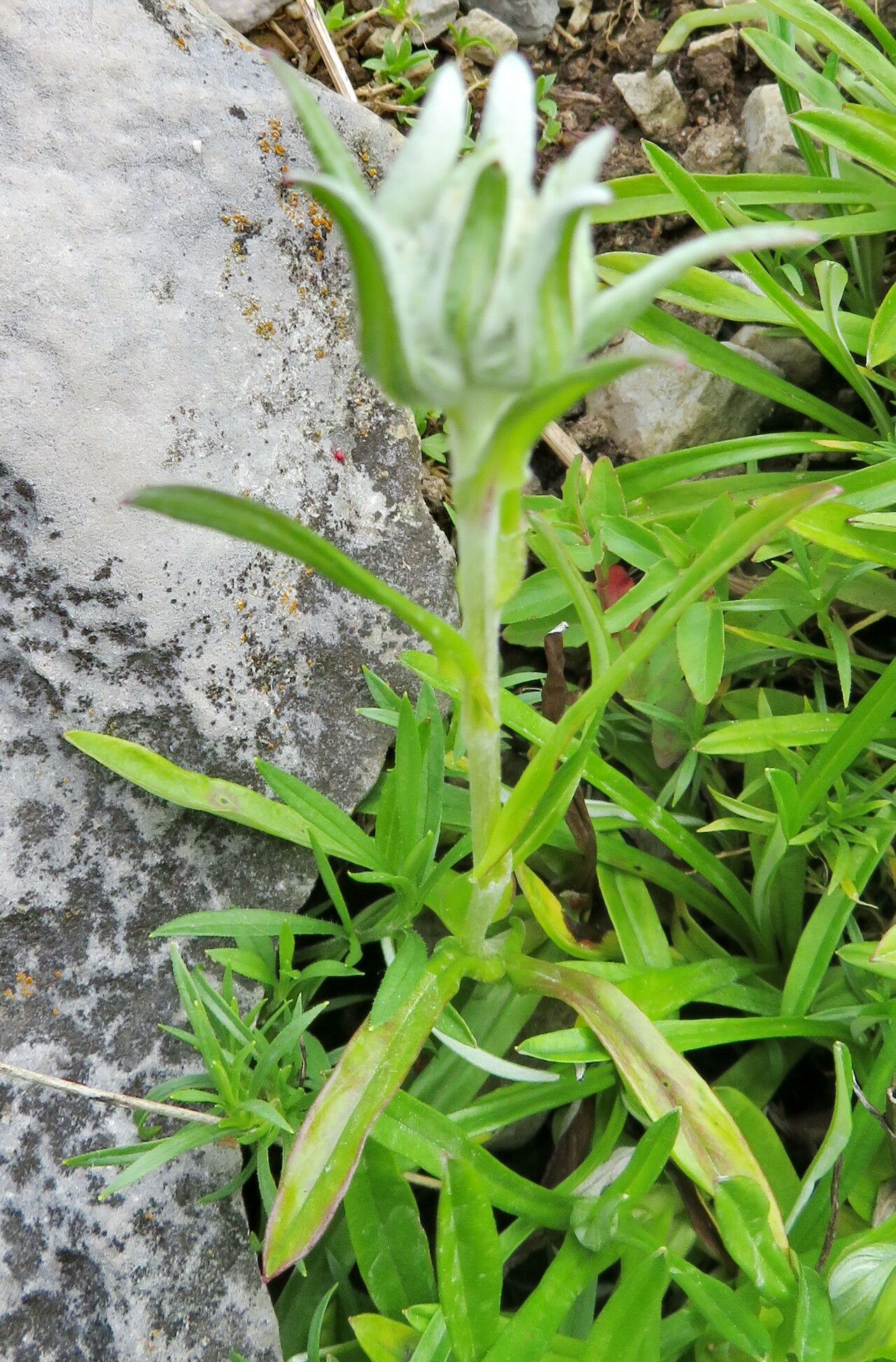
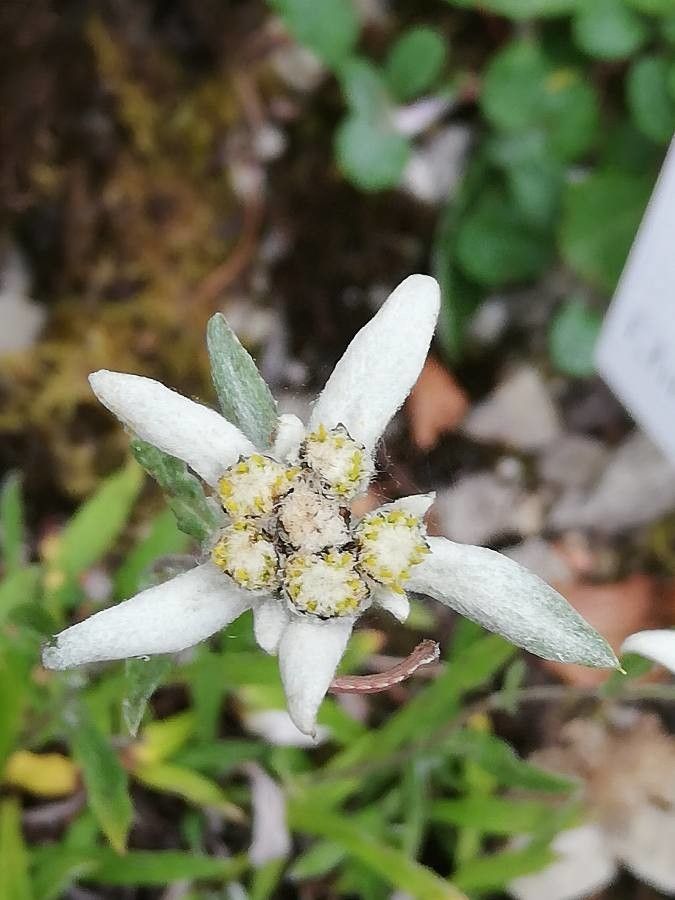
Leontopodium nivale, commonly called edelweiss (German: Alpen-Edelweiß, English pronunciation (listen)), is a mountain flower belonging to the daisy or sunflower family Asteraceae. The plant prefers rocky limestone places at about 1,800–3,000 metres (5,900–9,800 ft) altitude. It is non-toxic and has been used in traditional medicine as a remedy against abdominal and respiratory diseases. Its leaves and flowers are covered with dense hairs, which appear to protect the plant from cold, aridity, and ultraviolet radiation. It is a scarce, short-lived flower found in remote mountain areas and has been used as a symbol for alpinism, for rugged beauty and purity associated with the Alps and Carpathians. It is a national symbol, especially of Romania, Austria, Slovenia, Switzerland, and Italy. According to folk tradition, giving this flower to a loved one is a promise of dedication.
Edelweiss has strong disease resistance and is usually not affected by illnesses. Nevertheless, it can be vulnerable to pests and diseases present in its surroundings. These infections tend to be mild. For care, this plant needs a moderate amount of maintenance. It should be pruned regularly to keep a good appearance and encourage healthy growth. Fertilizing can also aid in promoting blooms. Edelweiss is suitable for someone with outdoor space, such as a garden or patio, and does not demand extensive care experience. It may need more attention when grown indoors.
How to keep Leontopodium Nivale.
Light
Edelweiss does well under a sky that pours abundant sunlight, which helps it grow healthily. Native to a place bathed in light, this plant is accustomed to ample sunshine. However, both too much and too little light can negatively affect its growth and vigor.
Water
Edelweiss is well-adapted to alpine conditions, making it drought-resistant and ideal for well-drained soil. It typically requires infrequent watering, about once a week. To successfully grow edelweiss, recreate its natural high-altitude environment by maintaining lightly moist soil during the growing season, but be cautious not to overwater, as it thrives in cool outdoor temperatures.
Temperature
Edelweiss is native to cold and temperate regions and requires temperatures between 41 and 89.6°F (5 and 32°C). In summer, make sure the temperature does not exceed 89.6°F (32°C). For winter, move the plant to locations where 41°F (5°C) is maintained.
Fertilizer
For Edelweiss, the ideal time to apply fertilizer is in early spring as the flowers start to form. The proper fertilizer promotes improved blooms and helps Edelweiss produce attractive flowers. Fertilizing in early spring ensures good flowers during the season and provides energy for dormant growth phases.
Pruning
Edelweiss, known for its woolly white star-shaped flowers, thrives with careful pruning. To maintain its health and beauty, remove dead stems and lightly shape the plant from late winter to early spring while it is dormant. This process improves air circulation, prevents disease, and encourages strong blooms, ensuring the plant remains both vigorous and visually appealing.
Botanical profile.
- Plant Type
- Herb
- Life Cycle
- Perennial
- Genus
- Leontopodium
- Family
- Asteraceae
- Hardiness Zone
- 4-7
- Mature Height
- 5 cm to 20 cm
- Mature Spread
- 20 cm
- Leaf Color
- Gray, Silver
- Leaf Type
- Evergreen
- Flower Color
- White, Yellow
- Flower Size
- 2.54 cm
- Bloom Time
- Early summer, Mid summer
- Planting Time
- Spring
- Harvest Time
- Late summer, Early fall
Other names.
Reader questions.
How do I water my Edelweiss plant throughout the different seasons?
The Edelweiss has different water needs depending on the season. In the hottest months of the year, especially during the height of summer, you will need to water this plant more frequently, potentially even more than once per week, if the soil dries out quickly. Conversely, during the winter months, the plant enters a dormant phase and requires much less water than usual. In fact, you may not need to water it at all during winter. However, if you choose to water in winter, it should be done no more than once a month to avoid the risk of disease contraction.
How many hours of sunlight does Edelweiss need every day to grow well?
If you want your Edelweiss plant to grow and bloom well during its blooming season, it's best to provide it with six hours of direct sunlight. However, certain perennial plants may require more sunlight and can tolerate up to twelve hours, depending on the temperature and environment. For example, plants like the Red Hot Poker and Giant Coreopsis thrive in hotter climates and can handle strong sunlight. In some cases, home gardeners may need to use grow lights due to limited outdoor sunlight. While most perennials can grow happily under grow lights, they will need around eight to fourteen hours of artificial light to stay healthy, as grow lights are not as powerful as the sun.
Here are three tips to control the temperature of Edelweiss.
Here are some tips for growing Edelweiss indoors and avoiding potential problems: Tip #1: Choose the Coldest Room with Sunlight To successfully grow Edelweiss indoors, select a room in your home that tends to be colder. This is usually on the side of your house that doesn't get direct heat from the sun in the middle of the day. However, it's important to ensure the room still receives a good amount of sunlight. Although you should protect the plants from excessive sunlight during the brightest and hottest part of the day, completely depriving them of sunlight can hinder their growth. Tip #2: Watch Out for High Temperatures During the growing season of Edelweiss in spring and early summer, there may be occasional periods of high temperatures. These fluctuations can negatively impact the growth of Edelweiss, leading to non-flowering buds instead of flowering buds. These buds may partially open or fail to open at all, which affects the plant's aesthetic appeal. To ensure proper flowering, aim to maintain a temperature range of 65-75℉ (18-25℃) for your Edelweiss plants. Tip #3: Protect from Frost Damage While Edelweiss can tolerate low temperatures as low as -5℉ (-20℃), it is not resilient against significant frost. If exposed to colder temperatures during late fall or winter, Edelweiss will show signs of frost damage. Look for visual changes in the plant, such as wilting, discoloration, and the affected areas turning brown or black as they die. Any parts of Edelweiss exhibiting these colors cannot be salvaged and should be pruned if you wish to keep the plant healthy.
How should I water my Edelweiss plant?
To properly water the Edelweiss, follow these guidelines for best results. First, use filtered water at room temperature. Tap water may contain harmful particles, so filtered water is preferred. Additionally, the water should not be cold, as the Edelweiss is accustomed to warmer temperatures. Cold water can be a shock to the plant's system. Instead of overhead watering, which can cause leaf problems, focus on saturating the soil with your filtered room temperature water. This process is beneficial as it moisturizes the roots and aids in their nutrient absorption.
What kind of sunlight does Edelweiss require?
Edelweiss requires full sun each day, needing at least six hours of sunlight to maintain healthy leaves, roots, and blooms. While many perennials also need six hours of sunlight, plants such as the Orange Daylily or Giant Coreopsis can survive with just three hours of sun each day. However, these perennial flowering plants won't thrive as well as they would in sunnier conditions.
What temperature is best for Edelweiss?
Edelweiss thrives in cooler weather and has an ideal temperature range of 65~75℉(18~25℃) for optimum growth. While Edelweiss can tolerate both higher and lower temperatures, it is best to keep them as close as possible to the range mentioned. If you are unable to maintain the exact temperature range, it won't halt their growth entirely. Edelweiss can handle a wider temperature range without experiencing damage or stunted growth. On the higher end, the acceptable range is 75~85℉(25~30℃), and on the lower end, Edelweiss can handle temperatures as low as 5℉(-15℃). However, it is crucial to pay closer attention to higher temperatures, as Edelweiss prefers cooler environments. Allowing temperatures to exceed the upper range may slow down growth, and anything above 85℉(30℃) could potentially kill the plant.
What should I do if I give my Edelweiss plant too much water or too little water?
Overwatering is a more common problem for Edelweiss plants, which can cause wilting, yellowing, and potentially deadly diseases like root rot, mold, and mildew. Underwatering is less common but can still occur, causing brittle, brown leaves. It is important to recognize the signs of overwatering early and reduce watering immediately. Assessing the soil's drainage is also important - if it is poor, replace it with a well-draining mix. If your Edelweiss shows signs of needing more water, simply increase your watering frequency until the signs improve.
Can sunlight harm Edelweiss? How can I keep Edelweiss safe from sun and heat damage?
In warm climates, some Perennial Flowering Plants may struggle with excessive heat and suffer from sun damage. They can wilt, dry out, or even experience growth problems if they are consistently exposed to the intense afternoon sun. However, not all plants require protection from the light afternoon sun. For those that are harmed by intense afternoon exposure, it is recommended to provide them with some shade in warmer climates. Gardeners can achieve this by planting these plants in areas that do not receive direct heat during the afternoon, such as under trees or behind bushes.
Does Edelweiss need different temperatures at different growing stages?
To ensure a healthy appearance, it is crucial to maintain a temperature range of 65-75℉ (18-25℃) while growing Edelweiss. It is recommended to lean towards the colder end of the range, but be careful not to let temperatures drop below -5℉ (-20℃). While extremely cold temperatures can impede growth, they are not as harmful as excessive heat. If temperatures are too high during the budding stage, Edelweiss may fail to flower.
How frequently do I need to water my Edelweiss?
If your Edelweiss is in a pot, you can easily determine if it needs water by sticking your finger into the soil. If the top two to three inches of soil are dry, it's time to water it. If you have your Edelweiss planted outside in the ground, you can use the same method. When the first few inches of soil are dry, it's time to give it some water. Generally, during the spring and early fall, watering once a week is sufficient. However, when it's extremely hot, you may need to water it twice or more per week. It's worth mentioning that mature, well-established Edelweiss plants can handle drought well.
Should I make sure Edelweiss isn't exposed to the sun?
Certain perennial plants require ample sunlight to reach their maximum bloom. However, in warmer climates, some of these plants actually benefit from less sun. For instance, individuals residing in hotter regions might find it beneficial to shade their flowering perennials during the intense afternoon sun, especially during summer months. Although many perennial flowering plants prefer partial shade in the hottest climates, there are exceptions. Take the Giant Coreopsis, for example, as it is not bothered by excessive sun exposure. These plants can flourish even when placed in the full sun during scorching weather.
Does Edelweiss require varying temperatures for different seasons?
To ensure optimal conditions for growing Edelweiss, it is important to maintain a consistent temperature in your growing area throughout the year. If you live in an area with harsh winters or extremely hot summers, it is recommended to bring your plants indoors. By keeping them in a cool room, you can provide the best environment for Edelweiss to thrive. If you choose to keep your plants outdoors, it is crucial to monitor the temperature closely, particularly during hot summers. Temperatures above 85℉ (30℃) can quickly dehydrate and damage Edelweiss, leading to their eventual demise.