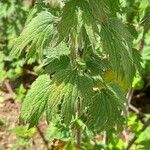
Leonurus cardiaca
دم شیر · Common motherwort · Motherwort · Szúrós gyöngyajak · Lion's Tail
Description
Source: leafsnapLeonurus cardiaca, commonly known as motherwort, is a perennial herbaceous plant belonging to the mint family. Native to Europe and Asia, it has also been naturalized in North America. The plant can reach heights of up to 5 feet and features a square stem with deeply lobed, toothed leaves. Motherwort blooms from June to September, producing small pink or purple flowers arranged in whorls around the stem. These flowers are particularly attractive to bees and other pollinators. For centuries, motherwort has been used for its medicinal properties, especially for its calming effects on the nervous system and its ability to regulate menstrual cycles. It is also a natural remedy for heart palpitations, anxiety, insomnia, and menopausal symptoms. Motherwort thrives in well-drained soil and can be grown in either full sun or partial shade. It is easy to propagate from seeds or cuttings, but care should be taken to contain it, as it can spread aggressively. In summary, Leonurus cardiaca (motherwort) is an attractive, herbaceous perennial with valuable medicinal properties, making it a beneficial addition to any garden or herbal medicine cabinet.
🌳 Aside from its well-known medicinal qualities, motherwort has additional useful applications. Its nectar-rich flowers are highly attractive to bees and other pollinators, thereby helping sustain local ecosystems and even possibly benefiting nearby agricultural activities. Moreover, parts of the plant have long been used to create natural dyes, pointing to its potential role in sustainable textile production.
🎭 Hidden love
Care Guide
💧 Water Every 7 days
Common motherwort thrives in moderate climates with consistent moisture. It prefers soil that stays evenly moist and typically requires watering once a week. When grown outdoors, it particularly benefits from rainwater, especially during peak growth periods. This helps support its herbaceous growth and ensures that its hydration needs are met.
When Should I Water My Common Motherwort?
Watering your common motherwort is crucial for its health and growth. If the leaves begin to wilt or lose firmness, it may need water, but be sure to check in the early morning as late-day wilt can be misleading. The top inch of soil should be your guide; if it's dry, the plant needs water, though be cautious if the soil beneath is still moist. Slow growth can also indicate a need for watering. However, overwatering or underwatering can lead to various problems including root rot and nutrient loss. Since common motherwort's water requirement can vary with its environment, it's essential to consider light exposure, humidity, and heat when determining when to water.
How Should I Water My Common Motherwort?
Watering common motherwort correctly involves a balance to avoid over-saturation while ensuring the roots have enough moisture. Bottom-watering is ideal to let the plant intake what it needs without risk of overwatering. If bottom-watering isn't feasible, using a watering can with a long spout can aid in targeted watering at the plant's base. To avoid diseases, keep water off the foliage and concentrate on the root zone. Tools like a moisture meter can help monitor the soil's moisture level for optimal watering conditions. Always aim for moist but not water-logged soil, focusing on the root zone and avoiding wetting the leaves and flowers to prevent fungal issues.
How Much Water Does Common Motherwort Really Need?
The amount of water common motherwort needs varies based on the plant's size, pot size, and root depth. Generally, watering once or twice a week with about 500 milliliters per session is adequate, ensuring the water penetrates to the root zone. Signs of proper hydration include healthy green leaves and moist soil. Conversely, dry soil and wilted leaves may suggest underwatering, while overwatering is indicated by consistent soil wetness and potential yellow leaves. Overwatering and underwatering can lead to root rot or stress, affecting the plant's health. Utilize well-draining soil, ensure pots have drainage holes, and maintain a balance in watering practices.
What Kind of Water is Best for Common Motherwort?
The best type of water for common motherwort is distilled water, as it is free from contaminants. Rainwater is another excellent choice due to its purity and balanced pH. If using tap water, let it sit for 24 hours to allow chlorine to evaporate, or consider filtering it to remove impurities. Common motherwort has moderate sensitivities to chlorine and fluoride, which can stress the plant or inhibit growth. Water temperature should be moderate, ideally between 68-72°F (20-22°C), and the water's pH should be neutral to slightly acidic, ranging from 6.0 to 7.0. Avoid highly mineralized water to prevent negative impacts on the plant's health.
How Do Common Motherwort's Watering Needs Change with the Seasons?
As seasons change, so do the watering needs of common motherwort. During spring, increased daylight and temperatures mean the plant needs more water to support growth, but be careful to avoid overwatering. Summer's heat necessitates more frequent watering to combat evaporation and support the plant's active growth. Come autumn, reduce watering as the plant's growth slows, ensuring the soil partially dries out between watering sessions. In winter, water only when the soil is dry to the touch, as the plant's dormancy period means it requires significantly less moisture, and overwatering can be particularly harmful.
☀️ Light Partial sun
Motherwort does best with moderate sun but can tolerate stronger or weaker light. Native to areas with mixed sunlight, its growth and vigor are generally not greatly affected by changes in sun levels. However, extended periods of intense sun or too little light can negatively affect its growth.
What are the sunlight requirements for Common Motherwort?
Common Motherwort requires about 3-6 hours of sunlight daily, classifying under partial sun conditions. However, it can also thrive in full sun or full shade environments, which means it needs more than 6 hours of sunlight. The plant is adaptable to varying light conditions, but extreme variations can affect its growth adversely. Adequate sunlight or the use of artificial lighting is crucial, especially in less sunny spaces or during winter, to promote healthy growth.
What are the essential care tips for indoor Common Motherwort plants regarding lighting?
For indoor Common Motherwort plants, ensuring adequate lighting is essential. When natural sunlight is insufficient, artificial lighting can substitute effectively. LED lights are recommended for their ability to provide specific light wavelengths needed by plants. Full sun plants require 30-50W/sq ft of artificial light, partial sun plants 20-30W/sq ft, and full shade plants 10-20W/sq ft. The light source should be placed 12-36 inches above the plant, and mimic natural daylight hours, usually 8-12 hours per day.
What symptoms indicate insufficient or excessive light exposure in Common Motherwort?
Symptoms of insufficient light in Common Motherwort include smaller new leaves, leggy or sparse growth, faster leaf drop, slower or no new growth, and lighter-colored new leaves. Excessive light can cause chlorosis, sunscald, leaf curling, wilting, and leaf scorching. These symptoms arise from the plant's inability to adapt quickly to its lighting environment, either leading to energy conservation measures under low light or defense mechanisms against intense sunlight.
How can I address light-related issues in Common Motherwort?
To mitigate light-related issues in Common Motherwort, gradually adapting the plant to changing light conditions is key. For indoor plants, this may involve moving them to progressively sunnier spots each week or using artificial lights for at least 8 hours daily. Outdoor plants should be moved gradually to avoid sunburn, considering the best sunlight availability. Reducing obstructions like overhanging branches can also help, alongside transplanting smaller plants to better-lit areas ensuring their adaptation and health.
🌡️ Temperature 5–32.2°C
Motherwort is a temperate plant that favors temperatures between 41 and 90 ℉ (5 and 32 ℃). It naturally grows in places with moderate climate. During warmer months it can thrive at temperatures up to 90 ℉ (32 ℃), but it shifts to cooler conditions in colder months.
What is the preferred temperature range for common motherwort?
Common motherwort thrives in a temperate climate, preferring temperatures between 41 to 90 °F (5 to 32 °C). It naturally grows in moderate environments, adapting well to variations in temperature. During the warmer months, it can withstand up to 90 °F (32 °C), whereas in colder months, it has a strong resistance to cold, usually not requiring special frost protection measures.
What should be done to protect common motherwort in extremely cold winters?
In anticipation of extremely cold winters, where temperatures are expected to drop below -30°C, common motherwort requires protection to withstand the cold. Covering the plant with soil or straw can provide the necessary insulation against the frost. Additionally, it is beneficial to water the plant abundantly before the first freeze of autumn to keep the soil moist, which helps in preventing drought and water scarcity during winter and early spring.
How does common motherwort respond to low temperatures, and what are the recommended solutions?
Common motherwort is cold-tolerant, with optimal growth above 5°C. It should ideally be kept above -25°C during winter. If temperatures fall below -30°C, the plant might not show immediate changes, but there might be a reduction in sprouting or even a lack of sprouting in spring. To mitigate this, it is advised to remove any parts of the plant that have failed to sprout in the spring.
How does common motherwort react to high temperatures, and what actions should be taken?
During summer, it is important to ensure that common motherwort's temperature does not exceed 32°C. Temperatures above 35°C can cause the plant's leaves to lighten in color, curl, and become susceptible to sunburn. In severe cases, the plant may wilt and dry out. The recommended course of action includes trimming away sunburned and dried-up parts of the plant, relocating it to a shadier location, or using a shade cloth to protect it from midday and afternoon sun. Additionally, watering the plant in the morning and evening helps keep the soil consistently moist.
💨 Humidity
🪴 Soil 6-7
🌱 Fertilizer
Typically, a single fertilizer application in spring is enough for Motherwort, though several feedings can increase growth. Fertilize every month to six weeks. Doing so improves the leaves’ appearance and function, maintaining uniform color and a healthy texture. It also encourages root development and enhances nutrient uptake for long-term plant health.
🪴 Pot & Repot Every 12 months
✂️ Pruning
Common motherwort features tall stems and heart-shaped leaves, adding beauty to any garden. To encourage bushier growth and maintain its shape, it's best to prune the plant from early to late spring. This process also involves removing any dead stems. Regular pruning not only promotes healthy growth but also improves air circulation, reducing the risk of disease and ensuring a vibrant plant throughout the growing season.
🌿 Propagating
🐛 Diseases & pets
☠️ Toxicity
Characteristics
- Plant Type
- Herb
- Life Cycle
- Perennial
- Genus
- Leonurus
- Family
- Lamiaceae
- Hardiness Zone
- 4-8
- Mature Height
- 61 cm to 91 cm
- Mature Spread
- 30 cm to 61 cm
- Leaf Color
- Green, Yellow
- Leaf Type
- Deciduous
- Flower Color
- White, Pink
- Flower Size
- 2.54 cm
- Bloom Time
- Late spring, Early summer, Mid summer
- Planting Time
- Spring, Summer, Autumn, Winter
- Harvest Time
- Mid summer
- Native Area
- Turkey, Austria, Sweden, Slovakia, Montenegro, Croatia, Slovenia, Belarus, Russia, Germany, Estonia, Romania, Latvia, Belgium, France, Netherlands, Czech Republic, Bulgaria, Poland, Greece, Ukraine, Serbia, Lithuania, Norway, Italy, Spain, Switzerland, Denmark, Finland, Iran, Albania, Hungary