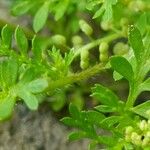
Lepidium didymum
ترتیزک · Lesser swine-cress · Lesser swinecress · Lesser Swine's Cress · Lesser Wartcress
Description
Source: leafsnapLepidium didymum, commonly known as lesser swinecress, is a small annual plant that belongs to the Brassicaceae family. Although native to Europe and Asia, it has now spread to other parts of the world. The plant typically grows up to 30 cm tall and produces small white flowers that bloom from May to September. The leaves of Lepidium didymum are pinnately divided into narrow segments, giving the plant a feathery appearance. The slender, branched stem is covered with tiny hairs. The plant's fruit is a small, round capsule that contains numerous tiny seeds. Lepidium didymum thrives in moist soils in open areas such as fields, meadows, roadsides, and waste places. However, it can also grow in well-drained dry soils and tolerate various soil types, including sandy and clayey soils. This plant has been used for medicinal purposes for centuries due to its high content of vitamins A and C, as well as minerals like calcium, iron, and potassium. Traditionally, it was used to treat respiratory issues such as coughs and asthma because of its expectorant properties. Ecologically, Lepidium didymum plays a significant role by providing food for pollinators such as bees, thereby aiding in pollination and promoting biodiversity. However, in some regions, Lepidium didymum is considered an invasive species. It can outcompete native plants, leading to reduced biodiversity, which negatively impacts ecosystem function. To manage this, control measures such as herbicides or manual removal methods like hand-pulling or mowing before seed production during the flowering season are often used.
🌳 Lesser swine-cress, relatively obscure to many botanists and chefs, is a member of the mustard family and has a peppery flavor similar to watercress. It is gaining popularity in fine dining and could be a source of essential oils because of its strong aroma. Researchers are studying its seeds as a high-protein ingredient for animal feed.
Care Guide
💧 Water Every 7 days
Lesser swine-cress flourishes in moist environments and needs consistent hydration. Watering it weekly is ideal to ensure it remains healthy. As an herbaceous plant, managing its water intake carefully during the active growing season promotes lush foliage and overall robust health.
How should I water my Lesser swine-cress?
There are several ways to water Lesser swine-cress. You can use a garden hose with a spray nozzle, a watering can, or any other usual watering tool. Lesser swine-cress is not very particular about how it gets watered, as it can thrive with rainwater, tap water, or filtered water. It is not advisable to water this plant from above as it can harm the leaves and flowers and may cause disease. A drip irrigation system is often the best choice for watering Lesser swine-cress as it provides even and direct water to the soil. If you have a container-grown Lesser swine-cress, you can use a cup, watering can, or tap water to water it directly into the soil.
What should I do if I give too much or too little water to my Lesser swine-cress?
The remedy for underwatering Lesser swine-cress is simple: water it regularly when you notice it lacks moisture. Overwatering, on the other hand, can be a more serious issue. If you don't catch it early, it can lead to diseases and the eventual decline and death of your plant. To prevent this, choose a location with plenty of sunlight and good drainage so that excess water can drain away and not saturate the soil. If your Lesser swine-cress is in a pot and you've overwatered it, you may need to transfer it to a new pot with better drainage and loose soil.
How often do I need to water my Lesser swine-cress?
To ensure the health of your Lesser swine-cress, it requires regular watering during the growing season. In the spring, watering once a week is sufficient. However, as the season progresses and temperatures rise, you may need to increase watering to two to three times per week. It's important not to exceed this rate as it can be harmful to the plant. Regardless of the watering frequency, make sure the soil remains moist but not waterlogged. For potted Lesser swine-cress, you'll need to water more frequently as the soil in containers tends to dry out faster. Typically, watering a container-grown plant a few times per week is recommended, compared to just once per week for plants in the ground.
How much water does my Lesser swine-cress plant need?
Determining how much water to give to your Lesser swine-cress can be done in a few ways. Some gardeners prefer to feel the soil for moisture and water until the first six inches are moist. Alternatively, you can use a set measurement like two gallons per week, adjusting based on temperature and soil dryness. However, be cautious not to overwater if your plant needs less. For container-grown Lesser swine-cress, ensure all layers of dry soil are moistened and check for moisture by sticking your finger in the soil or observing a slight trickle of excess water from the drainage holes.
How do I know if I'm watering my Lesser swine-cress enough?
Avoiding overwatering your Lesser swine-cress can be challenging because on one hand, these plants need the soil to be moistened weekly due to their deep roots. However, they are highly vulnerable to root rot and can develop browning if overwatered. Underwatering is less of a concern as these plants can survive without additional watering for some time, although they may wilt and exhibit dry leaves if deprived of water for too long.
☀️ Light Full sun
Lesser swine-cress does best in locations that receive abundant sunlight throughout the day. It can also tolerate areas where sunlight is not continuous. However, reduced light can impair its growth and health, reflecting the habitat where it originally flourished, which had ample sunshine. Like other plants, both too much and too little sunlight can result in unhealthy conditions.
What are the sun requirements for Lesser swine-cress?
Lesser swine-cress requires full sun, meaning it should receive above 6 hours of sunlight daily, but it can also thrive in partial sun with about 3-6 hours of sunlight. It's essential to observe the movement of sunlight in your garden to select the ideal balance of light and shade for these plants, ensuring their optimal growth and health.
What essentials should be considered for growing Lesser swine-cress?
Lesser swine-cress thrives in abundant sunlight, mirroring its natural habitat's conditions. While it can adapt to less continuous sun exposure, reduced light may impact its growth and health. In situations where natural sunlight is insufficient, especially indoors or during winter, artificial lighting serves as a crucial alternative. LED lights are recommended for their customizable wavelengths, with full sun plants requiring 30-50W/sq ft, partial sun plants 20-30W/sq ft, and full shade plants 10-20W/sq ft of artificial light. Artificial lights should be placed 12-36 inches from the plant to simulate natural sunlight conditions and used for 8-12 hours per day.
What symptoms indicate insufficient light for Lesser swine-cress?
When Lesser swine-cress does not receive enough light, several symptoms can appear, including smaller new leaves, leggy or sparse growth, early leaf drop, halting new growth, pale new leaves, and chlorosis (leaves turning yellow due to chlorophyll breakdown). Excessive sunlight exposure can cause sunscald (pale, bleached areas on tissue), leaf curling (to minimize water loss), wilting (from excessive transpiration), and leaf scorching (brown or crispy leaf edges). These symptoms help in diagnosing and remedying light-related issues.
How can you alleviate light-related issues for Lesser swine-cress?
For indoor plants suffering from low light, gradually move them to sunnier spots to achieve at least 6 hours of direct sunlight, using south-facing windows for maximum exposure. Artificial lighting, such as desk lamps or professional grow lights, can supplement light for larger or immovable plants for at least 8 hours a day. Outdoors, acclimating plants to increased sunlight by moving them weekly to sunnier locations can help, but avoid abrupt changes to prevent sunburn. Removing obstructions, like pruning trees, or transplanting smaller plants during their dormant period to sunnier areas with good drainage, can significantly improve their light intake. Note, parts of the plant affected by prior insufficient light may not recover, but new growth will be healthy with corrected lighting.
🌡️ Temperature 15–35°C
Lesser swine‑cress is native to temperate habitats and prefers temperatures generally between 68 and 95 °F (20 and 35 °C). Seasonal temperature adjustments may be necessary to align with its natural cycle.
What are the ideal temperature conditions for Lesser swine-cress?
Lesser swine-cress thrives in moderate environments, with a temperature range ideally between 68°F to 95°F (20°C to 35°C). It has some cold tolerance and generally does not require any additional cold protection measures if the temperature stays above 0°C. However, if temperatures are expected to drop below 0°C, temporary measures such as wrapping the plant with plastic film, fabric, or other materials should be taken to protect it from the cold. It's important to remove these protective measures once temperatures rise again.
How should Lesser swine-cress be cared for in low temperatures?
Lesser swine-cress has a moderate tolerance to low temperatures and prefers conditions above 20°C. In winter, it's important to ensure the temperature stays above 0°C to prevent damage. If temperatures fall below -10°C, the leaves may droop; in mild cases, they can recover, but in severe cases, the leaves will wilt and fall off. To protect the plant in cold weather, trim off frost-damaged parts, wrap the plant with materials like non-woven fabric, and construct a wind barrier to shield it from cold winds.
What care does Lesser swine-cress need in high temperatures?
During the summer, it's crucial to keep Lesser swine-cress' temperature below 35°C. Temperatures above 41°C can cause the leaves to lighten in color, dry and wither at the tips, curl, and make the plant more susceptible to sunburn. To care for it in high temperatures, trim away sunburned and dried parts of the plant. Move the plant to a location with shade during the midday and afternoon sun or use a shade cloth. Additionally, water the plant in the morning and evening to maintain soil moisture.
💨 Humidity normal (40-60%)
This plant will thrive in moderate humidity, which is probably the level in your home. However, misting it a few times a week can be very beneficial. Make sure the room has good ventilation.
🪴 Soil 6-7
🌱 Fertilizer
Lesser swine-cress benefits from regular, light applications of fertilizer to encourage healthy leaf development. You should fertilize Lesser swine-cress about once a month during the summer months. Nitrogen is vital for foliage, and adding nitrogen-rich sources helps Lesser swine-cress thrive.
🪴 Pot & Repot
✂️ Pruning
🌿 Propagating
🐛 Diseases & pets
☠️ Toxicity
Characteristics
- Plant Type
- Herb
- Life Cycle
- Annual, Biennial
- Genus
- Lepidium
- Family
- Brassicaceae
- Hardiness Zone
- 8-10
- Mature Height
- 40 cm
- Mature Spread
- 20 cm
- Leaf Color
- Green
- Leaf Type
- Deciduous
- Flower Color
- White
- Flower Size
- 0.10 cm
- Bloom Time
- Mid spring, Late spring, Early summer
- Planting Time
- Spring
- Harvest Time
- Early summer, Mid summer
- Native Area
- Bolivia, Venezuela, Peru, Brazil, Ecuador, United Kingdom