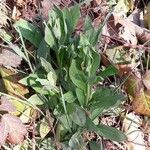
Lepidium draba
ازمک · Whitetop · Hoary Cress · Heart-pod hoary cress · Hoary cardaria
Description
Source: leafsnapLepidium draba, commonly known as hoary cress or whitetop, is a perennial herbaceous plant belonging to the Brassicaceae family. Originating in Europe and Asia, this plant has also been introduced and naturalized in North America. It can grow up to 1 meter tall, featuring a woody base and numerous branches. The leaves are grayish-green, lanceolate or oblong with toothed margins. The flowers of Lepidium draba are small and white or pale pink, arranged in clusters at the ends of stems. They bloom from May to August, depending on the location. Hoary cress is considered an invasive species because it spreads rapidly through its extensive root system and seed dispersal. It can outcompete native vegetation for resources such as water and nutrients, leading to reduced biodiversity. The plant has been used medicinally for treating respiratory ailments such as asthma, bronchitis, and coughs due to its expectorant properties. In summary, Lepidium draba, also known as hoary cress or whitetop, is an invasive species that can grow up to 1 meter tall with grayish-green, lanceolate leaves with toothed margins. It produces small white flowers from May to August depending on the location. Native to Europe and Asia, it has been introduced and naturalized in North America. Additionally, it is used medicinally to treat respiratory ailments like asthma, bronchitis, and coughs due to its expectorant properties.
💡 The whitetop may look harmless, but it's actually a harmful weed found in cultivated crops and pastures. As a perennial plant, livestock and other grazing animals typically avoid it, making it challenging to eliminate. Its roots release chemicals that inhibit the growth of certain grains and provide a habitat for pests that can spread to crops.
🌳 Although whitetop is infamous as an aggressive invader in North America, it is also being studied for its ability to remove contaminants like heavy metals from soil. This characteristic could make it useful in phytoremediation projects, where plants are used to clean polluted environments, turning whitetop into not just a problem but also part of the solution.
🎭 Broad, adaptable, upright
Care Guide
💧 Water Every 7 days
Whitetop flourishes in environments with consistent moisture, necessitating weekly watering to replicate its natural habitat. While it can withstand short periods of dryness, it strikes a balance between drought resistance and its need for hydration. When grown outdoors in temperate regions, Whitetop has adapted to the seasonal rainfall patterns that affect its growth cycles.
How do I water my Whitetop at different stages of growth?
The water requirements of the Whitetop can vary depending on its growth stages. When your Whitetop is in its early years or recently transplanted, it needs more water to support root development. These new roots are crucial for future growth and require extra moisture. As the plant matures, it will need less water. Another growth stage that requires increased watering is during the bloom period when the plant is producing flowers. The development of flowers requires a significant amount of moisture, so it is important to provide your Whitetop with additional water during this time.
How should I water my Whitetop plant?
To effectively water the Whitetop plant, it is recommended to use filtered water at room temperature. Tap water should be avoided as it may contain harmful particles. The water temperature should be warm or slightly above room temperature to ensure it doesn't shock the plant, considering its origin in a warm environment. It is also advised to refrain from watering the plant from above, as it can cause issues with its foliage. Instead, gently pour filtered room temperature water onto the soil until it is fully saturated. This method benefits the plant by keeping the roots moist and aiding their growth and nutrient absorption.
What should I do if I give my Whitetop plant too much or too little water?
Overwatering and underwatering can both harm your Whitetop plant, but overwatering is more commonly an issue. If the Whitetop receives too much water, its stems and leaves may wilt and turn yellow. Overwatering for an extended period can also cause diseases like root rot, mold, and mildew, which can be fatal to the plant. Underwatering is less common because the Whitetop can tolerate drought. However, it is still possible, and you will notice the leaves becoming brittle and brown. It is crucial to recognize the signs of overwatering early. Some diseases caused by overwatering, like root rot, may be irreversible if not addressed promptly. If you see signs of overwatering, reduce your watering schedule immediately and check the soil's quality. If the soil does not drain well, replace it with a loose, well-draining potting mix. If the Whitetop shows signs of underwatering, simply water it more regularly until the signs improve.
How often do I need to water my Whitetop plant?
If your Whitetop plant is in a pot, the most precise way to check if it needs water is by sticking your finger into the soil. When the top two to three inches of soil are dry, that's when you should add water. If you're growing your Whitetop plant outdoors in the ground, you can use a similar method to test the soil. Once you find that the top few inches of soil have dried out, it's time to water. Generally, during spring and early fall, watering once a week should suffice. However, during extremely hot weather, you may need to water twice or more per week. It's important to note that mature, well-established Whitetop plants can endure drought well.
How much water does my Whitetop plant need?
When watering your Whitetop, be generous with the amount of water you give. Wait until the first two to three inches of soil are dry, then give the plant a thorough watering. Make sure to soak the soil completely. You'll know you've added enough water if you see excess water draining out of the pot's drainage holes. If no water drains out, it means you haven't watered enough. However, be cautious not to let water accumulate in the soil, as this can harm the plant. On the other hand, if water doesn't drain through the pot, it may mean the soil is poorly draining, which is not good for the plant's health. If the plant is outside, 1 inch of rain each week will be sufficient.
☀️ Light Full sun
Whitetop thrives with abundant sunlight for optimal growth. It can tolerate lower light levels, even sparse light, though that may lead to slower growth. Coming from habitats with plentiful sun, it has adapted to withstand a range of light intensities. Nevertheless, extreme light exposure can negatively affect its growth.
What are the sunlight requirements for Whitetop?
Whitetop requires full sun, which means it thrives in conditions of more than 6 hours of direct sunlight daily. However, it can also tolerate partial sun and full shade, where it receives about 3-6 hours of sunlight. It's crucial to monitor the sunlight's movement in your garden to find the best spots that offer a balanced light exposure, ensuring your Whitetop's optimal growth and happiness.
How does Whitetop adapt to different light conditions?
Whitetop is adaptable to various light conditions due to its origin in environments with abundant sunlight. It prefers plenty of solar exposure for optimal growth but can survive in less light, albeit with slower growth rates. Extreme variations in light exposure can negatively impact its growth. Utilizing artificial lighting can be a valuable solution for indoor plants to achieve adequate light exposure, especially in winter or less sunny locations. Proper artificial light setup involves choosing the right type of light, adjusting the distance and duration of exposure to mimic natural sunlight.
What are the common symptoms of inadequate lighting in Whitetop?
Common symptoms of poor lighting in Whitetop include smaller new leaves, leggy or sparse growth, faster leaf drop, slower or halted new growth, lighter-colored new leaves, and adverse reactions such as chlorosis, sunscald, leaf curling, wilting, and leaf scorching. These symptoms indicate the plant's struggle with either too little or too much light, affecting its photosynthesis process and overall health.
How can I address lighting issues for my Whitetop plant?
To address lighting issues for Whitetop, gradual acclimatization to brighter conditions is key. For indoor plants, move them to a sunnier spot progressively each week, aiming for at least 6 hours of direct sunlight by using south-facing windows or supplemental artificial light if necessary. Outdoor plants should also be moved gradually to avoid shock and sunburn. Reducing obstructions such as tree branches can improve sunlight access. Transplanting should be considered during the plant's dormant period for optimal sunlight exposure and health.
🌡️ Temperature 5–35°C
Whitetop does best in cool temperate areas, preferring temperatures from 41 to 95 ℉ (5 to 35 ℃). It can tolerate warmer conditions in spring and summer but needs consistent moisture. In winter the plant may require protection from cold.
What are the ideal growing conditions for Whitetop plants?
Whitetop plants flourish in cool temperate climates, preferring temperatures between 41 to 95°F (5 to 35°C). They adapt well to the warmer temperatures of spring and summer as long as there is consistent moisture. During winter, they reveal a strong cold resistance, with no special frost protection measures needed unless temperatures are expected to fall below -25°C. At that point, it's important to protect the plants by covering them with soil or straw. To prepare for winter, watering the plants abundantly before the first freeze is recommended to keep the soil moist and prevent drought during colder months.
How does low temperature affect Whitetop, and what are the solutions?
Whitetop is notably cold-tolerant, preferring to stay above 5°C during winter and needing protection if temperatures drop below -20°C. If the mercury falls beneath -25°C, the plant might not show immediate distress, but you're likely to see a decrease in spring sprouting or possibly no sprouting at all. The solution for any parts that fail to sprout in the spring due to cold damage is simply to remove those parts.
What impact does high temperature have on Whitetop, and how can it be mitigated?
Whitetop should ideally be maintained under 35°C during the hot summer months. If temperatures soar above 38°C, the plant's leaves may lighten, curl, and become susceptible to sunburn, leading the whole plant to wilt and dry in severe cases. To prevent this, sunburned and dried parts should be trimmed. The plant should be moved to a shaded location or covered with a shade cloth to protect it from the midday and afternoon sun. Additionally, watering in the morning and evening can help keep the soil consistently moist.
💨 Humidity
🪴 Soil 6-7
🌱 Fertilizer
One fertilizer application in spring is generally adequate for Whitetop, although several feedings can promote maximum growth. Feed about once every month to a month and a half. Fertilization improves the leaves' appearance and function, helping maintain even color and a healthy texture. It also encourages root development and nutrient absorption, supporting long-term plant health.
🪴 Pot & Repot
✂️ Pruning
🌿 Propagating
🐛 Diseases & pets
☠️ Toxicity
Toxic to humans and livestock. Plants contain glucosinolates which can be toxic.
Characteristics
- Plant Type
- Herb
- Life Cycle
- Perennial
- Genus
- Lepidium
- Family
- Brassicaceae
- Hardiness Zone
- 5-9
- Mature Height
- 20 cm to 52 cm
- Mature Spread
- 30 cm
- Leaf Color
- Green, Gray
- Leaf Type
- Deciduous
- Flower Color
- White
- Flower Size
- 0.10 cm to 0.23 cm
- Bloom Time
- Mid spring, Late spring, Early summer
- Planting Time
- Spring
- Harvest Time
- Early summer, Mid summer
- Native Area
- Libya, Austria, Slovakia, Montenegro, Croatia, Morocco, Slovenia, Yemen, Belarus, Uzbekistan, Russia, Oman, Portugal, Czech Republic, Cyprus, Armenia, Greece, Ukraine, China, Serbia, Kyrgyzstan, Kazakhstan, Switzerland, Albania, Azerbaijan, Algeria, Kuwait, Turkmenistan