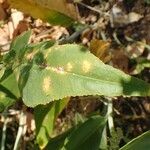
Lepidium latifolium
Dittander · Perennial pepper cress · Perennial peppergrass · Perennial pepperweed · Perennial pepperwort
Description
Source: leafsnapLepidium latifolium, commonly known as pepperweed or broadleaf pepperweed, is a perennial herbaceous plant belonging to the Brassicaceae family. Native to Europe and Asia, this plant has spread and naturalized in many parts of the world, including North America. The plant can reach a height of up to 1.5 meters and features broad leaves that are deeply lobed or toothed. From June to September, it produces small white flowers in dense clusters, followed by small round fruits that contain numerous seeds. Pepperweed thrives in moist soils and is commonly found along riverbanks, wetlands, ditches, roadsides, and disturbed areas such as abandoned fields or construction sites. It is considered an invasive species in many regions due to its ability to outcompete native vegetation. Despite its invasive nature, Lepidium latifolium has been used for medicinal purposes for centuries, thanks to its high content of glucosinolates, which have anti-inflammatory properties. Additionally, its leaves have been used as livestock feed. Conservationists around the world are working to control the spread of this plant species while also exploring its potential uses, such as biofuel production, due to the high oil content in its seeds.
Care Guide
💧 Water Every 7 days
Perennial pepperweed thrives in moist environments, needing consistent moisture without becoming waterlogged. Weekly watering is necessary to keep the soil humid, and it benefits from natural rainfall when grown outdoors. As a perennial herb, its growth and flowering rely on receiving enough water during the active growing season.
What's the difference in how much water my Perennial pepperweed needs inside compared to outside?
For gardeners who do not live in temperate or tropical regions, growing Perennial pepperweed indoors is the most common approach. However, it is important to be aware that soil in a container can dry out faster compared to soil in the ground. Additionally, if you have drying elements like air conditioning units present, your Perennial pepperweed may require more frequent watering compared to if it was planted outside. In this case, outdoor plants likely won't need much watering, as rainfall can be sufficient to keep them alive. On the other hand, indoor growers will need to water their Perennial pepperweed more often, since relying on rainwater to soak the soil is not an option.
How should I water my Perennial pepperweed?
When watering the Perennial pepperweed, it is best to use filtered water at room temperature. Tap water may contain harmful particles, so filtered water is preferred. The water should be at room temperature or slightly warmer because the plant is used to warm environments and cold water can shock its system. Avoid overhead watering as it can cause issues with the foliage. Instead, apply filtered room temperature water directly to the soil until it is completely soaked. This helps moisture reach the roots and allows them to spread and gather the necessary nutrients.
What should I do if I give my Perennial pepperweed too much or too little water?
Overwatering is a common issue that can harm your Perennial pepperweed. When this plant gets too much water, its stems and leaves may wilt and turn yellow. Overwatering over a long time can also cause diseases like root rot, mold, and mildew, which can kill the plant. On the other hand, underwatering is less common but still possible. It can make the leaves brittle and brown. It's important to spot the signs of overwatering early because some of the resulting diseases, like root rot, are difficult to fix if left too long. If you see signs of overwatering, reduce your watering schedule immediately. Also, check the soil drainage and replace it with a well-draining mix if needed. If you notice signs of underwatering, water more regularly until the signs go away.
How often do I need to water my Perennial pepperweed?
If your Perennial pepperweed is in a pot, the most accurate way to determine if it needs water is to insert your finger into the soil. If the top two to three inches of soil feel dry, it's time to water it. For Perennial pepperweed planted outdoors in the ground, you can use a similar method to test the soil. Again, if the first few inches of soil have dried out, it's time to water. Typically, in the spring and early fall, you'll need to water this plant about once a week using this method. However, during extremely hot weather, you may need to increase watering to about twice a week or more. It's worth noting that mature, well-established Perennial pepperweed can tolerate drought well.
How much water does my Perennial pepperweed require?
To properly water your Perennial pepperweed, you should be generous with the amount of water you provide. Make sure the first two to three inches of soil are dry before watering. Give the plant a thorough watering that completely saturates the soil. The water should be enough to cause excess water to drain out of the pot through the drainage holes. If you do not see excess water draining, it means you have likely not watered enough. However, be careful not to let the water accumulate in the soil, as it can harm the plant. On the other hand, if water does not drain through the pot, it could be a sign of poorly draining soil, which is not good for the plant's health. If the plant is outdoors, receiving about 1 inch of rain per week should suffice.
☀️ Light Full sun
Perennial pepperweed does best in full, unobstructed sunlight. Too little light can limit its growth and flowering. In its native range it is commonly found in open areas where sunlight is abundant. While very intense sun does not always harm it, it is also capable of tolerating periods of reduced light.
What are the sunlight requirements for Perennial pepperweed?
Perennial pepperweed requires full sun, which means it thrives best under unobstructed sunlight exposure of above 6 hours daily. This plant is often found in open areas in its native habitat, where it can receive ample sunlight. While excessive sunlight exposure does not necessarily harm the plant, it is capable of enduring periods of less light. However, sufficient sunlight is crucial for its optimal growth and bloom, and lack of adequate sunlight can hinder its development.
What should I do if my garden does not get enough natural sunlight?
If your garden or indoor space does not receive enough natural sunlight, particularly in winter or less sunny areas, artificial lighting offers a viable solution. Indoor plants can benefit from artificial lighting, such as LED lights, which can be customized to provide specific wavelengths of light needed by your plants. For full sun plants, 30-50W/sq ft of artificial light is recommended, partial sun plants require 20-30W/sq ft, and full shade plants need 10-20W/sq ft. The light source should be placed 12-36 inches above the plant to mimic natural sunlight, with 8-12 hours of light per day depending on the plant species.
How can inadequate lighting affect Perennial pepperweed?
Insufficient lighting can lead to several problems for Perennial pepperweed, including the development of smaller leaves compared to mature ones, a leggy or sparse growth pattern, faster leaf drop, and slower or halted growth. New leaves may also appear lighter in color or exhibit signs of chlorosis, leading to a yellowing of the leaf due to a breakdown in chlorophyll. Additionally, excessive sunlight can cause issues such as sunscald, leaf curling, wilting, and leaf scorching.
What are some effective solutions to insufficient sunlight for Perennial pepperweed?
To counteract insufficient sunlight, gradually move plants to sunnier locations, ensuring they receive at least 6 hours of direct sunlight daily. Utilize a south-facing window and keep curtains open for maximum sunlight. If the plant is large or not easily movable, consider artificial lighting solutions such as desk lamps or professional grow lights for at least 8 hours daily. It's crucial to avoid sudden changes in light intensity to prevent sunburn. Pruning obstructions like tree branches can also increase sunlight exposure, and transplanting smaller plants during their dormant period to locations with better sunlight and drainage can be beneficial.
🌡️ Temperature 5–35°C
Perennial pepperweed originates from temperate regions that undergo seasonal changes. It does best at temperatures between 68 and 95°F (20 and 35℃). In colder seasons, consider using a frost blanket to maintain suitable temperatures, while on hot days ensure shade is provided.
What is Perennial Pepperweed and where is it native to?
Perennial pepperweed, scientifically known as Lepidium latifolium, is native to temperate climatic regions characterized by seasonal variations. This plant thrives in environments where temperatures fluctuate between 68 to 95°F (20 to 35°C), indicating its preference for moderate to warm conditions.
How should Perennial Pepperweed be protected during different seasons?
To protect Perennial Pepperweed throughout the varying seasons, a combination of methods may be necessary. During the chillier seasons, utilizing a frost blanket can help maintain the plant's ideal heat levels. Conversely, in hotter days, providing shade is crucial to prevent overheating. Although this plant exhibits strong cold resistance, winter temperatures dropping below -25°C necessitate additional cold protection, such as covering the plant with soil or straw. It is also advisable to water the plant abundantly before the first freeze in autumn, ensuring the soil stays moist when it enters a frozen state, thereby preventing drought and water scarcity during the colder months.
What are the effects of low and high temperatures on Perennial Pepperweed and how can they be mitigated?
Perennial Pepperweed shows a remarkable tolerance to low temperatures, thriving best above 20°C and requiring protection only when temperatures drop below -25°C. In such cold, the plant may experience reduced or absent sprouting in spring. Mitigation involves removing any parts of the plant that fail to sprout. On the flip side, high temperatures above 35°C can be damaging. Signs of heat stress include lighter leaf colors, curling, susceptibility to sunburn, and, in extreme cases, wilting and drying of the plant. To counteract heat damage, trim away damaged parts, relocate the plant to a shaded area or use a shade cloth, and ensure the soil remains moist with morning and evening watering.
💨 Humidity high (>60%)
This plant needs special care because it loves high humidity levels of 60-80% or more. The best way to achieve this is by placing a humidifier near the plant. Daily misting is also essential! Make sure the room has good ventilation.
🪴 Soil 6-7
🌱 Fertilizer
Usually a single fertilizer application in spring is enough for Perennial pepperweed, although multiple feedings can maximize growth. Fertilize about once each month to every six weeks. Fertilization improves the leaves' appearance and function, helping maintain even color and a healthy texture. It also encourages root development and nutrient uptake, supporting long-term plant health.
What kind of fertilizer does my Perennial pepperweed require?
Choosing the best fertilizer for a Perennial pepperweed is actually quite simple. These plants thrive on a general-purpose garden fertilizer that has equal amounts of nitrogen, phosphorus, and potassium, like a 10-10-10 ratio. It's important to avoid fertilizers with high nitrogen content if unsure. The most effective fertilizers for Perennial pepperweed usually come in granular form and should be slow-release for easy application. Additionally, using organic soil amendments like compost can also be beneficial.
Why do I have to put fertilizer on my Perennial pepperweed?
The main structure of the Perennial pepperweed is made up of its leaves. Proper fertilization is important for ensuring the leaves look great and perform their function effectively. Fertilization not only enhances the color and texture of the leaves, but also promotes root growth and maintenance. By fertilizing, you not only keep your plant healthy in the present, but also improve its ability to absorb nutrients from the soil in the future.
When should I fertilize my Perennial pepperweed?
If you grow your Perennial pepperweed outdoors each year, it will start to grow new leaves in early spring. This is a sign that it's time to fertilize. Usually, one application of fertilizer is enough for the Perennial pepperweed to thrive in the spring. However, if you want it to grow even more, you can fertilize it multiple times throughout the spring and early summer. In this case, you can fertilize it about once every month or so.
When is it not a good idea to use fertilizer on my Perennial pepperweed?
During late fall and winter, your Perennial pepperweed goes dormant and stops growing. It's best to avoid fertilizing it during this time. In spring and summer, if you choose to fertilize, gradually reduce the amount as summer comes and the plant's growth rate slows down. In general, avoid fertilizing when the weather is very hot or when the soil is extremely dry, as this can stress the plant and cause it to die prematurely.
How should I fertilize my Perennial pepperweed plant?
To ensure the proper timing, wait until your Perennial pepperweed starts growing its first leaves in early spring. Then, apply a balanced slow-release fertilizer to the soil around the base of the plant. You can repeat this process later in the season if desired. When applying fertilizer, make sure to focus on the soil and not the plant itself. This may involve moving some leaves to access the soil near the roots. It's also recommended to water the Perennial pepperweed before and after fertilizing.
🪴 Pot & Repot
✂️ Pruning
Perennial pepperweed is an invasive plant with extensive roots. To control its spread and promote healthy growth, prune it from early to late spring. Be sure to remove all cut material to prevent regrowth, and use sterilized tools to reduce the risk of disease. These practices are recommended by university horticulture departments.
🌿 Propagating
🐛 Diseases & pets
☠️ Toxicity
Characteristics
- Plant Type
- Herb
- Life Cycle
- Perennial, Annual
- Genus
- Lepidium
- Family
- Brassicaceae
- Hardiness Zone
- 5-9
- Mature Height
- 0.3 m to 2.13 m
- Mature Spread
- 91 cm
- Leaf Color
- Green, Gray
- Leaf Type
- Deciduous
- Flower Color
- White
- Flower Size
- 0.08 cm to 0.13 cm
- Bloom Time
- Early summer, Mid summer
- Planting Time
- Spring, Summer, Autumn
- Harvest Time
- Late summer, Early fall
- Native Area
- Libya, Egypt, India, Turkey, Sweden, Austria, Slovakia, Pakistan, Croatia, Morocco, Yemen, Belarus, Uzbekistan, Russia, Iraq, Germany, Jordan, Estonia, Romania, Belgium, Netherlands, Portugal, France, Tajikistan, Czech Republic, Cyprus, Bulgaria, Poland, Armenia, Greece, Ukraine, Lebanon, China, Lithuania, Afghanistan, Syria, Kyrgyzstan, Kazakhstan, Italy, Spain, Switzerland, Denmark, Mongolia, Finland, Iran, Albania, Ireland, United Kingdom, Hungary, Algeria, Azerbaijan, Turkmenistan