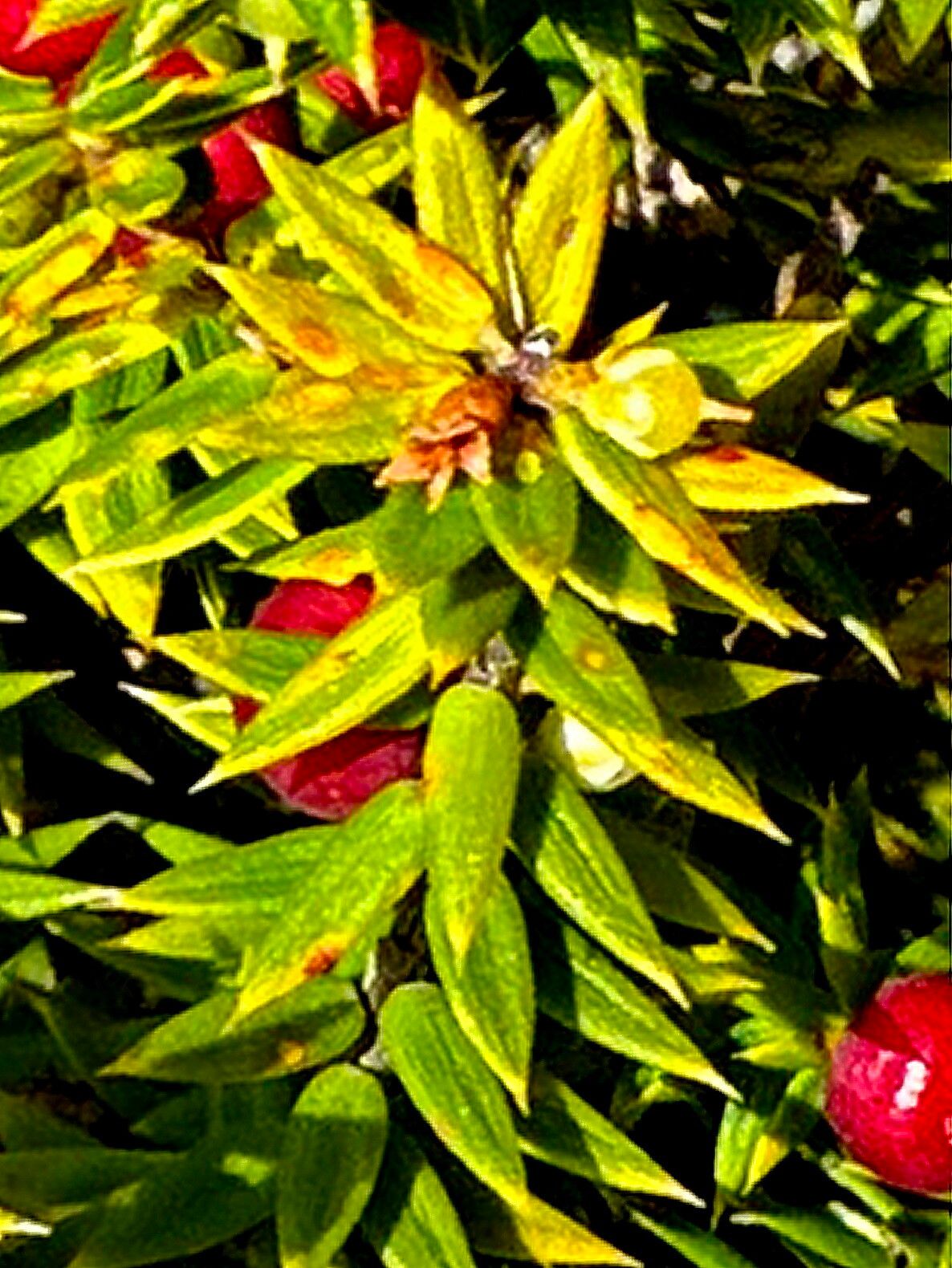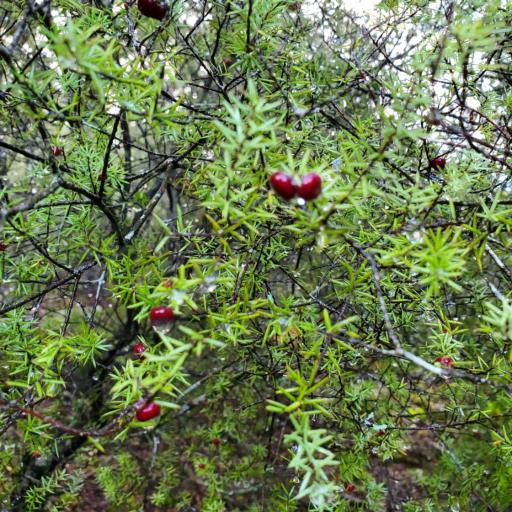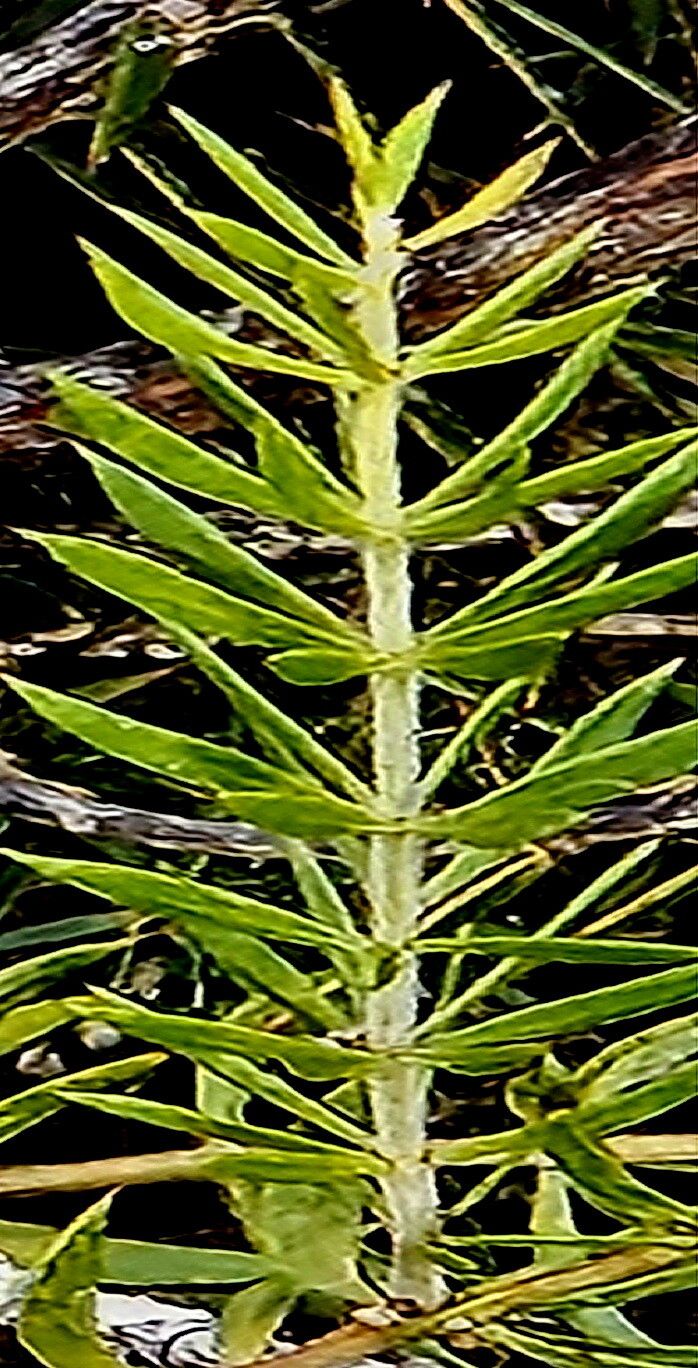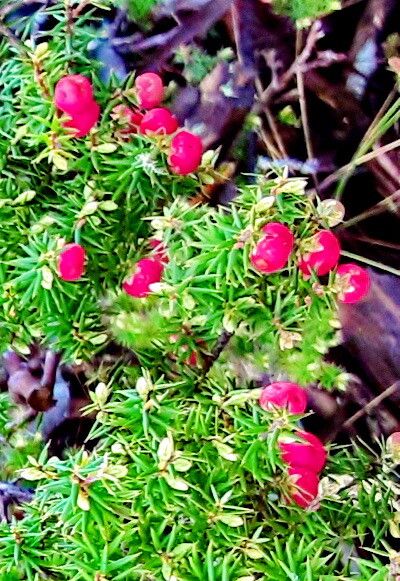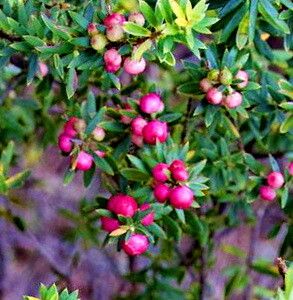
Leptecophylla tameiameiae, known as pūkiawe or maiele in the Hawaiian language, is a species of flowering plant that is native to the Hawaiian and Marquesas Islands. The specific epithet honors King Kamehameha I, who formed the Kingdom of Hawaiʻi. It grows as a tree up to 4.6 m (15 ft) tall in forests and as a shrub 0.9–3 m (3.0–9.8 ft) in height elsewhere. Its small needle-like leaves are whitish underneath, dark green above. The round berries range in color from white through shades of pink to red. Pūkiawe is found in a variety of habitats in Hawaii at elevations of 15–3,230 m (49–10,597 ft), including mixed mesic forests, wet forests, bogs, and alpine shrublands.
Hawaiian heather is quite resistant to disease and typically isn't susceptible to illnesses. As for upkeep, this plant is fairly low-maintenance. When grown outdoors it needs only light watering, and larger plants normally don't require pruning. Smaller plants, however, should be pruned after they finish blooming. Hawaiian heathert is appropriate for anyone who has an outdoor area, such as a garden or deck, and it doesn't demand much prior plant-care experience.
How to keep Leptecophylla Tameiameiae.
Light
Hawaiian heather naturally occurs in habitats like forest understories or rocky sites, where it is exposed to natural shade. It prefers partial sun but can tolerate both full sun and full shade, illustrating its hardy and adaptable nature.
Water
Hawaiian heather, a plant native to Hawaii, thrives in humid environments with consistent moisture. It is sensitive to drought and needs watering every 2-3 weeks to maintain evenly moist soil. To support its growth as an evergreen indoor plant, you can increase air humidity by misting the plant or using a pebble tray.
Temperature
Hawaiian heather comes from tropical areas, where the climate is usually warm and humid. Therefore it is well adapted to high temperatures and humidity. It does not tolerate sudden temperature changes and prefers a stable temperature, so avoiding temperature fluctuations indoors is important. It generally cannot withstand cold and requires higher temperatures to grow. If the surrounding temperature falls too low, the plant may stop growing or even die.
Fertilizer
Early spring, when the Hawaiian heather breaks dormancy, is the best time to apply fertilizer. This encourages overall growth and flower development. Fertilizing improves the foliage, stems, and branches, and supports flowers that are larger, more vivid, and longer-lasting. It helps transfer nutrients from the roots to the blooms and enhances the plant’s health and resistance to disease.
Pruning
Hawaiian heather is a resilient evergreen shrub with needle-like leaves and bright, colorful flowers. To keep the plant healthy, prune it in early spring by removing any dead branches and shaping the shrub. This will encourage growth, improve air circulation, and enhance flowering. Be sure to use clean, sharp tools to prevent the spread of disease.
Botanical profile.
- Plant Type
- Tree, Shrub
- Life Cycle
- Perennial
- Genus
- Leptecophylla
- Family
- Ericaceae
- Hardiness Zone
- 9-11
- Mature Height
- 0.91 m to 4.57 m
- Mature Spread
- 1.83 m to 2.44 m
- Leaf Color
- Dark Green
- Leaf Type
- Semi-evergreen
- Flower Color
- White
- Flower Size
- 0.51 cm
- Bloom Time
- Spring
- Planting Time
- Spring, Summer, Autumn
- Harvest Time
- Summer, Early fall