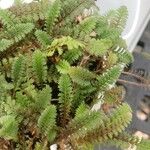
Leptinella squalida
New Zealand brass-buttons · Leptinella
Description
Source: leafsnapLeptinella squalida, commonly known as the brass buttons plant, is a low-growing perennial herb in the Asteraceae family. Native to New Zealand, it thrives in a variety of habitats, including rocky outcrops, alpine meadows, and coastal cliffs. This plant features small, fern-like green leaves that grow in a rosette pattern. The leaves are intricately divided into fine segments, giving them a delicate texture. From spring to summer, Leptinella squalida produces tiny yellow or green button-like flowers. Renowned for its effectiveness as ground cover, Leptinella squalida grows close to the ground and spreads rapidly through runners or stolons. It thrives in well-drained soil with moderate moisture but can endure drought conditions once established. Due to its appealing foliage and color contrast, the brass buttons plant is popular for ornamental use in rock gardens or borders. Additionally, it holds medicinal value for treating various ailments, such as stomach disorders. In summary, Leptinella squalida is an attractive herbaceous perennial with unique foliage, suitable for diverse landscaping purposes. It also possesses medicinal properties, traditionally utilized by the Maori, the indigenous people of New Zealand.
Care Guide
💧 Water Every 7 days
Leptinella thrives in conditions that mimic temperate regions and prefers soil that remains evenly moist. While it can tolerate moderate drought, it benefits from higher humidity levels. For optimal growth, it is recommended to water the plant weekly. Leptinella grows best outdoors in well-draining soil, which simulates its native wet-dry cycle.
☀️ Light Partial sun
Leptinella naturally occurs in habitats like forest understories and rocky sites, where it gets natural shade. It favors partial sun but can accommodate full sun or full shade, showing its adaptable and hardy nature.
What are the sunlight requirements for Leptinella squalida?
Leptinella squalida, also known as Leptinella, thrives in various sunlight conditions. For plants to enjoy full sun, they need above 6 hours of sunlight daily, which promotes healthy growth. However, they can also flourish in partial sun, requiring about 3-6 hours of sunlight. It's essential to observe the way sunlight moves through your garden throughout the day. Identifying areas that offer an optimal balance of light and shade will ensure your Leptinella plants are happy and healthy. This approach allows you to choose the best spots for planting, taking into account the unique lighting conditions of your garden space.
🌡️ Temperature 10–35°C
Leptinella can tolerate a wide range of temperatures, but its distribution can still be restricted by specific combinations of moisture and heat. It performs best in warm summer climates with enough rainfall or watering. Long periods of cloudy, rainy weather, as well as extended high temperatures, increase the chance of Leptinella dying. In winter, adequate protection from the cold can raise the plant’s survival rate.
💨 Humidity
🪴 Soil 6-7
🌱 Fertilizer
A single fertilizer application in spring is generally enough for Leptinella, although multiple feedings can boost growth. Feed about once every one to one-and-a-half months. Fertilization improves the appearance and function of the leaves, helping them retain uniform color and a healthy texture. It also promotes root development and nutrient uptake for sustained plant health.
🪴 Pot & Repot Every 12 months
✂️ Pruning
Leptinella is characterized by its lush, mat-forming growth and small, fern-like leaves. Prune it in early spring to encourage new growth, remove any winter damage, and keep its shape compact. Regular trimming helps prevent overcrowding, promoting healthier growth and enhancing both its visual appeal and effectiveness as ground cover.
🌿 Propagating
🐛 Diseases & pets
☠️ Toxicity
Brass buttons plants are non-toxic to humans and animals.
Characteristics
- Plant Type
- Herb
- Life Cycle
- Perennial
- Genus
- Leptinella
- Family
- Asteraceae
- Hardiness Zone
- 6-9
- Mature Height
- 3 cm
- Mature Spread
- 30 cm
- Leaf Color
- Green, Black, Bronze
- Leaf Type
- Evergreen
- Flower Color
- Green
- Flower Size
- 0.25 cm to 0.51 cm
- Bloom Time
- Mid spring, Late spring, Early summer
- Planting Time
- Spring, Summer, Autumn
- Harvest Time
- Summer
- Native Area
- New Zealand