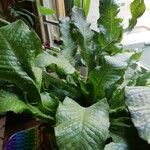
Leptochilus pteropus
Java fern
Description
Source: leafsnapLeptochilus pteropus, synonym Microsorum pteropus, commonly known as Java fern after the Indonesian island of Java, can be found in Malaysia, Thailand, Northeast India and some regions of China. It is a highly variable plant with several different geographic varieties that vary in leaf size and shape. Found in its natural habitat growing attached to roots and rocks, it can grow in both fully and partially submerged environs. The plant can propagate through small adventitious plants formed on older leaves, which attach themselves to hard substrates.
Care Guide
💧 Water
☀️ Light Full shade
Java fern is native to habitats such as forest undergrowth or rocky terrain that provide natural shade. It prefers Full Shade but can tolerate Partial Sun.
🌡️ Temperature 20–41.1°C
Java fern comes from tropical regions, where the climate is generally warm and humid. Consequently, it is adapted to high temperatures and humidity. It does not tolerate sudden temperature changes and prefers a stable temperature environment, so avoiding temperature fluctuations indoors is important. It usually cannot withstand cold temperatures and requires higher temperatures to grow. If the surrounding temperature drops too low, the plant may stop growing or even die.
💨 Humidity
🪴 Soil 6-7
🌱 Fertilizer
🪴 Pot & Repot
✂️ Pruning
🌿 Propagating
🐛 Diseases & pets
☠️ Toxicity
Characteristics
- Plant Type
- Fern
- Life Cycle
- Perennial
- Genus
- Leptochilus
- Family
- Polypodiaceae
- Hardiness Zone
- 9-13
- Mature Height
- 30 cm
- Mature Spread
- 15 cm to 20 cm
- Leaf Color
- Green
- Leaf Type
- Evergreen
- Planting Time
- Spring, Autumn
- Native Area
- Nepal, Sri Lanka, India, Indonesia, Vietnam, Myanmar, Philippines, Bangladesh, Laos, Thailand, China