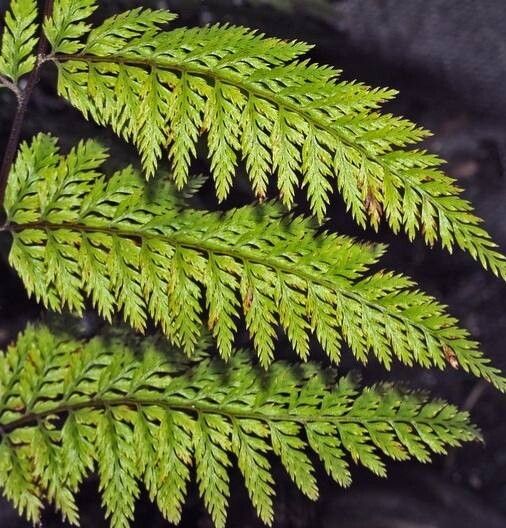
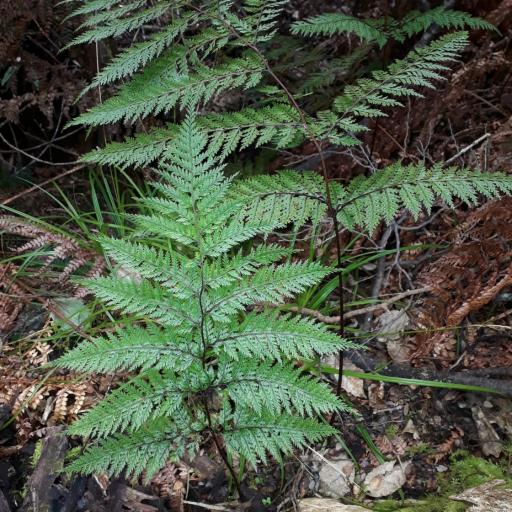
Leptolepia is a genus of ferns in the family Dennstaedtiaceae described as a genus in 1892. Leptolepia contains only one accepted species, Leptolepia novae-zelandiae, native to New Zealand. formerly included Leptolepia maxima (E. Fourn.) C. Chr., syn of Oenotrichia maxima (E.Fourn.) Copel. Leptolepia novae-zelandiae is commonly known as lace fern. The fronds of the lace fern are widely spaced, intricate and have a similar texture to lace. Lace fern can grow up to 0.75 metres high and a width of 1.5 metres.
Lace fern typically shows good disease resistance and is affected by relatively few insect pests. Its care is considered difficult because it needs a consistently moist environment and frequent watering. At the same time, the roots are susceptible to rot if overwatered or if the environment is poorly ventilated. Lace fern is better suited to people with some growing experience, since many can keep it alive for a time. Nevertheless, it may have difficulty thriving and its leaves can dry out and become less healthy over time.
How to keep Leptolepia Novae Zelandiae.
Light
Lace fern is native to habitats such as forest understories or rocky areas that provide natural shade. It prefers Full Shade but can tolerate Partial Sun.
Temperature
Lace fern grows best in forest thickets. It is very sensitive to temperature and humidity; high heat, dry conditions, and strong sunlight can all make Lace fern uncomfortable. In summer it needs adequate shading and a humid environment. Generally, Lace fern does not require special care in winter, but an extended winter drought can still be fatal to the plant.
Botanical profile.
- Plant Type
- Fern
- Life Cycle
- Perennial
- Genus
- Leptolepia
- Family
- Dennstaedtiaceae
- Hardiness Zone
- 8-11
- Mature Height
- 30 cm to 91 cm
- Mature Spread
- 30 cm to 61 cm
- Leaf Color
- Light Green, Forest Green
- Leaf Type
- Semi-evergreen
- Planting Time
- Spring, Summer
- Native Area
- New Zealand