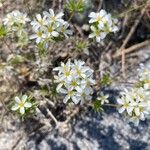
Leptosiphon nuttallii
Nuttall's linanthus
Description
Source: leafsnapLeptosiphon nuttallii is a species of flowering plant in the phlox family known by the common name Nuttall's linanthus. It is native to much of western North America, including the Western United States from California to New Mexico and Montana, and Northwestern Mexico. It is known from many types of habitat. It is native to the Klamath Mountains, Northern California Coast Ranges and Sierra Nevada in Northern California; and the Inyo Mountains, Peninsular Ranges, Transverse Ranges, and White Mountains in Southern California.
Care Guide
💧 Water
Nuttall's linanthus flourishes with moderate moisture, preferring consistent weekly watering to mimic its natural habitat. This hardy herbaceous plant thrives outdoors, making the most of natural rainfall during the peak growing season, yet can also endure periods without excessive watering.
☀️ Light Full sun
Nuttall's linanthus thrives with plentiful sunlight, growing best when exposed to the sun all day. Its native habitat provides full-day sun exposure. However, neither a shortage nor an excess of sunlight greatly affects it, indicating a high degree of adaptability.
What are the sunlight requirements for Nuttall's linanthus?
Nuttall's linanthus requires a generous amount of sunlight to flourish, with optimal growth observed when the plant receives daylong sun exposure. Its original habitat conditions provide it with abundant sunlight, indicating the plant's high adaptability to varying light levels. It's essential to choose locations in your garden that offer a good balance of light and shade, as advised, ensuring areas with at least 6 hours of direct sunlight to meet the full sun requirements of the plant.
How can I supplement natural lighting for Nuttall's linanthus indoors?
When natural sunlight is insufficient, especially during winter or in less sunny spaces, artificial lighting can be a crucial solution for maintaining the optimal growth of Nuttall's linanthus indoors. Select the appropriate type of artificial light, such as LED lights that can be customized to provide specific light wavelengths needed by your plants. Full sun plants require 30-50W/sq ft of artificial light, partial sun plants need 20-30W/sq ft, and full shade plants require 10-20W/sq ft. The light source should be placed 12-36 inches above the plant to mimic natural sunlight conditions, ensuring the plants receive 8-12 hours of light per day.
What are some common symptoms of incorrect lighting for Nuttall's linanthus?
Nuttall's linanthus exhibits several symptoms when exposed to inadequate lighting conditions. Common signs include smaller new leaves, leggy or sparse growth, faster leaf drop, slower or no new growth, and lighter-colored new leaves. Additionally, overexposure to sunlight can lead to chlorosis (leaves turning yellow), sunscald, leaf curling, wilting, and leaf scorching. These symptoms highlight the importance of providing the correct amount of sunlight to prevent stress and promote healthy plant growth.
How can I address and mitigate lighting issues for Nuttall's linanthus?
To address lighting issues for Nuttall's linanthus, consider implementing solutions that help modulate light exposure. For indoor plants, gradually move them to sunnier locations, ensuring they receive at least 6 hours of direct sunlight daily, or utilize artificial lighting like desk lamps or professional plant grow lights for a minimum of 8 hours a day. Outdoor plants should be gradually moved to optimal sunlight spots, avoiding sudden changes to prevent sunburn. For ground plants, reducing obstructions by pruning trees or transplanting to sunnier locations can significantly improve light exposure. Remember, affected parts may not recover, but new growth should be healthy once proper light conditions are established.
🌡️ Temperature 5–35°C
Nuttall's linanthus is a plant native to habitats with temperatures ranging from 41 to 95 °F (5 to 35 °C). It prefers mild temperatures for optimal growth. Seasonal adjustments may be required to maintain these temperatures for its best health.
What is the optimal growth temperature for Nuttall's linanthus?
Nuttall's linanthus thrives in environments where the temperature ranges from 41 to 95 °F (5 to 35 °C). This plant prefers mild temperatures for its optimal growth. To keep the plant healthy, seasonal adjustments may be necessary to maintain these temperature ranges. As Nuttall's linanthus possesses strong cold resistance, special frost protection measures are generally not required during winter. However, in cases where winter temperatures are forecasted to dip below -30°C, protecting the plant is essential. This can be done by covering the plant with soil or straw. Additionally, it is beneficial to water the plant abundantly before the first freeze in autumn to ensure the soil remains moist and enters the winter in a frozen state, helping to prevent drought and water scarcity during winter and early spring.
How does Nuttall's linanthus react to low temperatures?
Nuttall's linanthus is notably cold-tolerant, performing best when the temperature stays above 5°C. During the winter months, it is crucial to keep the temperature above -25°C for the plant's well-being. Should temperatures fall below -30°C, the plant may not show immediate signs of distress during the winter, but there could be a noticeable decrease in sprouting or a complete lack of sprouting come spring. To manage this, it is advised to remove any parts of the plant that have failed to sprout in the spring.
How does Nuttall's linanthus react to high temperatures, and what are the solutions?
In the summer season, it's important to ensure that the temperatures do not exceed 35°C for Nuttall's linanthus. When temperatures rise above 38°C, the plant may exhibit signs of stress such as lighter leaf color, curling leaves, susceptibility to sunburn, and in severe cases, the plant may wilt and dry up. To mitigate these effects, removing the sunburned and dried-up parts of the plant is advisable. Additionally, relocating the plant to a spot that provides shade during the midday and afternoon sun or using a shade cloth to create shade can be beneficial. Ensuring the plant is watered in the morning and evening will help keep the soil moist and further aid in protecting the plant from high temperatures.
💨 Humidity
🪴 Soil 6-7
🌱 Fertilizer
The best time to fertilize a Nuttall's linanthus is in early spring, when it is coming out of dormancy and entering active growth. Fertilization supplies essential nutrients for healthy growth. Although Nuttall's linanthus has relatively low fertilizer needs, annual fertilization can improve its survival and promote better, longer-lasting flowers.
🪴 Pot & Repot
✂️ Pruning
Nuttall's linanthus is a ground-covering plant with delicate flowers. To encourage healthy blooms, it's beneficial to prune the plant in early spring. This helps remove dead stems, improves air circulation, reduces the risk of disease, and ensures vibrant displays. Be sure to use clean, sharp tools to create optimal growth conditions.
🌿 Propagating
🐛 Diseases & pets
☠️ Toxicity
Characteristics
- Plant Type
- Herb, Shrub
- Life Cycle
- Perennial
- Genus
- Leptosiphon
- Family
- Polemoniaceae
- Hardiness Zone
- 4-9
- Mature Height
- 15 cm to 30 cm
- Mature Spread
- 15 cm to 25 cm
- Leaf Color
- Green
- Leaf Type
- Deciduous
- Flower Color
- White, Lavender
- Flower Size
- 1.02 cm
- Bloom Time
- Mid spring, Late spring, Early summer
- Planting Time
- Spring, Summer
- Harvest Time
- Summer