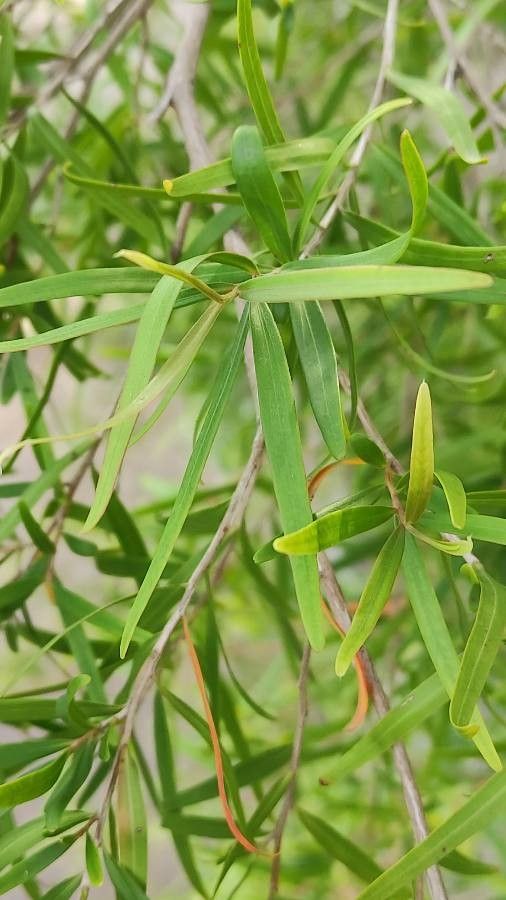
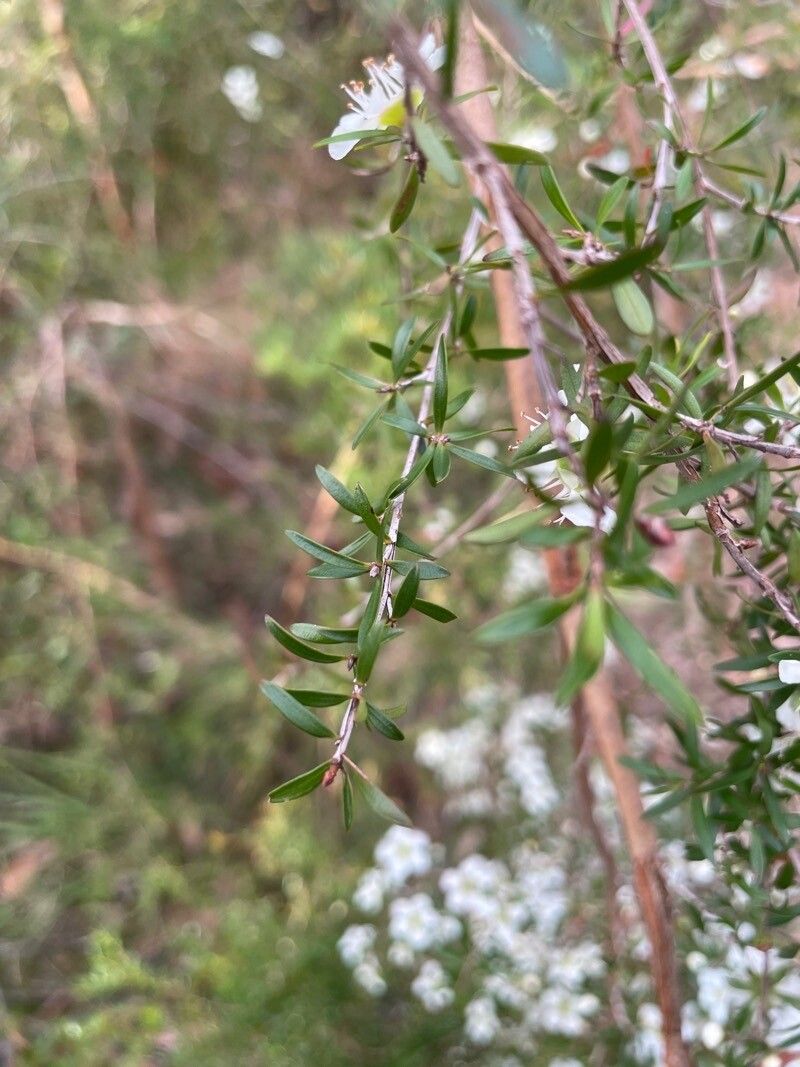
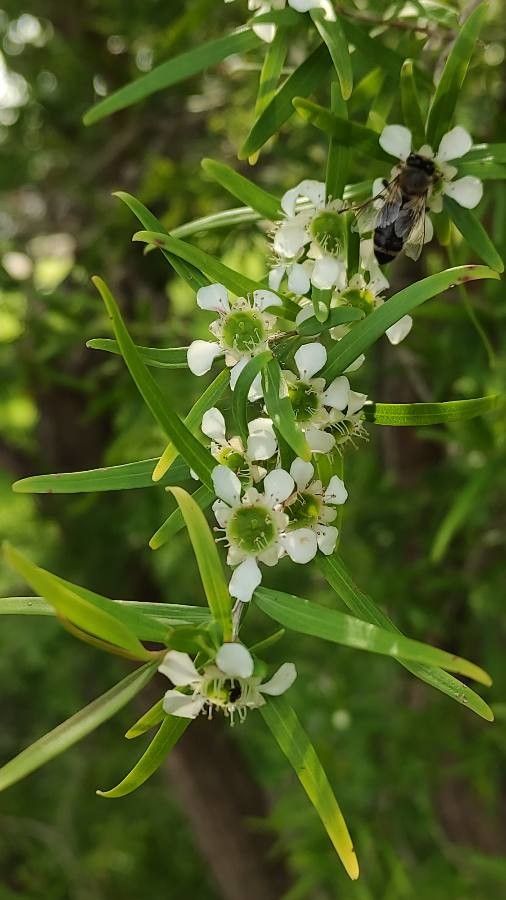
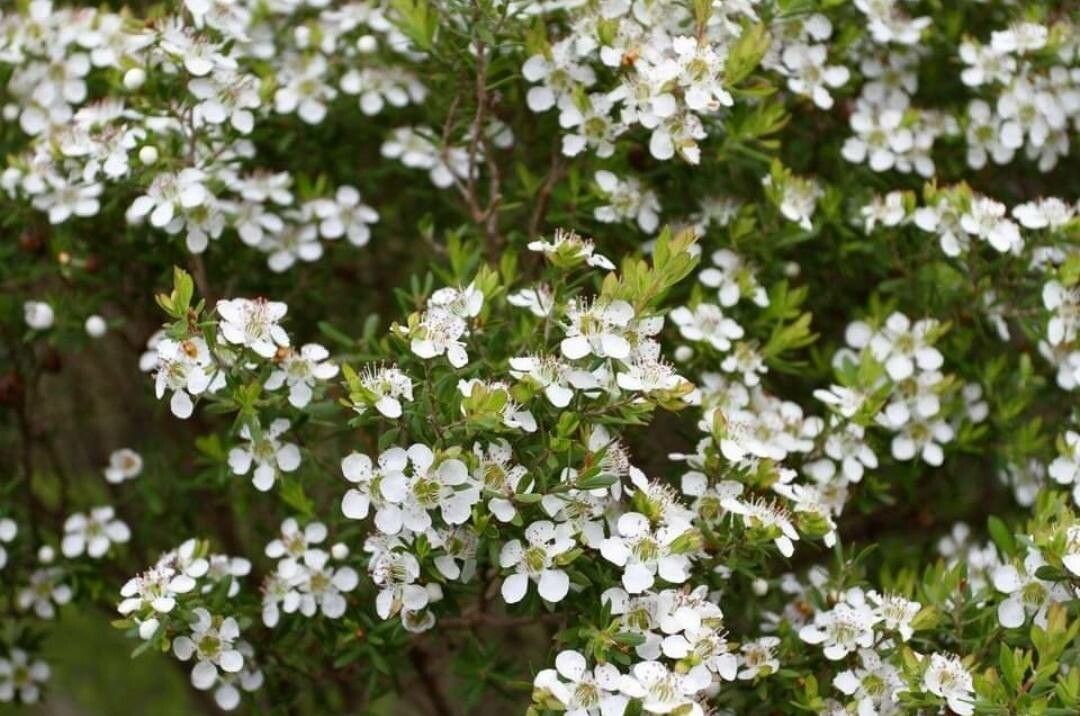
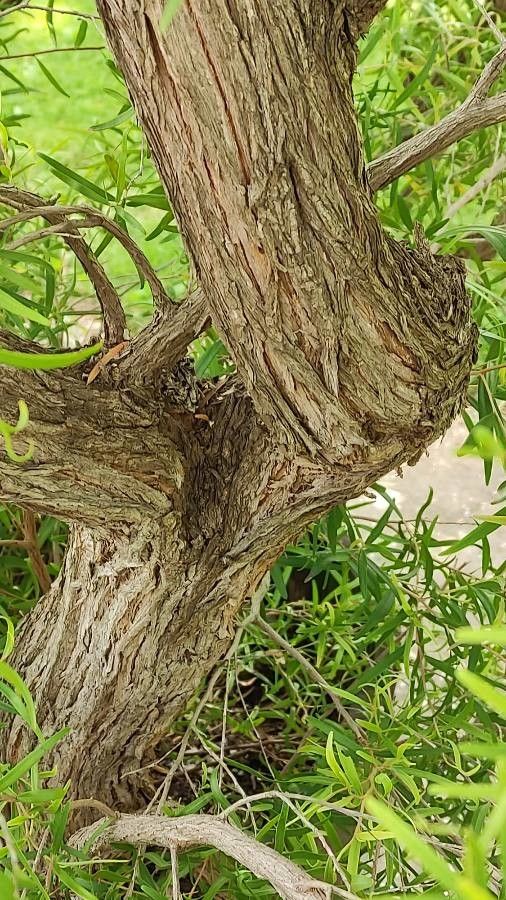
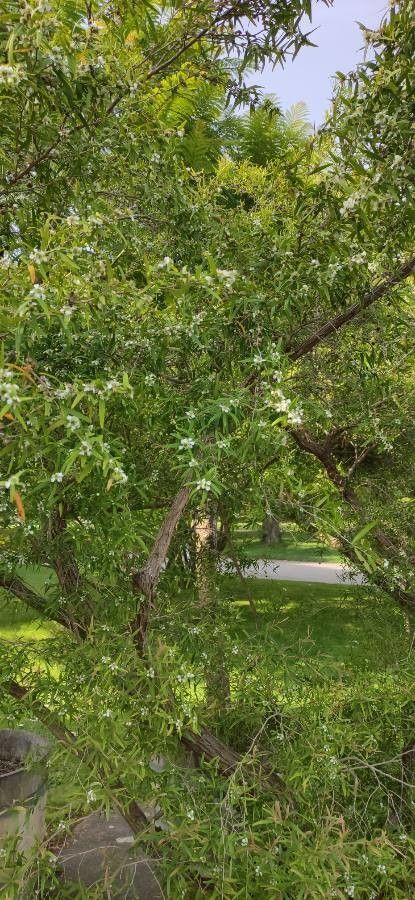
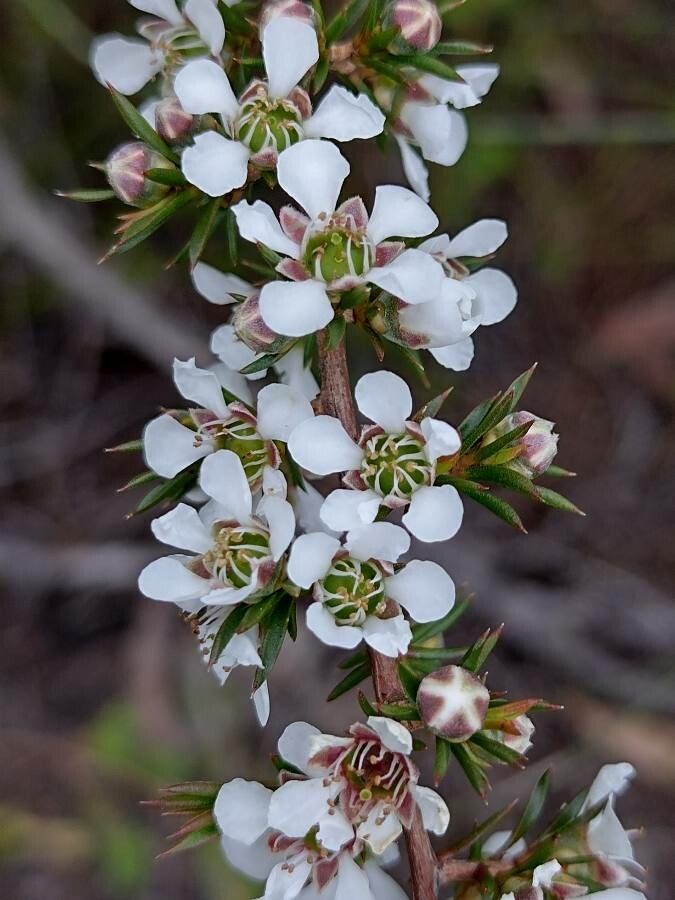
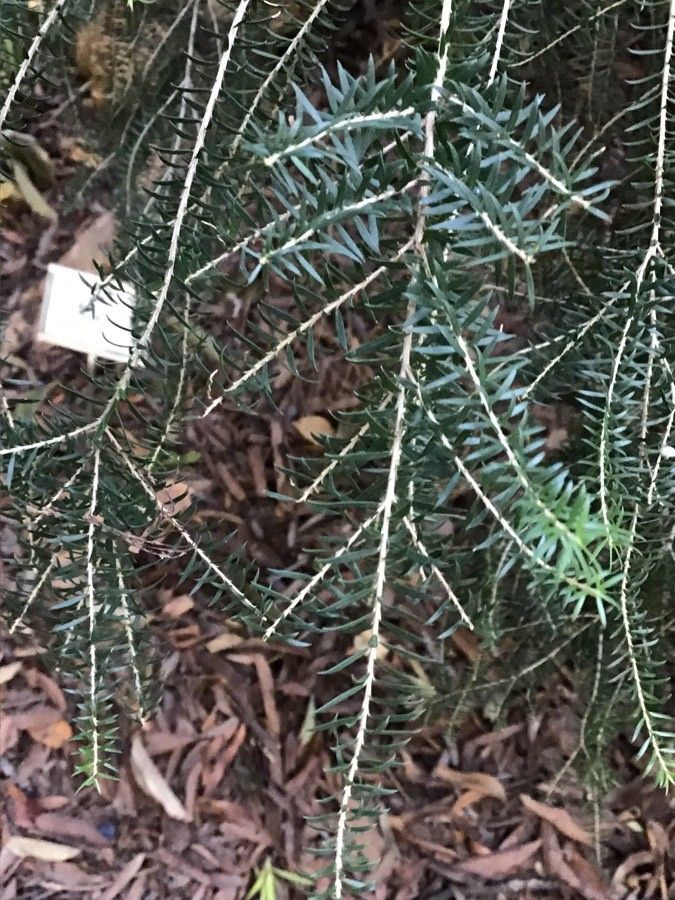
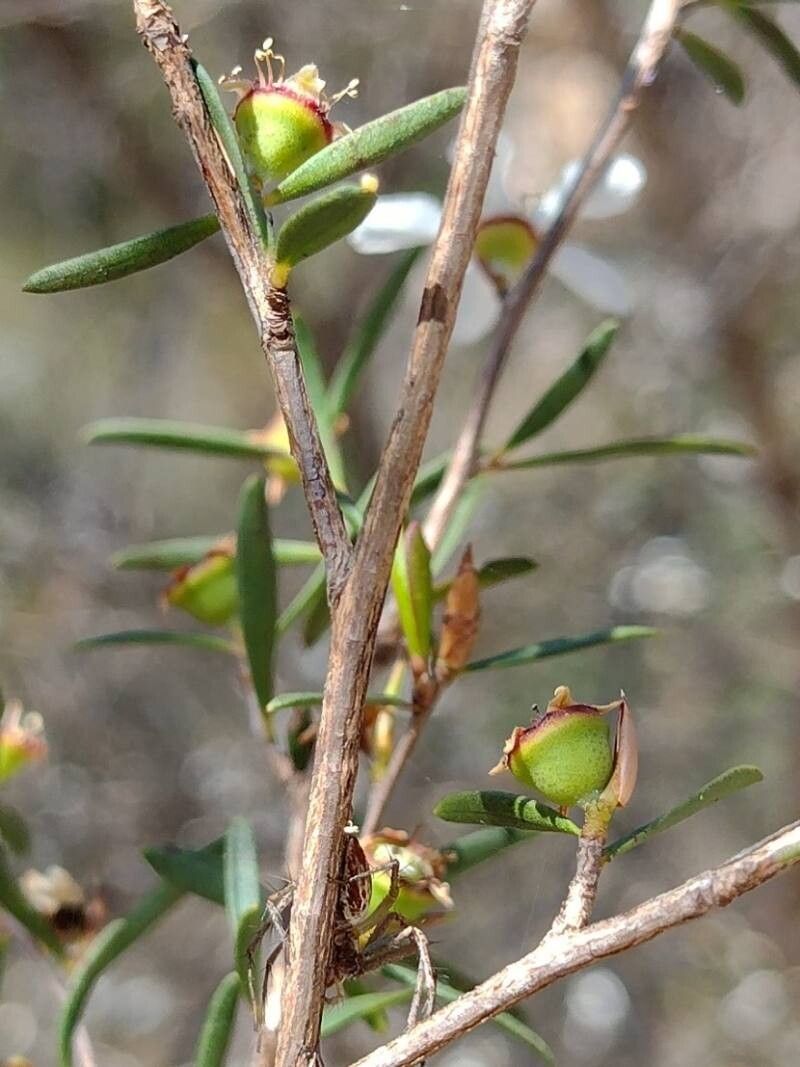
Leptospermum continentale, commonly known as prickly tea-tree, is a species of slender, straggling shrub that is endemic to south-eastern Australia. It has sharp-pointed, narrowly egg-shaped leaves, white flowers arranged singly in leaf axils and woody fruit that remains on the plant when mature.
The prickly tea-tree is resistant to disease and typically not susceptible to illnesses. In terms of care, this plant is fairly low-maintenance. When grown outdoors it needs only light watering, and larger specimens usually do not require pruning. Smaller plants, however, should be pruned after they finish blooming. The prickly tea-tree is suitable for anyone with an outdoor area, such as a garden or deck, and does not need extensive gardening experience.
How to keep Leptospermum Continentale.
Light
The prickly tea-tree favors a spot that balances shade and sun, reflecting its preference for partial exposure. It performs best where daylight is gently filtered. Excessive exposure can harm its growth, while insufficient light can slow its development. Its native habitat, which features mixed sunlight, explains this behaviour.
Water
The prickly tea-tree is a hardy plant that thrives in dry conditions due to its high drought tolerance. It typically requires watering every 2-3 weeks. While it is usually grown outdoors, it benefits from natural rainfall. Be careful not to overwater it during its dormant period, as this can lead to root rot.
Temperature
Prickly tea-tree is very adaptable to different climate conditions, whether in hot summers or cold winters. It nevertheless has a preferred temperature range for healthy growth. When temperatures become too high, the plant can experience heat and humidity stress that may lead to its death. In locations where temperatures approach the lower limit of its cold tolerance, insulating measures should be used to protect the plant.
Fertilizer
Correct timing is vital when fertilizing Prickly tea-tree. Begin feeding in early spring and continue monthly until early summer. Fertilizer encourages attractive blooms and supplies energy both during dormant periods and active growth phases.
Pruning
To help your prickly tea-tree thrive, regular pruning is recommended, especially during its dormant phase in winter. Focus on removing dead branches and thinning out the tree to improve air circulation. Using clean tools is crucial to prevent disease, promote healthier growth, enhance flowering, and maintain the tree's shape.
Botanical profile.
- Plant Type
- Shrub
- Life Cycle
- Perennial
- Genus
- Leptospermum
- Family
- Myrtaceae
- Hardiness Zone
- 8-11
- Mature Height
- 0.91 m to 2.13 m
- Mature Spread
- 2.13 m
- Leaf Color
- Green, Blue
- Leaf Type
- Evergreen
- Flower Color
- White
- Flower Size
- 0.10 cm
- Bloom Time
- Mid spring, Late spring, Early summer
- Planting Time
- Spring, Summer, Autumn
- Harvest Time
- Mid summer, Late summer, Early fall
Other names.
Reader questions.
How should I water my Prickly tea-tree?
Your Prickly tea-tree is not picky about how you water it. You can use any common watering tool, such as cans, hoses, or cups, to moisten its soil. Regardless of the tool, make sure to water the soil directly and evenly to ensure all parts of the root system receive enough water. It's helpful to use filtered water as tap water may have harmful particles. Also, use water that is at or slightly above room temperature to avoid shocking the Prickly tea-tree. However, the plant usually responds well to any type of water.
What are the sunlight requirements for a Prickly tea-tree?
The Prickly tea-tree requires about 3-6 hours of sunlight daily, preferring partial sun exposure. This preference is based on its native habitat, which experiences a blend of sun and shade. It's crucial to observe the movement of sunlight in your garden to find spots that offer the right balance for the plant. Too much sun can harm the plant, while too little can impede its growth. The plant thrives best with a softened dilution of daylight.
What is the botanical name of Prickly tea-tree?
The botanical name of Prickly tea-tree is Leptospermum continentale.
How much water should I give my Prickly tea-tree?
Watering your Prickly tea-tree can be surprising because it doesn't always need a lot of water. If the soil has only dried a few inches since your last watering, give it about five to ten ounces of water. You can also consider the soil moisture and how many inches have dried out between waterings. To ensure your Prickly tea-tree gets enough moisture, water until all the dry soil layers are moistened. If more than half of the soil has dried, give it extra water until you see drainage from the pot's holes. If your Prickly tea-tree is in a rainy outdoor area, it may not need additional watering. When it's young, it needs 1-2 inches of rain per week. Once established, it can rely on rainwater, but if it's really hot and there's no rain for 2-3 weeks, give it a good watering to prevent stress.
How can artificial lighting benefit indoor plants?
Indoor plants, including the Prickly tea-tree, can significantly benefit from artificial lighting, especially when natural sunlight is inadequate. This is common during winter or in less sunny interior spaces. Artificial lights, such as LEDs, are ideal because they can be customized to provide specific light wavelengths needed by the plants. For optimal growth, full sun plants require 30-50W/sq ft, partial sun plants need 20-30W/sq ft, and full shade plants need 10-20W/sq ft of artificial light. The light source should be placed 12-36 inches above the plant to mimic natural sunlight, and most plants need 8-12 hours of light per day.
How should I water my Prickly tea-tree as it grows?
When the Prickly tea-tree is young, especially in the seedling stage, it requires more water compared to when it is mature. It is essential to keep the soil consistently moist during the early stages to promote root development. This also applies to any Prickly tea-tree that has been transplanted to a new location. Additionally, with proper care, the Prickly tea-tree can produce attractive flowers and fruits. If your Prickly tea-tree is currently in the flowering or fruiting phase, it may require a bit more water than usual to support these plant structures.
What are the symptoms of insufficient light in Prickly tea-trees?
When a Prickly tea-tree doesn't receive enough light, several symptoms can manifest. These include smaller new leaves, leggy or sparse growth, faster leaf drop, slowed or halted growth, and lighter-colored new leaves. Additionally, the plant may exhibit chlorosis, where leaves lose their green color and turn yellow, and sunscald, which damages plant tissues with intense light exposure. Leaf curling, wilting, and leaf scorching are also common symptoms, indicating excessive sunlight or poor adaptation to light conditions.
How should I give my Prickly tea-tree water throughout the year?
The frequency of watering your Prickly tea-tree will be affected by seasonal changes. In the hottest summer months, you may need to water it more often, especially if it gets lots of sunlight. Summer sun can quickly dry out the soil, so you'll need to water it more frequently. On the other hand, during the winter when the plant isn't actively growing, it will need much less water. You can water it once every 2 to 3 weeks or even skip watering altogether. If you're growing this plant indoors, be cautious of appliances like air conditioners that can cause it to dry out faster, requiring more frequent watering.
How can I manage light exposure for Prickly tea-trees?
To manage light exposure for Prickly tea-trees effectively, gradually adapt the plants to changing light conditions by shifting them to sunnier spots each week until they achieve the recommended 3-6 hours of direct sunlight daily. For large or immobile indoor plants, consider supplemental artificial lighting, keeping a light source on for at least 8 hours a day. For outdoor plants, avoid drastic changes in light intensity to prevent sunburn. Additionally, for ground-planted varieties, reduce sunlight obstructions by pruning nearby trees or relocating the plant to a sunnier location, especially if it's smaller. Remember, parts of the plant that have suffered from insufficient light may not recover, but new growth should be healthy with corrected light exposure.