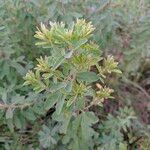
Lespedeza capitata
Round-head bush-clover · Round-head lespedeza · Dusty-clover · Roundhead lespedeza · Round-headed Bush Clover
Description
Source: leafsnapLespedeza capitata is a species of flowering plant in the Fabaceae, or legume family, and is known by the common name roundhead bushclover, or roundhead lespedeza. It is native to eastern North America, including eastern Canada and the eastern half of the United States.This plant is a perennial herb with erect stems growing up to 1.5 meters tall. The taproot may grow over two meters deep into the soil, with lateral roots reaching out one meter horizontally. The alternately arranged leaves are each made up of several leaflets. The plant is coated in silvery hairs. Flowers are borne in somewhat rounded clusters atop each stem. The flower is white with a purple spot.This plant is used as a component of seed mixes for vegetating rangeland. It is a good addition to livestock forage, as it is palatable and nutritious. USDA NRCS Plant Guide. The plant can also be used in flower arrangements.This plant had a number of medicinal uses for Native American groups. It was used as a moxa to treat rheumatism. The Comanche used the leaves for tea. The Meskwaki used the roots to make an antidote for poison. The Pawnee people referred to the plant as rabbit foot (parus-asu) on account of the shape of its fruits and made a tea from the dry stems and leaves when coffee was not available. Among the Omaha and Ponca peoples, it was known as the male buffalo bellow plant.The cultivar 'Kanoka' was released by the USDA in 1998.This plant may suffer from the rust pathogen Uromyces lespedezae-procaumbentis and the tar spot fungus Phyllachora lespedezae, as well as herbivory by the insect Pachyschelus laevigatus.
🎭 A four-leaf clover brings great luck, and people say that wearing one in your hat will let you see fairies.
Care Guide
💧 Water
Roundhead bushclover thrives in consistently moist soil and typically requires weekly watering to meet its moderate water needs. Although it can withstand short periods of drought, it flourishes during the growing season when it receives natural rainwater, which boosts its vigor and flowering potential.
How often should I give water to my Roundhead bushclover?
If your Roundhead bushclover is in a pot, the most accurate way to determine when it needs water is by checking the soil with your finger. If the top two to three inches of soil are dry, it's time to water it. If you're growing your Roundhead bushclover outdoors in the ground, you can use the same method. Once the first few inches of soil have dried out, it's time to water. Typically, during spring and early fall, you'll need to water this plant approximately once a week using this method. However, during extremely hot weather, you may need to water it twice a week or more. That being said, mature and well-established Roundhead bushclovers have the remarkable ability to withstand drought.
How should I water my Roundhead bushclover?
To properly water the Roundhead bushclover, it is recommended to use filtered water at room temperature. Tap water should be avoided as it may contain harmful particles. The plant prefers warm water as it comes from a warm environment, thus cold water can be shocking. It is also advised not to water the plant from above to prevent foliage issues. Instead, pour the filtered room temperature water onto the soil until it is thoroughly soaked. This method benefits the plant by moisturizing the roots and aiding their nutrient absorption as they spread through the soil.
If I give my Roundhead bushclover too much or too little water, what should I do?
Overwatering is a common problem for the Roundhead bushclover. It can cause wilting and yellowing of the stems and leaves, as well as diseases like root rot, mold, and mildew, which can be fatal for the plant. Underwatering is less common, but still possible, and can cause the leaves to become brittle and brown. It's important to be vigilant and notice the signs of overwatering early on. If you see these signs, reduce your watering schedule and consider changing the soil to improve drainage. If your plant is showing signs of underwatering, simply increase your watering frequency until the signs go away.
How much water does my Roundhead bushclover require?
When watering your Roundhead bushclover, don't be afraid to give it a lot of water. Make sure the top few inches of soil are dry before watering and then give it a thorough soaking. Add enough water so that it flows out of the drainage holes at the bottom of the pot. If you don't see excess water draining, you probably didn't give it enough water. However, be careful not to let water accumulate in the soil, as this can harm the plant. If the water isn't draining properly, you might have poorly draining soil, which is not good for the plant's health. If the plant is outside, about 1 inch of rain per week should be enough.
How do I water my Roundhead bushclover as it grows?
The water needs of the Roundhead bushclover vary depending on its growth stages. In the first few years or after being transplanted, it requires more water. During these stages, the plant is focused on developing new roots that will support future growth, so they need extra moisture. After a few seasons, the water requirements decrease. Additionally, during the bloom period, the plant needs more water to support flower development.
☀️ Light Full sun
The roundhead bushclover thrives when it receives ample sunlight each day, promoting healthy growth. It can also tolerate less intense sun exposure. Across its different growth stages, its need for sunlight remains consistent. Originating in open habitats, it is adapted to withstand strong sun. However, uneven light exposure can impair its health or result in stunted growth.
What are the sunlight requirements for Roundhead bushclover?
Roundhead bushclover thrives in full sunlight, requiring above 6 hours of sunlight daily for healthy growth. It can also cope with partial sun, about 3-6 hours of sunlight. However, the right balance of light and shade is crucial for the plant's health, as unbalanced light exposure may lead to stunted growth or poor health. It's important to observe how sunlight moves through your garden to find the ideal spot for your Roundhead bushclover, ensuring it gets the ample sunlight it is accustomed to from its origins in open environments.
Can Roundhead bushclover grow with artificial lighting?
Yes, Roundhead bushclover can grow with artificial lighting, which is especially helpful when natural sunlight is insufficient, such as in winter or less sunny spaces. Indoor plants benefit from artificial lights, which can be customized to provide specific wavelengths needed for the plant’s growth. LED lights are a popular choice, offering a solution that promotes faster, healthier growth. For full sun plants, 30-50W/sq ft of artificial light is recommended, 20-30W/sq ft for partial sun plants, and 10-20W/sq ft for full shade plants. The light source should be placed 12-36 inches above the plant and be kept on for 8-12 hours per day to mimic natural daylight hours.
What are the signs of insufficient sunlight in Roundhead bushclover?
Signs of insufficient sunlight in Roundhead bushclover include smaller new leaves, leggy or sparse growth, faster leaf drop, slower or no new growth, lighter-colored new leaves, and symptoms of chlorosis where leaves lose their green color and turn yellow. Extreme sunlight exposure can also cause issues like sunscald, leaf curling, wilting, and leaf scorching. These symptoms indicate the plant is not receiving the optimal light conditions for its growth, either too little or too much sunlight.
How can I improve sunlight exposure for my Roundhead bushclover?
To improve sunlight exposure for Roundhead bushclover, gradually move the plant to a sunnier location, ensuring it receives at least 6 hours of direct sunlight daily. If indoors, use a south-facing window and keep curtains open during the day. For larger or non-movable plants, consider using artificial lighting, such as desk or ceiling lamps, or invest in professional plant grow lights for at least 8 hours daily. Outdoors, choose spots with optimal sunlight and avoid sudden changes in light intensity to prevent sunburn. Additionally, reducing obstructions like pruning trees or transplanting the plant to a sunnier location can significantly improve light exposure. Note that parts of the plant affected by insufficient sunlight may not recover, but new growth will be healthy with increased light exposure.
🌡️ Temperature 5–32.2°C
Roundhead bushclover is suited to temperate climates and prefers temperatures between 41 and 89.6 °F (5 to 32 ℃). Under native growth conditions it can prosper through mild winters and warm summers. Depending on local climate, seasonal adjustments may be necessary.
What is the preferred climate for Roundhead bushclover?
Roundhead bushclover, also known by its botanical name Lespedeza capitata, is well-suited to temperate climates. It thrives in a temperature range of 41 to 89.6 °F (5 to 32 °C). The plant adapts well to conditions with mild winters and warm summers. Depending on the local climate, seasonal adjustments may be necessary to cater to its growth needs. Given its strong cold resistance, special frost protection measures are typically not required during winter. However, in extreme cases where temperatures drop below -30°C, protective measures such as covering the plant with soil or straw should be considered. Additionally, to mitigate the risks of drought and water scarcity during winter and early spring, it's advisable to water the plant abundantly before the first freeze of autumn to ensure the soil remains moist.
How does Roundhead bushclover respond to low temperatures?
Roundhead bushclover is notably cold-tolerant and performs optimally when the temperature stays above 5°C. Through winter, it is crucial to maintain temperatures above -25°C for its survival. Although the plant can withstand temperatures down to -30°C without noticeable changes during the winter, such extreme cold can lead to reduced sprouting or a complete lack of sprouting in spring. To address this, any parts of the plant that fail to sprout in spring should be removed.
What should be done if Roundhead bushclover experiences high temperatures?
During the summer months, it is important to ensure that the temperature around the Roundhead bushclover does not exceed 32°C. Exposure to temperatures above 35°C can cause the leaves to lighten in color, curl, become susceptible to sunburn, and in severe cases, lead to the wilting and drying out of the entire plant. To mitigate these effects, sunburned and dried parts should be trimmed away. Moving the plant to a shaded area during the midday and afternoon or using a shade cloth can provide necessary protection. Additionally, watering the plant in the morning and evening to maintain soil moisture is beneficial.
💨 Humidity
🪴 Soil 6-7
🌱 Fertilizer
The best time to fertilize Roundhead bushclover is in early spring, as it comes out of dormancy and starts active growth. Fertilization supplies essential nutrients for healthy development. Although Roundhead bushclover needs relatively little fertilizer, applying it once a year can improve its survival and encourage better, longer-lasting blooms.
🪴 Pot & Repot
✂️ Pruning
Roundhead bushclover has rounded flower heads and sturdy stems that benefit from pruning in the spring. Key techniques include removing damaged branches and thinning the stems to enhance growth and improve air circulation. This practice encourages vigorous growth, enhances flowering, helps prevent disease, and promotes overall plant health.
🌿 Propagating
🐛 Diseases & pets
☠️ Toxicity
Characteristics
- Plant Type
- Herb
- Life Cycle
- Perennial
- Genus
- Lespedeza
- Family
- Fabaceae
- Hardiness Zone
- 4-8
- Mature Height
- 1.52 m
- Mature Spread
- 15 cm to 30 cm
- Leaf Color
- Green, Dark Green
- Leaf Type
- Deciduous
- Flower Color
- White
- Flower Size
- 2.54 cm
- Bloom Time
- Mid summer
- Planting Time
- Spring, Summer, Autumn
- Harvest Time
- Mid summer, Late summer, Early fall