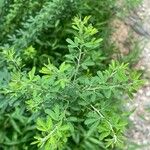
Lespedeza cuneata
Chinese Bush-clover · Chinese Bushclover · Chinese Lespedeza · Perennial Lespedeza · Sericea Lespedeza
Description
Source: leafsnapLespedeza cuneata, commonly known as Chinese bush clover or sericea lespedeza, is a perennial legume native to eastern Asia. Introduced to the United States in the early 1900s as a forage crop, it has since become an invasive species in many areas. This plant can grow up to 6 feet tall and features small pink or purple flowers that bloom from July to September. It flourishes in disturbed areas such as roadsides, pastures, and abandoned fields. Lespedeza cuneata is notable for its ability to fix nitrogen from the air into the soil through its root nodules, making it valuable for soil improvement and erosion control. However, it also competes with native plants for resources like water and sunlight, which can lead to a decrease in biodiversity. Additionally, the tannins it contains make it unpalatable for livestock, thereby reducing grazing opportunities. To manage this invasive species, conservationists and land managers across North America are employing various methods, including herbicides, prescribed burns, grazing management strategies, and mechanical removal techniques like mowing or cutting. In summary, Lespedeza cuneata is a plant with both beneficial and detrimental effects on ecosystems where it has established itself outside its native range.
🌳 Chinese bushclover isn't only useful for grazing. This high-protein forage is also being considered for biofuel because it grows rapidly and tolerates poor soils. It has been noted for its capacity to extract heavy metals, including lead, from contaminated soil. Unexpectedly, its roots can yield a yellow dye.
Care Guide
💧 Water Every 7 days
Sericea lespedeza, a plant from moderate climates, thrives with consistent hydration and can tolerate short periods of dryness. To prevent waterlogging, it benefits from weekly watering. Usually cultivated outdoors, sericea lespedeza requires attentive moisture management during its active growing season to maintain its health and vitality.
How should I water my Sericea lespedeza plant?
To properly water the Sericea lespedeza, use filtered water at room temperature or slightly warmer. Tap water may contain harmful particles, so filtered water is preferred. The plant is accustomed to warm environments, so avoid using cold water to prevent any shock. Additionally, do not water the plant from above as it can cause leaf issues. Instead, thoroughly soak the soil with your filtered room temperature water. This allows the roots to absorb moisture and nutrients, promoting healthy growth.
What should I do if I give too much or too little water to my Sericea lespedeza?
Overwatering is a more common issue than underwatering for Sericea lespedeza. Too much water can cause wilting, yellowing of stems and leaves, and can lead to diseases like root rot, mold, and mildew. Underwatering is less common, but it can cause brittle and brown leaves. It's important to recognize the signs of overwatering early, as some diseases may not be reversible if left for too long. Reduce watering if you notice signs of overwatering and consider replacing poorly draining soil. If your plant is not receiving enough water, increase watering until the signs improve.
How many times should I water my Sericea lespedeza?
If your Sericea lespedeza plant is in a pot, the most precise way to determine if it needs water is by checking the soil moisture with your finger. If the top two to three inches of soil are dry, it's time to water. If you have the plant planted outdoors in the ground, you can use the same method. Again, if the top few inches of soil are dry, it's time to water. Typically, during spring and early fall, you'll need to water this plant about once a week. However, during extremely hot weather, you may need to water twice or more per week. It's worth noting that mature, well-established Sericea lespedeza plants can withstand drought well.
How much water does my Sericea lespedeza plant require?
When you water your Sericea lespedeza, be generous with the amount of water you give. Wait until the top few inches of soil are dry, and then water the plant thoroughly until the soil is completely soaked. Make sure to water enough so that excess water flows out of the drainage holes at the bottom of the pot. If you don't see excess water draining, you may have not given enough water. However, be careful not to let water accumulate in the soil, as this can be harmful to the plant. On the other hand, if water is not draining properly, it could indicate poor soil drainage, which is not good for the plant's health. If the plant is outdoors, 1 inch of rain per week should be enough.
How do I water my Sericea lespedeza at different stages of growth?
The water needs of the Sericea lespedeza can vary depending on different growth stages. In the early years or after transplanting, the plant requires more water than usual. During these stages, the Sericea lespedeza puts a lot of energy into developing new roots to support future growth, so they need a bit more moisture compared to later stages. As the plant matures, it will require less water. Additionally, during the bloom period, when the flowers are developing, the Sericea lespedeza may need extra hydration.
☀️ Light Full sun
Chinese bushclover grows best in locations that receive sunlight for most of the day. However, it can adapt to areas with limited sun exposure during the day, including shaded spots. Adequate sunlight encourages its growth, while insufficient light can possibly impede its development.
What are the sunlight requirements for Sericea lespedeza?
Sericea lespedeza requires full sun, which means it thrives best with above 6 hours of sunlight daily. It can also adjust to partial sun or full shade conditions, where it receives about 3-6 hours of sunlight. Observing how sunlight moves through your garden is crucial for finding the perfect spots that provide a balance of light and shade, ensuring the plants' happiness and optimal growth.
How does insufficient sunlight affect Sericea lespedeza and what are the symptoms?
Inadequate sunlight can hinder the growth of Sericea lespedeza, leading to several symptoms: small leaves, leggy or sparse growth, faster leaf drop, slower or no new growth, lighter-colored new leaves, chlorosis (leaf yellowing), sunscald (damage from intense sunlight), leaf curling (to reduce water loss), wilting, and leaf scorching. These symptoms indicate the plant's struggle to adapt to low-light conditions, affecting its health and development.
What are some effective solutions for sunlight deficiency in Sericea lespedeza?
To address sunlight deficiency in Sericea lespedeza, consider gradually moving the plant to sunnier locations to receive at least 6 hours of direct sunlight daily, using a south-facing window for maximum exposure. For indoor plants not easy to move, keeping a desk or ceiling lamp on for at least 8 hours daily, or using professional grow lights, can help. Outdoors, adapt plants by moving them gradually to avoid sunburn. Minimizing obstructions like pruning trees and transplanting to sunnier locations can also be beneficial. Note that parts of the plant already affected may not recover, but new growth will be healthy with increased light exposure.
Can artificial lighting be used for Sericea lespedeza and what are the guidelines?
Yes, artificial lighting can support the growth of Sericea lespedeza when natural sunlight is insufficient, especially indoors during winter or in less sunny spaces. The optimal use entails selecting the right type of light (LED lights are recommended for their customizable output), setting the correct intensity (30-50W/sq ft for full sun plants, 20-30W/sq ft for partial sun, and 10-20W/sq ft for full shade), positioning the light source 12-36 inches above the plant, and mimicking natural daylight cycles with 8-12 hours of light exposure per day.
🌡️ Temperature 10–32.2°C
Chinese bushclover is a temperate woody plant that favors temperatures from 50°F to 90°F (10°C to 32°C) and grows best in full sun to partial shade. Native to the Midwest, it needs a warm summer with minimal drought for optimal development. In winter, it is advised to set the temperature to 20°F to 25°F (-7°C to -4°C) to encourage dormancy and avoid winter injury.
What are the essential growing conditions for Sericea lespedeza?
Sericea lespedeza, known botanically as Lespedeza cuneata, is a temperate woody plant that grows best in temperatures ranging from 50°F to 90°F (10°C to 32°C). It requires full sun to partial shade for optimal growth. A native to the Midwest, it thrives in warm summers with minimal drought. To prevent winter injury and promote dormancy, the winter temperature should be adjusted to 20°F to 25°F (-7°C to -4°C). Because of its strong cold resistance, special frost protection measures are not typically necessary. However, in regions where winter temperatures may fall below -25°C, it is important to protect the plant using soil or straw. Additionally, watering the plant abundantly before the first freeze in autumn helps the soil retain moisture through the winter, aiding the plant's survival during cold months.
How does Sericea lespedeza respond to low temperatures, and what are the recommended solutions?
Sericea lespedeza is quite tolerant of cold, flourishing when the temperature remains above 10°C. During the winter, it's crucial to ensure the temperature does not fall below -15°C. If temperatures drop below -25°C, while there might not be immediate visible damage, the plant could experience a reduction in springtime sprouting or fail to sprout at all. To mitigate this, it's recommended to remove any parts of the plant that fail to sprout in the spring, facilitating healthier growth and recovery.
How should one care for Sericea lespedeza during high temperatures, and what remedies are effective?
In the summer, it is essential to ensure that Sericea lespedeza is kept under temperatures of 32°C to prevent heat stress. Exposure to temperatures above 35°C can lead to lighter leaf color, an increase in leaf curling, susceptibility to sunburn, with severe cases resulting in wilting or the complete drying out of the plant. To handle such issues, sunburned and dried parts of the plant should be trimmed away. Moving the plant to a shaded area or using a shade cloth can protect it from harsh midday and afternoon sun. Additionally, watering the plant in the morning and evening helps maintain soil moisture, which is crucial for the plant's survival and health during high temperatures.
💨 Humidity
🪴 Soil 6-7
🌱 Fertilizer
One fertilizer application in spring is generally enough for Chinese bushclover, although multiple feedings can maximize growth. Apply fertilizer every one to one and a half months. Fertilizing improves the appearance and function of the leaves, encouraging uniform color and a healthy texture. It also promotes root development and nutrient absorption, supporting long-term plant health.
🪴 Pot & Repot
✂️ Pruning
🌿 Propagating
🐛 Diseases & pets
☠️ Toxicity
Characteristics
- Plant Type
- Herb, Shrub
- Life Cycle
- Perennial
- Genus
- Lespedeza
- Family
- Fabaceae
- Hardiness Zone
- 6-8
- Mature Height
- 0.61 m to 1.22 m
- Mature Spread
- 30 cm to 46 cm
- Leaf Color
- Green, Silver
- Leaf Type
- Deciduous
- Flower Color
- White, Pink
- Flower Size
- 2.54 cm
- Bloom Time
- Mid summer
- Planting Time
- Autumn
- Harvest Time
- Mid summer, Late summer
- Native Area
- Nepal, Afghanistan, India, Malaysia, Indonesia, Vietnam, Myanmar, Japan, Papua New Guinea, Philippines, Koppen, Bhutan, Pakistan, Laos, South Korea, Thailand, China