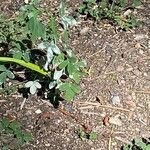
Lespedeza violacea
Violet lespedeza · Wand-like bush clover · Violet Bush Clover · Wand Bush-clover · Wand-like bush-clover
Description
Source: leafsnapLespedeza violacea, commonly known as violet bush clover, is a deciduous shrub belonging to the Fabaceae family. Native to the eastern United States, it typically thrives in open woods, fields, and roadsides. The shrub can grow up to 6 feet tall and features a spreading habit with arching branches. The leaves of Lespedeza violacea are alternate and trifoliate, with oval leaflets approximately 1 inch long. Its small yet numerous flowers, which bloom from July to September, are arranged in dense clusters at the ends of the branches and exhibit a pinkish-purple hue. This plant prefers well-drained soils in areas with full sun or partial shade but can tolerate drought conditions once established. It is also adaptable to various soil types, including sandy and clay soils. Lespedeza violacea is valued for multiple purposes. As an ornamental plant, it enhances landscaping with its attractive flowers and foliage. Additionally, it provides nourishment for wildlife: deer browse its leaves, and birds feed on its seeds. In summary, Lespedeza violacea is an appealing shrub that enhances natural landscapes while offering food for wildlife, making it a valuable addition to any garden or natural area.
Care Guide
💧 Water Every 7 days
☀️ Light Full sun
Violet lespedeza is a sun-loving, perennial herbaceous plant native to open habitats, where it commonly thrives in meadows and grasslands. It prefers full sun but can also tolerate partial sun.
🌡️ Temperature 5–32.2°C
Violet lespedeza can adjust to a wide range of temperatures, but its distribution may still be restricted by different combinations of moisture and heat. It performs best in warm summer conditions with sufficient rainfall or irrigation. Extended periods of cloudy, rainy weather, as well as prolonged high temperatures, increase the chance of Violet lespedeza dying. In winter, protecting it from cold can improve its survival rate.
💨 Humidity
🪴 Soil 6-8
🌱 Fertilizer
Early spring, when Violet lespedeza is coming out of dormancy and starting active growth, is the best time to apply fertilizer. Fertilizing supplies essential nutrients needed for healthy development. Although Violet lespedeza has fairly low fertilizer requirements, an annual application can improve its survival and encourage better, longer-lasting blooms.
🪴 Pot & Repot
✂️ Pruning
Violet lespedeza is known for its purple flowers and shrubby appearance. To maintain its shape and health, it is essential to selectively prune the plant from early to late spring, after it has finished blooming. During pruning, trim the old growth, remove any dead branches, and improve air circulation to prevent fungal problems and encourage a strong, healthy structure.
🌿 Propagating
🐛 Diseases & pets
☠️ Toxicity
Characteristics
- Plant Type
- Herb
- Life Cycle
- Perennial
- Genus
- Lespedeza
- Family
- Fabaceae
- Hardiness Zone
- 4-8
- Mature Height
- 30 cm to 91 cm
- Mature Spread
- 30 cm to 61 cm
- Leaf Color
- Green, Dark Green
- Leaf Type
- Deciduous
- Flower Color
- Violet, Purple
- Flower Size
- 0.51 cm to 1.02 cm
- Bloom Time
- Mid summer, Late summer, Early fall
- Planting Time
- Summer, Autumn
- Harvest Time
- Early fall, Mid fall