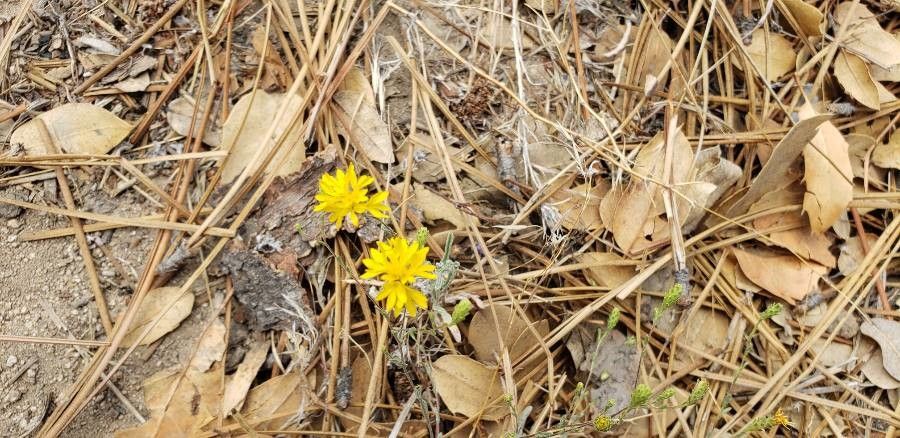
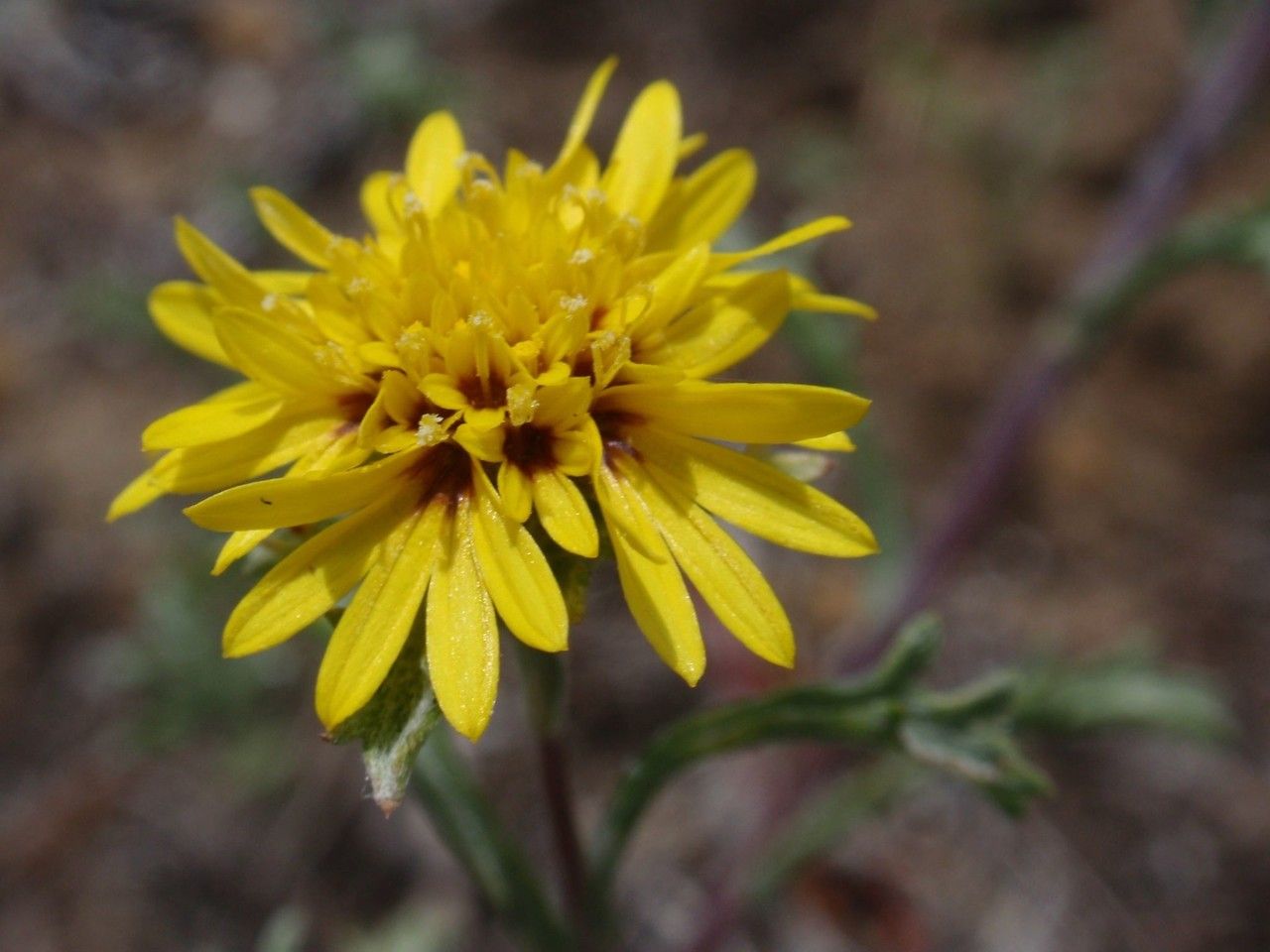
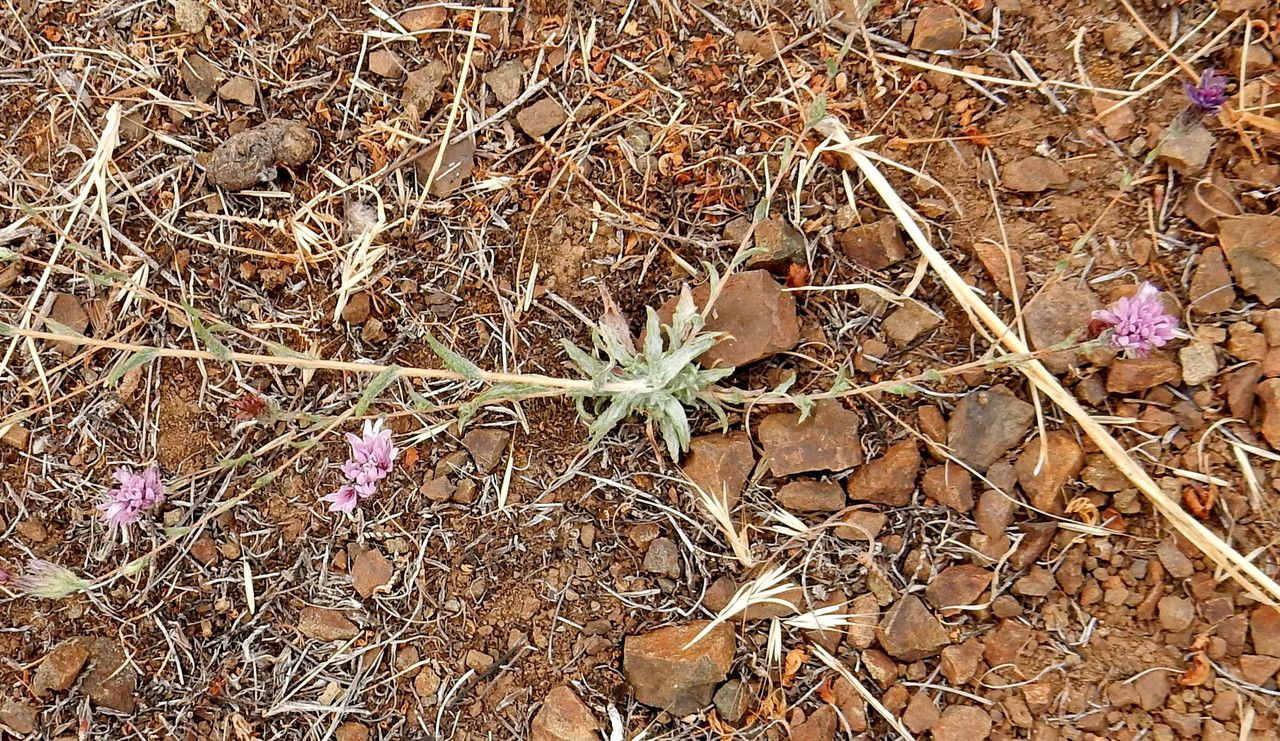
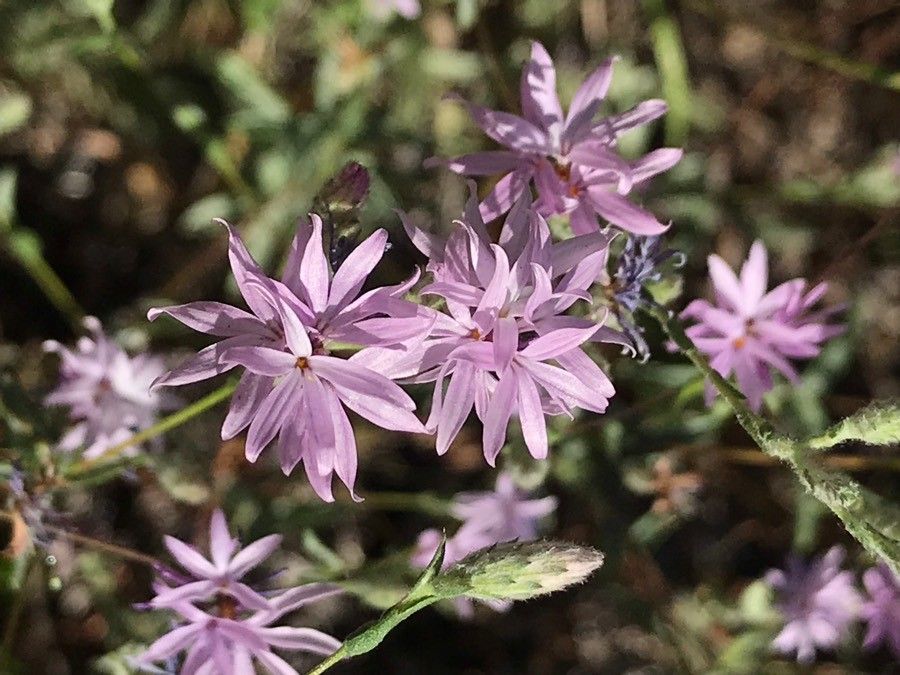
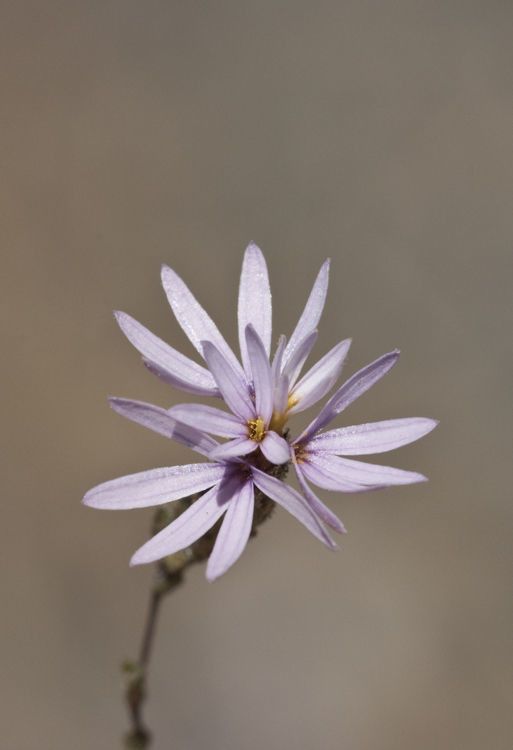
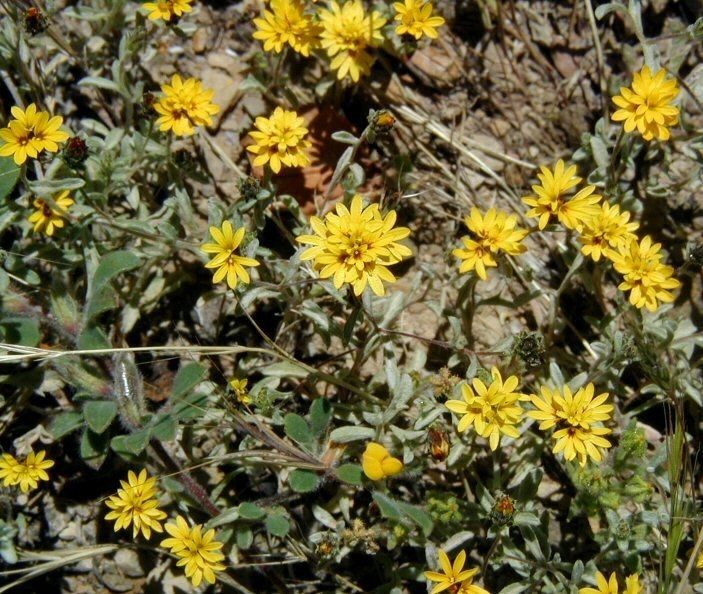
Lessingia germanorum is a rare species of flowering plant in the family Asteraceae known by the common name San Francisco lessingia. It is endemic to California, where it is known from four populations in the Presidio of San Francisco and one occurrence on San Bruno Mountain south of San Francisco. It is a state and federally listed endangered species. The already rare plant is endangered by many processes, including invasive species, development, sand mining, off-road vehicles and bulldozers, habitat fragmentation, trampling, and pollution, as well as stochastic events.This is an annual herb producing a decumbent to erect, reddish stem no more than 30 centimeters long. The deeply lobed leaves are up to 3 or 4 centimeters long. Some leaves and new stem parts are coated in woolly fibers. The inflorescence is a solitary flower head or cluster of heads at the tip of the stem. The bell-shaped involucre is lined with pointed phyllaries that curl back as the head matures. The head is discoid, with no ray florets but several tubular golden disc florets with raylike lobes. The plant blooms in July through November. The fruit is an achene with a whitish pappus. This plant grows in beach sand dunes and scrub and similar sandy habitat. It is native to the tip of the San Francisco Peninsula, a land mass which is intensely developed and urbanized. The single population known on San Bruno Mountain near Daly City was discovered in 1989 and is threatened by the construction of houses in the immediate vicinity. The largest population of the plants is in the dunes at the mouth of Lobos Creek in the San Francisco Presidio. Habitat in the area is infested with non-native species such as ice plant (Carpobrotus sp.), which produces mats of herbage over the sand dunes, stabilizing the sand; the lessingia requires shifting, windblown sand habitat. Introduced trees have also altered the habitat of the lessingia. Old Monterey cypress (Cupressus macrocarpa) and Monterey pine (Pinus radiata) planted many decades ago remain in the Presidio dunes; these native California trees are not native to this particular ecosystem, and have become detrimental.
San Francisco lessingia has strong resistance to disease and is generally unlikely to suffer from illnesses. Still, it can be vulnerable to pests and diseases present in its environment. Such infections are typically mild. Regarding care, this plant needs a moderate level of attention. It should be pruned regularly to preserve a tidy appearance and support healthy growth. Applying fertilizer can also encourage blooming. San Francisco lessingia is appropriate for anyone with outdoor areas like a garden or patio and does not demand extensive gardening experience. It may need extra care when cultivated indoors.
How to keep Lessingia Germanorum.
Light
San Francisco lessingia comes from bright, open habitats and performs best in full sun. It can endure partial shade but favors direct sunlight for ideal growth. This plant, which may be annual or biennial, is noted for its sun-loving character.
Water
San Francisco lessingia flourishes in moderately moist environments with balanced humidity. To ensure optimal hydration, it should be watered weekly. During the growing season, consistent watering is essential to support its blooms.
Temperature
San Francisco lessingia can tolerate a wide range of temperatures, but its distribution may still be constrained by certain combinations of water and heat conditions. It does best in warm summer climates with adequate rainfall or watering. Extended periods of cloudy, rainy weather, as well as prolonged high temperatures, can increase the chance of San Francisco lessingia dying. In winter, providing proper protection from cold can improve the plant's survival.
Fertilizer
San Francisco lessingia benefits from frequent, weak fertilizer applications to encourage healthy leaf growth. You should fertilize San Francisco lessingia about once a month during the summer. Nitrogen is vital for foliage, and supplementing with nitrogen-rich sources helps San Francisco lessingia thrive.
Pruning
The San Francisco lessingia is a perennial plant that benefits from pruning between early and late spring to achieve optimal shape and growth. During pruning, concentrate on removing dead wood and thinning out dense areas. This process helps improve air circulation, manage the plant's size, and enhance its blooming potential. Always use clean tools when pruning to prevent the spread of disease.
Botanical profile.
- Plant Type
- Herb
- Life Cycle
- Annual
- Genus
- Lessingia
- Family
- Asteraceae
- Hardiness Zone
- 8-10
- Mature Height
- 10 cm to 30 cm
- Mature Spread
- 15 cm to 30 cm
- Leaf Color
- Gray, Green
- Leaf Type
- Semi-evergreen
- Flower Color
- Yellow
- Flower Size
- 1.02 cm to 1.52 cm
- Bloom Time
- Mid summer, Late summer, Early fall
- Planting Time
- Spring, Summer
- Harvest Time
- Early fall, Mid fall
Other names.
Reader questions.
How should I water my San Francisco lessingia as it grows?
San Francisco lessingia goes through different growth stages throughout the year, each with its own water needs. When starting as a seed, give more water than needed later on, ensuring the soil stays consistently moist. After a few weeks, when the plant emerges from the soil, it requires slightly less water. Once mature, water once a week. During flower development, increase watering slightly to support the process.
What are the sunlight requirements for San Francisco lessingia?
San Francisco lessingia, scientifically known as Lessingia germanorum, thrives in full sun, requiring above 6 hours of direct sunlight daily for optimal growth. It can also tolerate partial sun, about 3-6 hours of sunlight. It's important to observe how sunlight moves through your garden to find spots that offer the perfect balance of light and shade for your plants, ensuring their happiness and health.
How essential is sunlight for the growth of San Francisco lessingia?
Sunlight is crucial for the growth of San Francisco lessingia, a plant originating from bright, open environments. Preferring full sun for optimal growth, it can also grow under partial sun conditions. In scenarios where natural sunlight is limited, especially indoors or during winter, artificial lighting serves as a significant alternative, promoting faster and healthier plant growth. LED lights are recommended for their ability to be customized to provide specific wavelengths needed by plants. For full sun plants, 30-50W/sq ft of artificial light is needed, partial sun plants require 20-30W/sq ft, and full shade plants need 10-20W/sq ft.
What are the symptoms of inadequate light in San Francisco lessingia?
When San Francisco lessingia is cultivated indoors or under inadequate light conditions, it may exhibit several symptoms indicating light deficiency. These include smaller new leaves compared to previous ones, leggy or sparse growth, accelerated leaf drop to conserve resources, hindered new growth indicating the plant entering survival mode, lighter-colored new leaves suggesting a lack of chlorophyll and essential nutrients, and signs of chlorosis, sunscald, leaf curling, wilting, and leaf scorching due to excessive sunlight or inadequate water supply.
What solutions can be applied to address light deficiency in San Francisco lessingia?
To combat light deficiency in San Francisco lessingia, gradually introduce the plant to more sunlight by moving it to a sunnier location weekly, aiming for at least 6 hours of direct sunlight daily. Use south-facing windows for maximum exposure and consider artificial lighting if natural light is insufficient, keeping lamps on for at least 8 hours daily. Outdoors, gradually adapt plants to increased sunlight to prevent sunburn. Pruning trees or branches that block sunlight and transplanting smaller plants to sunnier locations during their dormant periods can also improve sunlight access.