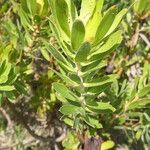
Leucadendron laureolum
Golden Sunshinebush · Golden conebush · Laurelleaf conebush
Description
Source: leafsnapLeucadendron laureolum, common names golden conebush and laurel leaf conebush, is a species of plant in the family Proteaceae. It is endemic to South Africa and also cultivated. It is a large bush that turns bright yellow in the winter flowering season.
Care Guide
💧 Water
The Golden Conebush thrives in arid regions due to its excellent drought tolerance and needs watering only every 2-3 weeks. This evergreen plant prefers full sun exposure and efficiently retains moisture in its foliage, making it suitable for a range of climate zones.
How do I keep my Golden conebush watered all year round?
The amount of water you need to give your Golden conebush will vary depending on the season. In the summer, especially if it gets a lot of sunlight, you'll need to water it more often because the soil will dry out quicker. However, in the winter when the plant isn't actively growing, it will need much less water. You can get by watering it only once every 2 to 3 weeks, or even less frequently. If you have a Golden conebush indoors, be cautious of appliances like air conditioners as they can make the plant dry out faster, requiring more frequent watering.
How should I water my Golden conebush properly?
Your Golden conebush is not particular about how you water it. You can use any common watering tool, such as watering cans, hoses, or even cups. It's best to water directly onto the soil, ensuring that all areas are evenly moistened to nourish the root system. Filtered water is recommended to avoid harmful particles present in tap water. It's also best to use water at or slightly above room temperature, as extremely cold or hot water can shock the plant. However, the Golden conebush generally responds well to any type of water you provide.
What should I do if I give too much or too little water to my Golden conebush?
Outdoor plants, especially newly planted ones or seedlings, are prone to lack of watering. It's important to continue watering consistently for a few months when the tree is small or recently planted. Once the roots are established, Golden conebush can rely on rain most of the time. When you have Golden conebush planted in pots, overwatering is more likely to happen. If you accidentally overwater your Golden conebush, take immediate action to correct the situation. First, stop watering your plant to minimize the impact of overwatering. Then, remove the Golden conebush from its pot and inspect the roots. If there is no sign of root rot, you can place the plant back in its container. However, if there are signs of root rot, trim away the affected roots and consider applying a fungicide to prevent further damage. Lastly, repot the Golden conebush in well-draining soil. In the case of underwatering, simply water the Golden conebush more frequently. This is usually an easy fix. If you notice drooping, drying out, or falling off leaves, water the plant adequately and the leaves will quickly regain their fullness. It's important to adjust your watering frequency promptly when underwatering occurs.
How frequently do I need to water my Golden conebush?
To ensure your plants thrive, it's important to adjust their watering routine based on environmental factors. Most outdoor plants can rely on rainfall, but if your area lacks rain, you'll need to water them adequately. In the spring and fall, watering every 2 weeks should suffice, while the hot summer months may require more frequent watering. During winter when growth slows down, you can water less often or even not at all. However, if your Golden conebush is young or newly planted, it's crucial to water more frequently to help it establish and grow. For potted plants like the Golden conebush, there are two ways to determine the watering frequency. One option is to follow a set schedule, such as watering once a week or every other week. However, this may not always account for the unique conditions of your plant's environment. Another approach is to monitor the soil moisture. Wait until the top 2 to 4 inches of soil have completely dried out before watering again. This method ensures that the plant's water needs are met and prevents over-watering.
How much water does my Golden conebush require?
When watering your Golden conebush, it's important to note that it doesn't always need a lot of water. If only a few inches of soil have dried since your last watering, giving it about five to ten ounces of water will support healthy growth. You can also gauge the water volume based on soil moisture by observing how many inches of soil have dried out between waterings. To ensure your Golden conebush is getting enough moisture, water it enough to moisten all the soil layers that have become dry since the last watering. If more than half of the soil has dried out, consider giving more water until you see excess water draining from the pot's drainage holes. If your Golden conebush is planted in a rainy outdoor area, it may not need additional watering. However, when it's young or establishing, it should receive 1-2 inches of rain per week. As it grows and becomes established, it can rely solely on rainwater. Only in hot weather with no rainfall for 2-3 weeks should you consider giving it a full watering to prevent stress.
☀️ Light Full sun
The golden conebush prospers when it receives plentiful sunlight throughout the day. It can also tolerate sites where sunlight isn't continuous but occurs fairly often. A balance between these conditions supports healthy growth. In its native habitats, the golden conebush develops under abundant sun. Too much or too little light can harm its growth.
What kind of sunlight does the Golden conebush need?
Golden conebush thrives in full or partial sun, particularly if it receives direct morning light. However, during summer, it is essential to shield it from the harsh afternoon sun to prevent leaf burn and maintain its overall appearance and health.
Does the Golden conebush require specific sunlight care at each stage of its growth?
Tender, new leaves are highly susceptible to sunburn. It is important to remember that young Golden conebush, particularly when experiencing rapid growth in late spring and early summer, are more vulnerable to intense sunlight and heat compared to mature plants or those in a dormant fall growth stage. Additionally, Golden conebush that has recently been purchased from a nursery is typically unaccustomed to strong, direct sunlight and should be gradually exposed to it.
How many hours of sunlight does a Golden conebush need each day to grow well?
To ensure healthy growth, Golden conebush needs a minimum of 3–6 hours of sunlight daily. While plants that can tolerate part sun can also do well in full sun, they are more adaptable because they require less light for photosynthesis compared to plants that need full sun or part shade.
Does sunlight harm Golden conebush? How can I keep Golden conebush safe from the sun and heat?
When moving indoors Golden conebush, be careful of direct sunlight when transferring it outside. To prevent sunburn, gradually move the pots from shade to a brighter area. However, even acclimated plants can get damaged by extreme heat. During a heatwave, it's important to keep the soil moist so that the plants can handle the high temperatures. Consider moving potted plants to shaded areas or using a shade cloth to protect sensitive Golden conebush during extreme weather.
Does Golden conebush need to avoid being exposed to the sun?
Golden conebush benefits from bright morning sun and some full sun exposure, but it cannot handle the harsh, hot midday sun of summer. If it is planted in the ground, it can gradually adapt to the increasing intensity of the summer sun. However, potted plants that have been indoors or in a protected location may be injured if suddenly exposed to direct summer sun in the hottest part of the day. To protect a Golden conebush from the brutal afternoon summer sun, it should be planted or placed in a location with shade at midday, such as under taller trees or plants, a building, or a landscape feature.
🌡️ Temperature 20–37.8°C
Golden conebush is very adaptable to different climate conditions, from blistering summers to frosty winters. It nevertheless has an optimal temperature range for growth. If temperatures become too high, the plant can experience heat and humidity stress that may lead to its death. In areas where temperatures reach the lower end of its cold tolerance, it is important to provide insulation to protect the plant.
💨 Humidity
🪴 Soil 5-7
🌱 Fertilizer
Timing is important when fertilizing Golden conebush. Apply fertilizer in early spring and repeat monthly through early summer. Fertilizer encourages attractive blooms and supplies energy both during dormancy and active growth.
How do I make my Golden conebush grow better?
When using fertilizer for your Golden conebush, it's important to follow the specific directions for the type of fertilizer you have. To avoid over-fertilizing, it's crucial to determine the correct amount to use. One useful rule of thumb is to use the age of the tree or the diameter of the trunk to gauge the amount of fertilizer. Generally, you can estimate using about one-tenth of a pound of fertilizer per year or per inch of trunk, with a maximum of one pound. To apply granular or organic fertilizers such as blood meal, simply sprinkle them around the base of the tree, extending all the way to the drip line (the area below the farthest-reaching branches). Make sure not to let the fertilizer come in contact with the trunk. Over time, the granules will break down and filter into the soil to be absorbed by the roots. After fertilizing, it's recommended to spread a one-inch layer of compost around the base of the tree and thoroughly water it.
Why should I add fertilizer to my Golden conebush?
Fertilizing a Golden conebush is important for several reasons. One obvious reason is that fertilizing helps the plant produce beautiful blooms. To ensure excellent flowers during the spring, it is best to fertilize in early spring. Additionally, fertilizer provides the plant with energy that it can store in the ground during dormant growth phases. By giving the plant extra nutrients during fall planting or late spring, it will have more energy to use when active growth resumes.
When should I fertilize my Golden conebush?
Timing is critical for fertilizing Golden conebush. If fertilizer is applied too early while the plant is still dormant, it will be ineffective and wasted as rainwater washes it away. The first application of fertilizer should be done in early spring, followed by monthly fertilizing until early summer.
When is the best time to not fertilize my Golden conebush?
To ensure optimal blooming, be mindful of the nitrogen content in the fertilizer you provide for Golden conebush. High levels of nitrogen can cause abundant leaf growth at the expense of fewer blooms. Seek out fertilizers with a lower nitrogen level in comparison to other nutrients. Avoid fertilizing after early autumn, as this can lead to excessive growth right before winter. Additionally, refrain from fertilizing during hot and dry periods, as dry soil hampers effective fertilizer delivery and can stimulate growth that requires more water than may be available. It is best to apply fertilizer earlier in the season when temperatures are cooler. Lastly, be aware that Golden conebush can absorb nearby fertilizers, whether intended for other plants or lawns, so exercise caution to avoid inadvertently over-fertilizing the shrub.
What kind of fertilizer does my Golden conebush require?
To optimize the growth of your Golden conebush, it is recommended to use a fertilizer with a balanced mix of the three main plant nutrients, with slightly more phosphorus. Alternatively, you can enhance the soil by incorporating organic materials such as compost, worm castings, and manure. Some experienced gardeners suggest supplementing with water-soluble fertilizers containing phosphorus when the flower buds appear. This promotes better flower development, resulting in increased size and longer blooming. There are various forms of fertilizers available, but liquid or powdered options are highly recommended for Golden conebush. Regardless of the form you choose, remember to dilute the fertilizer and apply it while watering your plant.
🪴 Pot & Repot
✂️ Pruning
The Golden Conebush boasts vibrant yellow flowers and dense foliage. To maintain its health and appearance, prune it in early spring. This will help remove any dead branches and improve air circulation. Regular pruning encourages vigorous growth, enhances flowering, and prevents legginess. Be sure to use sharp, clean tools for precise cuts to ensure the plant's overall health.
🌿 Propagating
🐛 Diseases & pets
☠️ Toxicity
Characteristics
- Plant Type
- Shrub
- Life Cycle
- Perennial
- Genus
- Leucadendron
- Family
- Proteaceae
- Hardiness Zone
- 9-11
- Mature Height
- 2.13 m
- Mature Spread
- 2.13 m
- Leaf Color
- Dark Green, Forest Green
- Leaf Type
- Evergreen
- Flower Color
- Yellow, Gold
- Flower Size
- 2.03 cm to 3.05 cm
- Bloom Time
- Late summer, Early fall, Mid fall
- Planting Time
- Spring, Summer, Autumn, Winter
- Harvest Time
- Late fall, Early winter, Mid winter
- Native Area
- South Africa