Leucanthemum maximum
مارگریت · مینای چشم گاوی درشت، · Shasta daisy · Daisy-chrysanthemum · Max-chrysanthemum
Description
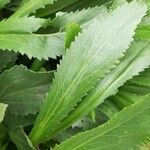
Source: leafsnapLeucanthemum maximum, commonly known as the Shasta daisy, is a perennial flowering plant in the Asteraceae family. Native to North America, it thrives in a variety of habitats, including meadows, fields, and roadsides. This plant can grow up to 3 feet tall and is known for its large, white daisy-like flowers with yellow centers that bloom from late spring through summer. The Shasta daisy's leaves are dark green with serrated edges, while its flowers typically range from 2 to 4 inches in diameter and feature numerous petals surrounding a yellow central disk. These blooms are particularly attractive to bees, butterflies, and other pollinators. Shasta daisies prefer full sun but can tolerate partial shade. They flourish in well-drained soil rich in organic matter, although they can also withstand poorer soil conditions. During their growing season, the plants need regular watering but should be allowed to dry out between sessions. Once established, Shasta daisies are easy to grow and require minimal maintenance. They make excellent cut flowers for arrangements and bouquets, thanks to their long stems and appealing blooms. Overall, Leucanthemum maximum, or Shasta daisy, is an attractive perennial that enhances any garden or landscape. It not only adds beauty but also provides significant ecological benefits by supporting pollinators like bees and butterflies.
💡 Shasta daisies are often mistaken for regular daisies, but there are some differences between the two. When Shasta daisies bloom, they attract insects. As a result, their petal leaves are often bitten, leaving their beauty slightly flawed.
🌳 Shasta daisy plays an important role in enhancing biodiversity by drawing beneficial insects, including pollinators and natural pest controllers, into gardens and agricultural fields. Its bright white petals and large yellow disc centers strongly attract bees and butterflies, which are vital for the pollination of many other plant species. This ecological service is invaluable for preserving healthy ecosystems and supporting agriculture.
🎭 Honesty and friendship
Care Guide
💧 Water Every 7 days
The Shasta daisy thrives in moist environments, needing consistent watering twice a week, but be careful not to waterlog the soil. It grows best outdoors where there is plenty of sunlight and well-draining soil. These conditions support its lush foliage and vibrant blooms, replicating the moisture levels of its native habitat.
When Should I Water My Shasta Daisy?
Determining the right time to water your shasta daisy (Leucanthemum maximum) is vital for its health, enabling it to yield beautiful blooms. Check the soil: if it's dry an inch below the surface, it's time to water, making this approach particularly useful for potted plants. Weather conditions, especially during hot and dry periods, might require more frequent watering. Keep an eye on the leaves for signs of wilting, which might indicate the plant's need for water, but remember, wilting might also signal other issues such as stress or disease. During its active growth phases in spring and summer, a shasta daisy will likely need more water. Avoid both overwatering and under-watering to safeguard the plant's health, keeping an eye out for the mentioned signs to ensure it gets water just when needed.
How Should I Water My Shasta Daisy?
Watering your shasta daisy properly is essential for its growth. Employ bottom-watering for potted plants, allowing the plant to uptake water from the bottom, or use a slow-release spout watering can for top watering to avoid disturbing soil or stressing the plant. Utilize tools like a moisture meter to maintain accurate soil moisture levels, helping to prevent overwatering. Focus watering on the soil at the plant's base, keeping the foliage dry to avoid fungal diseases. Regular checks of the topsoil's moisture, preventing it from being overly dry or waterlogged, are crucial for the shasta daisy's health.
How Much Water Does Shasta Daisy Really Need?
The water needs of a shasta daisy depend on several variables but generally, a pint of water per watering session for a pot-sized plant is adequate. Ensure the soil is thoroughly moistened to the bottom, catering to the plant's deep roots. Observing the plant's leaves can provide clues to its water needs: wilted, yellowing leaves often indicate under-watering, while yellow to brown, soggy leaves signal overwatering. Strive for damp, but not waterlogged, soil, and healthy-looking green leaves. Adjust the amount of water based on the plant's size, pot size, and root depth, leaning towards underwatering to avoid issues like root rot.
What Kind of Water is Best for Shasta Daisy?
Shasta daisy thrives on distilled or rainwater, free from impurities and harmful chemicals, although filtered or dechlorinated tap water can also be used. The plant is sensitive to chlorine, making it crucial to let chlorinated tap water sit for at least 24 hours before watering to allow the chlorine to evaporate. Moderate caution is advised regarding minerals and pollutants like calcium, iron, or heavy metals that might be present in the water. Keeping the water at room temperature, around 68-72\u00b0F or 20-22\u00b0C, is preferred to avoid shocking the plant.
How Do Shasta Daisy's Watering Needs Change with the Seasons?
Seasonal changes significantly affect the watering needs of a shasta daisy. In spring, as the plant enters its growth phase, it requires more frequent watering to support blooming. Summer demands careful watering to prevent soil dryness while avoiding waterlogging. Water less in autumn as the plant begins to enter dormancy, but ensure the soil does not completely dry out, especially during dry periods. During winter, reduce watering further, keeping the soil only slightly moist to prevent root rot and accommodate the plant's reduced water needs.
☀️ Light Full sun
The shasta daisy thrives when fully exposed to the sun, yet it can tolerate a moderate amount of shade. Ample sunlight encourages vigorous growth and plentiful flowering. Insufficient light may impede its growth and cause fewer flowers. Excessive shade or extreme sun exposure can stress the plant.
What are the sunlight requirements for Shasta Daisy?
Shasta daisy thrives under different sunlight conditions but grows best under full sun exposure, which means above 6 hours of direct sunlight daily. However, it can also grow well in partial sun, receiving about 3-6 hours of sunlight. Full sun exposure is crucial for their lush growth and abundant blooming, while insufficient light can lead to fewer flowers and hamper growth. It's important to observe the sunlight movement in your garden to ensure the right balance of light and shade for optimal plant health.
How does artificial lighting affect indoor Shasta Daisies?
When natural sunlight is insufficient, especially for indoor Shasta daisies, artificial lighting can be a great solution to ensure they receive adequate light for optimal growth. LED lights are recommended due to their ability to provide specific wavelengths needed for plant growth. Full sun plants require 30-50 watts per square foot, partial sun plants need 20-30 watts per square foot, and full shade plants need 10-20 watts per square foot of artificial light. The light source should be placed 12-36 inches above the plant and turned on for 8-12 hours per day to mimic natural sunlight conditions.
What are common symptoms of light deficiency in Shasta Daisies?
Symptoms of light deficiency in Shasta daisies can vary. These include smaller new leaves compared to older ones, leggy or sparse growth, faster leaf drop, and a halt in new growth due to insufficient sunlight. Chlorosis or yellowing of the leaves can occur both from too little and too much sun, leading to a lack of chlorophyll. Excessive sunlight can cause symptoms like sunscald, leaf curling, wilting, and leaf scorching, indicating stress due to overexposure. Observing these symptoms can help diagnose and correct light issues for healthier plant growth.
How can I manage light exposure for healthier Shasta Daisies?
To manage light exposure for healthier Shasta Daisies, gradually acclimatize them to the right amount of sunlight, especially if transitioning from a less sunny to a sunnier location. For indoor plants, consider using artificial lighting, such as grow lights or keeping a lamp on for at least 8 hours daily. Outdoor plants should be moved gradually to avoid sunburn. Minimizing obstructions like pruning obstructive branches can help outdoor plants receive more sunlight. Additionally, transplanting smaller plants to sunnier spots during their dormant period can improve light exposure.
🌡️ Temperature 5–35°C
The Shasta daisy is native to regions with mild temperatures, favoring a range of 68 to 95 °F (20 to 35 ℃). It tolerates seasonal temperature changes; during colder periods, consider relocating it to a warmer indoor spot.
What is the ideal temperature range for Shasta Daisy?
Shasta Daisy thrives in environments with moderate temperatures, preferring a range between 68 to 95°F (20 to 35°C). It's adaptable to seasonal changes, with robust cold resistance. During colder seasons, it may benefit from being moved to warmer indoor settings if the outside temperature becomes uncomfortably cold.
How should Shasta Daisy be protected during extreme winter conditions?
Despite its strong cold resistance, Shasta Daisy requires special care when winter temperatures are expected to drop below -25°C. To protect it from frost, cover the plant with insulating materials such as soil or straw. Additionally, it's advisable to water the plant abundantly before the first freeze in autumn to keep the soil moist. This preparation helps the plant avoid drought and water scarcity during the colder months and into early spring.
What are the symptoms of Shasta Daisy being exposed to low temperatures and how can it be managed?
Shasta Daisy is notably cold-tolerant, best thriving in temperatures above 20°C and needing to be kept above 0°C during winter to avoid damage. Exposure to temperatures below -25°C might not show immediate changes during winter, but could lead to decreased sprouting or a complete lack of sprouting in spring. To manage this, any parts of the plant that have failed to sprout by spring should be removed.
How does high temperature affect Shasta Daisy and what are the solutions?
In summer, it's vital to ensure that Shasta Daisy is kept below 35°C to avoid heat stress. Exposure to temperatures above 38°C may cause the leaves to lighten in color, curl, become prone to sunburn, and in severe cases, the entire plant may wilt and dry out. To combat this, trim away the sunburned and dried parts of the plant. Moving the plant to a spot with afternoon shade or using a shade cloth can protect it from excessive sun. Additionally, watering the plant in the morning and evening helps keep the soil moist, further reducing stress on the plant.
💨 Humidity
🪴 Soil 6-7
🌱 Fertilizer
The best time to fertilize a Shasta daisy is in early spring, as it comes out of dormancy and begins active growth. Fertilizing supplies essential nutrients for healthy growth. Although Shasta daisy has relatively low fertilizer needs, applying fertilizer annually can improve its survival and promote better, longer-lasting flowers.
Why is it important to put fertilizer on my Shasta daisy?
Fertilization is important for the Shasta daisy for a few reasons. First, it provides essential nutrients that help the plant grow both above and below ground. However, Shasta daisies don't require a lot of fertilization overall. While they can survive without it, annual fertilization can greatly benefit the plant. It not only helps keep the plant alive, but also encourages better and longer-lasting flowers. Therefore, if you want your Shasta daisy to look its best, it's a good idea to fertilize it annually.
When should I fertilize my Shasta daisy?
To ensure healthy growth, it is best to fertilize a Shasta daisy in the late winter to early spring when it is coming out of dormancy and entering an active growth phase. This will give the plant a strong start for the season. While fertilizing in the early spring is most beneficial, it is also okay to fertilize in the fall. However, it is not recommended to feed the Shasta daisy during summer or winter seasons.
When is not a good time to put fertilizer on my Shasta daisy?
To properly care for your Shasta daisy, fertilization should only occur in late winter and early spring. This plant requires minimal feeding, so one annual application is sufficient. Avoid fertilizing during spring, summer, and fall as it can easily result in overfertilization and its associated problems. The only exception is if you neglected to fertilize in the spring, in which case a fall feeding is permissible. Additionally, refrain from fertilizing during the winter when the Shasta daisy is in a dormant phase and not producing new growth.
What kind of fertilizer does my Shasta daisy require?
For Shasta daisy, any general-purpose fertilizer with a balanced amount of the three main plant nutrients will work well. However, there are specific nutrient blends that can be even more beneficial. Many gardeners believe that higher levels of phosphorus lead to stronger roots and better flowers, so using a phosphorus-rich fertilizer may be the best option for this flowering plant. Granular or liquid forms of fertilizer are both suitable as long as there are enough nutrients present. In addition to manufactured fertilizers, you can also improve the soil for your Shasta daisy by using compost, manure, and similar organic materials. These can greatly contribute to creating a healthy growing medium for your plant.
How can I make my Shasta daisy grow better?
The most common way to fertilize a Shasta daisy is by applying a granular or pellet fertilizer to the soil around the plant. It's important to fertilize when the plant is transitioning from its dormant phase to active growth. In early spring, wait for shoots to emerge before applying fertilizer. Alternatively, you can use liquid fertilizer, diluted with water before applying. No matter the type of fertilizer, it's crucial to moisten the soil before, during, and after application.
🪴 Pot & Repot 2-3 years
When repotting a Shasta daisy, select a pot 1-2 inches (2.5–5.1 cm) larger that has good drainage. Use a well-draining potting mix. Repot in spring or fall, making sure the root ball sits slightly below the rim of the pot. Water thoroughly after repotting and keep it in a warm spot with indirect sunlight.
✂️ Pruning
To keep your Shasta daisies healthy and blooming beautifully, it's important to prune them from early to late spring. Start by removing any faded flowers and damaged stems to encourage new growth and extend the blooming period. During the summer, shear off spent blooms to promote additional flowering. Additionally, trim any crowded or leggy stems to improve airflow and reduce the risk of disease. These practices will help ensure your plants remain vigorous and healthy.
🌿 Propagating
🐛 Diseases & pets
☠️ Toxicity
Characteristics
- Plant Type
- Herb
- Life Cycle
- Perennial, Annual
- Genus
- Leucanthemum
- Family
- Asteraceae
- Hardiness Zone
- 5-9
- Mature Height
- 10 cm to 49 cm
- Mature Spread
- 10 cm to 49 cm
- Leaf Color
- Green
- Leaf Type
- Deciduous
- Flower Color
- White, Yellow
- Flower Size
- 5.08 cm to 7.62 cm
- Bloom Time
- Early summer, Mid summer
- Planting Time
- Spring
- Harvest Time
- Mid summer
- Native Area
- Spain, France