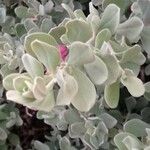
Leucophyllum frutescens
Purple-sage · Texas Barometer Bush · Texas silverleaf · Barometer-bush · Ceniza
Description
Source: leafsnapLeucophyllum frutescens, commonly known as Texas ranger or barometer bush, is a drought-tolerant evergreen shrub native to the southwestern United States and northern Mexico. This plant, a member of the Scrophulariaceae family, can grow up to 8 feet tall and wide. It features a dense, bushy growth habit with small, gray-green leaves covered in fine hairs. In late summer or early fall, Leucophyllum frutescens produces showy, tubular flowers with five petals. Depending on the cultivar, the blooms can be pink, purple, blue, or white. These vibrant flowers attract bees and butterflies, making the shrub an excellent choice for pollinator gardens. Highly adaptable to various soil types, Leucophyllum frutescens prefers well-draining soil with low fertility levels. While it can tolerate extreme heat, the plant may suffer frost damage if exposed to temperatures below 20°F. Once established, Leucophyllum frutescens is very low-maintenance and drought-tolerant, making it ideal for xeriscaping or low-maintenance landscapes. Overall, Leucophyllum frutescens is a beautiful shrub that adds color and texture to any garden or landscape design with minimal upkeep required.
💡 The Texas Ranger, scientifically known as Leucophyllum frutescens, is a low-maintenance ornamental shrub. Its leaves are soft and covered with fine white hairs, giving them a silvery gray appearance. After heavy rain, the shrub blooms spectacularly, draping itself in a rose-colored blanket of flowers that attract bees and hummingbirds.
🌳 A relatively obscure but fascinating trait of the texas ranger is its reputation as a 'barometer bush', with its flowering episodes said to coincide with rises in local humidity or impending rain. This odd feature has drawn interest from both gardeners and scientists, who study the texas ranger as a possible natural indicator for forecasting weather changes in arid regions.
🎭 Well-being, safeguarding, weather divination
Care Guide
💧 Water Every 7 days
Texas ranger thrives in arid environments due to its high drought tolerance and moderate watering needs. Ideally, it requires watering only once every 1-2 weeks. It grows best outdoors, where it can take advantage of natural rainfall patterns, making it an excellent choice for xeriscaping.
How should I water my Texas ranger plant?
Your Texas ranger plant isn't too fussy about how you water it. You can use any common watering tool, such as a watering can, hose, or even cups. When watering, make sure to apply the water directly to the soil. It's important to evenly moisten all areas of the soil to nourish the entire root system. Using filtered water is recommended as tap water may contain harmful particles. Also, try to use water that is at or slightly above room temperature to avoid shocking the plant. However, the Texas ranger plant generally responds well to any type of water you give it.
What should I do if I give my Texas ranger plant too much or too little water?
Planting outdoor plants, especially new ones or seedlings, increases the risk of them not getting enough water. It's important to keep watering them consistently for a few months until they become established. Once the roots are established, Texas ranger plants can generally rely on rain for hydration. When Texas ranger plants are in pots, there is a higher chance of overwatering. In case you accidentally overwater your Texas ranger, take immediate action to minimize the damage. Stop watering the plant right away and check the roots by removing it from the pot. If there is no sign of root rot, you can put the plant back in its container. However, if you find any roots affected by rot, trim them off and consider using a fungicide to prevent further damage. Repot the Texas ranger plant in well-draining soil. On the other hand, underwatering a Texas ranger plant is a simpler issue to address. If you notice the leaves drooping, drying out, or falling off, it means the plant needs more water. Once you water it adequately, the leaves will regain their fullness. Adjust your watering frequency promptly when you notice your Texas ranger plant is being underwatered.
How often do I need to water my Texas ranger plant?
Most outdoor plants can thrive with natural rainfall. However, if your area lacks rainfall, it's important to provide adequate watering every 2 weeks in the spring and fall, more often in the summer, and less frequently in the winter when plants require less water. During the winter, additional watering may not be necessary at all. If you have a young or newly planted Texas ranger, watering more frequently will help it establish and grow into a more adaptable and drought-tolerant plant. For potted Texas rangers, there are two main approaches to determining watering frequency. The first is to follow a predetermined schedule, such as watering once a week or every other week. However, this may not always be accurate as it doesn't consider the specific growing conditions of your plant. Instead, you can adjust your watering frequency based on soil moisture. It's generally recommended to wait until the top two to four inches of soil, about ⅓ to ½ depth of the pot, have completely dried out before watering again. This method takes into account the plant's seasonal water needs, as a predetermined schedule may not be sufficient during the summer when water requirements are higher.
How much water does my Texas ranger plant need?
When watering your Texas ranger plant, you may be surprised to learn that it doesn't always require a large amount of water. Instead, if only a few inches of soil have dried since the last watering, giving it about five to ten ounces of water will support healthy growth. You can also determine the amount of water based on the moisture of the soil. Take note of how many inches of soil have dried between waterings. To ensure your Texas ranger receives sufficient moisture, water enough to moisten all the dry soil layers since the last watering. If over half of the soil is dry, consider giving more water than usual. In such cases, continue watering until you see excess water draining from the pot's holes. If your Texas ranger plant is placed in an area that receives ample outdoor rain, it may not need additional watering. When the plant is young or newly established, make sure it receives 1-2 inches of rain per week. As it continues to grow, it can survive solely on rainwater. Only during extremely hot weather with no rain for 2-3 weeks should you give your Texas ranger a thorough watering to prevent stress.
How do I know if I'm giving enough water to my Texas ranger plant?
The Texas ranger plant is more commonly affected by overwatering, and there are signs to watch for in this situation. An overwatered plant will have yellowing leaves and may shed some of them. Additionally, overwatering can cause the plant to shrink and can lead to root decay. Conversely, an underwatered Texas ranger will begin to droop and may have brown or easily breakable leaves. If you notice signs of either overwatering or underwatering, it is important to take action to revive the health of your Texas ranger plant.
☀️ Light Full sun
The Texas ranger develops best with abundant sunlight, though it can tolerate a moderately bright setting. Excessive shade impedes growth and can produce weak, unhealthy plants. Native to a sun-rich environment, its individual growth stages remain unaffected by variations in light.
What are the sunlight requirements for a Texas Ranger?
The Texas Ranger requires full sun exposure, which means it thrives in areas that receive more than 6 hours of sunlight daily. However, it can also tolerate partial sun conditions, receiving about 3-6 hours of sunlight. It's essential to watch how sunlight moves through your garden to choose spots that offer the right balance of light and shade, ensuring your Texas Ranger's happiness.
How does sunlight affect the growth of Texas Ranger plants?
Sunlight greatly influences the growth and health of Texas Ranger plants. They flourish under a generous amount of sunlight, aligning with their natural habitat's conditions. However, they can also adapt to moderately bright environments. Lack of sufficient sunlight may hinder their growth, leading to frail and unhealthy plants. In case of insufficient natural light, especially during winter or in less sunny spaces, employing artificial lighting can promote healthier growth by mimicking the necessary solar conditions.
How can I use artificial lighting for indoor Texas Ranger plants?
For indoor Texas Ranger plants, artificial lighting can be essential for optimal growth, especially when natural sunlight is insufficient. LED lights are a popular choice because they can be customized to provide specific wavelengths needed by plants. Full sun plants require 30-50W per square foot, partial sun plants need 20-30W per square foot, and full shade plants require 10-20W per square foot of artificial light. The light source should be placed 12-36 inches above the plant to simulate natural sunlight, and the duration should mimic natural daylight hours, with most plants needing 8-12 hours of light per day.
What are some common symptoms of light deficiency in Texas Ranger plants?
Texas Ranger plants may exhibit several symptoms indicating light deficiency. These include small or lighter-colored new leaves, indicating a lack of chlorophyll and essential nutrients. Leggy or sparse growth and faster leaf drop can also occur, with the plant entering a survival mode that leads to slower or stopped growth. Additionally, symptoms like chlorosis, sunscald, leaf curling, wilting, and leaf scorching may occur due to inappropriate light conditions, either too little or too much sunlight.
How can I address light-related issues in my Texas Ranger plants?
To ensure optimal growth amidst light-related issues, indoor plants can be gradually moved to sunnier locations to receive at least 6 hours of direct sunlight daily. Using south-facing windows and keeping curtains open during the day maximizes sunlight exposure. For plants that are large or not easily movable, consider using artificial lighting for at least 8 hours daily. Outdoor plants should also be moved gradually to sunnier spots to avoid shock. Removing obstructions such as tree branches can improve sunlight access. If necessary, for smaller plants, consider transplanting during their dormant period to a location with ample sunlight and good drainage. It's important to remember that parts of the plant already affected may not recover, but new growth should be healthy with improved light conditions.
🌡️ Temperature 15–35°C
The native growing environment of texas ranger requires temperatures between 15 and 35 ℃ (59 and 95 ℉) for optimal growth. It favors warmer conditions and can tolerate summer temperatures up to 40 ℃ (104 ℉). In winter it can withstand lows of 5 ℃ (41 ℉). To keep the plant healthy during winter, it is advisable to provide frost protection and to avoid watering in the colder months.
What is the optimal growth temperature range for the Texas Ranger?
The Texas Ranger thrives in temperatures ranging from 15°C (59°F) to 35°C (95°F). It prefers warmer climates and can endure summer temperatures as high as 40°C (104°F). During the winter, it can tolerate temperatures down to 5°C (41°F). For optimal growth and health, it's recommended to protect the plant from frost and to reduce watering during the colder months.
What should I do to protect my Texas Ranger from extreme cold?
The Texas Ranger has a moderate tolerance to cold, generally not requiring special care for temperatures above -5°C. However, if temperatures are forecasted to fall below -5°C, it's necessary to take temporary measures for cold protection. This can include wrapping the plant in plastic film, fabric, or other materials to shield it from the cold. Once the temperature warms up, these protective wrappings should be removed promptly to ensure the plant's health.
How does low temperature affect the Texas Ranger and what are the solutions?
Low temperatures can challenge the Texas Ranger, especially when the mercury drops below 15°C, with severe impacts visible below -10°C. In such cold conditions, the leaves may droop, and although they may recover from mild episodes, severe cases can lead to wilted and falling leaves. To mitigate frost damage, trim off the frost-impacted parts of the plant. Before cold weather hits again, wrapping the plant in non-woven fabric or cloth and constructing a wind barrier can help protect it from chilling winds.
What happens to the Texas Ranger in high temperatures, and how can I alleviate the effects?
During the summer, it's crucial to keep the Texas Ranger's exposure to temperatures below 35°C (95°F). When temperatures exceed 41°C (104°F), the plant may show signs of stress, such as lighter leaf color, dry and withered leaf tips, leaf curling, and increased susceptibility to sunburn. To help the plant recover and protect it from further damage, trim away sunburned and dried parts. Moving the plant to a shaded location or using a shade cloth can provide relief from the intense midday and afternoon sun. Additionally, watering the plant in the morning and evening helps keep the soil moist and supports the plant's health in high temperatures.
💨 Humidity
🪴 Soil 6-8
🌱 Fertilizer
Fertilize your Texas ranger in early spring to encourage healthy growth. Regular feeding boosts the plant's overall health, producing vigorous growth, better tolerance of difficult conditions, and improved resistance to pests and diseases. Stick to a specific fertilization schedule for your Texas ranger to maintain vibrant, deeply colored, lush foliage.
Why should I put fertilizer on my Texas ranger plant?
No matter which type of Texas ranger you have, regular fertilization is essential for ensuring the plant's overall health. By providing the proper nutrients, the plant will experience stronger growth, making it more resistant to challenging conditions and better equipped to combat diseases and pests. Maintaining the foliage of your Texas ranger is crucial as it is one of its most attractive features. To achieve this, you should establish and follow a regular fertilization schedule tailored specifically to your Texas ranger. This will result in vibrant, richly colored leaves, giving the plant a lush appearance.
When should I fertilize my Texas ranger plant?
To nourish your Texas ranger plant and support its healthy growth, it's recommended to fertilize it for the first time in late winter or early spring. This ensures that it receives the necessary nutrients to resume vigorous growth once the weather warms up. In warm climate regions, it can be beneficial to provide an additional fertilizer feeding during early fall. This not only supplements the soil with nutrients for the following growing season, but also enhances the plant's resilience to winter cold, preventing damage to its foliage. Fertilizing earlier in the fall allows the new branches enough time to develop and withstand the cold winter.
When is it best to not give my Texas ranger plant fertilizer?
There are specific periods throughout the year when you should avoid fertilizing your Texas ranger plant. One is during early and mid-winter when the plant is dormant and does not require feeding. Another crucial period to skip fertilization is late spring through summer, as the weather tends to be hotter and drier. These conditions can have a harmful effect on your Texas ranger if fertilized during this time. To prevent any negative effects, it's best to follow a fertilization schedule that only involves feeding in early spring and early fall.
What kind of fertilizer does my Texas ranger plant need?
When it comes to nourishment, nitrogen is typically the most crucial nutrient for a Texas ranger. However, this doesn't mean that phosphorus and potassium should be overlooked. On the contrary, your Texas ranger plant will typically require a decent amount of all three main nutrients to thrive. This is why a balanced fertilizer, like a 10-10-10 ratio, can be effective. Nonetheless, achieving optimal growth for a Texas ranger often entails a more nuanced nutrient ratio. Usually, fertilizers with slightly higher nitrogen content tend to yield better results. For instance, a ratio of 10-6-4 can often work well. When fertilizing, you have the option to use granular or liquid-based fertilizers.
How should I fertilize my Texas ranger plant?
To fertilize your Texas Ranger, you have two options: using a granular fertilizer or a liquid fertilizer. For granular fertilizer, simply sprinkle the fertilizer on the soil at the right time. This type of fertilizer releases nutrients slowly over time, benefiting your Texas Ranger. Before applying granular fertilizer, it's usually a good idea to lightly water your plant. Alternatively, you can opt for liquid fertilizer, although this is less common. To use this method, mix the fertilizer with water and pour it onto the soil around the base of your Texas Ranger. If you want to ensure the best results, it can be helpful to conduct a soil test before fertilizing. This will help you determine if any adjustments need to be made to the soil's pH level.
🪴 Pot & Repot 2-3 years
When repotting Texas ranger, select a pot 1-2 inches (2.5–5.1 cm) larger that has good drainage. Use a well-draining potting mix. Repot in spring or fall, making sure the root ball sits slightly below the rim of the flower pot. Water thoroughly after repotting and place in a warm area with indirect sunlight.
✂️ Pruning
The Texas Ranger plant is known for its silvery foliage and purple flowers. For optimal health and appearance, prune the plant in early spring. Focus on removing dead branches and thinning out any overcrowded areas. This encourages healthy growth, improves air circulation, and enhances blooming. Additionally, be sure to disinfect your tools to prevent disease and maintain the plant's vigor and aesthetic appeal.
🌿 Propagating
🐛 Diseases & pets
☠️ Toxicity
Characteristics
- Plant Type
- Shrub
- Life Cycle
- Perennial
- Genus
- Leucophyllum
- Family
- Scrophulariaceae
- Hardiness Zone
- 8-10
- Mature Height
- 1.52 m to 2.44 m
- Mature Spread
- 1.22 m to 1.83 m
- Leaf Color
- Green, Silver, Gray
- Leaf Type
- Evergreen
- Flower Color
- Lavender
- Flower Size
- 2.54 cm
- Bloom Time
- Mid summer
- Planting Time
- Spring, Autumn
- Harvest Time
- Late summer, Early fall
- Native Area
- Mexico, Australia