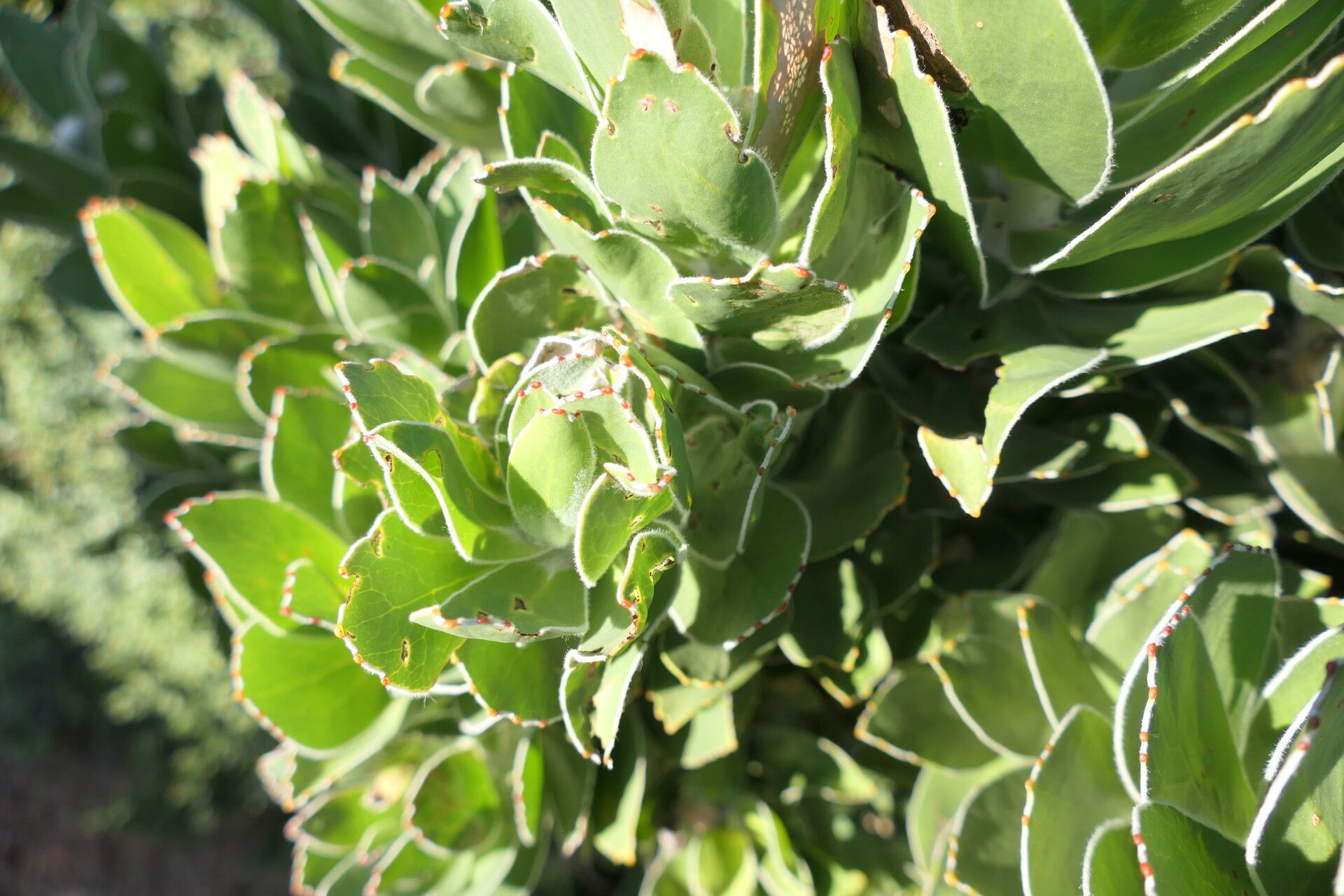
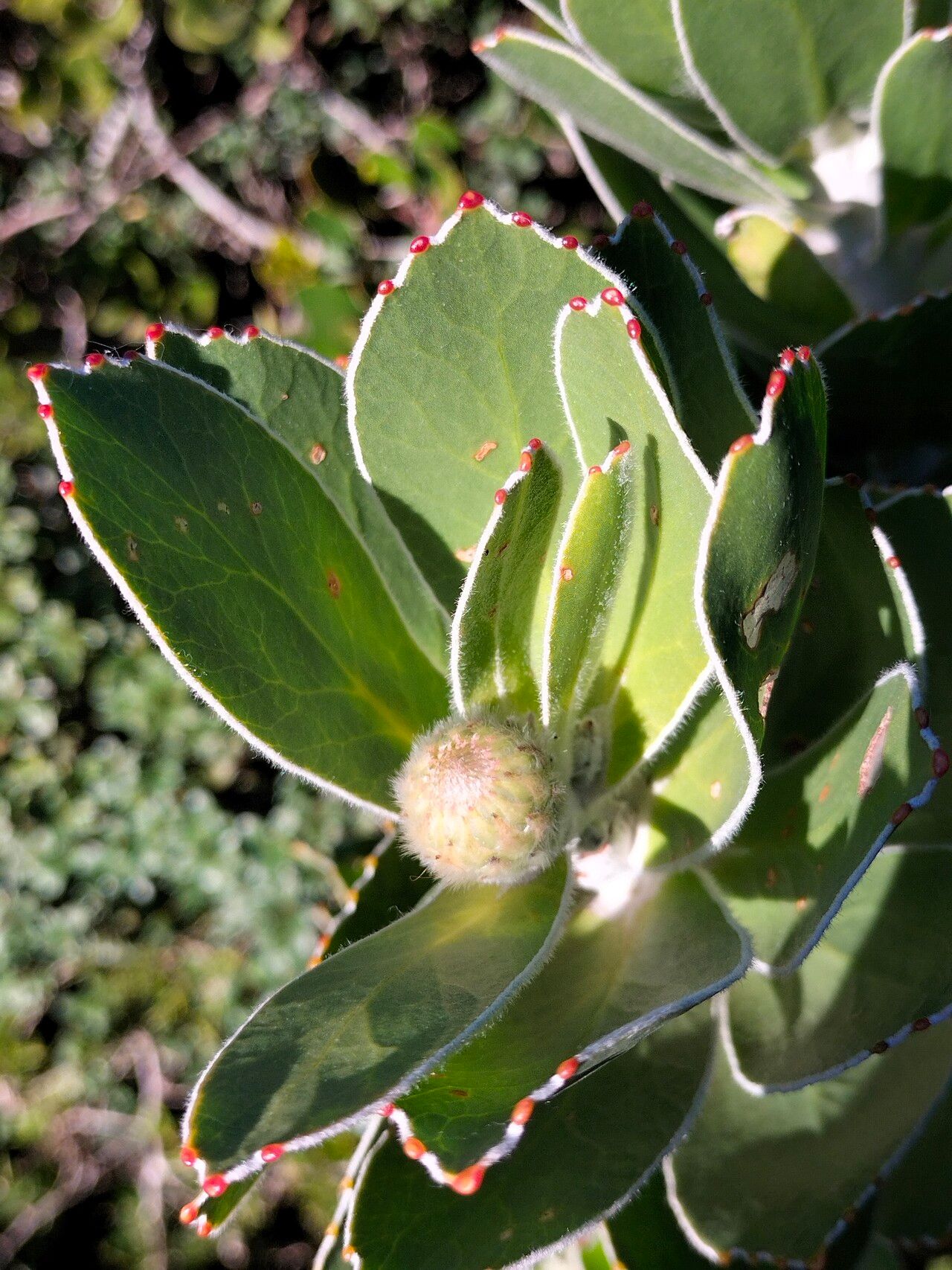
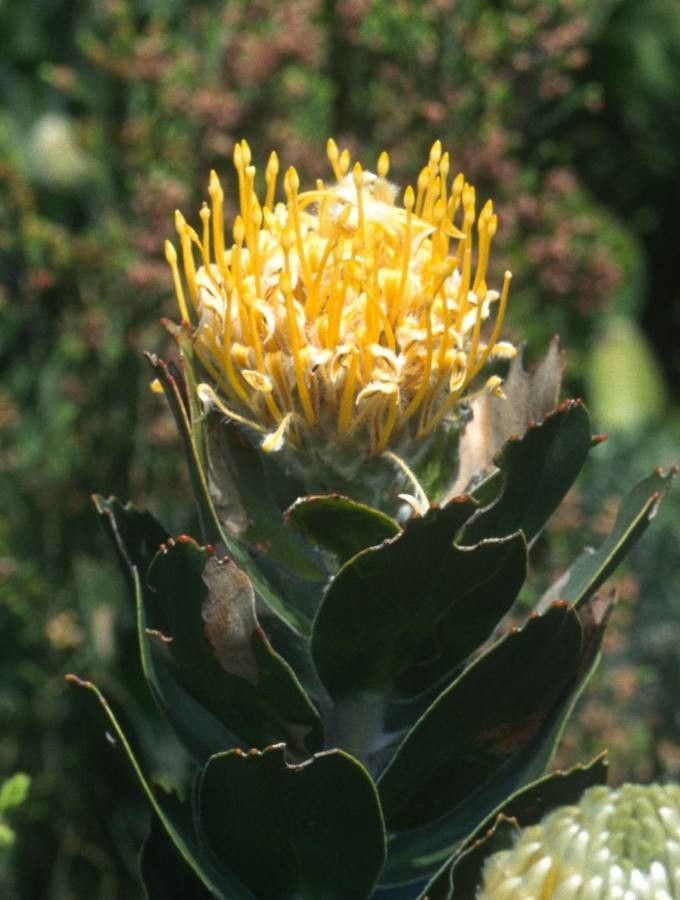
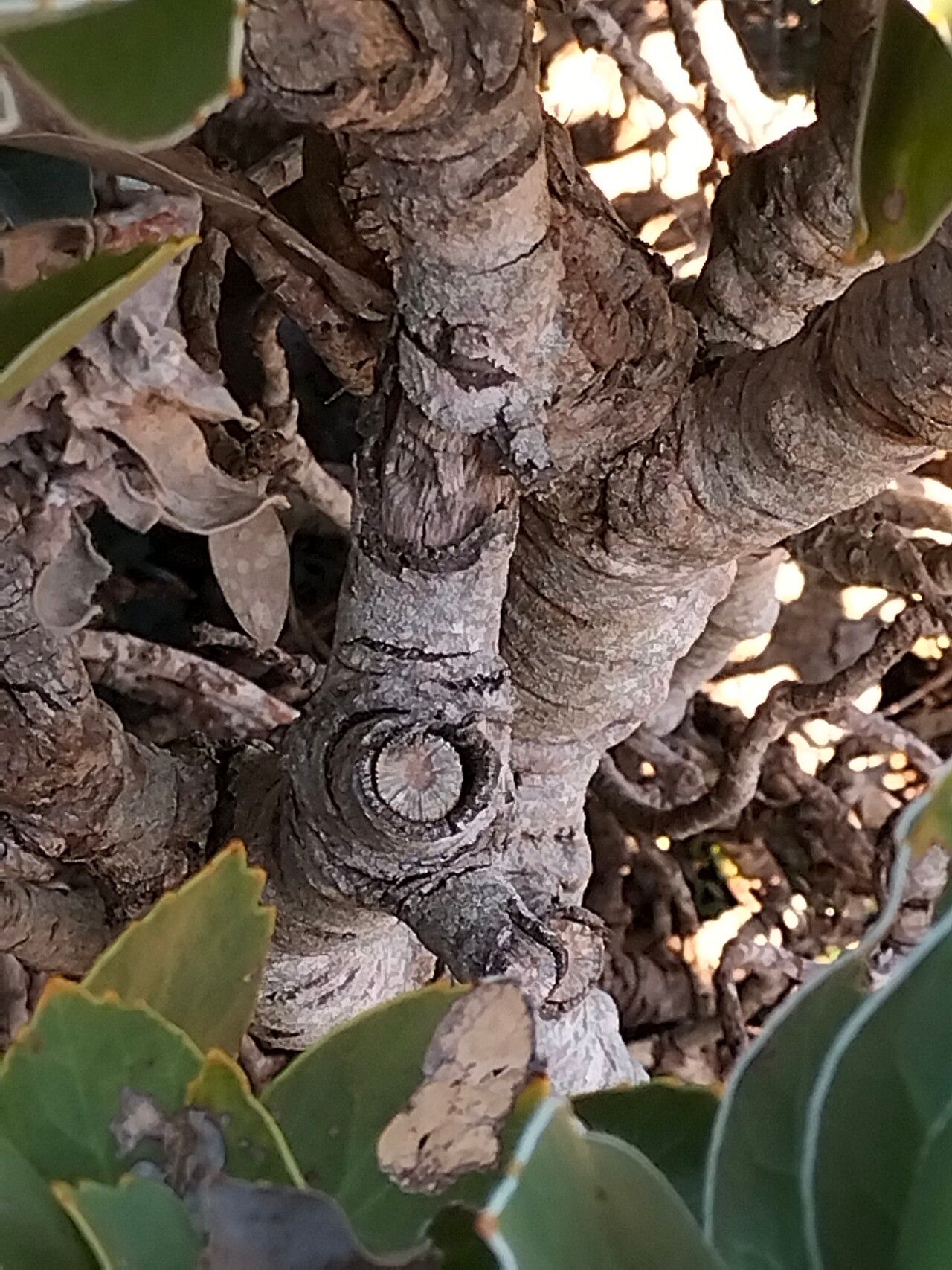
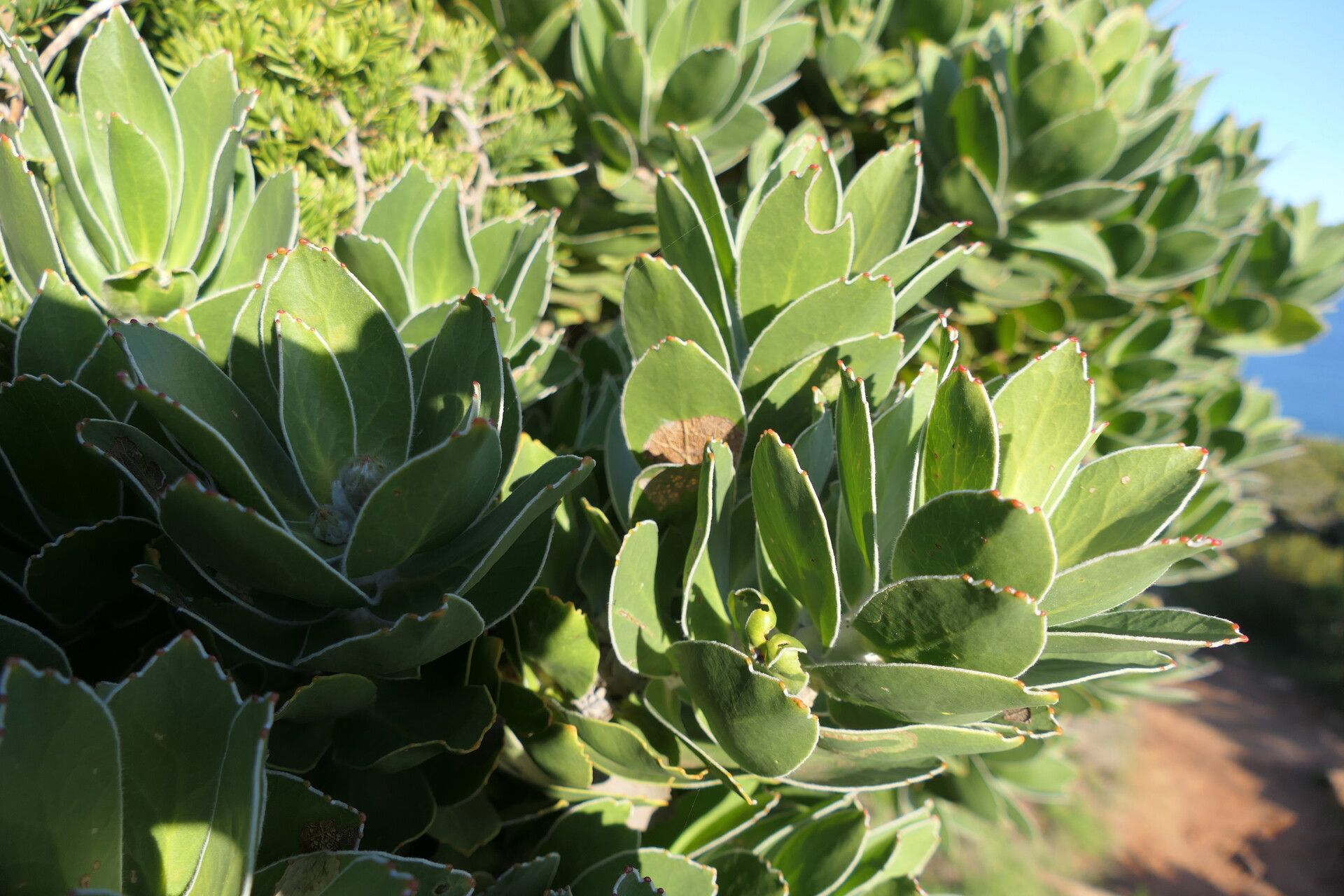
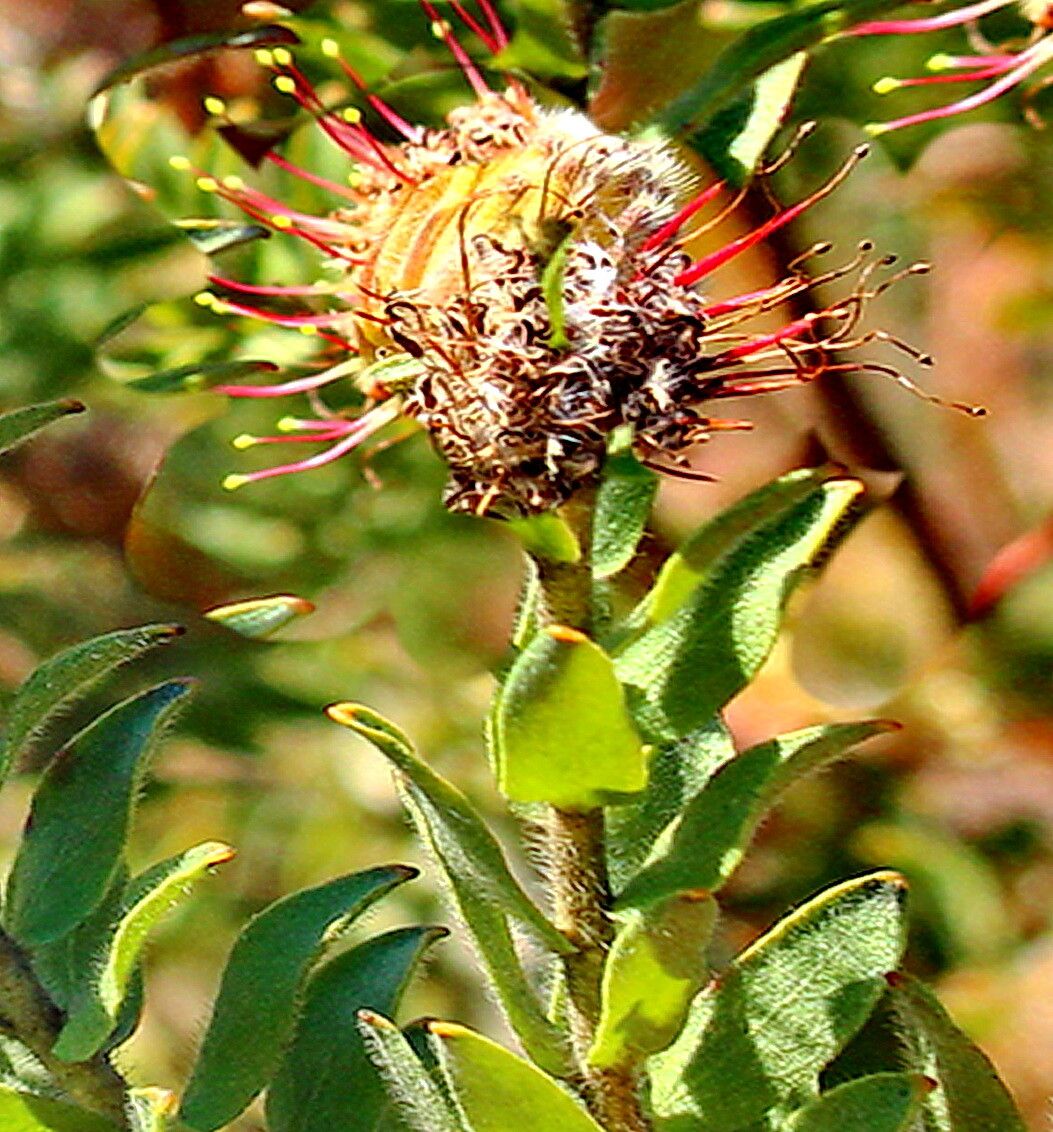
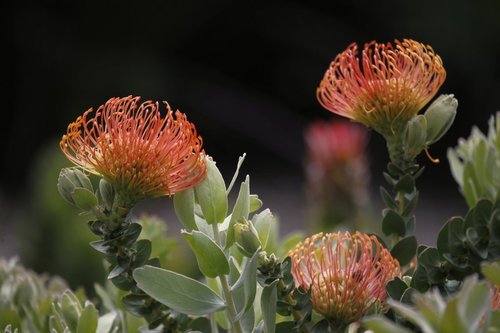
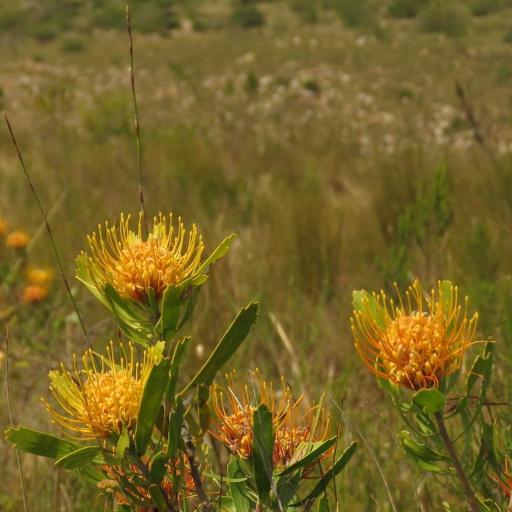
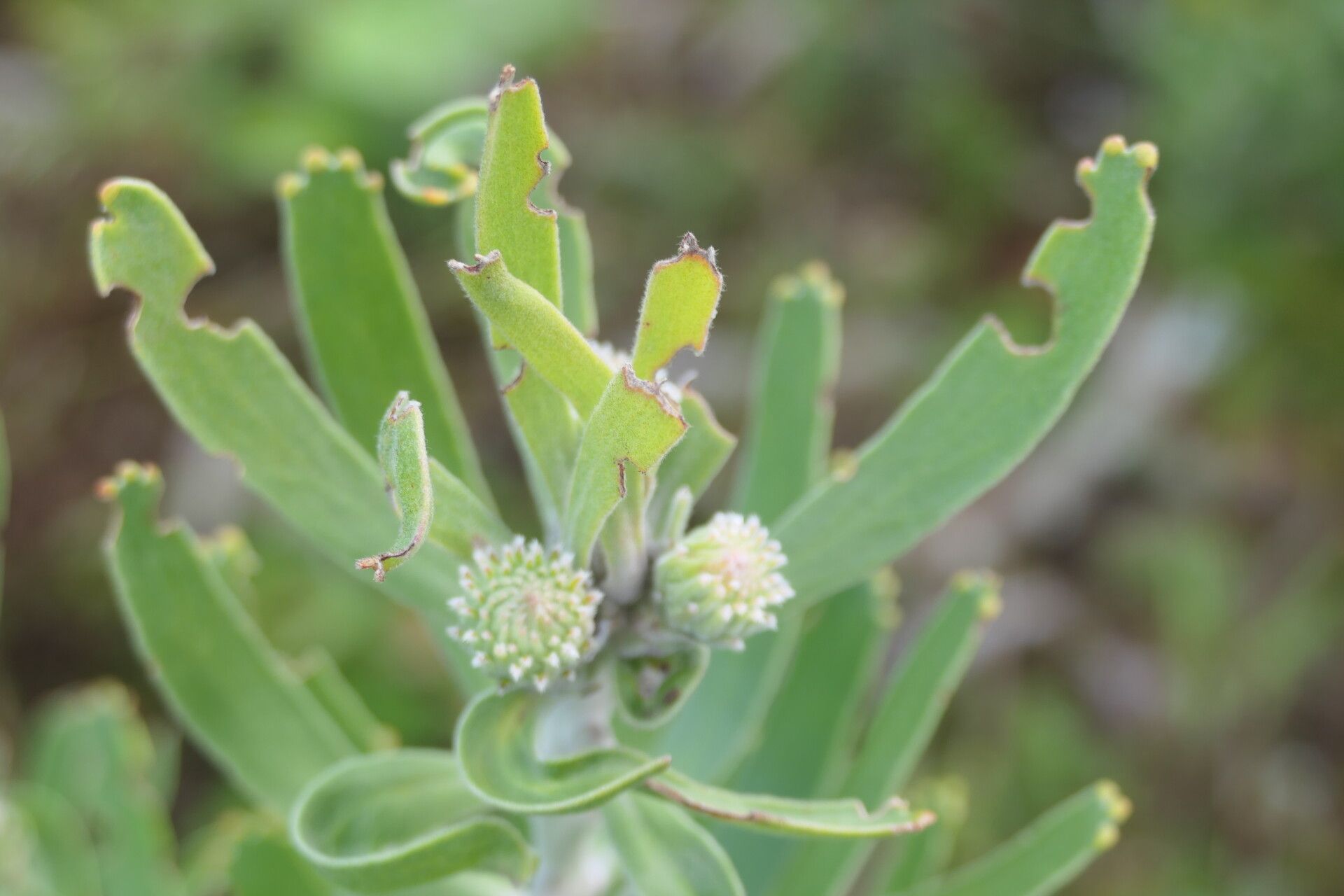
Leucospermum conocarpodendron is the largest species of the genus Leucospermum, reaching almost tree-like proportions of 5–6 m (16–20 ft) high with a firm trunk that is covered in a thick layer of cork that protects it from most fires. It has greyish or green narrow or broad inverted egg-shaped leaves with three to ten teeth near the tip and large yellow flowerheads, with firm, bent, yellow styles that stick far beyond the rest of the flower and give the impression of a pincushion. It is commonly known as the tree pincushion in English or goudsboom in Afrikaans. They naturally occur near Cape Town, South Africa. Two subspecies are distinguished. L. conocarpodendron subsp. conocarpodendron, that has greyish leaves because they have a covering of felty hairs. L. conocarpodendron subsp. viridum, has green leaves that lack felty hairs. Flowers can be found between August and December.
Cloud bank is resistant to disease and is generally unlikely to suffer from illnesses. Regarding care, this plant is fairly low-maintenance. When grown outdoors it needs little watering, and larger specimens typically do not require pruning. Smaller plants, however, should be trimmed after they finish blooming. Cloud bankt is suitable for anyone with an outdoor area, such as a garden or deck, and does not call for much gardening experience.
How to keep Leucospermum Conocarpodendron.
Light
Cloud bank is found in open habitats, like sunny meadows and forest margins, where plenty of light is available. It prefers Full Sun but can also endure Partial Sun, adapting well to different light conditions.
Water
The 'cloud bank' plant is drought-tolerant, but it requires specific watering practices during its initial growth period. After planting, and throughout the first two growing seasons, it's important to keep the soil consistently moist. Loamy soil typically needs watering 2-3 times per week. However, if the soil is sandy or the plant is in a pot, it might need daily watering, especially during dry spells. Always water at the base of the plant to help prevent diseases.
Temperature
Cloud bank shows good heat adaptability, tolerating higher temperatures and large temperature fluctuations. During hot weather, attention should be paid to watering and to giving suitable shade to prevent sunburn. However, Cloud bank is relatively sensitive to low temperatures. While it can endure some cold, excessively low temperatures may cause frost damage.
Fertilizer
Timing matters when fertilizing Cloud bank. Apply fertilizer in early spring and then every month through early summer. The fertilizer encourages lovely blooms and supplies energy during both dormant periods and active growth.
Pruning
The cloud bank showcases beautiful pom-pom flowers and lush foliage. To encourage growth and flowering, prune in early spring, paying attention to removing any dead or overcrowded branches. Be sure to use clean tools to prevent disease. Avoid heavy pruning after late spring to protect the blooming cycle and enhance the plant's overall appearance.
Botanical profile.
- Plant Type
- Shrub
- Life Cycle
- Perennial
- Genus
- Leucospermum
- Family
- Proteaceae
- Hardiness Zone
- 9-11
- Mature Height
- 2.13 m to 4.88 m
- Mature Spread
- 2.13 m to 3.96 m
- Leaf Color
- Dark Green, Gray
- Leaf Type
- Evergreen
- Flower Size
- 7.62 cm to 10.16 cm
- Bloom Time
- Fall
- Planting Time
- Spring, Summer, Autumn
- Harvest Time
- Winter
Other names.
Reader questions.
What are the sunlight requirements for Cloud bank (Leucospermum conocarpodendron)?
Cloud bank, known botanically as Leucospermum conocarpodendron, thrives under specific sunlight conditions. It requires full sun, which means it should receive above 6 hours of sunlight daily. In some cases, it can also manage in partial sun, getting about 3-6 hours of sunlight each day. It's crucial to observe how sunlight moves through your garden throughout the day to choose the best spots. Providing the perfect balance of light and shade ensures the happiness and health of your Cloud bank plants.
What is the common name of Leucospermum conocarpodendron?
The common name of Leucospermum conocarpodendron is Cloud bank.
What are the symptoms of an issue related to Leucospermum conocarpodendron?
There are no specified symptoms related to issues with Leucospermum conocarpodendron provided in the information.
What essentials should be known about Cloud bank?
There are no specific essentials provided regarding the Cloud bank (Leucospermum conocarpodendron).