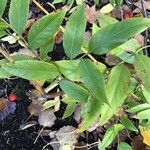
Leucothoe axillaris
Coast leucothoe · Coastal doghobble · Dog-hobble · Leucothoe
Description
Source: leafsnapThis striking coastal native from the southeastern U.S. presents a wonderful alternative to common boxwood or holly. It features stunning blazing red new foliage, white urn-shaped flowers on gracefully arching branches, and vibrant winter color. Ideal for foundation plantings in lightly shaded to dappled sunlight, it also thrives on slopes and in naturalized woodlands. This plant is evergreen.
🌳 The bell-shaped blossoms of coastal doghobble are a little-known treasure for certain pollinators. As a nectar-rich plant, coastal doghobble fulfills a distinct role in supporting the local ecosystems where it grows. Specifically, it provides nectar to specialist bees that have co-evolved with native plants like coastal doghobble, promoting a specialized and often overlooked pollination symbiosis. This complex interaction highlights the importance of conserving native plant species to preserve the health of local bee populations and, by extension, the broader environment.
Care Guide
💧 Water
Coastal doghobble thrives in humid environments, where it prefers well-drained soil with consistent moisture. It needs to be watered every 1-2 weeks, with particular attention to hydration during its active growth phase. This helps maintain its foliage and support flowering. Although it is moderately drought-tolerant, it performs best with stable moisture levels.
How should I water my Coastal doghobble plant?
Your Coastal doghobble is not particular about how you water it, so you can use any common watering tool. This includes watering cans, hoses, or cups. It's important to apply the water directly to the soil, making sure to moisten all areas equally. Using filtered water is helpful to avoid harmful particles from tap water. Additionally, using water at or slightly above room temperature is preferred, as extremes in temperature can be a bit shocking for the Coastal doghobble. However, this plant generally responds well to any kind of water given to it.
If I give my Coastal doghobble too much or too little water, what should I do?
Outdoor plants, especially newly planted ones or seedlings, are prone to lack of watering. It's important to consistently water them for a few months when they are small or recently planted. Once the roots are established, Coastal doghobble mainly relies on rain. When Coastal doghobble is planted in pots, overwatering is a common issue. If you accidentally overwater your plant, there are steps you can take to remedy the situation. First, stop watering the plant immediately to minimize the impact of overwatering. Then, remove the Coastal doghobble from its pot to check the roots. If there is no root rot, you can return the plant to its container. However, if you notice root rot, trim away the affected roots and apply a fungicide. Finally, replant the Coastal doghobble in well-draining soil. If you underwater the Coastal doghobble, simply water it more frequently. Underwatering is easily fixed, as the leaves will droop and dry out, but they will quickly regain their fullness after sufficient watering. Make sure to adjust your watering frequency as soon as you notice underwatering.
How much should I water my Coastal doghobble?
To ensure healthy growth for most outdoor plants, they can rely on natural rainfall. However, if your area doesn't receive much rain, it's important to provide adequate watering every 2 weeks in the spring and fall. In the summer, plants need more frequent watering, while in winter, when growth slows down, water sparingly or not at all. If you have recently planted a young Coastal doghobble, it requires more frequent watering to establish and grow into a drought-tolerant plant. For potted Coastal doghobbles, there are two ways to determine watering frequency. The first is to follow a set schedule, such as watering once every week or every other week. However, this may not always consider the specific growing conditions of your Coastal doghobble. Another approach is to monitor soil moisture. Typically, it's best to wait until the top 2 to 4 inches of soil have completely dried out before watering again. It's important to be more mindful of watering during summer when this plant's water needs are highest.
How much water does my doghobble plant that grows in coastal areas need?
To water your Coastal doghobble, keep in mind that it doesn't always require a lot of water. If only a few inches of soil have dried since the last watering, give it about five to ten ounces of water. You can also gauge water volume by checking soil moisture. Take note of how many inches of soil have dried out between waterings. To ensure proper moisture, water enough to moisten all the dry soil layers. If over half of the soil is dry, consider giving more water until you see excess water draining from the pot's holes. If your Coastal doghobble is planted in a rainy outdoor area, it may not need extra watering. When it's young or still establishing, aim for 1-2 inches of rain per week. As it grows, it can rely on rainwater, but during hot weather with no rain for 2-3 weeks, give it a thorough watering to prevent stress.
How can I know if I'm giving enough water to my Coastal doghobble?
Coastal doghobble is often overwatered, which can lead to specific signs. Look for yellowing leaves and leaf drop as indicators of overwatering. Additionally, overwatering can cause the plant's overall structure to shrivel and may result in root rot. Conversely, an underwatered Coastal doghobble will start to wilt and may develop brown or brittle leaves. Regardless of whether you observe signs of overwatering or underwatering, take action promptly to restore your Coastal doghobble's health.
☀️ Light Partial sun
Coastal doghobble does best with a moderate amount of sunlight, though it can also adjust to shadier sites. It is capable of tolerating fairly low light conditions. Sunlight exposure is the primary factor affecting the plant's growth, health, and survival, and insufficient light can reduce its vitality and growth rate.
What are the sunlight requirements for Coastal Doghobble?
Coastal Doghobble thrives in moderate levels of sun exposure and can adapt to lower sun conditions. It requires about 3-6 hours of sunlight daily for partial sun and less than 3 hours for full shade environments. Insufficient sunlight can affect its vitality and growth speed. It's crucial to observe how sunlight moves through your garden to find spots that offer the right balance of light and shade, ensuring the plant's health and happiness.
Can Coastal Doghobble grow under artificial lighting?
Yes, Coastal Doghobble can grow under artificial lighting, especially when natural sunlight is not sufficient. Indoor plants benefit significantly from artificial lights, such as LED, which can be customized to provide necessary wavelengths. For optimal growth, full sun plants need between 30-50W per square foot, partial sun plants require 20-30W per square foot, and full shade plants need 10-20W per square foot. The artificial light source should be placed 12-36 inches above the plant for 8-12 hours per day to mimic natural daylight.
What are the symptoms of insufficient light in Coastal Doghobble?
When Coastal Doghobble doesn't receive enough light, several symptoms may appear, including smaller new leaves, leggy or sparse growth, faster leaf drop, slower or halted growth, and paler new leaves. Additionally, chlorosis (leaves turning yellow), sunscald, leaf curling, wilting, and leaf scorching can occur with inappropriate light conditions. These symptoms indicate that the plant is not receiving the required amount of light for healthy growth.
How can I address light deficiency in Coastal Doghobble?
To optimize Coastal Doghobble's growth with insufficient light, gradually increase sun exposure by shifting the plant to sunnier spots each week until it receives the recommended sunlight. Use artificial light for indoor or immovable plants, keeping a lamp on for at least 8 hours daily or investing in professional plant grow lights. Outdoors, gradually move plants to better-lit areas to prevent sunburn. For plants in the ground, reduce obstacles, like pruning trees, or transplant to sunnier locations during the plant's dormant period for better light access. Note that parts of the plant affected by insufficient light may not recover, but new growth will be healthier after adjusting light exposure.
🌡️ Temperature 10–35°C
Coastal doghobble is a woody plant of temperate regions that grows naturally where average temperatures range from 10 to 35 ℃ (50 to 95 ℉). In winter, it is best kept in a cool spot of about 10 to 15 ℃ (50 to 59 ℉), while in summer it can tolerate and do well at warmer temperatures up to 25 to 30 ℃ (77 to 86 ℉).
What is the ideal temperature range for coastal doghobble?
Coastal doghobble, or Leucothoe axillaris, thrives in a temperate environment with an optimal temperature range of 10 to 35°C (50 to 95°F). During winter, it is best to keep the plant in a cooler environment, ideally between 10 to 15°C (50 to 59°F), while in summer, it can tolerate warmer temperatures of 25 to 30°C (77 to 86°F). The plant has a strong cold resistance, so special frost protection measures are generally not necessary, but it's important to provide some protection if temperatures are expected to drop below its tolerance limit.
How should coastal doghobble be cared for in winter to avoid cold damage?
To prevent cold damage to coastal doghobble during the winter, especially if temperatures are expected to fall below its cold tolerance threshold, it's advisable to wrap the plant's trunk and branches with non-woven fabric or cloth. Watering the plant abundantly before the first freeze of autumn to ensure the soil is moist and enters a frozen state is also crucial. This helps to avoid drought and water scarcity for the plant during winter and early spring.
What are the signs of temperature stress in coastal doghobble, and how can they be mitigated?
Signs of temperature stress in coastal doghobble vary with the seasons. In winter, if temperatures fall below the plant's cold tolerance, the branches may become brittle and dry by spring, with no new shoots emerging. Pruning away any dead branches that have failed to produce new leaves in spring is recommended. During summer, if temperatures exceed the plant's heat tolerance, leaves may lighten in color, and tips might dry and wither, making the plant more susceptible to sunburn. To mitigate this, sunburned and dried-up parts should be trimmed away, and the plant moved to a shaded location or protected with a shade cloth. Additionally, watering the plant in the morning and evening to keep the soil moist can help.
💨 Humidity
🪴 Soil 4-6
🌱 Fertilizer
Fertilize your Coastal doghobble in early spring to encourage healthy growth. Regular feeding improves overall health, producing vigorous growth, better tolerance of harsh conditions, and increased resistance to pests and diseases. Keep a consistent fertilization schedule for your Coastal doghobble to maintain richly colored, vibrant foliage and a lush appearance.
When should I fertilize my Coastal doghobble?
To ensure healthy growth, fertilize your Coastal doghobble for the first time in late winter or early spring. This will provide the necessary nutrients for the plant to thrive once the weather warms up. If you live in a warm climate region, it is beneficial to fertilize again in early fall. This will not only add nutrients for the upcoming growing season, but also make the plant more resilient to winter cold without any foliage damage. Fertilizing earlier in fall will allow the new branches enough time to grow and withstand the cold winter.
What kind of fertilizer does my Coastal doghobble need?
Coastal doghobble primarily relies on nitrogen as its most important nutrient, but this doesn't mean that phosphorus and potassium are not important. On the contrary, all three nutrients are necessary for the optimal growth of a Coastal doghobble. A balanced fertilizer like 10-10-10 can be a good choice, as it provides a decent amount of all three nutrients. However, a more precise nutrient ratio can lead to even better growth. For Coastal doghobble, fertilizers with a slightly higher nitrogen content, such as 10-6-4, often yield good results. When fertilizing, you have the option of using granular or liquid-based fertilizers.
What will happen if I put too much fertilizer on my Coastal doghobble plant?
Feeding a Coastal doghobble always carries the risk of overfertilization. This risk is particularly high if you feed the plant at the wrong time of year, feed it too frequently, or feed it without first watering the soil. When overfertilization occurs, the leaves of the Coastal doghobble may turn brown and its growth may become stunted. On the other hand, excessive fertilizer can cause the Coastal doghobble to produce an abundance of weak new growth, which is prone to breaking. This weak growth can also affect the overall form and structure of the plant.
Why should I use fertilizer on my Coastal doghobble?
No matter what type of Coastal doghobble you have, regularly fertilizing it will promote overall health. Providing the right nutrients will result in stronger growth, making your Coastal doghobble more resilient to harsh conditions and better equipped to fight diseases and pests. The foliage of the plant is one of its most appealing characteristics, so it's important to maintain it. To do this, establish and stick to a fertilization schedule tailored to your specific Coastal doghobble. This will encourage the development of vibrant leaves with a lush appearance.
When is the best time to not fertilize my Coastal doghobble?
To ensure proper care for your Coastal doghobble, it's important to note a few key times when fertilization should be avoided. Firstly, in the early and mid-winter months when the plant is dormant, there is no need for feeding. Additionally, it is not advisable to fertilize during late spring and summer, as the hotter and drier weather during this time can have a detrimental effect on the plant's response to fertilization. To prevent any negative consequences, it is best to stick to a fertilization schedule that focuses on early spring and early fall for feeding.
🪴 Pot & Repot 2-3 years
When repotting Coastal doghobble, choose a pot 1–2 inches (2.5–5.1 cm) larger with ample drainage. Use a well-draining potting mix. Repot in spring or fall, ensuring the root ball is slightly lower than the rim of the flower pot. Water thoroughly after repotting and place the plant in a warm spot with indirect sunlight.
✂️ Pruning
Coastal doghobble has arching branches and glossy leaves. To maintain its shape and promote dense growth, prune it in late spring by cutting above the leaf nodes. This helps remove old or damaged stems. Regular pruning also improves airflow and light penetration, which enhances the plant's overall health and vigor.
🌿 Propagating
🐛 Diseases & pets
☠️ Toxicity
Characteristics
- Plant Type
- Shrub
- Life Cycle
- Perennial
- Genus
- Leucothoe
- Family
- Ericaceae
- Hardiness Zone
- 6-9
- Mature Height
- 2.13 m
- Mature Spread
- 1.52 m to 1.83 m
- Leaf Color
- Green, Yellow, Gold
- Leaf Type
- Evergreen
- Flower Color
- White
- Flower Size
- 0.15 cm to 0.20 cm
- Bloom Time
- Mid spring, Late spring, Early summer
- Planting Time
- Spring, Autumn
- Harvest Time
- Early summer, Mid summer
- Native Area
- Southeastern US