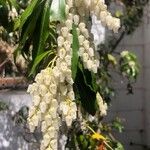
Leucothoe davisiae
Sierran Doghobble · Sierra laurel
Description
Source: leafsnapLeucothoe davisiae, an evergreen shrub from the Ericaceae family, is native to the Pacific Northwest of North America, particularly Oregon and Washington. It typically grows up to 3 meters tall and has a spreading habit with arching branches adorned with glossy, dark green leaves. These lance-shaped leaves have serrated edges and can reach up to 10 centimeters in length. In spring, Leucothoe davisiae produces clusters of small, bell-shaped flowers that are white or pinkish and fragrant, attracting bees, butterflies, and other pollinators. Following the flowering period, the plant develops small berries that transition from green to red as they mature. This shrub prefers moist soil with good drainage but can also tolerate some drought once established. It thrives in partial or full shade but can grow in full sun if provided with adequate moisture. Leucothoe davisiae is popular in landscaping due to its attractive foliage and flowers. Additionally, it provides habitat for wildlife, with birds feeding on its berries during the winter months. Overall, Leucothoe davisiae is a beautiful evergreen shrub that is not only aesthetically pleasing for landscaping but also offers ecological benefits by supporting wildlife habitats.
Care Guide
💧 Water Every 7 days
Sierra laurel thrives in moderately humid environments, striking a balance between drought tolerance and its need for moisture. Watering it every 1 to 2 weeks is sufficient. As an evergreen plant, the sierra laurel stores water in its leaves, which allows it to adapt well to different climate zones.
☀️ Light Partial sun
Sierra laurel naturally occurs in habitats like forest understories or rocky areas, where it grows in natural shade. It prefers partial sun but can tolerate full sun or full shade, demonstrating its versatile, hardy nature.
🌡️ Temperature 5–32.2°C
💨 Humidity
🪴 Soil 6-7
🌱 Fertilizer
The timing of fertilizing Sierra laurel is important. Start fertilizing in early spring and repeat once a month through early summer. Fertilizer encourages attractive blooms and supplies energy during both dormant and active growth periods.
🪴 Pot & Repot
✂️ Pruning
Sierra laurel is an evergreen shrub known for its attractive foliage and cascading growth habit. To maintain its health and appearance, prune it in early spring by removing dead or crowded branches to improve air circulation. Pruning after it blooms can also encourage new growth. Regular maintenance is important to prevent overgrowth, ensuring the plant remains robust and well-shaped.
🌿 Propagating
🐛 Diseases & pets
☠️ Toxicity
Characteristics
- Plant Type
- Shrub
- Life Cycle
- Perennial
- Genus
- Leucothoe
- Family
- Ericaceae
- Hardiness Zone
- 5-8
- Mature Height
- 0.91 m to 1.83 m
- Mature Spread
- 61 cm to 91 cm
- Leaf Color
- Dark Green
- Leaf Type
- Evergreen
- Flower Color
- White
- Flower Size
- 0.51 cm to 0.76 cm
- Bloom Time
- Mid spring, Late spring
- Planting Time
- Spring, Summer, Autumn
- Harvest Time
- Mid summer, Late summer, Early fall