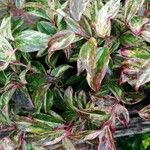
Leucothoe fontanesiana
Dog-hobble · Fetterbush · Switch-ivy · Highland Doghobble · Drooping leucothoe
Description
Source: leafsnapLeucothoe fontanesiana, commonly known as drooping leucothoe or doghobble, is an evergreen shrub belonging to the Ericaceae family. Native to the southeastern United States, this plant thrives in moist woodlands and along stream banks. It typically reaches up to 6 feet in height and spreads to about 8 feet in width, forming a dense, spreading habit. The leaves of Leucothoe fontanesiana are glossy green with a leathery texture and are oblong or lance-shaped, growing up to 6 inches long. In the fall, these leaves transform into a beautiful bronze color before falling off. In early spring, the shrub produces small white or pinkish flowers arranged in clusters along the stems. These flowers emit a sweet fragrance that attracts bees and other pollinators. Leucothoe fontanesiana thrives in moist, acidic soil with good drainage but can tolerate some drought once established. It is also shade-tolerant but performs best in partial shade to full sun. Overall, Leucothoe fontanesiana is an attractive evergreen shrub that provides year-round interest with its glossy foliage and fragrant spring blooms. Once established, it is easy to care for, making it an excellent choice for woodland gardens, mixed borders, or foundation plantings.
🌳 Mountain doghobble has been used mainly for its ornamental beauty, thriving in preferred shady conditions. It serves as an attractive undergrowth in woodland gardens because of its gracefully arching stems and white, bell-shaped flowers. In landscaping, it provides erosion control on slopes. Its dense foliage offers valuable shelter and habitat for a variety of wildlife.
Care Guide
💧 Water Every 7 days
Mountain doghobble thrives in moist, well-drained soils and benefits from consistent humidity. It needs watering every one to two weeks, ensuring a balance between hydration and drainage. As an ornamental shrub, mountain doghobble maintains its lush foliage throughout the growing season, even with occasional rainfall.
What's the difference between watering my Mountain doghobble inside or outside?
Your Mountain doghobble may not require extra watering if it's growing outside and receives sufficient rain. However, if you live in an area with minimal rainfall, watering the plant every two weeks is recommended. If you reside outside the plant's natural hardiness zone, it's best to cultivate it indoors. When grown indoors, keep an eye on the soil moisture as it may dry out faster in containers or due to HVAC units like air conditioners. These drying factors may require more frequent watering compared to outdoor growth.
How should I water my Mountain doghobble plant?
When watering your Mountain doghobble, you have flexibility in choosing your watering tool. Watering cans, hoses, cups - they all work fine for this plant. The important thing is to water the soil directly, ensuring equal moisture distribution for all parts of the root system. filtered water is recommended to avoid harmful particles found in tap water, and using water at or slightly above room temperature is ideal to prevent shocking the plant. However, the Mountain doghabble is generally adaptable to different water types.
What should I do if I give too much or too little water to my Mountain doghobble?
Outdoor plants, especially newly planted ones or seedlings, are prone to lack of watering. It is important to make sure you water them sufficiently for a few months while they are small or just planted. Once the roots are established, Mountain doghobble can rely on rain most of the time. When your Mountain doghobble is planted in pots, overwatering is more likely to happen. If you accidentally overwater your plant, take immediate action to remedy the situation. First, stop watering your plant to minimize the effect of overwatering. Then, remove your Mountain doghobble from its pot to check its roots. If the roots do not show any signs of rot, you can return the plant to its container. But if you find signs of root rot, trim away the affected roots and consider applying a fungicide to prevent further damage. Lastly, repot your Mountain doghobble in well-draining soil. In the case of underwatering, simply water your Mountain doghobble more frequently. It is usually an easy fix. If the plant's leaves droop, dry out, and fall off due to underwatering, they will quickly regain fullness after sufficient watering. Remember to correct your watering frequency as soon as you notice underwatering.
How often should I water my Mountain doghobble plant?
If you have plants that grow outdoors naturally, they usually get enough water from rainfall. However, if your area doesn't get much rain, you should water your plants every 2 weeks in the spring and fall, and more often in the summer. In the winter, when plants need less water, you can water them less frequently or not at all. If you have a young or newly planted Mountain doghobble, it needs more frequent watering to help it establish and grow. For potted plants, there are two ways to determine how often to water your Mountain doghobble. The first is to follow a set watering schedule, such as once a week or every other week. However, this may not always be accurate for your specific plant and growing conditions. The other option is to check the soil moisture before watering. Wait until the top few inches of soil have dried out before giving more water. This is usually about ⅓ to ½ depth of the pots.
How much water does my Mountain doghobble require?
When watering your Mountain doghobble, you might be surprised that it doesn't always require a large amount of water. Instead, if only a few inches of soil have dried since the last watering, giving it about five to ten ounces of water will promote healthy growth. You can also determine the amount of water based on the soil's moisture level. Remember to observe how many inches of soil have dried out between waterings. To ensure the plant receives enough moisture, water all the layers of dry soil since the last watering. If over half of the soil is dry, it's best to provide extra water. Keep adding water until you see it draining from the pot's drainage holes. If your Mountain doghobble is planted in a rainy area, it may not need additional watering. When the plant is young or establishing, make sure it receives 1-2 inches of rain per week. As it grows, it can rely solely on rainwater, except during hot weather with no rainfall for 2-3 weeks. In such cases, give it a full watering to prevent stress.
☀️ Light Partial sun
Mountain doghobble thrives in dappled sunlight that mirrors its native understory habitat, where it experiences alternating light and shade. It can, however, tolerate lower light levels. Excessive exposure may cause leaf scorch, whereas inadequate light can lead to poor growth and pale leaves.
What are the sunlight requirements for Mountain Doghobble?
Mountain Doghobble thrives best under filtered solar gleam, which simulates its natural undergrowth habitat with a mix of light and shade. This plant can also adjust to lower light conditions. It requires about 3-6 hours of sunlight for partial sun conditions and should receive less than 3 hours of sunlight for full shade conditions. Insufficient light may lead to poor growth and a pale appearance, while excessive exposure can cause leaf scorch. Observing how sunlight moves through your garden helps in choosing spots that ensure the balance of light and shade needed for the plants.
How do indoor Mountain Doghobble plants benefit from artificial lighting?
Indoor Mountain Doghobble plants require adequate lighting for optimal growth, especially when natural sunlight is insufficient, such as during winter or in less sunny spaces. Artificial lights, like LED lights, offer a vital solution by providing the specific wavelengths of light needed by the plants. For different sunlight needs, full sun plants require 30-50W/sq ft, partial sun plants need 20-30W/sq ft, and full shade plants need 10-20W/sq ft of artificial light. The light source should be placed 12-36 inches above the plant to mimic natural sunlight, and most plants need 8-12 hours of light per day to mimic the natural daylight hours for the plant species.
What are the symptoms of light deficiency in Mountain Doghobble?
Mountain Doghobble can exhibit several symptoms when grown indoors with insufficient light, including smaller new leaves, leggy or sparse growth, faster leaf drop, slower or no new growth, and lighter-colored new leaves. Insufficient sunlight causes these symptoms due to a lack of chlorophyll and essential nutrients. Conversely, excessive sunlight exposure may lead to sunscald, chlorosis (leaves turning yellow), leaf curling, wilting, and leaf scorching. All these conditions affect the plant's ability to photosynthesize and maintain overall health.
What solutions can mitigate light deficiency issues for Mountain Doghobble?
To address light deficiency in Mountain Doghobble, gradually increase its sunlight exposure for both indoor and outdoor plants. For indoor plants, shift them to sunnier spots each week until they achieve 3-6 hours of direct sunlight daily or use artificial light such as desk or professional grow lights for at least 8 hours daily. Outdoor plants should be gradually moved to optimal sunlight spots, avoiding sudden changes to prevent sunburn. Reducing obstructions like tree branches can help, and for smaller plants, consider transplanting during their dormant period to a location with ample sunlight. While parts of the plant that suffered from insufficient light may not recover, new growth will be healthy after correcting the light exposure.
🌡️ Temperature 5–32.2°C
Mountain doghobble is a temperate, woody plant that prefers temperatures of 41 to 90 ℉ (5 to 32 ℃) in its native habitat. Through the seasons it can accommodate temperature shifts by keeping a similar range or falling slightly to 23 to 86 ℉ (-5 to 30 ℃) in winter.
What is Mountain Doghobble and what are its preferred growth temperatures?
Mountain Doghobble, botanically known as Leucothoe fontanesiana, is a temperate woody plant that thrives in temperatures ranging from 41 to 90°F (5 to 32°C). Its native growth environment allows it to adjust to seasonal temperature changes, typically maintaining or slightly decreasing its tolerance to 23 to 86°F (-5 to 30°C) in winter. This plant exhibits strong cold resistance, minimizing the need for special frost protection measures during the colder months.
How can you protect Mountain Doghobble from severe winter conditions?
Even though Mountain Doghobble has strong cold resistance, protection from extreme winter conditions can further ensure its health and vitality. In instances where winter temperatures are expected to drop below the plant's growth limit, protecting it with non-woven fabric or cloth wrapped around the trunk and branches can be beneficial. Additionally, watering the plant abundantly before the first freeze of autumn helps the soil to remain moist and enter a frozen state, which aids in preventing drought and water scarcity during winter and early spring.
What symptoms indicate temperature distress in Mountain Doghobble, and how can you address them?
Temperature distress in Mountain Doghobble manifests distinctly under low or high temperature conditions. When temperatures fall below the plant's cold tolerance limit, branches may become brittle and dry by spring, failing to produce new shoots. Pruning any dead branches can help rejuvenate the plant. Conversely, exceeding the maximum temperature tolerance during summer can lead to lighter leaf colors, dry and withered tips, and increased susceptibility to sunburn. Addressing this involves trimming sunburned and dried-up parts, relocating the plant to shaded areas, or using a shade cloth to protect it from intense sun. Regular watering in the morning and evening will also help keep the soil moist.
💨 Humidity
🪴 Soil 4-5
🌱 Fertilizer
Fertilize your Mountain doghobble in early spring to encourage healthy growth. Regular fertilization boosts overall health, producing vigorous growth, increased tolerance of harsh conditions, and enhanced resistance to diseases and pests. Keep to a specific fertilization schedule for your Mountain doghobble to preserve vibrant, deeply colored foliage and a lush appearance.
Why should I fertilize my Mountain doghobble?
No matter the type of Mountain doghobble you own, regular fertilization is essential for the plant to thrive. Providing the proper nutrients will promote vigorous growth and increase its ability to withstand challenging conditions and combat diseases and pests. Maintaining the foliage of your Mountain doghobble is important as it adds to its attractiveness. To achieve this, follow a specific fertilization schedule tailored to your plant, which will result in deep-colored leaves and an overall lush appearance.
When should I fertilize my Mountain doghobble plant?
To ensure healthy growth of your Mountain doghobble, start by fertilizing it in late winter or early spring. This provides the necessary nutrients for the warmer months ahead. Additionally, if you live in a warm climate area, consider fertilizing again in early fall. This helps add nutrients for the next growing season and makes your plant more resilient to winter conditions. By fertilizing early, you give the branches enough time to grow and withstand the cold winter without damage.
When is the best time to not fertilize my Mountain doghobble?
There are a few times when you should avoid fertilizing your Mountain doghobble. Firstly, during the early and mid-winter months when the plant is dormant and does not require feeding. Additionally, it is not recommended to fertilize this plant in late spring and throughout summer due to hot and potentially dry weather. These conditions can lead to a negative reaction to fertilization. To prevent any problems, it is best to stick to a fertilization schedule that only involves feeding in early spring and early fall.
What kind of fertilizer does my Mountain doghobble need?
The most important nutrient for a Mountain doghobble is usually nitrogen, but phosphorus and potassium are also important. A balanced fertilizer like 10-10-10 can work well because your Mountain doghobble needs a decent amount of all three nutrients. However, a more nuanced nutrient ratio often leads to optimal growth. Fertilizers with a slightly higher nitrogen content, like 10-6-4, tend to work better. You can choose between granular or liquid-based fertilizers when applying them.
How do I make my Mountain doghobble plant grow better?
To fertilize your Mountain doghobble, there are two options: granular fertilizer and liquid fertilizer. For granular fertilizer, simply sprinkle it on the soil at the right time. This type of fertilizer releases nutrients slowly over time. It's generally a good idea to lightly water your Mountain doghobble before applying the fertilizer. Alternatively, you can use liquid fertilizer, although this is less common. To do this, mix the fertilizer with water and pour it onto the soil around the base of your Mountain doghobble. It can be helpful to conduct a soil test beforehand to determine if any pH adjustments are needed.
🪴 Pot & Repot 2-3 years
When repotting Mountain doghobble, pick a pot 1-2 inches (2.5-5.1 cm) larger with ample drainage. Use a well-draining potting mix. Repot in spring or fall, making sure the root ball sits slightly below the rim of the flower pot. Water thoroughly after repotting and place the plant in a warm spot with indirect sunlight.
✂️ Pruning
Mountain doghobble benefits from a pruning session in late spring. Focus on removing dead or damaged branches, taking care to make only light cuts to reduce stress on the plant. Regular, gentle pruning enhances air circulation and light penetration, which helps lower the risk of disease. The best time to prune is after the plant has finished flowering, as this respects its natural growth cycle.
🌿 Propagating
🐛 Diseases & pets
☠️ Toxicity
Characteristics
- Plant Type
- Shrub
- Life Cycle
- Perennial
- Genus
- Leucothoe
- Family
- Ericaceae
- Hardiness Zone
- 5-8
- Mature Height
- 0.61 m to 1.83 m
- Mature Spread
- 1.22 m to 2.44 m
- Leaf Color
- Green
- Leaf Type
- Evergreen
- Flower Color
- White
- Flower Size
- 2.54 cm to 7.62 cm
- Bloom Time
- Mid spring, Late spring
- Planting Time
- Spring, Autumn
- Harvest Time
- Early summer, Mid summer