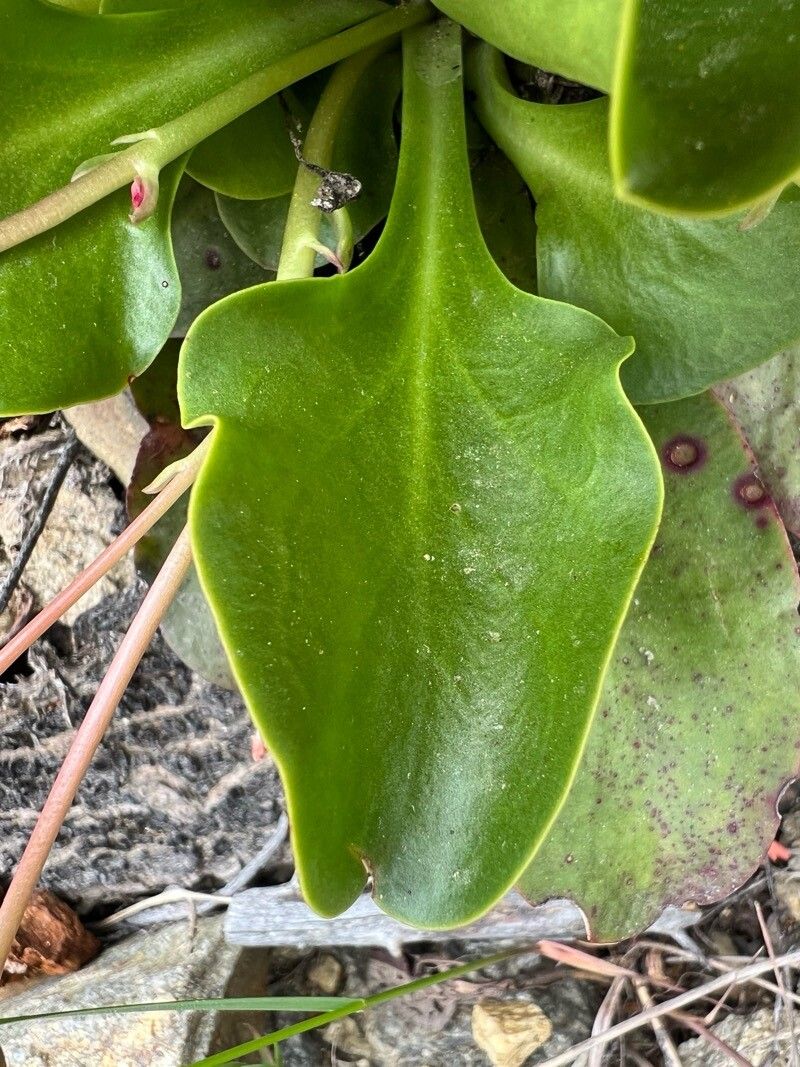
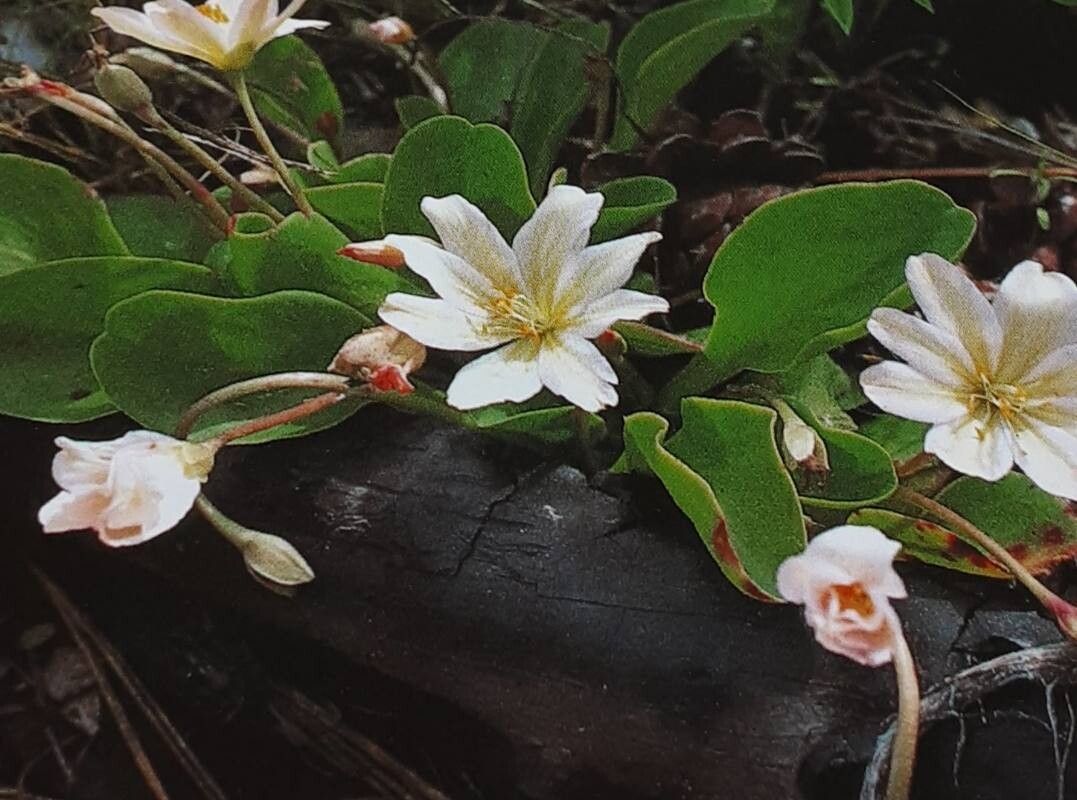
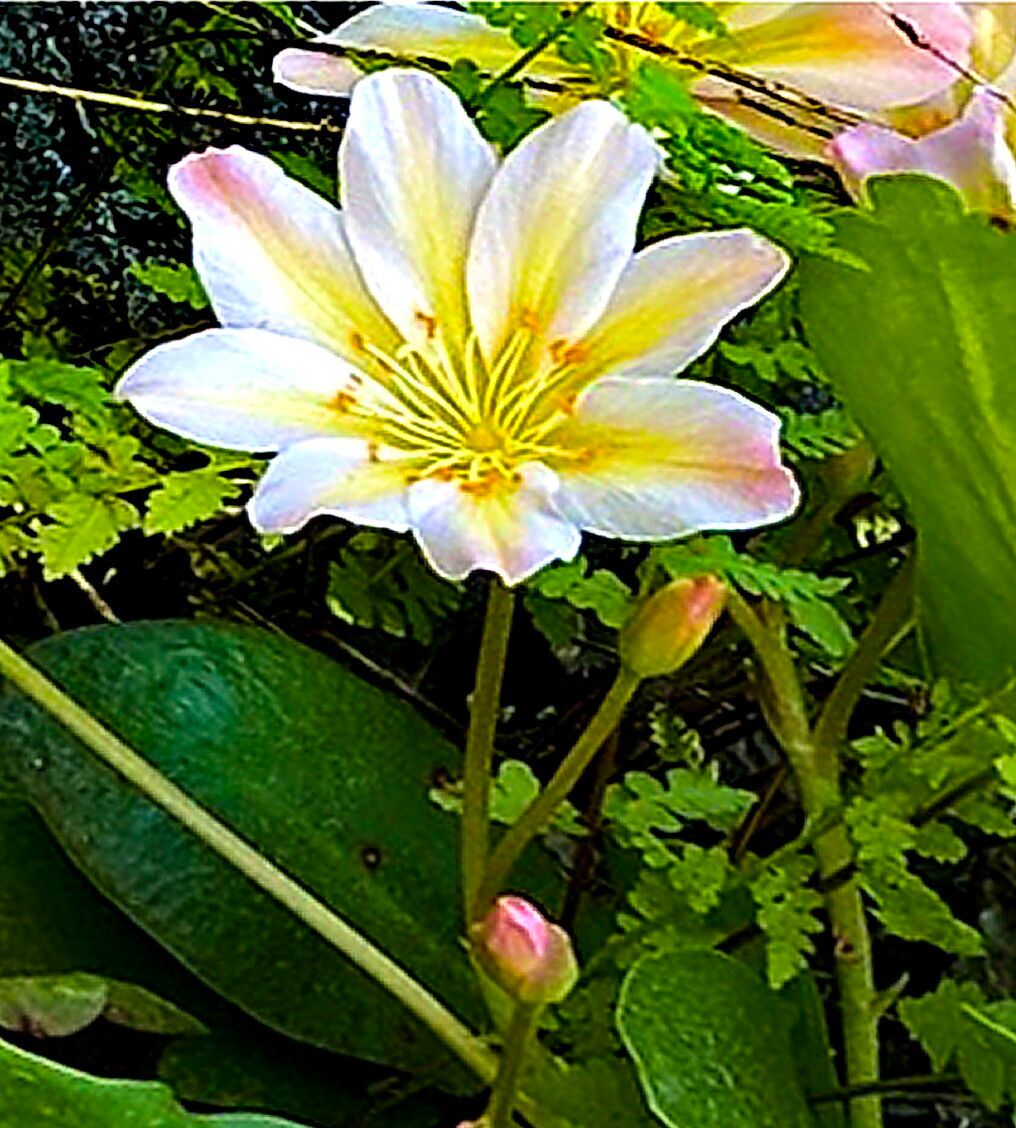
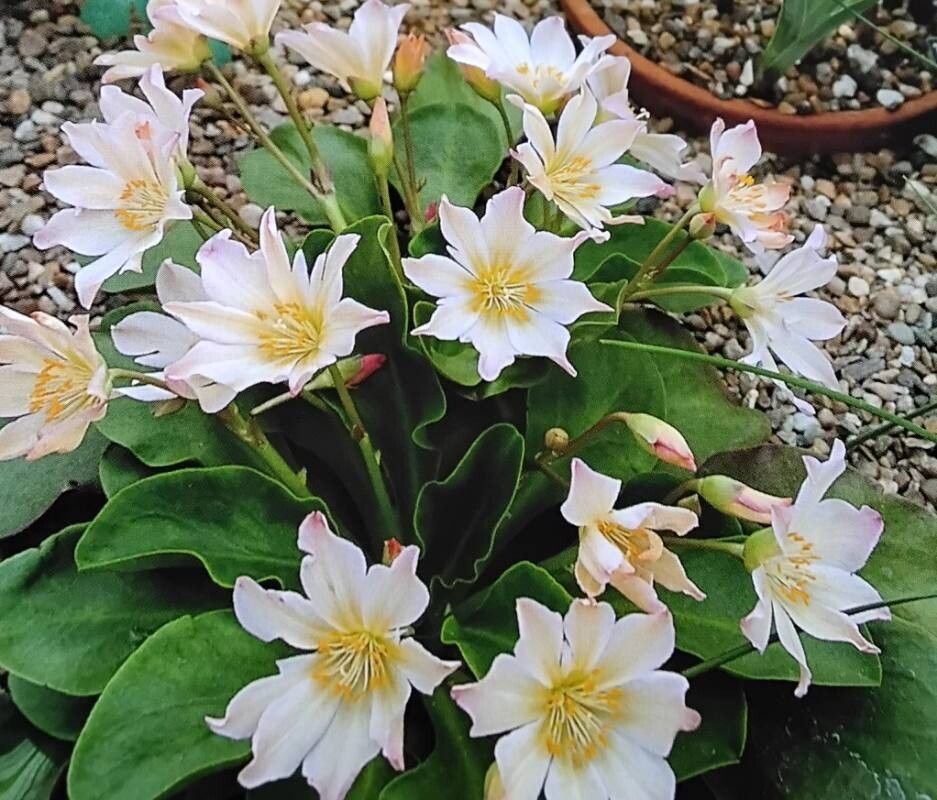
Lewisiopsis tweedyi is a flowering plant and sole species in genus Lewisiopsis. The species, formerly known as Cistanthe tweedyi and Lewisia tweedyi, is now classified in the family Montiaceae. The plant is known by the common names Tweedy's pussypaws, Tweedy's lewisia, or Tweedy's bitterroot. It is endemic to western North America in north-central Washington and adjacent British Columbia. It commonly grows on well-drained slopes often on rocky slopes or in rock crevices from low elevation ponderosa pine sites up to the drier part of the Grand Fir zone of the North Cascades. The flowers usually have a coral, apricot, or pink color.
Tweedy's pussypaws has moderate resistance to disease and may be prone to issues such as leaf spot. Its susceptibility to insect pests can differ by variety, but most are less resistant to pests. Regarding care, Tweedy's pussypaws requires consistent watering and fertilizing, as well as frequent removal of yellow leaves. It is important to manage pests and diseases when they appear and to harvest the plant in a timely way. Tweedy's pussypaws is suitable for people who can dedicate some time and energy to regular maintenance.
How to keep Lewisiopsis Tweedyi.
Light
Tweedy's pussypaws comes from habitats that receive abundant sunlight, such as open fields and sunny meadows. It prefers full sun but can also tolerate partial sun.
Temperature
Tweedy's pussypaws does best in moderate temperatures, about the same range people usually find comfortable. It prefers conditions that are neither excessively warm nor cold. The primary problem with high temperatures is the danger of sunburn, so providing some shade in summer is recommended to prevent overheating. When temperatures fall, Tweedy's pussypaws becomes dormant. If you want it to keep growing, you need to keep warmer conditions through the winter. Frost can damage the plant and should be avoided.
Fertilizer
Tweedy's pussypaws plants benefit from one or two applications of natural organic fertilizers containing potassium and phosphorus. Apply the fertilizer before planting, work it into the soil and water it in well. Usually a single application is enough, though a second may be applied once seedlings are established. Avoid overuse of fertilizer to prevent damage to the plants.
Botanical profile.
- Plant Type
- Herb
- Life Cycle
- Perennial
- Genus
- Lewisiopsis
- Family
- Montiaceae
- Hardiness Zone
- 8-10
- Mature Height
- 10 cm to 20 cm
- Mature Spread
- 30 cm
- Leaf Color
- Green
- Leaf Type
- Evergreen
- Flower Color
- Pink
- Flower Size
- 2.03 cm to 3.05 cm
- Bloom Time
- Mid spring, Late spring
- Planting Time
- Spring
- Harvest Time
- Early summer, Mid summer
Other names.