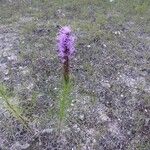
Liatris punctata
Dotted gayfeather · Plains gayfeather · Snakeroot · Dotted blazing star · Plains blazing-star
Description
Source: leafsnapLiatris punctata is a species of flowering plant in the family Asteraceae known by the common names dotted gayfeather, dotted blazingstar, and narrow-leaved blazingstar. It is native to North America, where it occurs throughout the plains of central Canada, the central United States, and northern Mexico.
Care Guide
💧 Water Every 1-2 weeks
Dotted Gayfeather is well-suited to the North American prairies and prefers well-drained soil, displaying a good tolerance to drought. It thrives outdoors with balanced watering every 1 to 2 weeks, adapting well to periods of rainfall. Its growth is particularly vigorous during the active season, demonstrating its resilience to changing moisture levels.
How should I water my Dotted Gayfeather plant?
To properly care for the Dotted Gayfeather, it is important to use filtered water at room temperature. Tap water may contain harmful particles that could affect the plant's health. This plant prefers warm environments, so it is best to avoid using cold water, which can be a shock to its system. Instead, water the plant by applying filtered, room temperature water directly to the soil until it is completely soaked. This method benefits the plant by keeping the roots moist and allowing them to spread and gather nutrients. Avoid overhead watering, as it can cause issues with the foliage.
What should I do if I give too much or too little water to my Dotted Gayfeather?
Overwatering is more common and damaging to the health of your Dotted Gayfeather plant compared to underwatering. When this species is overwatered, its stems and leaves may wilt and turn yellow. Extended overwatering can also cause diseases like root rot, mold, and mildew, which can be fatal to your plant. Underwatering is not as common for the Dotted Gayfeather, as it can tolerate drought. However, when underwatering does occur, the leaves of your plant will become brittle and brown. It is essential to recognize the signs of overwatering early when caring for your Dotted Gayfeather. Some diseases caused by overwatering, such as root rot, cannot be reversed if action is delayed. If you notice early signs of overwatering, reduce your watering schedule immediately. Additionally, assess the soil quality and replace it with a well-draining potting mix if it drains poorly. Conversely, if your Dotted Gayfeather displays signs of underwatering, simply water it more regularly until these signs disappear.
How frequently should I water my Dotted Gayfeather plant?
If you have your Dotted Gayfeather plant in a pot, you can easily check if it needs water by sticking your finger into the soil. If the top two to three inches of soil feel dry, then it's time to water it. If you have your Dotted Gayfeather planted outdoors, you can use the same method to test the soil. Once again, if the top few inches of soil are dry, it's time to give it some water. Generally, during spring and early fall, you'll need to water this plant once a week. However, during very hot weather, you may need to water it two or more times per week. It's worth noting that mature, well-established Dotted Gayfeather plants can withstand drought quite well.
How much water does my Dotted Gayfeather plant need?
To give your Dotted Gayfeather a good watering, don't hold back on the amount of water you provide. Wait until the top 2-3 inches of soil are dry and then give it a nice, thorough soaking. Make sure the water reaches all the way through the soil by adding enough water to see it flowing out of the drainage holes at the bottom of the pot. If you don't see any excess water draining, it means you haven't given enough water. However, be careful not to let water accumulate in the soil, as this can harm the plant. If you're watering the plant outside, about 1 inch of rain per week should be enough. Also, be mindful of using well-draining soil to prevent any issues with water retention.
How do I water my Dotted Gayfeather as it grows?
The watering needs of the Dotted Gayfeather can vary depending on its growth stages. In the first few years of its life or after being transplanted to a new location, it will require more water than usual. During these stages, the plant focuses on developing new roots for future growth, and these roots thrive with a bit more moisture. As the Dotted Gayfeather matures, it will require less water. Additionally, during the bloom period, the plant may need extra water as flower development requires significant moisture.
☀️ Light Full sun
Dotted Gayfeather does best when it gets plenty of light for the whole day. However, it can also do well in locations that receive a mix of sun and shade during the day. In its native prairie-like habitats, abundant light is important for healthy growth. Extended periods in heavy shade can hinder vigorous development, resulting in sparse foliage and poor flowering.
What are the sunlight requirements for Dotted Gayfeather?
Dotted Gayfeather, known botanically as Liatris punctata, demands specific sunlight conditions to thrive. It requires full sun, which entails more than 6 hours of sunlight daily, but can also survive under partial sun, meaning it can manage with about 3-6 hours of sunlight a day. It's key to observe the movement of sunlight through your garden to ensure you pick locations that provide an optimal mix of light and shade for the plant's health.
What essentials should be considered for the growth of Dotted Gayfeather?
The essentials for healthy growth of Dotted Gayfeather include ample daylong light exposure. While the plant can also grow in a mix of light and shade, its native prairie-like habitats offer conditions ideal for its development. If the plant is kept in overly shaded areas for prolonged periods, it may lead to sparse foliage and poor flowering. For indoor plants struggling with natural light availability, especially in winter or in less sunny spaces, artificial lighting becomes crucial. LED lights, providing 30-50W/sq ft for full sun plants, 20-30W/sq ft for partial sun plants, and 10-20W/sq ft for full shade plants, are recommended. The artificial light source should be placed 12-36 inches above the plant, and the duration should mimic natural daylight hours, generally 8-12 hours per day.
What are the symptoms of light deficiency in Dotted Gayfeather?
Symptoms of light deficiency in Dotted Gayfeather include smaller new leaves, leggy or sparse growth, faster leaf drop, slower or no new growth, and lighter-colored new leaves. Chlorosis, sunscald, leaf curling, wilting, and leaf scorching could also indicate insufficient sunlight or excessive exposure. These symptoms reflect the plant's struggle in inadequate light conditions, affecting its robustness and overall health.
What solutions are available for overcoming light deficiency in Dotted Gayfeather?
To combat light deficiency in Dotted Gayfeather, indoor plants should be gradually moved to sunnier locations to achieve at least 6 hours of direct sunlight daily, utilizing south-facing windows for maximum exposure. If moving the plant isn't feasible, artificial lighting such as desk lamps or professional grow lights for at least 8 hours daily can provide supplemental light. Outdoors, plants should be relocated to sunnier spots gradually to avoid shock. Reducing obstructions like tree branches can increase sunlight access. If necessary, transplant smaller plants during their dormant period to areas with ample sunlight and good drainage to ensure healthy new growth.
🌡️ Temperature 0–32.2°C
Dotted Gayfeather naturally occurs in environments with temperatures from 32 to 90 °F (0 to 32 ℃). It does best within that temperature range. During seasonal changes, care should be taken to mimic the temperature conditions of its native habitat.
What is the native temperature range for Dotted Gayfeather?
Dotted Gayfeather is native to environments where the temperature ranges from 32 to 90 °F (0 to 32 °C). It thrives best within this temperate range, which indicates a preference for moderate conditions. To ensure its health and growth, care should be taken to mimic these native temperature conditions as closely as possible, offering an environment that aligns with its natural habitat.
Does Dotted Gayfeather require frost protection measures?
Dotted Gayfeather is highly cold-tolerant and does not require additional frost protection measures during the colder months. However, to prepare the plant for winter, it is recommended to water it generously before the first freeze of autumn. This practice helps ensure the soil around the plant remains moist and enters a frozen state hydrated. Maintaining such moisture levels helps prevent drought and water scarcity for the plant during the challenging winter and early spring seasons.
How does Dotted Gayfeather react to temperatures below -35°C?
Dotted Gayfeather is extremely cold-tolerant but does have its limits. When the winter temperature falls below -35°C, the plant may not show immediate damage but could exhibit a decrease in sprouting or fail to sprout altogether during the following spring. To manage this, in spring, gardeners should remove any parts of the plant that have failed to sprout, helping to encourage new growth and maintain the plant’s health.
What should be done if Dotted Gayfeather is exposed to high temperatures?
Dotted Gayfeather does not fare well in high temperatures, particularly those exceeding 32°C. Exposure to such high temperatures can halt its growth and make it more prone to rot. To mitigate damage from high temperatures, it's advised to trim away any sunburned and dried-up parts of the plant. Relocating the plant to a shaded area or using a shade cloth to protect it from midday and afternoon sun can also help, as can watering the plant in the morning and evening to ensure the soil remains moist.
💨 Humidity
🪴 Soil 6-7
🌱 Fertilizer
The best time to apply fertilizer to a Dotted Gayfeather is in early spring, as it comes out of dormancy and starts actively growing. Fertilization supplies essential nutrients for healthy development. Although Dotted Gayfeather has fairly low fertilizer requirements, an annual application can improve its survival and encourage better, longer-lasting blooms.
Why should I put fertilizer on my Dotted Gayfeather plant?
Fertilization is essential for the Dotted Gayfeather and other plants as it provides crucial nutrients for growth. While the fertilization needs of the Dotted Gayfeather are generally low, it can greatly benefit from annual fertilization. This not only helps the plant survive but also improves the quality and longevity of its flowers. Therefore, those wanting their Dotted Gayfeather to flourish should prioritize regular fertilization.
When should I fertilize my Dotted Gayfeather for best results?
The best time to fertilize a Dotted Gayfeather is in late winter to early spring when it is transitioning from dormancy to active growth. This is beneficial for the plant's healthy growth at the start of the season. Fertilizing in the fall is also acceptable, but it is not recommended to feed the plant during summer or winter.
When is it not a good idea to add fertilizer to my Dotted Gayfeather?
To effectively care for your Dotted Gayfeather, it is best to fertilize only during late winter and early spring. This plant has low fertilization requirements, so a single annual feeding is sufficient. Additional fertilization during spring, summer, and fall can easily result in overfertilization and its associated complications. However, if you missed fertilizing during spring, it is acceptable to feed the plant in fall. It is important to note that fertilizing during the winter is unnecessary as the Dotted Gayfeather is in a dormant growth phase and does not produce new growth. Therefore, it is not recommended to fertilize during most of the winter.
What kind of fertilizer does my Dotted Gayfeather plant need?
When choosing a fertilizer for your Dotted Gayfeather, any general-purpose fertilizer with a balanced amount of the three main plant nutrients will work well. However, there are specific nutrient blends that can be even more beneficial. Many gardeners recommend using a phosphorus-rich fertilizer for stronger roots and better flowers, which is especially important for a flowering plant like Dotted Gayfeather. You can opt for granular or liquid fertilizers as long as they contain plenty of nutrients. In addition to manufactured fertilizers, using organic materials like compost and manure can greatly improve the soil for your Dotted Gayfeather's growth.
How can I give my Dotted Gayfeather plant the necessary nutrients?
To fertilize a Dotted Gayfeather, the most common method is to use a granular or pellet fertilizer. It is important to do this when the plant is transitioning from its dormant phase to active growth, typically in early spring when shoots start to emerge from the soil. However, some people prefer using a liquid fertilizer instead. If you choose this option, make sure to dilute the fertilizer with water before applying it. Regardless of the type of fertilizer used, it is recommended to moisten the soil before, during, and after application.
🪴 Pot & Repot
✂️ Pruning
The Dotted Gayfeather features tall spikes of purple flowers and narrow leaves. To maintain its health and appearance, prune it in early spring. This will remove any dead growth and encourage new growth. Additionally, trimming faded flower spikes will help keep the plant tidy and improve air circulation. By pruning at the right time, you can enhance both the plant's growth and its visual appeal, while also preventing overcrowding and reducing the risk of disease.
🌿 Propagating
🐛 Diseases & pets
☠️ Toxicity
Characteristics
- Plant Type
- Herb
- Life Cycle
- Perennial
- Genus
- Liatris
- Family
- Asteraceae
- Hardiness Zone
- 3-7
- Mature Height
- 15 cm to 76 cm
- Mature Spread
- 15 cm to 30 cm
- Leaf Color
- Green, Blue
- Leaf Type
- Deciduous
- Flower Color
- Purple, Lavender
- Flower Size
- 2.54 cm
- Bloom Time
- Mid summer
- Planting Time
- Spring
- Harvest Time
- Mid summer
- Native Area
- Mexico