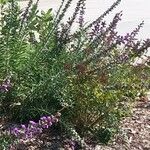
Liatris scariosa
Northern gayfeather · Plains blazingstar · Devil's bite · Large blazing star
Description
Source: leafsnapLiatris scariosa, called savanna blazing star, is a species of flowering plant in the genus Liatris, native to the US states of Maryland, North Carolina, Pennsylvania, Tennessee, Virginia and West Virginia. It is fire-adapted, and its seeds germinate if they detect chemicals from plant smoke. It is a perennial herb that grows in dry woods and clearings. The Latin specific epithet scariosa means shriveled.
Care Guide
💧 Water
Devil's Bite thrives in arid environments due to its strong drought tolerance. It typically needs watering every 1 to 2 weeks. As a deciduous plant, it sheds its leaves annually. During this period, it requires more moisture to encourage new growth.
☀️ Light Full sun
Devil's bite is a perennial herbaceous plant that prefers sunny conditions and comes from open habitats, commonly growing in meadows and grasslands. It favors full sun but can also tolerate partial sun.
What are the sunlight requirements for Devil's Bite (Liatris scariosa)?
Devil's Bite, also known as Liatris scariosa, thrives in different sunlight conditions. For full sun exposure, it requires above 6 hours of sunlight daily, which is ideal for the plant's growth and flowering. If you're dealing with partial sun conditions, about 3-6 hours of sunlight will suffice. It's important to observe how sunlight moves through your garden throughout the day. Selecting the right spots that offer a balance of light and shade will ensure your plants remain healthy and happy.
🌡️ Temperature 0–35°C
Devil's bite can tolerate a wide array of temperature conditions, though its distribution may still be restricted by different combinations of moisture and heat. It does best in warm summer climates with sufficient rainfall or watering. Extended periods of cloudy, rainy weather, as well as prolonged high temperatures, can raise the chance of Devil's bite dying. In winter, adequate protection from the cold can enhance the plant's survival rate.
What is Devil's Bite?
Devil's Bite, also known by its botanical name, Liatris scariosa, is a plant that doesn't have specific details provided in terms of its essentials, content, additional information, or symptoms associated with it in the provided data. The document lacks detailed information regarding its characteristics, uses, or any potential health implications.
💨 Humidity
🪴 Soil 6-7
🌱 Fertilizer
The best time to fertilize a Devil's bite is in early spring, as it comes out of dormancy and begins active growth. Fertilizing supplies essential nutrients needed for healthy development. Although Devil's bite has relatively low fertilizer requirements, applying fertilizer annually can improve its survival and encourage better, longer-lasting flowers.
🪴 Pot & Repot
✂️ Pruning
The Devil's Bite plant requires minimal pruning to thrive. However, trimming it in early spring can stimulate growth and remove any dead stems. Light pruning helps enhance airflow and prevent diseases. Be sure to use clean, sharp tools when pruning to reduce stress and lower the risk of disease, ensuring that your garden gains a healthier and more attractive addition.
🌿 Propagating
🐛 Diseases & pets
☠️ Toxicity
Characteristics
- Plant Type
- Herb
- Life Cycle
- Perennial
- Genus
- Liatris
- Family
- Asteraceae
- Hardiness Zone
- 3-9
- Mature Height
- 0.61 m to 1.22 m
- Mature Spread
- 49 cm
- Leaf Color
- Green, Dark Green
- Leaf Type
- Deciduous
- Flower Color
- Purple, Lavender
- Flower Size
- 1.02 cm to 2.03 cm
- Bloom Time
- Late summer, Early fall
- Planting Time
- Spring, Summer
- Harvest Time
- Early fall, Mid fall