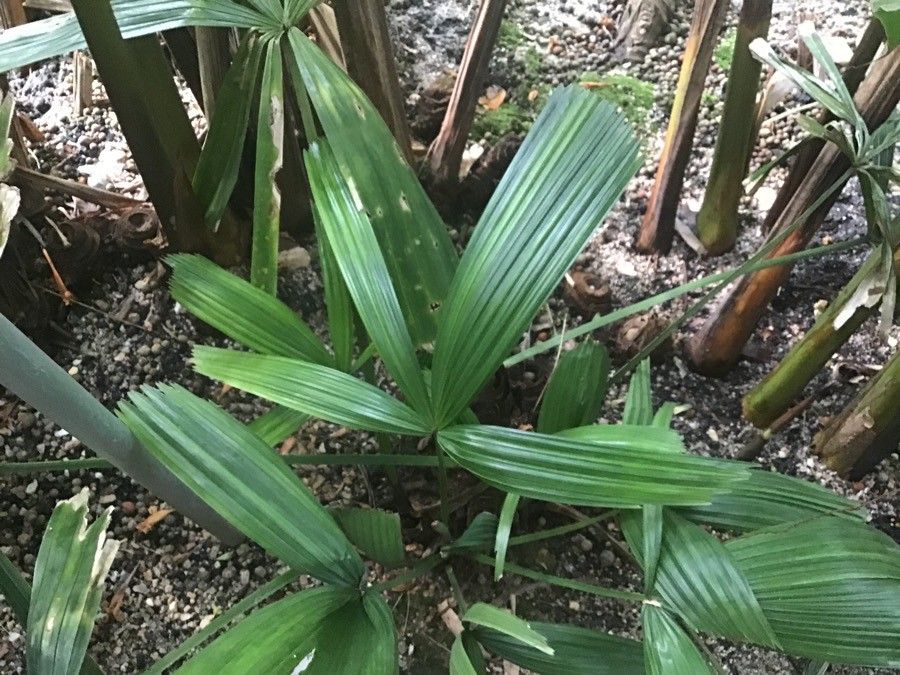
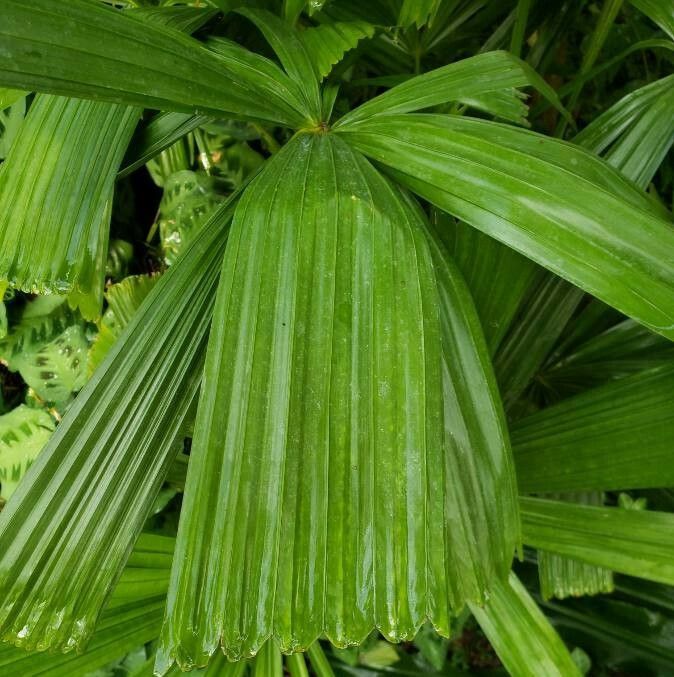
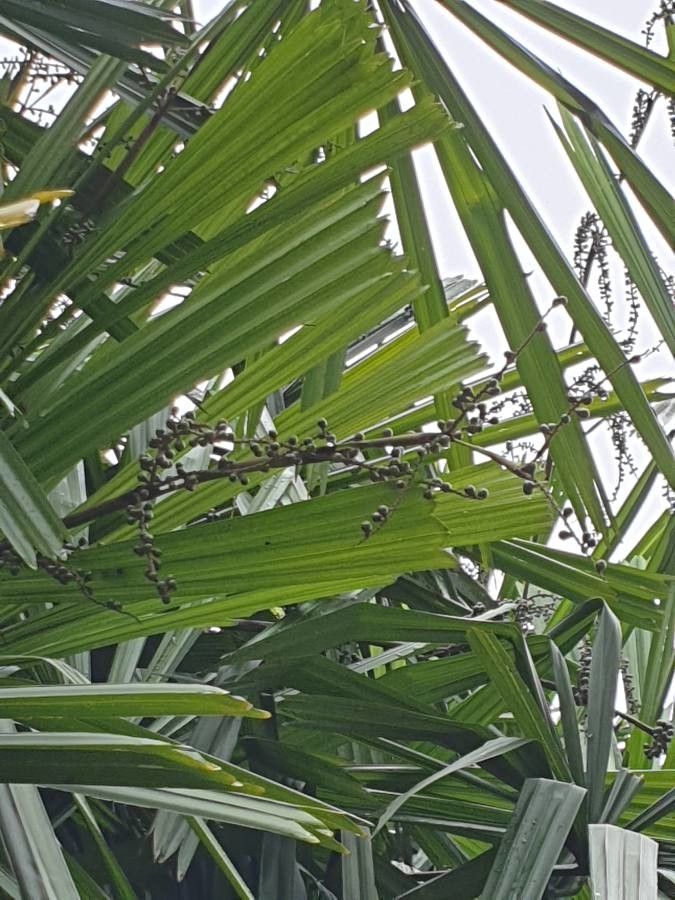
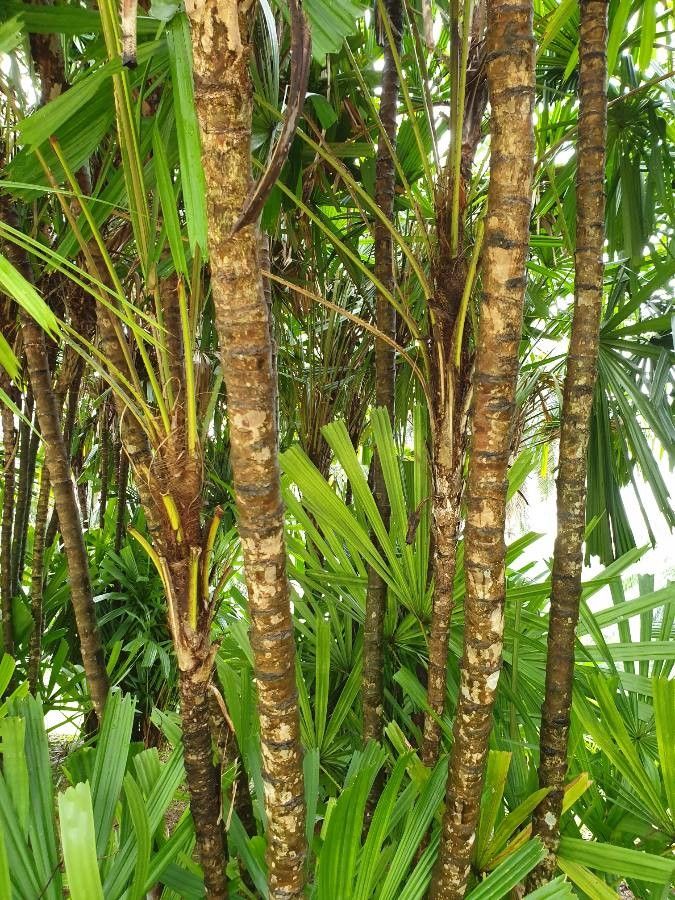
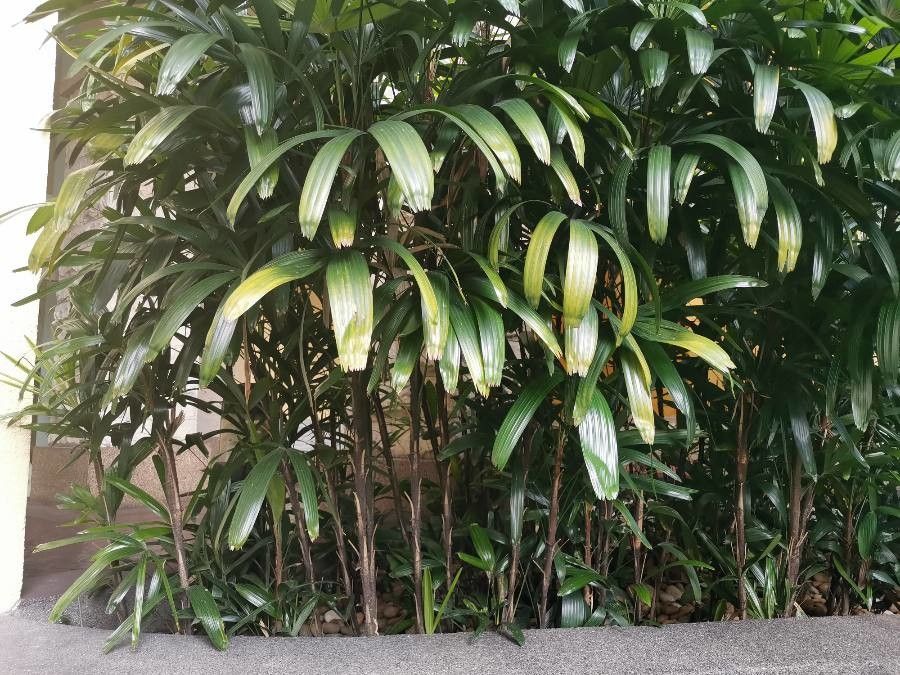
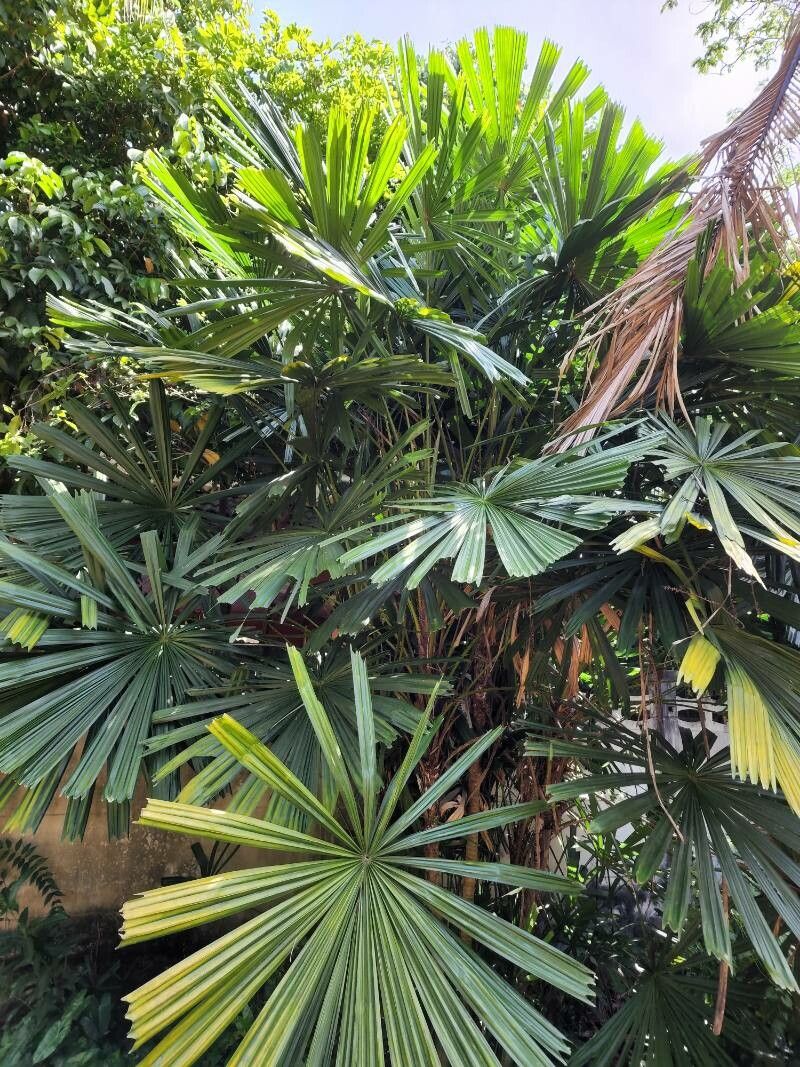
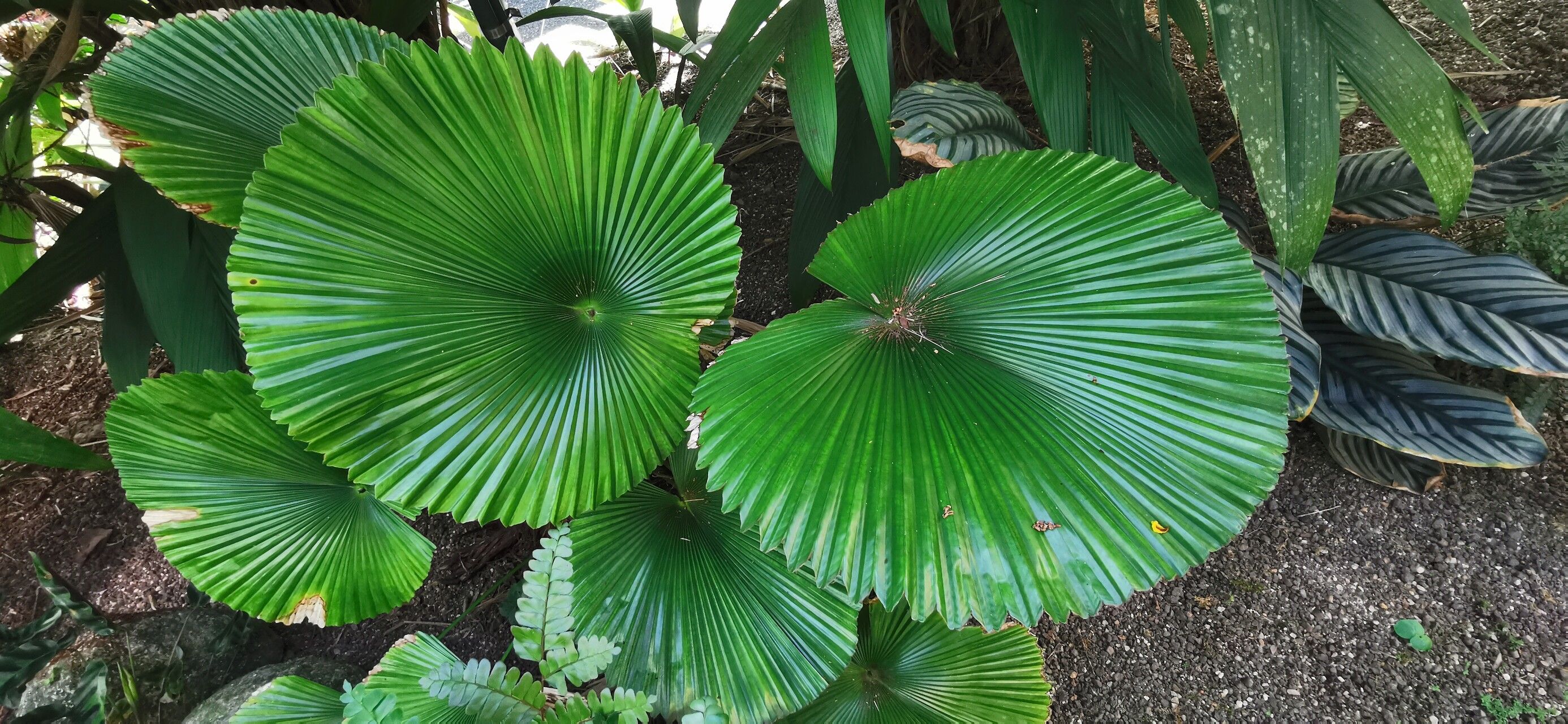
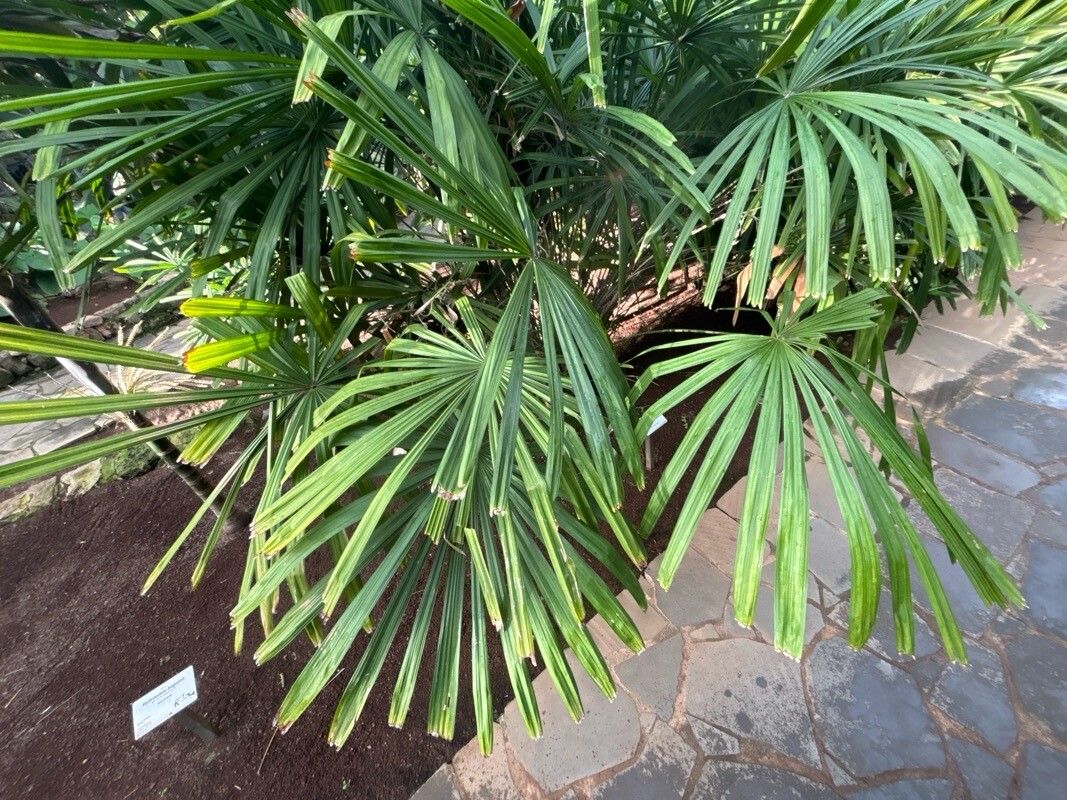
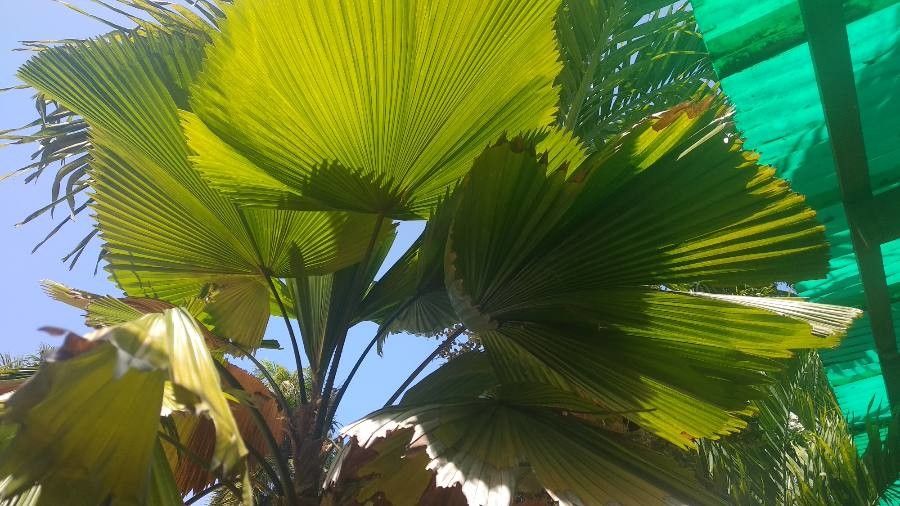
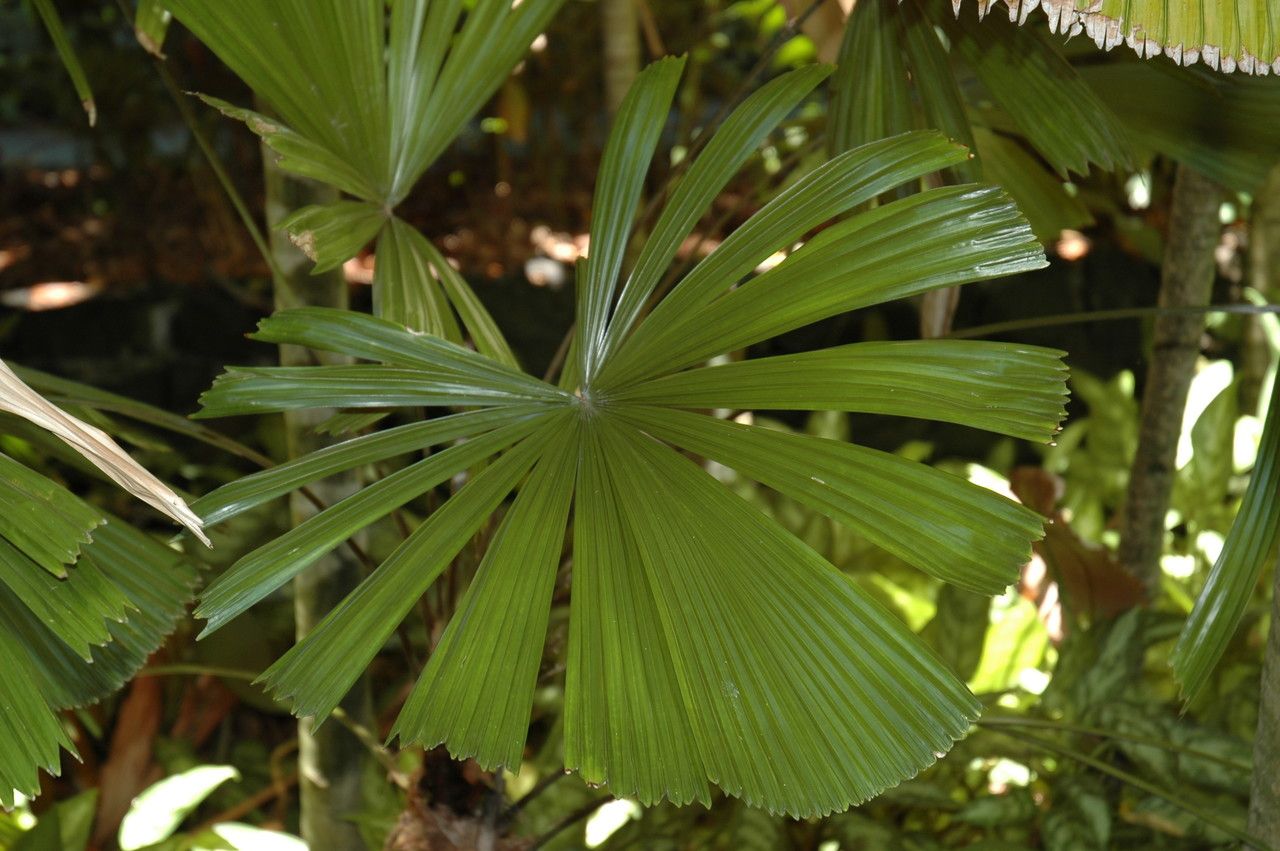
Licuala spinosa, the Mangrove fan palm, is a species of palm in the genus Licuala. The plant is native to the wet places of fresh and salt water of Southeast Asia. Licuala spinosa grows 2 to 7 m (6.6 to 23.0 ft) high, with a trunk of 4-7cm. It may grow in clumps. It prefers full sun, a lot of water, and is more cold hardy than most Licuala species.A Cambodian name for L. spinosa is pha'aw, in that region its leaves are used to make hats and wrap food. Its heart and terminal bud prepared as a vegetable are appreciated by Cambodians. In traditional Cambodian medicine, both a febrifuge remedy and for a preparation for the health of the foetus, use the root of the palm in compounds, while the bark of the trunk is used to treat tuberculosis.
The Mangrove fan palm has strong disease resistance and is typically not susceptible to illnesses. In terms of care, this plant is fairly low-maintenance. When grown outdoors it needs minimal watering, and larger specimens generally do not require pruning; however, smaller plants should be trimmed after they flower. The Mangrove fan palm is suitable for anyone with an outdoor area, such as a garden or deck, and does not demand much gardening experience.
How to keep Licuala Spinosa.
Light
The mangrove fan palm does best in full sun, preferring a large amount of light throughout the day. It can also tolerate moderate sunlight. In its natural habitat it is generally exposed to sunlight, which encourages strong growth. Insufficient light can impede growth, while too much can scorch the leaves.
Water
The mangrove fan palm thrives in humid, swampy environments and requires consistent moisture, needing to be watered every 1-2 weeks. It grows best outdoors in warm climates, where it benefits from well-draining soil. As an evergreen, this plant maintains its water needs throughout the year to support its vibrant foliage.
Temperature
Mangrove fan palm comes from tropical areas, where the climate is usually warm and humid. Consequently, it is adapted to high temperatures and moisture. It does not tolerate sudden temperature shifts and prefers a consistent thermal environment, so avoiding indoor temperature fluctuations is important. It generally cannot withstand cold and needs higher temperatures to grow. If the surrounding temperature falls too low, the plant may stop growing or even die.
Fertilizer
The best time to fertilize a Mangrove fan palm is in early spring, when it breaks dormancy. This encourages overall growth and the development of flowers. Fertilization improves the foliage, stems, and branches, while encouraging flowers that are large, colorful, and long-lasting. It helps transport nutrients from the roots to the flowers and enhances the plant’s health and resistance to disease.
Pruning
The Mangrove fan palm, known for its unique fan-shaped leaves, needs pruning in early spring. When pruning, concentrate on removing dead or damaged fronds and avoid making heavy cuts. This approach improves air circulation, prevents pests, and encourages healthy growth. Reliable sources recommend regular, light pruning for the best results.
Botanical profile.
- Plant Type
- Tree, Shrub
- Life Cycle
- Perennial
- Genus
- Licuala
- Family
- Arecaceae
- Hardiness Zone
- 10-12
- Mature Height
- 1.83 m to 2.44 m
- Mature Spread
- 1.83 m to 3.66 m
- Leaf Color
- Green
- Leaf Type
- Evergreen
- Flower Color
- White, Green
- Flower Size
- 2.54 cm
- Bloom Time
- All year round
- Planting Time
- Spring, Summer, Autumn
- Harvest Time
- All year round
- Native Area
- Malaysia, Indonesia, Cambodia, Vietnam, Myanmar, Philippines, Singapore, Laos, Thailand, China
Other names.
Reader questions.
How often do I need to water my Mangrove fan palm?
Most outdoor plants can rely on rainfall for their water needs. However, if your area doesn't get much rain, you should water your plants every 2 weeks in the spring and fall, and more frequently in the summer. During winter when plants grow slower and need less water, you can water sparingly or not at all. If you have a young or newly planted Mangrove fan palm, you should water it more often to help it establish and grow. For potted plants like the Mangrove fan palm, there are two main methods to determine watering frequency. One is to follow a set schedule, watering once every week or every other week. However, this might not account for the specific conditions of your plant. Another approach is to check the soil moisture. Wait until the top 2 to 4 inches of soil have completely dried out before watering again. This method is particularly useful during summer when the plant has higher water needs.
What is the ideal time to fertilize my Mangrove fan palm?
To ensure healthy growth, it is recommended to fertilize your Mangrove fan palm for the first time in late winter or early spring. This provides the palm with necessary nutrients to thrive once the weather warms up. If you live in a warm climate, it is beneficial to give your palm an additional dose of fertilizer in early fall. This not only enriches the soil for the following growing season, but also strengthens the palm's ability to withstand the winter cold and avoid foliage damage. Early fertilization is particularly important for promoting the growth of new branches that can withstand the cold winter temperatures.
How much sunlight does a Mangrove fan palm require?
The Mangrove fan palm, known botanically as Licuala spinosa, thrives best in full sun exposure, benefitting from a generous amount of light throughout the day. This plant prefers over 6 hours of direct sunlight, but it can also manage in conditions of partial sun, about 3-6 hours of sunlight. It's important to observe the movement of sunlight through your garden and position your plants in areas that offer an ideal balance of light and shade, ensuring their optimum growth and health.
What is the name of the plant?
The name of the plant is Mangrove fan palm.
How much water does my Mangrove fan palm require?
To properly water your Mangrove fan palm, you don't always need to use a lot of water. If the soil has only dried a few inches since the last watering, you can give it around five to ten ounces of water. You can also gauge the water volume based on how dry the soil is. Take note of how many inches of soil have dried out between waterings. To ensure the plant gets enough moisture, water until all the layers of dry soil have been moistened. If more than half of the soil has dried out, give it extra water until you see excess water draining from the pot's holes. If your Mangrove fan palm is planted in an area with plenty of rainfall, it might not need additional watering. When the plant is young or just establishing, it should receive 1-2 inches of rain per week. As it grows and becomes more established, it can rely solely on rainwater. Only when the weather is hot and there has been no rainfall for 2-3 weeks should you consider giving it a full watering to prevent stress.
What kind of fertilizer does my Mangrove fan palm need?
The most important nutrient for a Mangrove fan palm is usually nitrogen, but phosphorus and potassium should not be neglected. It is recommended to provide a decent amount of all three main nutrients, as a balanced fertilizer like a 10-10-10 can be effective. However, a more carefully adjusted nutrient ratio can promote the best growth for a Mangrove fan palm. Fertilizers that are slightly higher in nitrogen, such as a ratio of 10-6-4, often yield good results. Both granular and liquid-based fertilizers can be used for fertilizing.
What are the symptoms of incorrect lighting for a Mangrove fan palm?
When a Mangrove fan palm is not receiving the appropriate amount of sunlight, it may exhibit several symptoms indicating light deficiency or excessive sunlight exposure. Insufficient light can lead to smaller new leaves, leggy or sparse growth, accelerated leaf drop, delayed or ceased growth, and paler than normal leaves. On the other hand, too much sunlight can cause chlorosis, where leaves lose their green color, sunscald resulting in damaged plant tissue, leaf curling as a defense mechanism, wilting due to excessive water loss, and leaf scorching characterized by brown, dry edges or patches on leaves. These symptoms show the plant's struggle to adapt to its lighting conditions.
What is the botanical name of the Mangrove fan palm?
The botanical name of the Mangrove fan palm is Licuala spinosa.
How can I provide adequate light for my indoor Mangrove fan palm?
To ensure your indoor Mangrove fan palm receives enough light, consider placing it near a south-facing window, where it can bask in at least 6 hours of direct sunlight every day. Keep curtains open to maximize sunlight exposure. If your plant is large or not easily movable, or if natural sunlight is insufficient, artificial lighting can be a viable alternative. Indoor plants benefit from artificial lights, especially during winter or in less sunny locations, promoting healthier growth. LED lights are recommended for their ability to provide specific wavelengths needed by plants. For full sun plants, 30-50W/sq ft of artificial light is ideal, and the light source should be placed 12-36 inches above the plant. Most plants will need 8-12 hours of artificial light per day to mimic natural daylight hours effectively.
What solutions are available for Mangrove fan palms experiencing light-related issues?
To address light-related issues in Mangrove fan palms, gradual adaptation to the optimal light conditions is key. For indoor plants, gradually moving them to a sunnier spot each week until they receive the desired amount of sunlight is advisable. Using artificial light sources can also supplement their light intake, ensuring at least 8 hours of light exposure daily. For outdoor plants, similarly, adjust their location gradually each week to prevent sunburn, helping them adapt to increased sunlight. If necessary, prune surrounding vegetation to reduce obstructions and allow more sunlight to reach the plants. Transplanting may be considered for smaller plants; this should be done during their dormant period, ensuring ample sunlight and good drainage in the new location. Note that parts of the plant previously affected by light issues may not recover, but new growth will be healthy with proper light exposure.