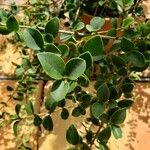
Ligustrum sempervirens
Privet
Description
Source: wikipedia (CC BY-SA)Ligustrum vulgare is a species of Ligustrum native to central and southern Europe, north Africa and southwestern Asia, from Ireland and southwestern Sweden south to Morocco, and east to Poland and northwestern Iran.
🌳 Besides its typical use as an ornamental hedge, common privet has traits that make it suitable for urban green spaces with practical functions. One especially original application is its ability to provide acoustic insulation in highly populated areas. Its dense foliage can absorb sound, thus decreasing noise pollution. This opens up possibilities in urban planning and landscape architecture for those seeking natural ways to create quieter environments. Additionally, the plant is employed as an indicator of certain soil contaminants, highlighting its ecological role in environmental monitoring.
🎭 Mending old wounds, releasing blocks, gentleness, do not proceed
Care Guide
💧 Water
☀️ Light Full sun
The ordinary privet flourishes when given plenty of sunlight during the day. It can also survive in places with slightly less light. However, overexposure to sunlight can result in scorched leaves, whereas inadequate light can hinder its development and liveliness. In its native habitat, there's a substantial amount of sun.
🌡️ Temperature 5–32.2°C
Common privet thrives in its natural habitat at temperatures between 5 and 32 ℃ (41 and 90 ℉). In response to varying seasons, it might need safeguarding against excessively hot or cold conditions.
💨 Humidity
🪴 Soil 6-7
🌱 Fertilizer
Fertilize your Common privet in early spring to encourage healthy growth. Regular feeding improves overall health, leading to vigorous growth, increased tolerance of adverse conditions, and better resistance to diseases and pests. Keep a consistent fertilization schedule for your Common privet to maintain vibrant, deeply colored, and lush foliage.
🪴 Pot & Repot 2-3 years
When rehousing Common privet, opt for a pot that is 1-2 inches (2.5-5 cm) bigger and has sufficient drainage. Utilize a potting mixture that drains well. Carry out the repotting during the spring or the fall, making sure the root ball is somewhat below the edge of the plant pot. Thoroughly water after repotting and position in a warm location with indirect light from the sun.
✂️ Pruning
🌿 Propagating
🐛 Diseases & pets
☠️ Toxicity
Characteristics
- Plant Type
- Shrub
- Life Cycle
- Perennial
- Genus
- Ligustrum
- Family
- Oleaceae
- Hardiness Zone
- 5-8
- Mature Height
- 1.52 m to 4.57 m
- Mature Spread
- 2.44 m to 4.57 m
- Leaf Color
- Green
- Leaf Type
- Deciduous
- Flower Color
- White
- Flower Size
- 0.51 cm to 0.51 cm
- Bloom Time
- Late spring, Early summer, Mid summer
- Planting Time
- Spring, Autumn
- Harvest Time
- Mid summer
- Native Area
- Turkey, Sweden, Austria, Slovakia, Montenegro, Slovenia, Morocco, Croatia, Russia, Germany, Romania, Belgium, Moldova, Portugal, Netherlands, France, Czech Republic, Bulgaria, Armenia, Poland, Greece, Ukraine, Serbia, Norway, Italy, Spain, Switzerland, Iran, Albania, Ireland, United Kingdom, Hungary, Azerbaijan