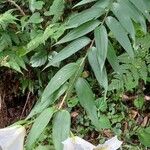
Lilium auratum
Golden-ray lily · Golden-ray lily of Japan · Mountain lily · Gold-band lily · Asiatic Lily
Description
Source: leafsnapLilium auratum is a bulbous perennial originating from the wooded areas of Asia and Europe. Also known as the Asiatic lily, this plant grows vigorously, boasting stiff stems that sprout lance-shaped, dark green leaves. Later in the season, it blooms up to racemes of up to 12 bowl-shaped flowers with white tepals dotted with red and a bold central gold band.
Care Guide
💧 Water
The golden-rayed lily, native to Japan's moist, mountainous regions, flourishes best in well-drained soil with consistent moisture. For optimal health, it should be watered weekly. As an outdoor plant, it requires plenty of hydration during the growing season to support vibrant blooms and robust growth.
☀️ Light Full sun
The golden-rayed lily performs best with abundant light, matching its natural habitat of plentiful sunlight. It can, however, survive under moderate sun and adapt to light shade. Insufficient sunlight may stunt its vigorous growth, producing weak stems and fewer flowers. Likewise, too much light can scorch the leaves and dull the flower color.
What are the sunlight requirements for Golden-rayed lily?
The Golden-rayed lily requires full sun exposure, which means it needs more than 6 hours of sunlight daily to thrive. It can also tolerate partial sun conditions, getting about 3-6 hours of sunlight a day. It's crucial to observe how sunlight moves through your garden and select planting spots that offer the right balance of light and shade, ensuring the plants' optimal growth and happiness.
How does sunlight affect the growth of Golden-rayed lily?
Sunlight plays a significant role in the growth and health of the Golden-rayed lily. Adequate sunlight exposure is vital for the lily to mirror its natural habitat conditions, promoting lush growth, strong stems, and vibrant flowering. Insufficient sunlight can lead to weak stems, reduced flowering, and the potential for leaf burn and faded flower colors in case of excessive light exposure. Artificial lighting can be used indoors to supplement natural sunlight, particularly in winter or less sunny spaces, using specific types of lights and adjusting the distance and duration of exposure appropriately.
What symptoms indicate insufficient or excessive sunlight in Golden-rayed lilies?
Symptoms of insufficient sunlight in Golden-rayed lilies include smaller leaves than previously matured ones, leggy or sparse growth, faster leaf drop, slower or no new growth, and lighter-colored or irregularly colored new leaves. Excessive sunlight can cause chlorosis, sunscald, leaf curling, wilting, and leaf scorching. These signs indicate issues with the plant's ability to photosynthesize properly and maintain overall health due to inappropriate sunlight exposure.
How can I address sunlight-related issues in Golden-rayed lilies?
To address sunlight-related issues in Golden-rayed lilies, gradually move the plants to sunnier spots to ensure they receive at least 6 hours of direct sunlight daily. Indoors, use south-facing windows and consider artificial lighting for plants that are large or difficult to move, ensuring they have light for at least 8 hours daily. Outdoors, gradually acclimate your plants to avoid sunburn. If sunlight is obstructed by trees or buildings, consider pruning or transplanting to sunnier locations. Note that parts of the plant affected by previous poor light conditions may not recover fully, but new growth should be healthy with improved light exposure.
🌡️ Temperature 5–35°C
The Golden-rayed lily is native to climates with temperatures ranging from 41 to 95 °F (5 to 35 ℃). It performs best in these conditions, although it can adapt. For optimal growth, maintain a consistent temperature within this range throughout the year.
What is the optimal temperature range for growing a Golden-rayed lily?
The Golden-rayed lily, also known by its botanical name Lilium auratum, thrives best in climates where temperatures vary between 41 to 95 °F (5 to 35 °C). It is indigenous to regions that experience this temperature range, exhibiting strong cold resistance. Although special frost protection measures are not typically necessary, maintaining a steady temperature within this range all year round is crucial for optimal growth. If winter temperatures are expected to drop below -25°C, it is important to provide cold protection by covering the plant with materials such as soil or straw, and watering it abundantly before the first freeze in autumn. This helps ensure the soil remains moist, preventing drought and water scarcity during winter and early spring.
How does low temperature affect Golden-rayed lily, and what are the solutions?
The Golden-rayed lily is cold-tolerant, thriving best when the temperature is maintained above 5°C. During winter, it's essential to keep the temperature above -20°C. If temperatures fall below -25°C, the plant may not show immediate signs of distress during winter, but there could be a decrease in sprouting or no sprouting at all during spring. In the event that some parts of the plant fail to sprout in spring due to cold damage, it is recommended to remove these non-sprouting parts to help the plant recover and promote healthy growth.
How does high temperature affect Golden-rayed lily, and what are the solutions?
During the summer, it is crucial to ensure that the Golden-rayed lily's surroundings do not exceed 35°C. Exposure to temperatures above 38°C can result in the leaves of the plant becoming lighter in color, prone to curling, susceptible to sunburn, and in severe cases, the entire plant may wilt and dry up. To counteract these adverse effects of high temperature, sunburned and dried parts should be trimmed away. It is also beneficial to move the plant to a shaded location or use a shade cloth to protect it from the midday and afternoon sun. Watering the plant in the morning and evening can help keep the soil moist and cool, further mitigating the impact of high temperatures.
💨 Humidity
🪴 Soil 5-6
🌱 Fertilizer
The best time to fertilize a Golden-rayed lily is in early spring, as it comes out of dormancy and begins active growth. Fertilizing supplies essential nutrients needed for healthy development. Although the Golden-rayed lily requires relatively little fertilizer, feeding it once a year can improve its survival and encourage better, longer-lasting flowers.
Which fertilizer should I use for my Golden-rayed lily?
When choosing a fertilizer for your Golden-rayed lily, a general-purpose one with balanced amounts of the three main plant nutrients will be sufficient. However, certain nutrient blends can provide even more benefits. Many gardeners believe that higher levels of phosphorus can lead to stronger roots and better flowers, making a phosphorus-rich fertilizer a good choice for a flowering plant like the Golden-rayed lily. Whether you prefer granular or liquid fertilizer, as long as it is nutrient-rich, it will work. Additionally, organic materials like compost and manure can also help improve the soil for the Golden-rayed lily, creating a healthy growing environment.
🪴 Pot & Repot Every 12 months
✂️ Pruning
The golden-rayed lily features large, star-shaped blooms with a delightful fragrance and striking golden stripes. To encourage healthy growth and blooming, pruning should be done from early to late spring, after the flowers have bloomed. Remove any spent flowers and damaged stems during this time. Always use clean, sharp tools to minimize the risk of disease.
🌿 Propagating
🐛 Diseases & pets
☠️ Toxicity
Characteristics
- Plant Type
- Herb
- Life Cycle
- Perennial
- Genus
- Lilium
- Family
- Liliaceae
- Hardiness Zone
- 5-9
- Mature Height
- 0.61 m to 1.52 m
- Mature Spread
- 49 cm
- Leaf Color
- Green
- Leaf Type
- Deciduous
- Flower Color
- White, Gold
- Flower Size
- 20.32 cm to 25.40 cm
- Bloom Time
- Early summer, Mid summer
- Planting Time
- Spring, Summer
- Harvest Time
- Late summer, Early fall, Mid fall
- Native Area
- Japan