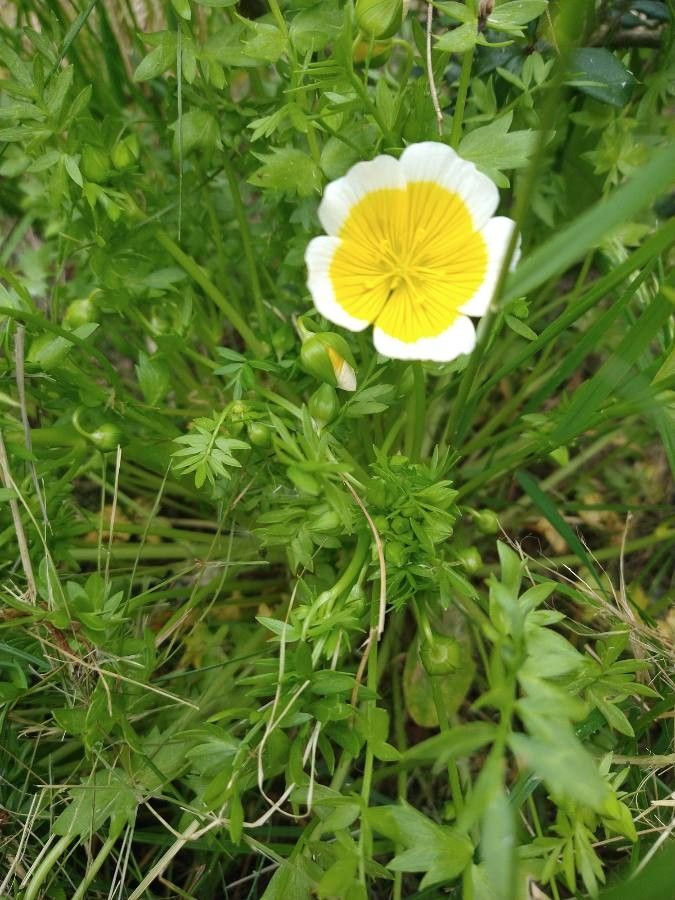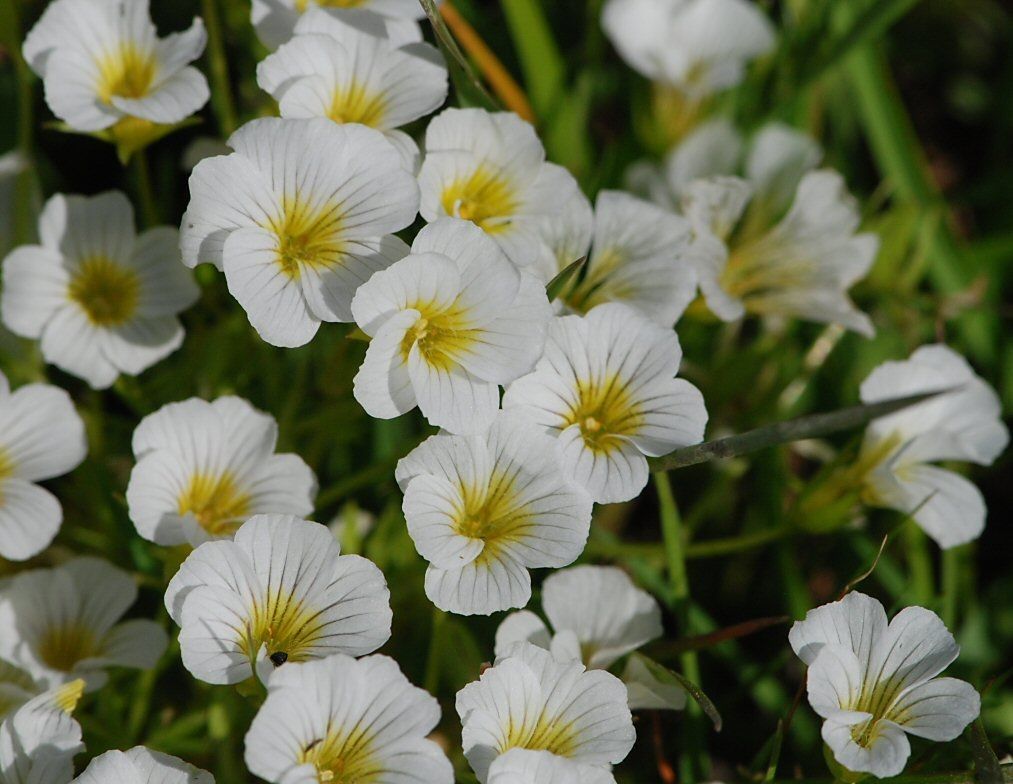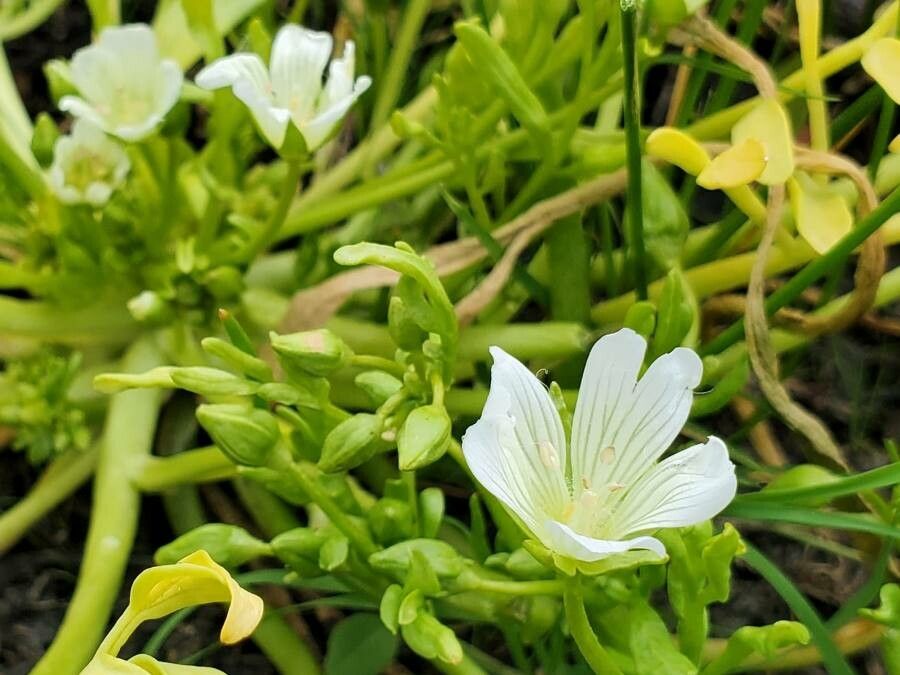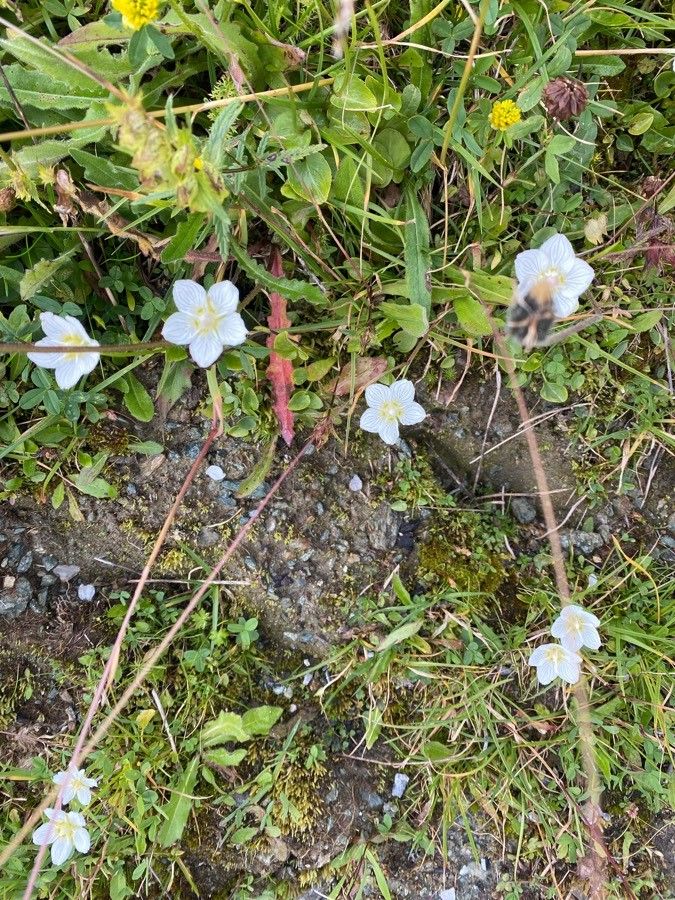
Limnanthes alba is a species of flowering plant in the meadowfoam family known by the common name white meadowfoam. It is native to California and Oregon, where it grows in wet grassy habitat, such as vernal pools and moist spots in woodlands. It generally grows in poorly drained soils. It is an annual herb producing an erect or decumbent stem up to about 30 centimeters long. The leaves divided into several lobed or unlobed leaflets. The flower is cup-shaped with white petals 1 to 1.5 centimeters long. This grassland wildflower is also under small-scale cultivation. It is the source of meadowfoam seed oil and The fruit of the plant, a nutlet, is 20 to 30% oil. The oil is one of the most stable vegetable oils known and can be converted to waxes and lubricants, similar to whale oil. White meadowfoam is very susceptible to the Botrytis cinerea fungus; commercial crops were devastated during the 1982 and 1984 growing seasons.
White meadowfoam has good resistance to disease and is generally not susceptible to illnesses. However, it can be affected by pests and diseases present in its environment. These issues are typically not serious. Regarding care, this plant requires moderate upkeep. It should be pruned regularly to maintain its appearance and support healthy growth. Applying fertilizer can also aid flowering. White meadowfoam is appropriate for anyone with an outdoor area, such as a garden or patio, and does not require extensive gardening experience. It may need more attention when grown indoors.
How to keep Limnanthes Alba.
Light
White meadowfoam comes from bright, open habitats and performs best in full sun. It can tolerate some shade but prefers direct sunlight for optimal growth. This plant, which can be annual or biennial, is known for its sun-loving nature.
Temperature
White meadowfoam can tolerate a wide range of temperatures, but its distribution may still be restricted by particular combinations of moisture and heat. It performs best in warm summer climates with adequate rainfall or irrigation. Extended periods of cloudy, rainy conditions or prolonged high temperatures can raise the likelihood of White meadowfoam dying. During winter, protecting the plant from cold can increase its chances of survival.
Fertilizer
Once most of the White meadowfoam blooms have opened fully, resume fertilizing. At about the peak of bloom production, apply fertilizer every three to four weeks, weather permitting. Then, when the White meadowfoam begins to produce fewer new blooms, stop fertilizing; there's no need to fertilize when the plant can no longer set more blooms.
Botanical profile.
- Plant Type
- Herb
- Life Cycle
- Annual
- Genus
- Limnanthes
- Family
- Limnanthaceae
- Hardiness Zone
- 6-9
- Mature Height
- 20 cm to 40 cm
- Mature Spread
- 15 cm to 30 cm
- Leaf Color
- Green, Dark Green
- Leaf Type
- Deciduous
- Flower Color
- White, Yellow
- Flower Size
- 1.02 cm to 2.03 cm
- Bloom Time
- Mid spring, Late spring
- Planting Time
- Spring, Summer
- Harvest Time
- Early summer, Mid summer