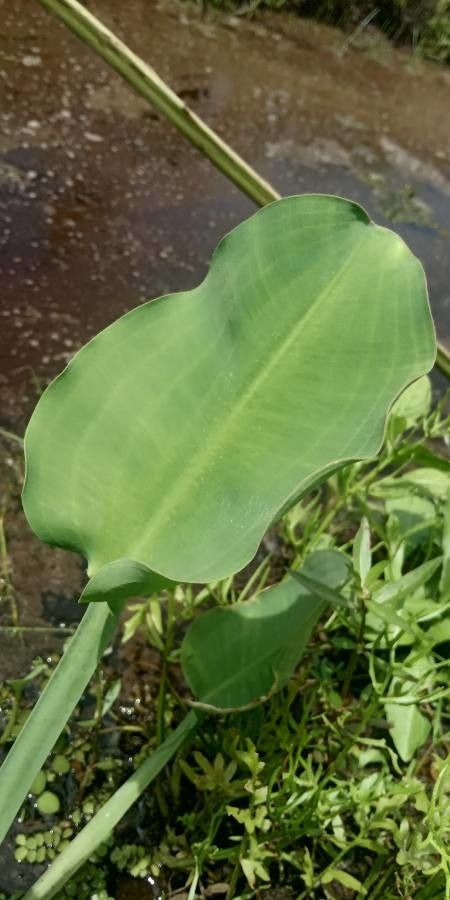
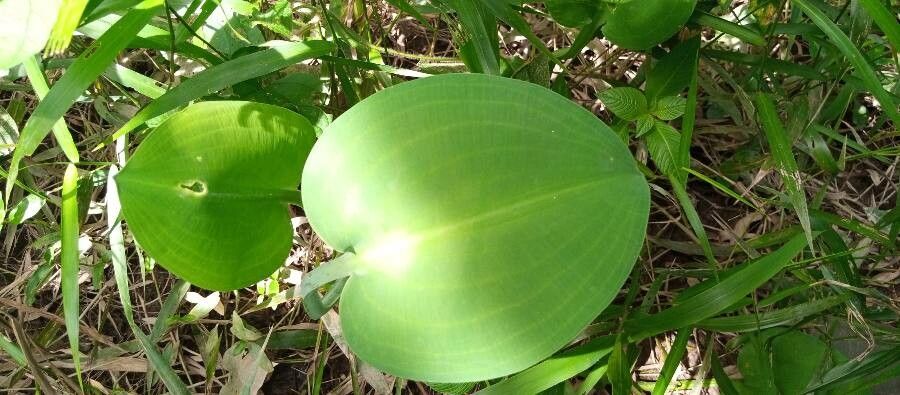
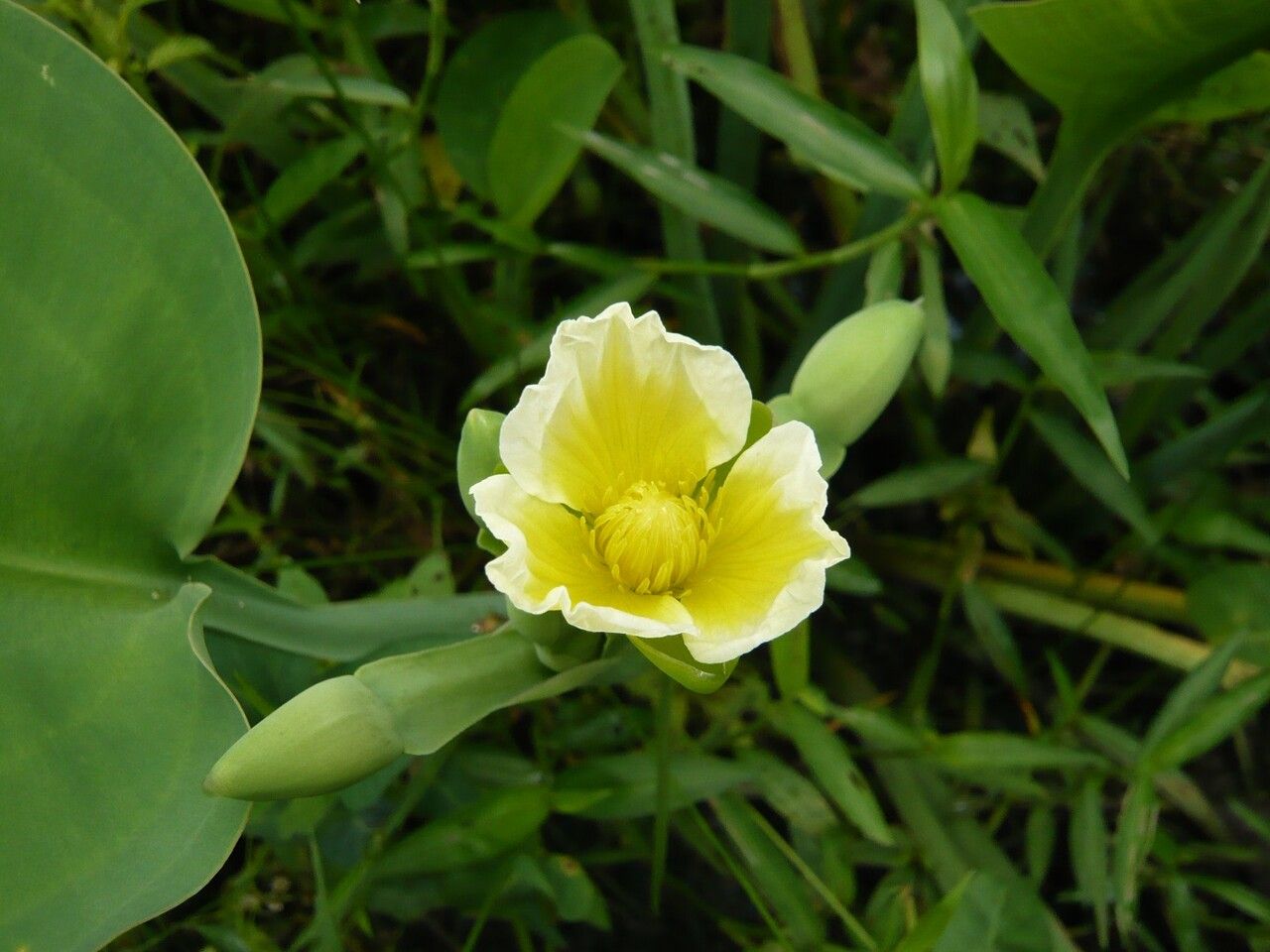
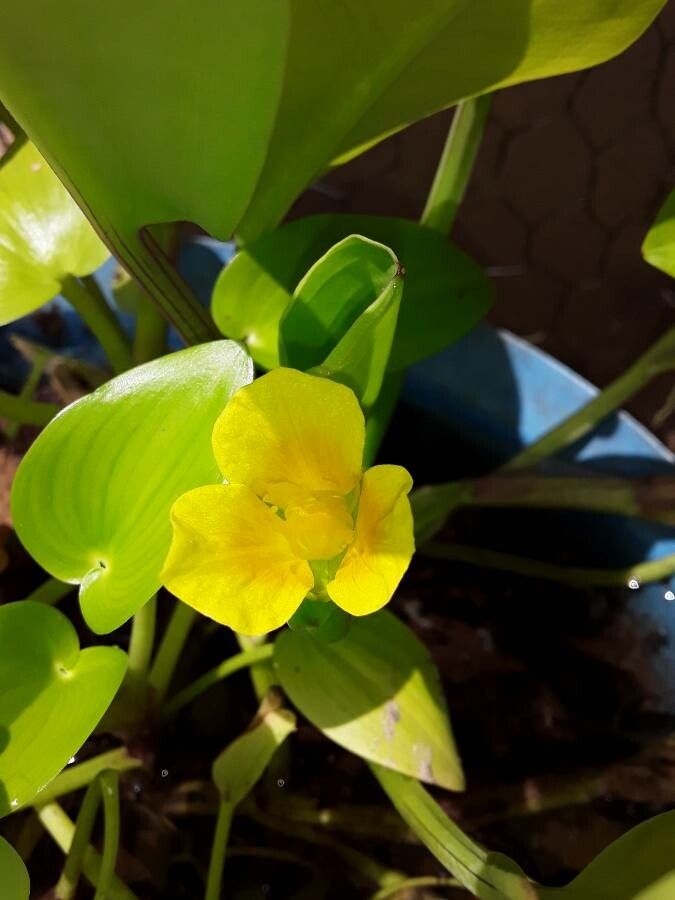
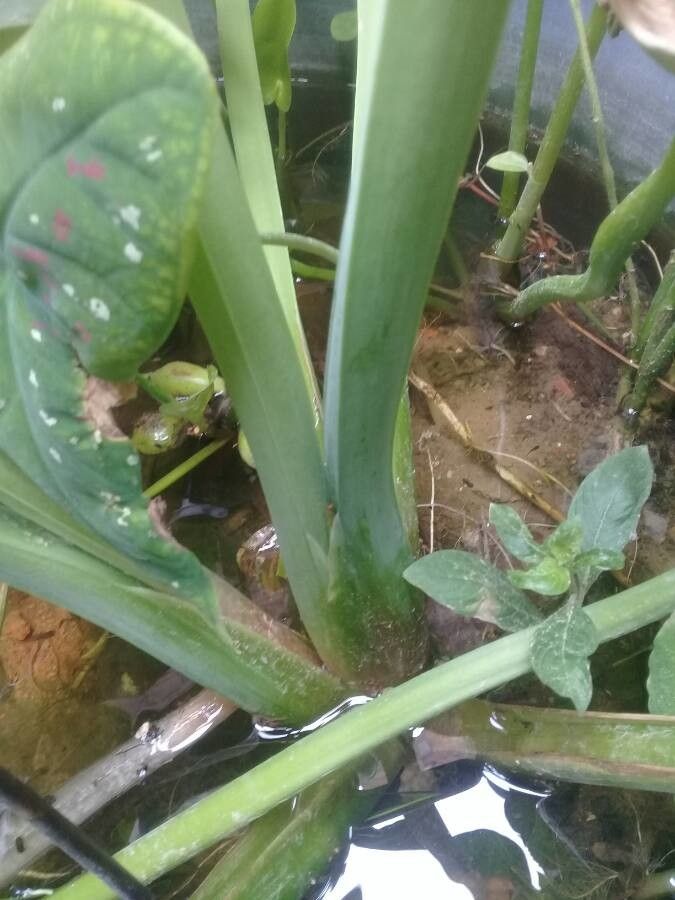
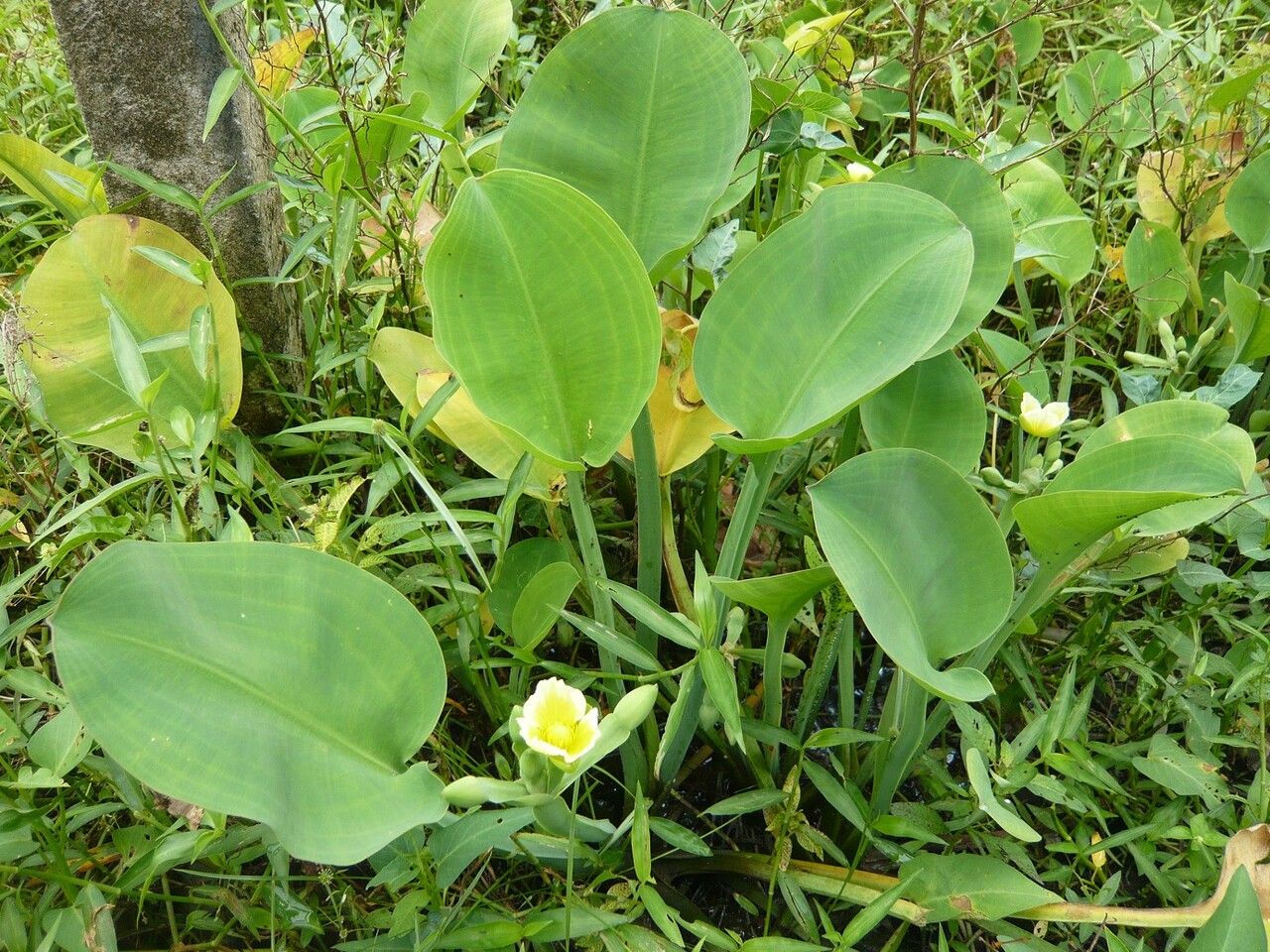
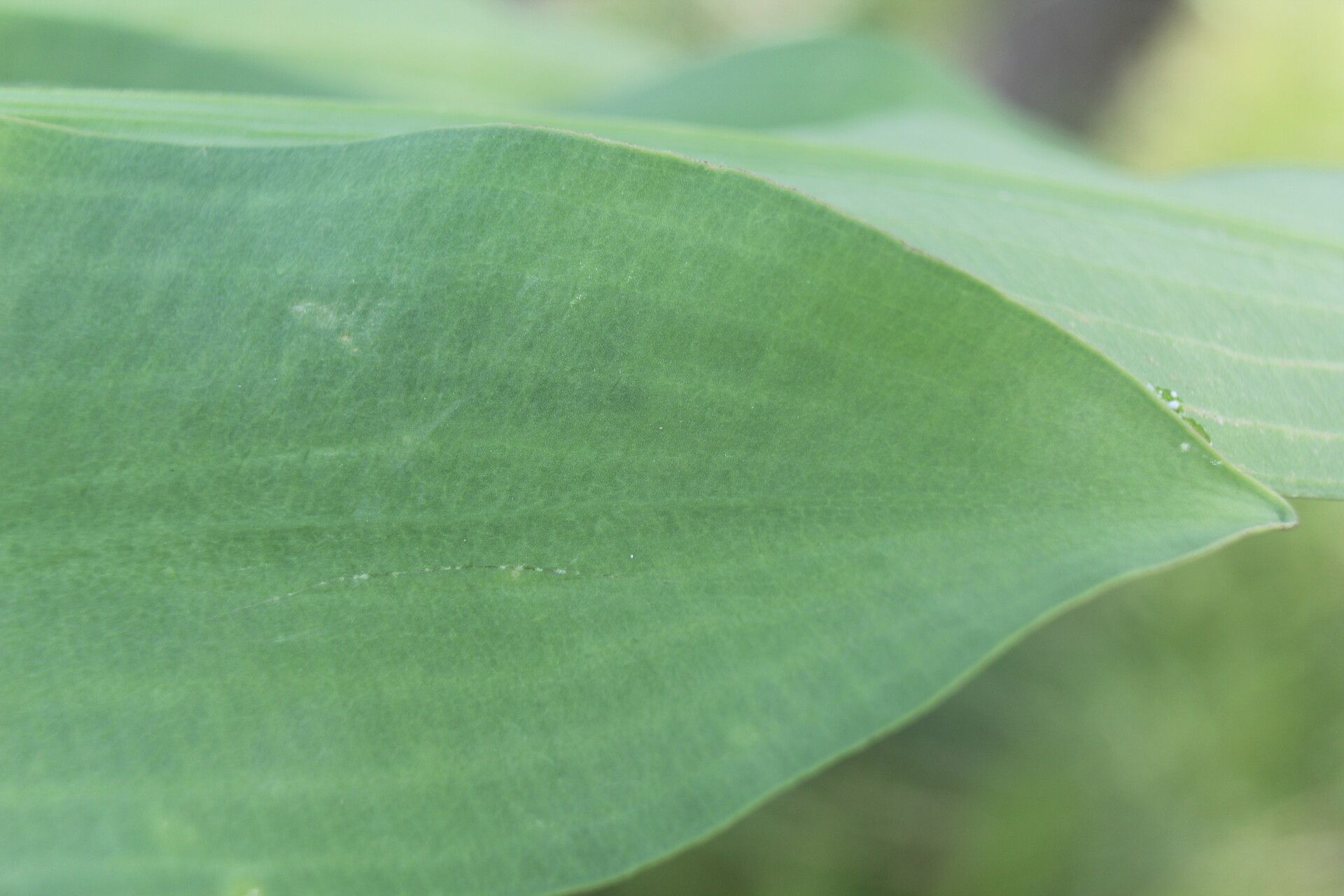
Limnocharis flava (commonly known as yellow velvetleaf, sawah flower rush, sawah lettuce) is a species of aquatic flowering plant which is native to Mexico, Central America, South America, Cuba, Haiti and the Dominican Republic but widely naturalized in southern and southeastern Asia: India, Sri Lanka, Cambodia, Burma, Thailand, Vietnam, Indonesia, Malaysia, Brunei and southern China (Guangdong, Yunnan).Limnocharis flava is roughly 50 centimetres (20 in) tall growing in clumps. Its triangular-shaped leaves and hollow stems are glabrous. Its inflorescences have a very characteristic shape, producing three-lobed yellow flowers about 1.5 cm in diameter. The fruits are spherical. Although it is not a floating plant, its seeds are carried away by currents.Yellow velvetleaf grows generally wherever there is not very deep stagnant fresh water, in swampy areas. It sometimes invades rice fields where it can become a weed. As an invasive species it has become a pest in some wetlands in other parts of the world.
Yellow velvetleaf shows moderate resistance to disease but can be prone to issues like leaf spot. Its vulnerability to insect pests differs by variety, though most are relatively less resistant to pests. For care, Yellow velvetleaf requires regular watering and fertilizing, plus routine pruning of yellow leaves. Pests and diseases should be managed as soon as they appear, and the plant should be harvested promptly. Yellow velvetleaf is best suited to people who can dedicate some time and effort to ongoing care.
How to keep Limnocharis Flava.
Light
Yellow velvetleaf does best with ample sunlight during the day, which is necessary for healthy, vigorous growth. Having originated in conditions with abundant sun, the plant can struggle when light is insufficient, producing poor growth or pale foliage. By contrast, too much sunlight may cause the leaves to become scorched.
Water
Yellow velvetleaf thrives in tropical wetlands because it requires consistently moist soil and high humidity. It does best with weekly watering and can even tolerate standing water. This plant flourishes outdoors, where it benefits from natural rainfall and seasonal changes in water levels, especially during periods of abundant moisture.
Temperature
Yellow velvetleaf thrives in areas where temperatures range from 68 to 100.4 °F (20 to 38 ℃), matching its native habitat. Seasonal changes may require warmer indoor conditions during colder times.
Pruning
Yellow velvetleaf is a plant with stunning yellow flowers that thrives with proper care. To keep it healthy and vibrant, it is best to prune it in early spring or late winter. Regularly removing dead leaves with clean tools helps prevent infections. By maintaining the plant properly, you can promote vigorous growth, enhance air circulation, and reduce the risk of fungal diseases, all of which contribute to the ornamental appeal of yellow velvetleaf.
Botanical profile.
- Plant Type
- Herb
- Life Cycle
- Perennial
- Genus
- Limnocharis
- Family
- Alismataceae
- Hardiness Zone
- 10-12
- Mature Height
- 61 cm to 91 cm
- Mature Spread
- 30 cm to 61 cm
- Leaf Color
- Light Green
- Leaf Type
- Evergreen
- Flower Color
- Yellow
- Flower Size
- 2.54 cm to 5.08 cm
- Bloom Time
- All year round
- Planting Time
- Spring, Summer, Autumn
- Harvest Time
- All year round
- Native Area
- Honduras, Mexico, Guatemala, Peru, Dominican Republic, Panama, Colombia, Cuba, Paraguay, Argentina, Haiti, Bolivia, Venezuela, Brazil, El Salvador, Nicaragua, Ecuador, Costa Rica
Other names.
Reader questions.
What do I do if I give my Yellow velvetleaf plant too much or too little water?
If you notice that you have given too much water to your Yellow velvetleaf and are worried about the risk of disease, it is important to take immediate action. The best way to handle an overwatered Yellow velvetleaf is to remove it from its current spot. Once the plant is out of the ground, let the roots dry out a bit before replanting it in a new location with well-draining soil. If you grow the plant in pots, it may be helpful to transfer it to a pot with more or larger drainage holes. On the other hand, if you are not giving enough water to your plant, simply increase the frequency of watering.
What are the sunlight requirements for Yellow Velvetleaf?
Yellow Velvetleaf thrives when it receives plenty of sunlight throughout the day, necessitating above 6 hours of sunlight for robust growth. Originating from environments with abundant sunlight exposure, it might struggle under insufficient light, leading to poor growth or faded foliage. However, excessive sunlight can cause scorched leaves. It's essential to watch how sunlight moves through your garden and choose spots that provide a perfect balance of light and shade for your plants, ensuring their happiness.
What is the ideal growing temperature for Yellow velvetleaf?
Yellow velvetleaf thrives in climates where the temperature ranges between 68 to 100.4 °F (20 to 38 °C), mimicking its native growth environment. To support its growth, especially in winter, it's crucial to maintain temperatures above 20°C, ensuring the plant's environment never dips below freezing to prevent damage. If temperatures approach -5°C (25°F) during winter, it's advisable to bring the plant indoors or offer protection, such as using plastic film or fabric wraps, to shield it from the cold.
How do I know if I am giving my Yellow velvetleaf plant enough water?
Both underwatering and overwatering can be problematic for your Yellow velvetleaf, and they can both result in similar symptoms. For instance, foliage discoloration and wilting can occur due to both underwatering and overwatering. When your Yellow velvetleaf is underwatered, its leaves will initially start curling and drooping, and you will notice a decrease in leaf vitality. Underwatering can also hinder growth and overall development since this plant requires ample water. On the other hand, overwatering is more likely to cause disease, such as rot, and can lead to unpleasant smells coming from the soil. Symptoms of underwatering tend to appear faster compared to overwatering. To determine if overwatering is happening, you can look for excess standing water or waterlogged soil.
How can artificial lighting supplement sunlight for indoor Yellow Velvetleaf plants?
Indoor Yellow Velvetleaf plants require adequate lighting for optimal growth. When natural sunlight is insufficient, particularly in winter or in less sunny spaces, artificial lights offer a vital solution, promoting faster, healthier growth. For full sun plants, 30-50W/sq ft of artificial light is recommended; partial sun plants need 20-30W/sq ft, and full shade plants 10-20W/sq ft. LED lights are a popular choice because they can provide specific wavelengths needed by your plants. The light source should be placed 12-36 inches above the plant, mimicking natural sunlight. Most plants need 8-12 hours of light per day.
How does Yellow velvetleaf respond to temperature changes?
Yellow velvetleaf has moderate tolerance to low temperatures but thrives best within 20°C to 38°C. It should be kept above 5°C during winter to prevent damage. If temperatures fall below 1°C, its leaves may darken, and in severe cases, symptoms like water-soaked necrosis, wilting, drooping, and a gradual browning of the leaves can occur. On the other hand, during summer, it's advisable to keep the plant below 38°C. Temperatures above 43°C can slow the plant's growth, lighten the leaf colors, and make it more prone to sunburn.
How do I water my Yellow velvetleaf plant throughout the year?
Your Yellow velvetleaf's water needs will change throughout the seasons. In spring and summer, water it once a week. In the heat of summer, water it once or twice a day. In late summer and fall, water it once a week. After harvest, stop watering as the plant has reached the end of its life cycle. The amount of water you provide will depend on the plant's growth stage. Initially, provide enough water to maintain consistent soil moisture for root development. When it begins to produce flowers, it will likely need more water. During fruit development, it will need the most water, sometimes more than twice a day. After that, its water needs will decrease significantly.
What symptoms indicate Yellow Velvetleaf is receiving inadequate light?
When grown indoors with limited light, Yellow Velvetleaf may exhibit symptoms of light deficiency, such as smaller new leaves compared to previous ones, leggy or sparse growth, faster leaf drop, slower or no new growth, and lighter-colored new leaves. These symptoms can indicate a serious lack of sunlight, impacting the plant's overall health and growth.
What should I do if my Yellow velvetleaf is damaged by low or high temperatures?
For frost damage due to low temperatures, trim the frost-damaged parts and immediately move the plant to a warmer indoor environment or set up a temporary greenhouse. Place it near a south-facing window for ample sunlight, or use supplemental lighting if natural light is insufficient. In case of damage from high temperatures, trim away sunburned and dried parts, move the plant to a shaded location, especially from the afternoon sun, and ensure the soil is kept moist by watering in the morning and evening.
What symptoms of overexposure to sunlight can Yellow Velvetleaf experience?
Excessive sunlight can cause various symptoms in Yellow Velvetleaf, including chlorosis (leaves losing green color), sunscald (damaged leaves from intense light exposure), leaf curling (a defense mechanism to minimize water loss), wilting (loss of turgor pressure causing drooping), and leaf scorching (appearance of brown, dry edges on leaves). These conditions demonstrate the plant's struggle with intense light and its effects on overall health.
What solutions are available for Yellow Velvetleaf experiencing light-related issues?
For Yellow Velvetleaf suffering from inadequate light, gradually moving the plants to a sunnier spot each week until they receive at least 6 hours of sunlight daily is recommended. For indoor plants, using artificial light, such as a desk or ceiling lamp for at least 8 hours daily, or investing in professional plant grow lights, can help. If outdoors, ensure gradual adaptation to prevent sunburn. Minimize obstructions by pruning trees or branches blocking sunlight and consider transplanting smaller plants to sunnier locations during their dormant period for better light exposure and healthier growth.