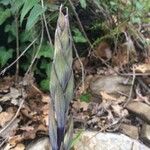
Limodorum abortivum
Violet Limodore · Violet birdsnest orchid
Description
Source: leafsnapLimodorum abortivum, commonly known as the Violet Limodore or Violet Bird's-nest Orchid, is a species of orchid native to Europe and Asia. This terrestrial orchid thrives in damp, shady environments such as forests, meadows, and wetlands. Its unique appearance is characterized by a stemless growth habit, with flowers emerging directly from the base of the plant. The flowers are small and feature purple or pinkish petals that form a tubular shape. The lip of the flower is three-lobed and adorned with purple spots. The plant typically blooms from May to July. Limodorum abortivum is considered endangered in some countries due to habitat loss from human activities like deforestation and urbanization. It is also threatened by over-collection from orchid enthusiasts. Traditionally, this plant has been used for its anti-inflammatory properties in medicinal practices. However, it should not be consumed without proper medical supervision due to potential toxicity. In summary, Limodorum abortivum is a fascinating orchid species that enhances the beauty of natural habitats. Nevertheless, it requires conservation efforts in regions where it is threatened by human activities.
Care Guide
💧 Water Every 7 days
The violet birdsnest orchid flourishes in environments with stable moisture, so consistent weekly watering is crucial. It prefers moderate humidity, which can be maintained through regular misting. This helps to improve the health of its foliage and increase its flowering potential, making it an excellent choice for indoor cultivation.
What do I do if I give too much or too little water to my Violet birdsnest orchid?
To avoid killing your Violet birdsnest orchid, it is important to not let the soil remain too moist for too long. While these plants need frequent watering during active growth, they also need well-draining soil. Overwatering can lead to mushy roots and rot. If this happens, you should use sterile pruning shears to remove any rotten roots and repot the orchid in a container with good drainage and fast-draining potting mix. However, excessive repotting can negatively affect the orchid, so it's crucial to find the right watering balance. If the orchid starts to shrivel and feel dry to the touch, it may be underwatered. In that case, increase your watering frequency as the soil is drying faster than expected.
What do I need to think about when watering my Violet birdsnest orchid at different times of the year and when it's growing?
When planning the watering schedule for your Violet birdsnest orchid, it's important to consider two growth phases. The first phase is the active growth period, which happens in spring and summer. During this time, the plant needs to be watered multiple times per week. The second phase is the rest period, which occurs during winter and lasts about two to three months. During this period, the orchid requires much less water and fertilization. It should be watered about once or twice per month. To transition from the active growth period to the rest period, gradually reduce the watering frequency in the fall. Start by reducing it from multiple times per week to the once or twice per month rate that is appropriate for winter.
How should I water my Violet birdsnest orchid in the best way?
The way you water your Violet birdsnest orchid depends on whether it is in an active growth phase or not. During active growth, water the soil and occasionally mist the leaves if it's warm. In winter or cool, wet weather, stick to watering the soil only. If the roots and leaves become dry or discolored, it needs more water. Overwatering will cause the plant to look mushy and limp. Use a pot with good drainage and water multiple times per week during the growing season. The amount of water depends on the pot size, with larger pots needing less frequent watering. Rainwater or distilled water is best, and use water that matches the air temperature.
How often should I water my Violet birdsnest orchid?
During the active growth stage in spring and summer, water your Violet birdsnest orchid once or twice a week, increasing to three times a week or more in hot and dry weather. In winter, water it less frequently, about two to three times a month to keep it alive. However, if it's indoors during winter, the soil may dry faster, so you might need to water it more often. Use the fall to gradually reduce watering from multiple times per week to the reduced winter schedule.
If I grow my Violet birdsnest orchid indoors, how should I water it in a different way?
The Violet birdsnest orchid thrives in a humid environment, which can be a challenge to achieve indoors. Indoor locations typically lack the desired level of air moisture, causing the plant and its soil to dry out faster than when it's grown outside. To overcome this issue, it's recommended to use a humidifier in the room where you cultivate your Violet birdsnest orchid. You may also need to water the plant more frequently. However, it's important to note that while these orchids appreciate humidity, they also require appropriate air circulation to avoid excessive moisture buildup and the associated diseases. To ensure proper air circulation, using a fan in the growing space is highly recommended.
☀️ Light Partial sun
Violet birdsnest orchid is native to habitats such as forest understories or rocky areas, where it receives natural shade. It prefers partial sun but can adapt to full sun or full shade, demonstrating its versatility and hardiness.
🌡️ Temperature 15–35°C
Violet birdsnest orchid can tolerate a wide range of temperatures, but its distribution can still be limited by various combinations of moisture and heat. It does best in warm summer conditions with adequate rainfall or watering. Extended stretches of cloudy, rainy weather, as well as prolonged high temperatures, can increase the likelihood of the Violet birdsnest orchid dying. In winter, shielding it from cold can improve its chances of survival.
What is the Violet birdsnest orchid?
The Violet birdsnest orchid is known scientifically as Limodorum abortivum. This particular species does not have additional essential information, symptoms, or further details provided in this context. It is recognized for its unique characteristics and name.
💨 Humidity normal (40-60%)
This plant will thrive in moderate humidity, which is probably the level in your home. However, misting it a few times a week can be very beneficial. Make sure the room has good ventilation.
🪴 Soil 5-7
🌱 Fertilizer
For the Violet birdsnest orchid, the primary time to fertilize is in early spring while the flowers are developing. The correct fertilizer promotes improved blooms and helps the Violet birdsnest orchid produce attractive flowers. Fertilizing in early spring ensures excellent flowers throughout the season and supplies energy for dormant growth phases.
🪴 Pot & Repot
✂️ Pruning
The Violet Birdsnest Orchid, known for its leafless stem and violet flowers, requires minimal pruning. To maintain healthy roots and prevent disease, remove any dead parts in the spring and prune the plant after it blooms. Regular inspections help ensure robust growth and enhance its visual appeal. Be sure to follow established horticultural practices for the best results.
🌿 Propagating
🐛 Diseases & pets
☠️ Toxicity
Characteristics
- Plant Type
- Herb
- Life Cycle
- Perennial
- Genus
- Limodorum
- Family
- Orchidaceae
- Hardiness Zone
- 7-9
- Mature Height
- 20 cm to 76 cm
- Mature Spread
- 10 cm to 20 cm
- Leaf Color
- Purple
- Leaf Type
- Semi-evergreen
- Flower Color
- Violet
- Flower Size
- 1.52 cm to 2.03 cm
- Bloom Time
- Late spring, Early summer
- Planting Time
- Spring, Summer
- Harvest Time
- Mid summer, Late summer