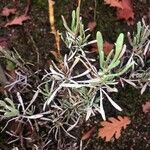
Limoniastrum monopetalum
Bushy Sea-lavender · Limoniastrum
Description
Source: leafsnapLimoniastrum monopetalum, commonly known as the single-petaled marsh-rosemary, is a perennial herbaceous plant belonging to the Plumbaginaceae family. Native to the Mediterranean region, this plant thrives in wetlands, marshes, and along riverbanks. The plant features a woody base from which numerous stems emerge, reaching heights of up to 1 meter. Its small, narrow leaves display a distinctive gray-green coloration. From May to September, Limoniastrum monopetalum produces pink or purple flowers with five petals. Historically, this plant has been valued for its medicinal properties, particularly its anti-inflammatory benefits. Beyond its health applications, it is also popular as an ornamental garden plant owing to its striking flowers. For optimal growth, Limoniastrum monopetalum requires full sun or partial shade and moist soil conditions. It can be propagated via seeds or stem cuttings. In summary, Limoniastrum monopetalum is an attractive herbaceous perennial that enhances the beauty and diversity of wetland areas while offering notable medicinal benefits.
Care Guide
💧 Water Every 7 days
Limoniastrum thrives in arid environments thanks to its excellent drought tolerance. It efficiently maintains water balance and usually requires watering only once every 2-3 weeks. This makes it an ideal choice for xeriscaping. Due to its resilience and low maintenance needs, Limoniastrum is often grown outdoors in challenging climates.
How should I water my Limoniastrum plant?
Your Limoniastrum plant is not demanding when it comes to watering. You can use various common tools such as watering cans, hoses, or even cups to water it. Regardless of the tool, make sure to water the soil directly and evenly to ensure all parts of the root system receive sufficient water. Using filtered water is recommended to avoid any harmful particles that may be present in tap water. Additionally, it is better to use water that is at or slightly above room temperature, as extremely hot or cold water may shock the Limoniastrum. However, this plant generally responds well to any kind of water it receives.
What should I do if I give my Limoniastrum plant too much or too little water?
Outdoor plants, particularly newly planted ones or seedlings, are prone to lack of watering. It is important to consistently water them for a few months until their roots are established, as they can rely on rain thereafter. However, when Limoniastrum is planted in pots, overwatering becomes more likely. In the event that you accidentally overwater your Limoniastrum, there are steps you can take to remedy the situation. First, stop watering the plant immediately to minimize the effects of overwatering. Then, remove the Limoniastrum from its pot and check the roots for signs of root rot. If there is no root rot, you can place the plant back in its container. However, if you do find root rot, trim away the affected roots and consider applying a fungicide to prevent further damage. Lastly, repot the Limoniastrum in well-draining soil. In the case of underwatering, simply water the plant more frequently. If the leaves droop, dry out, or fall off due to underwatering, they will bounce back once adequately watered. Make sure to adjust your watering frequency promptly if underwatering occurs.
How often should I give water to my Limoniastrum plant?
Most outdoor plants can grow naturally with rainfall, but if your area lacks rain, you should water them adequately every 2 weeks in spring and fall. In summer, you'll need to water more frequently, but in winter, when growth is slower, water sparingly or not at all. If your Limoniastrum is young or newly planted, water it more often to help it establish and become more drought tolerant. For potted plants, there are two ways to determine how often to water your Limoniastrum. The first is to create a set watering schedule, like once a week or every other week. However, this may not always work because it doesn't consider the unique conditions of your growing environment. Watering frequency can also change with the season. A set schedule may not be enough during summer when the plant needs more water. An alternative approach is to check the soil moisture. Wait until the top two to four inches of soil, around ⅓ to ½ depth of the pots, have completely dried out before watering again.
How much water does my Limoniastrum plant require?
When watering your Limoniastrum plant, you may be surprised to learn that it doesn't always need a lot of water. Instead, if only a few inches of soil have dried since your last watering, you can give it about five to ten ounces of water each time. You can also gauge how much water to give based on the moisture of the soil. Keep track of how many inches of soil have dried out between waterings. To ensure your Limoniastrum gets enough moisture, water the soil layers that have become dry since the last watering. If more than half of the soil is dry, you may want to give more water than usual. In that case, continue watering until you see excess water draining from the pot's drainage holes. If your Limoniastrum is planted outdoors in a rainy area, it may not require additional watering. When the plant is young or still establishing, give it 1-2 inches of rainwater per week. As it grows and becomes established, it can rely solely on rainfall. Only in hot weather with no rain for 2-3 weeks should you consider giving it a full watering to prevent stress.
How do I know if I am watering my Limoniastrum plant enough?
The Limoniastrum plant is more commonly affected by overwatering, and there are specific signs to look out for. If the plant is overwatered, you will notice yellowing leaves and potential leaf loss. Overwatering can also cause the plant's structure to shrink and lead to root rot. On the other hand, an underwatered Limoniastrum will start to droop and may have brown or brittle leaves. Regardless of whether you notice signs of overwatering or underwatering, it's important to take action to revive the plant's health.
☀️ Light Full sun
Limoniastrum strongly requires plenty of sunlight to grow well. It originates from areas where the sun is unobstructed. It has no particular tolerance for shade; insufficient light may hinder its development, while excessive sunlight is not known to cause harm.
What are the sunlight requirements for Limoniastrum monopetalum?
Limoniastrum monopetalum requires full sun, meaning it needs above 6 hours of sunlight daily to thrive. It originates from regions where sunlight is abundant and unobstructed, and lacks specific tolerance to shade. Inadequate sunlight exposure may hinder its growth, though it does not suffer from excessive sunlight exposure. To ensure your garden or indoor plants receive the right amount of light, observe how sunlight moves through the space and choose locations that offer a balance of light and shade. For indoor plants, consider using artificial lighting, especially in less sunny spaces or during winter. Artificial lights, like LED, can be customized to provide the required wavelengths of light, with recommended wattage varying by the plant's sunlight needs.
What are the symptoms of inadequate sunlight for Limoniastrum monopetalum?
Symptoms of inadequate sunlight in Limoniastrum monopetalum include smaller new leaves compared to older ones, leggy or sparse growth, faster leaf drop, slower or no new growth, lighter-colored new leaves, and symptoms of excessive sunlight exposure like chlorosis, sunscald, leaf curling, wilting, and leaf scorching. These signs indicate either insufficient sunlight, which affects the plant's ability to photosynthesize and maintain health, or damage from excessive sunlight exposure. Monitoring and adjusting the plant's exposure to sunlight accordingly can help mitigate these symptoms.
How can you address insufficient or excessive sunlight exposure in Limoniastrum monopetalum?
To address insufficient sunlight for Limoniastrum monopetalum, gradually move the plant to sunnier locations, ensuring it receives at least 6 hours of direct sunlight daily. Utilize a south-facing window for indoor plants and keep curtains open during the day. If the plant is large or immobile, consider using artificial light sources, such as desk lamps or professional grow lights, for at least 8 hours daily. For outdoor plants, avoid sudden changes to brighter settings to prevent sunburn. In case of obstructions blocking natural sunlight, consider pruning or transplanting plants to more sunlit areas. Not all damage from insufficient sunlight may be reversible, but new growth following better light exposure will be healthy. Monitor and adjust care to prevent overexposure symptoms like chlorosis and sunscald.
🌡️ Temperature 20–37.8°C
Limoniastrum is native to temperate regions and does best at temperatures between 68 and 100 °F (20 to 38 °C). For optimal growth, keep this temperature range year-round when possible.
What is the optimal temperature range for growing Limoniastrum?
Limoniastrum, also known by its botanical name Limoniastrum monopetalum, is indigenous to regions with temperate climates, thriving in a temperature range of 68 to 100°F (20 to 38°C). To ensure optimal growth, it is recommended to maintain this temperature range year-round wherever possible. Limoniastrum is extremely heat-loving, and exposure to cold temperatures can be harmful. During the colder months, particularly in autumn, it is advisable to bring outdoor-grown Limoniastrum indoors, placing it near a bright window while ensuring it is kept at a safe distance from heaters. Keeping the temperature above 20°C during winter supports its growth, as temperatures nearing 5°C can be detrimental.
How should you care for Limoniastrum in low temperature conditions?
Limoniastrum thrives in warm temperatures and struggles in colder conditions, requiring temperatures to remain above 20°C for optimal health. It is particularly important to keep the plant above 5°C during the winter months. Exposure to temperatures below 1°C can lead to a lightening of the leaves' color, which, after frost damage, may turn brown or black. Such damage is typically accompanied by wilting and drooping. To mitigate frost damage, it's advisable to trim off the frost-damaged parts of the plant and immediately move it to a warm, indoor environment to protect it from the cold. Placing Limoniastrum near a south-facing window can ensure it receives ample sunlight, while also avoiding proximity to heaters or air conditioning vents which can cause excessive dryness.
What care does Limoniastrum need in high temperature conditions?
During the hotter months, it is crucial to keep Limoniastrum in temperatures below 38°C. Exposure to temperatures above 43°C can make the plant's leaves lighter in color and increase its susceptibility to sunburn. To care for Limoniastrum in such conditions, trim away any sunburned or dried-up parts to prevent further damage. Relocating the plant to a spot that offers shade during the midday and afternoon sun can also protect it. Ensuring the plant is watered in the morning and evening will help keep the soil sufficiently moist, further mitigating the risks associated with high temperatures.
💨 Humidity
🪴 Soil 6-8
🌱 Fertilizer
The best time to fertilize a Limoniastrum is in early spring as it comes out of dormancy. This encourages overall growth and flower development. Fertilizing improves the foliage, stems, and branches, while encouraging large, vivid, and long-lasting blooms. It helps move nutrients from the roots to the flowers and enhances the plant’s health and resistance to disease.
🪴 Pot & Repot
✂️ Pruning
Limoniastrum is a resilient evergreen shrub known for its silver-green leaves and pink-lavender flowers. To encourage dense foliage and abundant blooms, prune the shrub in early spring. Be sure to remove any dead branches to enhance air circulation. Use clean, sharp tools to minimize plant stress and the risk of disease.
🌿 Propagating
🐛 Diseases & pets
☠️ Toxicity
Characteristics
- Plant Type
- Shrub
- Life Cycle
- Perennial
- Genus
- Limoniastrum
- Family
- Plumbaginaceae
- Hardiness Zone
- 10-11
- Mature Height
- 0.4 m to 1.52 m
- Mature Spread
- 91 cm
- Leaf Color
- Green Yellow, Light Green
- Leaf Type
- Evergreen
- Flower Color
- Pink, Lavender
- Flower Size
- 0.51 cm to 0.76 cm
- Bloom Time
- Summer
- Planting Time
- Spring
- Harvest Time
- Late summer, Early fall, Mid fall
- Native Area
- Libya, Egypt, Tunisia, Italy, Algeria, Greece, Morocco, France