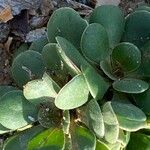
Limonium duriusculum
European sea lavendar
Description
Source: leafsnapLimonium duriusculum, commonly known as rock sea-lavender, is a perennial herbaceous plant belonging to the family Plumbaginaceae. Native to Europe, it thrives in rocky and sandy coastal areas. The plant features a woody stem that can reach up to 50 cm in height and produces clusters of small, pale lilac flowers from June to September. The leaves of Limonium duriusculum are narrow and lance-shaped with slightly wavy edges. They are alternately arranged along the stem and exhibit a grey-green color, covered with fine hairs. Rock sea-lavender plays a crucial role in coastal ecosystems by stabilizing sand dunes through its root system, which traps sand particles. Additionally, the plant provides food for various insects, including bees, butterflies, moths, and beetles. In traditional medicine, Limonium duriusculum has been valued for its anti-inflammatory properties. The roots have been used to treat rheumatism, while the leaves have been applied externally to wounds and bruises. Overall, Limonium duriusculum is an attractive perennial herbaceous plant that significantly contributes to coastal ecosystems and possesses medicinal properties beneficial for human health.
Care Guide
💧 Water Every 7 days
☀️ Light Full sun
European sea lavender is a sun-loving perennial herbaceous plant native to open habitats, commonly found in meadows and grasslands. It prefers full sun but can also tolerate partial sun.
🌡️ Temperature 15–35°C
European sea lavender demonstrates good temperature adaptability, tolerating higher heat and considerable temperature fluctuations. In hot weather, monitor watering and provide adequate shade to avoid sunburn. However, it is relatively intolerant of low temperatures; while it can endure some cold, extremely low temperatures can cause frost damage.
💨 Humidity
🪴 Soil 6-8
🌱 Fertilizer
Usually one fertilizer application in spring is enough for European sea lavender, though repeated feedings can boost growth. Feed every month to every month and a half. Fertilizing improves the leaves' appearance and function, helping maintain even color and a healthy texture. It also promotes root development and nutrient uptake for the plant's long-term health.
🪴 Pot & Repot
✂️ Pruning
European sea lavender is known for its clusters of small, papery flowers. To keep the plant healthy and vibrant, it benefits from annual pruning in early spring. Trim away any spent stems and damaged leaves to promote growth, maintain its shape, and improve airflow. This helps minimize the risk of disease. With proper care, the plant will produce vibrant summer blooms, making it a striking addition to coastal gardens.
🌿 Propagating
🐛 Diseases & pets
☠️ Toxicity
Characteristics
- Plant Type
- Herb
- Life Cycle
- Perennial
- Genus
- Limonium
- Family
- Plumbaginaceae
- Hardiness Zone
- 7-10
- Mature Height
- 20 cm to 40 cm
- Mature Spread
- 15 cm to 30 cm
- Leaf Color
- Dark Green
- Leaf Type
- Deciduous
- Flower Color
- Lavender
- Flower Size
- 0.25 cm to 0.51 cm
- Bloom Time
- Summer
- Planting Time
- Spring, Summer, Autumn
- Harvest Time
- Late summer, Early fall, Mid fall
- Native Area
- Italy, France