Limosella aquatica
Mudwort · Awl-leaved Mudwort · Awl-Leaf Mudwort · Water mudwort · Awlleaf Mudwort
Description
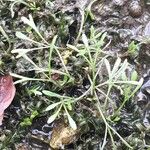
Source: leafsnapLimosella aquatica, commonly known as mudwort or water mudwort, is a small aquatic plant in the Scrophulariaceae family. It is native to Europe and Asia and typically grows in shallow water bodies such as ponds, lakes, and slow-moving streams. This plant has a prostrate growth habit, with stems that can extend up to 10 cm in length. Its leaves are small, oval-shaped, and smooth, growing opposite each other on the stem. The flowers are tiny, featuring five petals that are white or pale blue. Limosella aquatica serves as an important food source for aquatic insects like dragonflies and damselflies. Additionally, it provides shelter for small fish species. Traditionally, this plant has been used for its anti-inflammatory properties, making it useful in treating skin conditions such as eczema. In summary, Limosella aquatica plays a crucial role in maintaining healthy aquatic ecosystems by offering food for insects and shelter for fish, while also holding potential medicinal benefits.
Care Guide
💧 Water Every 7 days
Water mudwort flourishes in aquatic environments that have high water requirements and consistently saturated soils. To maintain the necessary humidity levels, it needs to be watered weekly. Although typically an outdoor plant, water mudwort has a strong root system that allows it to thrive in flooded areas.
How can I know if I am giving enough water to my Water mudwort?
Avoiding overwatering your Water mudwort can be a bit challenging. While their deep roots need weekly soil moistening, Water mudwort is highly prone to root rot and browning due to excessive watering. Underwatering is less likely to be a problem as these plants can survive without supplemental watering for some time. However, if you go for too long without watering, the plant may start to wilt and develop dry leaves.
How do I water my Water mudwort when it is at different stages of growth?
Water mudwort goes through different growth stages throughout the year, each with varying water requirements. When starting as a seed, give it more water than it will need later on, making sure the soil moisture remains consistent. After a few weeks, it will grow above the soil and require slightly less water. Once mature, you can water it about once per week. During flower development, you may need to increase the watering slightly.
How can I water my Water mudwort plant effectively?
Watering Water mudwort is a versatile task that can be accomplished using various tools such as a garden hose with a spray nozzle, a watering can, or any other common watering tool. This plant is generally not very particular about the source of water it receives, as it can thrive on rainwater, tap water, or even filtered water. However, it is advisable to avoid watering from above as this can harm the leaves and flowers and potentially result in disease. Setting up a drip irrigation system is often the most effective method for watering Water mudwort, as it ensures that water is evenly and directly applied to the soil. When it comes to watering container-grown Water mudwort, similar techniques can be employed but with different tools. Using a cup, watering can, or tap, water should be directed specifically to the soil.
What should I do if I give my Water mudwort too much or too little water?
To remedy underwatering Water mudwort, simply increase the frequency of watering when you notice dryness. Overwatering can be a more serious issue, leading to diseases and death. The best prevention is choosing a sunny location with good soil drainage. If your potted Water mudwort is overwatered, consider repotting it with loose soil in a pot that drains well.
How often should I water my water mudwort plant?
Water mudwort should be watered regularly throughout the growing season. In the beginning of spring, water once a week. As the season progresses and it gets warmer, increase watering to two to three times per week. However, be careful not to exceed this rate as it can harm the plant. It's important to keep the soil relatively moist but not overly wet, regardless of how often you water. When watering Water mudwort in a pot, the frequency should be increased as the soil in pots can dry out more quickly. In most cases, water a container-grown Water mudwort a few times per week compared to just once per week for an in-ground plant.
☀️ Light Full sun
Water mudwort grows best where sunlight reaches it without obstruction. The plant's health benefits from plenty of sun exposure. Too little or too much sunlight can cause poor growth. Because it originated in an environment with unrestricted sun, its growth stages have fairly consistent sunlight needs.
What are the sunlight requirements for Water Mudwort?
Water Mudwort (Limosella aquatica) thrives best in full sun conditions, requiring above 6 hours of sunlight daily to flourish. It's crucial to observe the movement of sunlight through your garden to find spots that offer a balanced mix of light and shade, ensuring the plants' optimal growth. Ample exposure to the sun is vital for the health of Water Mudwort, as it originated in environments with unobstructed sun. Both lack and excess of sunlight can hinder its growth, so providing the right amount is key.
How can artificial lighting supplement natural sunlight for Water Mudwort?
When natural sunlight is insufficient, especially in winter or less sunny spaces, artificial lighting can be an effective solution for Water Mudwort indoor cultivation. Optimal growth is supported by ensuring the plants receive adequate artificial lighting, which involves selecting the right type of light (like LED lights that provide specific wavelengths), determining the appropriate distance (12-36 inches above the plant), and setting the correct duration (8-12 hours per day) to mimic natural daylight conditions. For plants requiring full sun, 30-50W/sq ft of artificial light is beneficial, while partial sun and full shade plants need 20-30W/sq ft and 10-20W/sq ft respectively.
What are the symptoms of inadequate light in Water Mudwort?
Symptoms of light deficiency in Water Mudwort include smaller new leaves, leggy or sparse growth, faster leaf drop, and slower or no new growth, indicating the plant’s struggle with inadequate light conditions. This may lead to lesser chlorophyll and essential nutrients, evident through paler new leaves or chlorosis, where leaves turn yellow. Excessive sunlight can cause sunscald, curling of leaves as a defense mechanism, wilting from water loss, and leaf scorching with brown, dry edges affecting the plant's health.
How can I ensure my Water Mudwort receives adequate sunlight?
To ensure your Water Mudwort receives enough sunlight, gradually move the plant to sunnier locations, aiming for at least 6 hours of direct sunlight daily. Use south-facing windows and artificial lights if natural sunlight is insufficient, keeping them on for about 8 hours daily. For outdoor plants, gradual relocation helps them adapt without the risk of sunburn. Minimize shade by pruning trees or relocate smaller plants to sunny spots. However, parts affected by prior insufficient sunlight might not recover, though new growth will be healthy with proper light exposure.
🌡️ Temperature 5–35°C
Water mudwort can tolerate a wide range of temperatures, but its distribution may still be restricted by particular combinations of moisture and heat. It grows best in warm summer conditions with sufficient rainfall or watering. Extended periods of cloudy, rainy weather or sustained high temperatures increase the chance that Water mudwort will die. In winter, adequate protection from cold can boost the plant’s survival.
💨 Humidity
🪴 Soil
🌱 Fertilizer
For water mudwort, apply a balanced fertilizer once a month during its growing season to promote vigor. Additionally, use a high-nitrogen fertilizer to encourage leaf development. Reduce feeding during dormancy. Be sure to apply fertilizers sparingly to avoid root burn and environmental harm. Always dilute the fertilizer according to the instructions for aquatic plants to ensure consistent care without over-fertilization.
🪴 Pot & Repot
✂️ Pruning
Water mudwort is an aquatic perennial plant known for its delicate foliage. Pruning in the early to late spring encourages new growth, improves light penetration, and increases airflow by removing dead leaves and thinning out dense areas. Regular maintenance helps prevent overcrowding, limits the plant's invasiveness, and maintains its aesthetic and ecological benefits.
🌿 Propagating
🐛 Diseases & pets
☠️ Toxicity
Characteristics
- Plant Type
- Herb
- Life Cycle
- Annual, Perennial
- Genus
- Limosella
- Family
- Plantaginaceae
- Hardiness Zone
- 5-9
- Mature Height
- 3 cm to 10 cm
- Mature Spread
- 5 cm to 10 cm
- Leaf Color
- Light Green
- Leaf Type
- Semi-evergreen
- Flower Color
- White, Pink
- Flower Size
- 0.20 cm
- Bloom Time
- Late spring, Summer
- Planting Time
- Spring, Summer
- Harvest Time
- Mid summer, Late summer, Early fall, Mid fall
- Native Area
- Egypt, Turkey, Sweden, India, Austria, Mexico, Slovakia, Pakistan, Slovenia, Morocco, Croatia, Belarus, Russia, Germany, Iceland, Estonia, Romania, Latvia, South Korea, Belgium, Portugal, Netherlands, France, Tajikistan, Czech Republic, Cyprus, Armenia, Poland, Greece, Ukraine, Serbia, China, Lithuania, Norway, Afghanistan, Kyrgyzstan, Kazakhstan, Italy, Spain, Switzerland, Denmark, Japan, Mongolia, Finland, Ireland, United Kingdom, Hungary, Azerbaijan