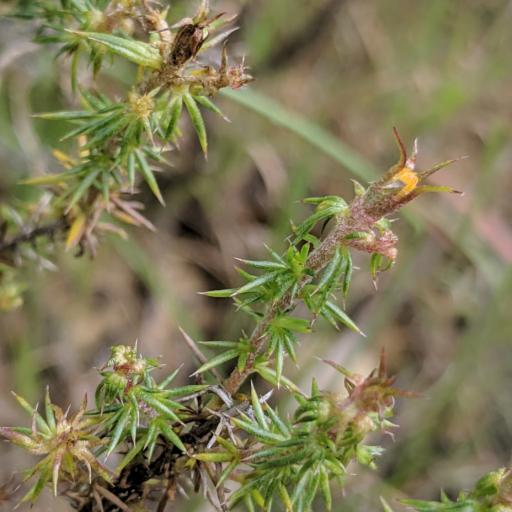
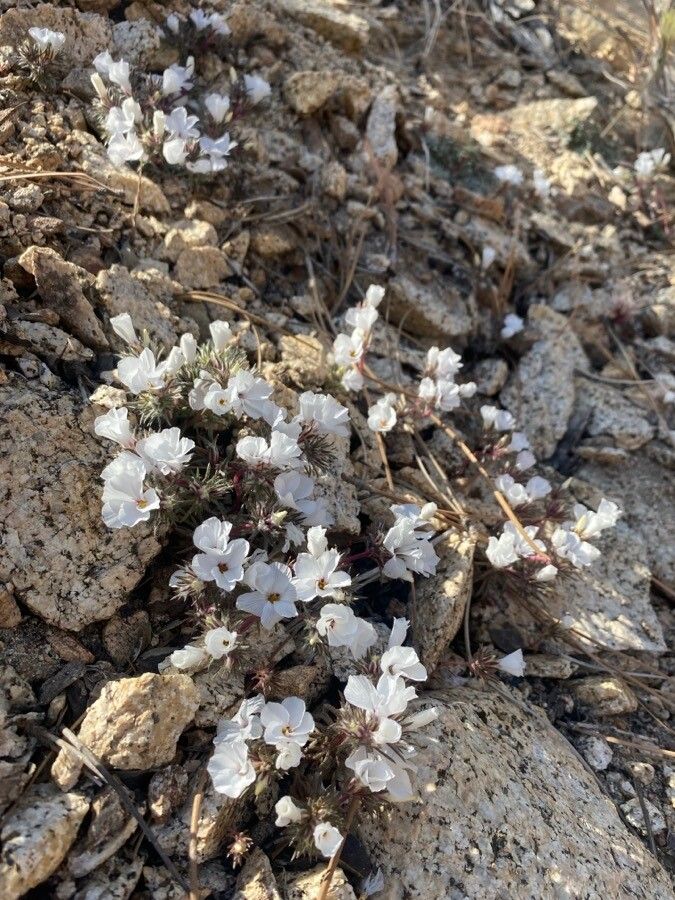
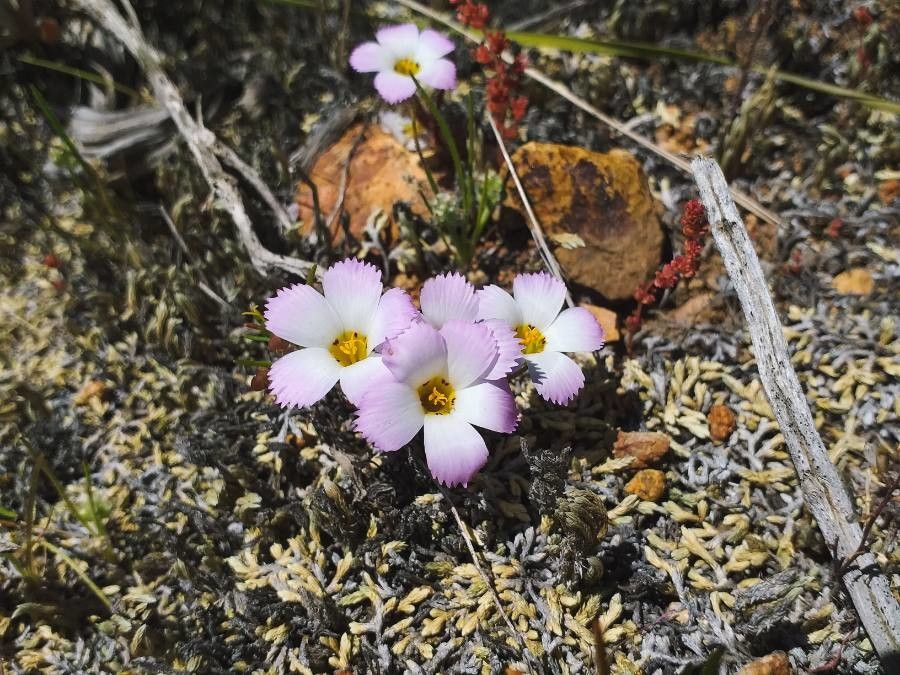
Linanthus maculatus (formerly Gilia maculata) is a species of flowering plant in the phlox family known by the common names San Bernardino Mountain gilia and Little San Bernardino Mountains gilia. It is endemic to California, where it is known only from a few locales in the Little San Bernardino Mountains and the adjacent Palm Springs area in the northern end of the Coachella Valley. The largest populations, which may contain thousands of individuals, are located within the bounds of Joshua Tree National Park. This is a very small annual herb no more than three centimeters high. It has a taproot which may exceed 6 centimeters in length to collect moisture from the dry desert sand in its native habitat. The tiny, hairy stem branches to form small matted clusters on the sand surface. The hairy leaves are just a few millimeters long and unlobed. The inflorescence is a dense cluster of flowers each only 2 to 5 millimeters wide. The flower corolla has curled-back lobes which are white, sometimes with a spot of purple or pink. The protruding stamens are yellow. The main threat to this species is development in its range, and it is also vulnerable to off-road vehicle damage in the wide open sandy flats where it grows.
Maculigilia maculata has good disease resistance and is generally not prone to illnesses. However, it can be affected by pests and diseases present in its environment. These infections are typically not severe. Regarding care, this plant is medium maintenance. It requires regular pruning to maintain a neat appearance and healthy growth. Fertilizing can also help encourage flowering. Maculigilia maculata is suitable for anyone with outdoor space, such as a garden or patio, and does not demand extensive care experience. It may need more attention when grown indoors.
How to keep Linanthus Maculatus.
Light
Maculigilia maculata is native to well-lit, open spaces where it flourishes under direct sunlight. While it has the capacity to withstand indirect sunlight, it favors full sun for the best possible growth. This plant, which cycles yearly and biyearly, is noted for its affinity for sunny conditions.
Temperature
The Maculigilia maculata plant comes from tropical areas that are typically hot and moist. Consequently, it has adjusted well to a warm, high-moisture environment. The plant isn't keen on abrupt changes in temperature and prefers a stable thermal atmosphere, hence it's crucial to prevent fluctuating temperatures indoors. It generally can't withstand chilly conditions and demands elevated temperatures to grow. Should the surrounding temperature decrease excessively, the plant might stop growing or potentially perish.
Fertilizer
Regular, mild applications of fertilizer can support leaf development in Maculigilia maculata. Throughout the summer months, it's best to feed Maculigilia maculata around once a month. Nitrogen is vital for leaf growth, and using nitrogen-rich supplements can enable Maculigilia maculata to flourish.
Botanical profile.
- Plant Type
- Herb
- Life Cycle
- Annual
- Genus
- Linanthus
- Family
- Polemoniaceae
- Hardiness Zone
- 5-9
- Mature Height
- 10 cm to 30 cm
- Mature Spread
- 15 cm to 25 cm
- Leaf Color
- Green, Dark Green
- Leaf Type
- Deciduous
- Flower Color
- Lavender
- Flower Size
- 1.02 cm to 2.03 cm
- Bloom Time
- Late spring, Early summer
- Planting Time
- Spring, Summer, Autumn
- Harvest Time
- Mid summer, Late summer