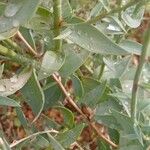
Linaria dalmatica
Balkan toadflax · Dalmatian toadflax · Broadleaf toadflax
Description
Source: leafsnapLinaria dalmatica, commonly known as Dalmatian toadflax, is a perennial herbaceous plant in the Plantaginaceae family. Native to southeastern Europe and western Asia, it has spread and naturalized in various parts of North America. The plant can grow up to 1 meter tall, featuring a woody base and multiple erect or ascending stems. Its narrow, lance-shaped leaves are gray-green with smooth edges. The yellow flowers, distinguished by their orange centers, bloom on long spikes from June through September. Linaria dalmatica is often considered an invasive species because it can outcompete native plants for essential resources such as water, nutrients, light, and space. Additionally, it can produce allelopathic chemicals that inhibit the growth of surrounding plants. Despite its invasive nature, Linaria dalmatica has been utilized in traditional medicine for treating respiratory infections and digestive disorders due to its anti-inflammatory properties. Conservationists globally have been working to control or eradicate this species from natural habitats where it poses a threat. They also promote responsible gardening practices to homeowners, who might inadvertently introduce this plant into their gardens through seed dispersal by wind or birds.
🌳 Dalmatian toadflax, mainly viewed as an invasive species, may be overshadowed by its reputation. Its bright yellow flowers provide an important ecological service by attracting a range of pollinators. That interaction aids the reproduction of many plant species, thereby reinforcing local ecosystems. Despite the scarcity of extensive studies on other potential uses, the plant’s ability to attract pollinators remains a key ecological contribution, suggesting value in further investigation of additional benefits dalmatian toadflax might offer.
Care Guide
💧 Water Every 7 days
Dalmatian toadflax thrives in moderately moist environments and needs balanced watering, ideally on a weekly basis. Although it is not drought-tolerant, it can withstand brief periods of dryness. Generally grown outdoors, dalmatian toadflax is an evergreen plant that thrives in temperate climates with regular rainfall.
How should I water my Dalmatian toadflax plant?
To properly water the Dalmatian toadflax, it is recommended to use filtered water at room temperature. Tap water should be avoided as it may contain harmful particles. Since the Dalmatian toadflax is accustomed to a warm environment, it is important to use room temperature or slightly warmer water to prevent any shock. Overhead watering should be avoided as it can cause issues with the foliage. Instead, water the plant by applying filtered room temperature water directly to the soil until it is completely soaked. This allows the roots to receive moisture and spread through the soil to collect necessary nutrients.
How often do I need to water my Dalmatian toadflax?
If your Dalmatian toadflax is in a pot, you can determine if it needs water by checking the soil. Stick your finger into the soil and if the top two to three inches feel dry, it's time to water it. The same method can be used if you grow the plant outdoors in the ground. Again, if the top few inches of soil are dry, it needs water. In spring and early fall, watering once a week is usually enough. However, during hot weather, you may need to water it twice or more per week. It's worth noting that mature Dalmatian toadflax plants can tolerate drought well.
How do I water my Dalmatian toadflax throughout the different seasons?
The water needs of the Dalmatian toadflax vary depending on the time of year. In the hottest months of summer, the plant will require more frequent watering, potentially more than once a week, to keep the soil from drying out too quickly. However, during the winter, the plant enters a dormant phase and needs significantly less water. In fact, it may not require any watering at all during this time. If you do choose to water the plant in winter, it should be done sparingly, no more than once a month, to avoid the risk of disease.
What should I do if I give my Dalmatian toadflax too much or too little water?
Both overwatering and underwatering can harm the health of your Dalmatian toadflax, but overwatering is more common. When this plant receives too much water, its stems and leaves may droop and turn yellow. Prolonged overwatering can also lead to diseases like root rot, mold, and mildew, which can be fatal. Underwatering is less common because the Dalmatian toadflax can tolerate drought to some extent. However, it is still possible, and if it happens, the plant's leaves will become brittle and brown. It is crucial to recognize the signs of overwatering early on. Some diseases caused by overwatering, such as root rot, can become irreversible if not addressed promptly. If you notice early signs of overwatering, reduce your watering schedule immediately. Also, check the quality of the soil. If it drains poorly, replace it with a loose, well-draining potting mix. If you find signs of underwatering, increase your watering frequency until the signs disappear.
How much water does my Dalmatian toadflax require?
To properly water your Dalmatian toadflax, don't hold back on the amount of water you give. Make sure the top two to three inches of soil are dry before watering. When you do water, make sure to thoroughly soak the soil. The water should be enough to cause excess water to flow out of the drainage holes at the bottom of the pot. If you don't see any excess water coming out, it means you haven't given the plant enough water. However, don't let the water accumulate in the soil, as this can be harmful to the plant. If there is no water draining through the pot, it may be a sign that the soil doesn't drain well, which is not good for the plant's health. If the plant is outside, it should receive about one inch of rain per week, which is enough.
☀️ Light Full sun
Dalmatian toadflax grows best when it gets the maximum daily sunlight, reflecting its native occurrence in areas of very high light intensity. Insufficient light can restrict its growth and development, whereas excessive light rarely produces harmful effects.
What are the sunlight requirements for Dalmatian toadflax?
Dalmatian toadflax flourishes under conditions of maximum sunlight, aligning with its natural habitat that experiences high light intensities. It essentially requires over 6 hours of sunlight per day, categorized as full sun, to thrive optimally. However, it can also grow in partial sun conditions, which means about 3-6 hours of sunlight daily. It's essential to observe how sunlight moves through your garden to ensure plants get a balanced light-to-shade ratio, as this promotes the well-being of your Dalmatian toadflax.
How does artificial lighting affect indoor Dalmatian toadflax plants?
When natural sunlight is not sufficient, especially during winter or in less sunny locations, artificial lighting can be a crucial support for Dalmatian toadflax's growth indoors. Optimal growth under artificial light requires selecting the right type of light (such as LED), providing the necessary wattage (30-50W/sq ft for full sun plants, 20-30W/sq ft for partial sun plants, and 10-20W/sq ft for full shade plants), ensuring the light source is placed 12-36 inches above the plant, and mimicking natural daylight hours by keeping the lights on for 8-12 hours per day.
What are the symptoms of incorrect lighting for Dalmatian toadflax?
Symptoms of incorrect lighting in Dalmatian toadflax can vary from deficiencies to excesses. Light deficiencies may lead to small leaves, leggy or sparse growth, faster leaf drop, slower or no new growth, and lighter-colored or irregularly patterned new leaves, indicating insufficient chlorophyll and essential nutrients. Excessive light can cause chlorosis (yellowing leaves due to chlorophyll breakdown), sunscald (pale, bleached areas on leaves/stems), leaf curling (to minimize surface area exposed), wilting (due to increased water loss), and leaf scorching (brown, dry edges on leaves). Each of these symptoms suggests the need for adjusting the plant's light exposure.
How can I manage sunlight exposure for Dalmatian toadflax to promote healthy growth?
To manage sunlight exposure for Dalmatian toadflax effectively, consider both outdoor and indoor solutions. For outdoor plants, gradually moving them to sunnier locations each week can help them adapt without incurring sunburn. Ensure they receive at least 6 hours of direct sunlight daily. For indoor plants not easily moved or too large, supplement natural light with artificial lighting, keeping a desk or plant grow light on for a minimum of 8 hours a day. If plants have been affected by insufficient light, focus on new growth after adjusting light levels, as parts of the plant previously suffering may not fully recover. Additionally, reducing environmental obstructions and considering transplanting for smaller plants can be effective for improving sunlight access.
🌡️ Temperature 5–35°C
Dalmatian toadflax originates from habitats where temperatures range from 41 to 95 °F (5 to 35 °C). It favors moderate to warm temperatures but can tolerate cooler conditions. In extreme seasons, adjust thermal settings to match the natural climatic conditions.
What are the native temperature conditions for Dalmatian toadflax?
Dalmatian toadflax originates from environments where temperatures range between 41 to 95 °F (5 to 35 °C). It prefers moderate to warm conditions but is capable of tolerating cooler temperatures as well. To mimic its natural habitat, it's advisable to adjust the plant's surroundings to reflect these moderate to warm temperature conditions, especially during extreme weather seasons.
Does Dalmatian toadflax require special frost protection measures during winter?
Dalmatian toadflax exhibits strong resistance to cold and doesn't usually require special frost protection measures in winter. Nonetheless, if temperatures are anticipated to fall below -25°C, providing some form of cold protection is crucial. This could involve covering the plant with soil or straw. Additionally, watering the plant generously before the first autumn freeze to keep the soil moist can help the plant endure winter and early spring by preventing drought and water scarcity.
How does Dalmatian toadflax react to low temperatures?
Dalmatian toadflax is cold-tolerant and fares best when temperatures are kept above 5°C. Throughout the winter, it should remain above -20°C. If the temperature dips below -25°C, the plant may not show immediate distress during winter, but it could lead to decreased sprouting or even failure to sprout in spring. To manage this, it's recommended to remove any parts of the plant that have not sprouted in the spring.
What should be done if Dalmatian toadflax experiences high temperatures?
During the summer months, it's important to ensure that Dalmatian toadflax does not get exposed to temperatures above 35°C. Exposure to temperatures exceeding 38°C can cause the plant's leaves to lighten in color, curl, become susceptible to sunburn, and, in severe cases, the entire plant may wilt and dry out. To mitigate high temperature stress, trim away sunburned and dried-up parts of the plant. Relocating the plant to a shaded area during the most intense midday and afternoon sun, or using a shade cloth, can be effective. Additionally, watering the plant in the morning and evening helps keep the soil moist and supports the plant's health.
💨 Humidity
🪴 Soil 6-7
🌱 Fertilizer
The best time to fertilize a Dalmatian toadflax is in early spring, as it emerges from dormancy and starts active growth. Fertilization supplies essential nutrients for healthy development. Although Dalmatian toadflax has relatively low fertilizer requirements, an annual application can improve its survival and encourage better, longer-lasting flowers.
🪴 Pot & Repot
✂️ Pruning
Dalmatian toadflax features tall stems adorned with yellow, snapdragon-like flowers. Prune the plant from early to late spring to encourage growth, remove spent blooms, and trim weak stems. This process improves airflow, reduces pests, and maintains the plant’s appearance. Regular monitoring is crucial to manage its vigorous growth effectively.
🌿 Propagating
🐛 Diseases & pets
☠️ Toxicity
Characteristics
- Plant Type
- Herb
- Life Cycle
- Perennial
- Genus
- Linaria
- Family
- Plantaginaceae
- Hardiness Zone
- 5-9
- Mature Height
- 61 cm to 91 cm
- Mature Spread
- 30 cm to 61 cm
- Leaf Color
- Green
- Leaf Type
- Deciduous
- Flower Color
- Yellow, Gold
- Flower Size
- 2.54 cm to 5.08 cm
- Bloom Time
- Late spring, Early summer, Mid summer
- Planting Time
- Spring, Summer, Autumn
- Harvest Time
- Mid summer
- Native Area
- Turkey, India, Montenegro, Bulgaria, Pakistan, Armenia, Greece, Croatia, Serbia, Iraq, Syria, Italy, Iran, Albania, Azerbaijan, Romania, France