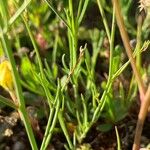
Linaria spartea
Ballast toadflax
Description
Source: leafsnapLinaria spartea, commonly known as striped toadflax or pine barren toadflax, is a perennial herbaceous plant in the family Plantaginaceae. Native to North America, it thrives in sandy or rocky soils found in pine barrens and open woods. This plant can grow up to 60 cm tall and features narrow leaves arranged alternately along the stem. The small, tubular flowers have two lips and display a striking combination of yellow-orange with purple stripes. These blooms appear from May through August. Traditionally, Native Americans have utilized Linaria spartea for medicinal purposes to treat ailments such as coughs, colds, fever, and digestive problems. It also attracts beneficial pollinators like bees and butterflies. Linaria spartea is easy to cultivate from seeds or cuttings, provided it is planted in well-drained soil with full sun exposure. It can be an excellent addition to rock gardens or naturalized areas, though it may become invasive if not properly managed. Overall, Linaria spartea is an attractive wildflower that brings vibrant color to natural landscapes and offers medicinal benefits when used correctly under the guidance of medical professionals.
Care Guide
💧 Water Every 7 days
Ballast toadflax, native to Mediterranean climates, is moderately drought-tolerant but thrives best with consistent moisture. It typically benefits from watering twice a week. This plant is often used in rock gardens and arid landscapes, where it efficiently maximizes water uptake during the growing season to ensure robust growth, even amidst environmental fluctuations.
☀️ Light Full sun
Ballast toadflax comes from bright, open habitats and does best in full sun. It can tolerate some partial shade but prefers direct sunlight for optimal growth. This plant, which occurs as both an annual and a biennial, is noted for its sun-loving habit.
What are the sunlight requirements for Ballast toadflax (Linaria spartea)?
Ballast toadflax (Linaria spartea) has specific sunlight requirements to thrive. Plants that need 'Full sun' require above 6 hours of sunlight daily, while those needing 'Partial sun' do well with about 3-6 hours of sunlight. It's important to observe the movement of sunlight through your garden to identify spots that offer a balance of light and shade, ensuring the optimal growing conditions for your Ballast toadflax, fostering its happiness and growth.
🌡️ Temperature 15–35°C
Ballast toadflax can adjust to a wide range of temperatures, but its distribution may still be constrained by various combinations of moisture and heat. It performs best in warm summer conditions with sufficient rainfall or watering. Extended stretches of cloudy, rainy weather or sustained high temperatures can increase the likelihood of Ballast toadflax dying. In winter, protecting it properly from cold can improve the plant's survival rate.
What is the name of the plant?
The plant is known as Ballast toadflax.
What is the botanical name of Ballast toadflax?
The botanical name of Ballast toadflax is Linaria spartea.
💨 Humidity
🪴 Soil 6-8
🌱 Fertilizer
Ballast toadflax does well with regular, mild applications of fertilizer to encourage healthy leaf development. Fertilize Ballast toadflax about once a month during the summer. Nitrogen is essential for foliage, and supplying nitrogen-rich sources helps Ballast toadflax thrive.
🪴 Pot & Repot
✂️ Pruning
Ballast toadflax features tall, slender stems and bright yellow flowers. To promote growth and maintain shape, prune dead stems from early to late spring. Regular pruning improves air circulation, reduces the risk of disease, and encourages vigorous blooming, resulting in a more attractive display.
🌿 Propagating
🐛 Diseases & pets
☠️ Toxicity
Characteristics
- Plant Type
- Herb
- Life Cycle
- Annual
- Genus
- Linaria
- Family
- Plantaginaceae
- Hardiness Zone
- 7-10
- Mature Height
- 20 cm to 49 cm
- Mature Spread
- 15 cm to 30 cm
- Leaf Color
- Green
- Leaf Type
- Semi-evergreen
- Flower Color
- Yellow, Gold
- Flower Size
- 1.02 cm to 2.03 cm
- Bloom Time
- Mid spring, Late spring, Early summer, Mid summer
- Planting Time
- Spring, Summer
- Harvest Time
- Summer
- Native Area
- Spain, Portugal, France