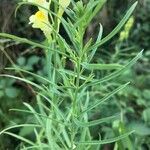
Linaria vulgaris
گل میمون · Common Toadflax · Butter-and-eggs · Wild snapdragon · Yellow Toadflax
Description
Source: leafsnapLinaria vulgaris, commonly known as common toadflax or butter-and-eggs, is a perennial herbaceous plant belonging to the Plantaginaceae family. Although native to Europe and Asia, it has been introduced and naturalized in North America. The plant can grow up to 1 meter tall, featuring narrow leaves arranged alternately along the stem. The flowers of Linaria vulgaris are yellow with an orange center, blooming from June through September. These flowers grow in dense spikes at the top of the stem, attracting bees and other pollinators. Common toadflax prefers well-drained soils and can thrive in full sun or partial shade. It is adaptable to various soil types and is often found along roadsides, railway tracks, waste areas, meadows, and pastures. Linaria vulgaris has been used for medicinal purposes for centuries due to its anti-inflammatory properties. However, it is also considered an invasive species as it spreads rapidly through self-seeding, potentially outcompeting native plants if not properly managed. Overall, Linaria vulgaris is a beautiful plant that adds color and interest to any setting but should be monitored carefully if planted outside its natural range due to its invasive tendencies.
💡 Butter-and-eggs is often the least popular flower among gardeners for the courtyard. Once its seeds take root, the small roots germinate rapidly, spreading quickly and becoming difficult to remove.
🌳 Yellow toadflax plays a notable ecological role as a bioindicator because it is sensitive to changes in soil conditions. It can signal the presence of certain metals in the soil, which has prompted its use in phytoremediation to clean contaminated soils. It also acts as a host plant for several butterfly species, thereby supporting biodiversity and serving as an ecological indicator of a healthy environment.
🎭 Perseverance
Care Guide
💧 Water Every 3 days
Butter-and-eggs thrive in temperate climates and need consistent moisture, though they can handle short dry periods. To ensure they are well-hydrated, which is essential for healthy flowering, it's best to water them weekly. Adequate water supply is key because it directly impacts the size and duration of the blooms, especially for those grown outdoors.
How much water does my Butter-and-eggs plant need?
When watering your Butter-and-eggs plant, don't hold back on the amount of water you give it. Make sure the top two to three inches of soil are dry before watering, and then give it a good, thorough soaking. The water should be enough to completely saturate the soil and cause excess water to drain out of the pot's drainage holes. If you don't see water draining out, it means you haven't given enough water. However, be careful not to let water accumulate in the soil, as this can be harmful to the plant. On the other hand, if water isn't draining properly, it may indicate that the soil doesn't have good drainage, which is bad for the health of the plant. If the plant is outside, about 1 inch of rain per week should be enough.
☀️ Light Full sun
Yellow toadflax does best in places with abundant sunlight but can also grow satisfactorily where sun is present only part of the day. Its original habitat was naturally lit, which supports its growth. However, if it receives very little sunlight, the plant may not thrive as well and its overall health could decline.
What are the sunlight requirements for Butter-and-eggs (Linaria vulgaris)?
Butter-and-eggs, or Linaria vulgaris, thrives best in conditions where it can receive a lot of sunlight exposure. It requires full sun, meaning it should be placed in locations that receive more than 6 hours of direct sunlight per day. However, it can also tolerate partial sun, which is about 3-6 hours of sunlight. Observing how sunlight moves through your garden and choosing spots that provide the perfect balance of light and shade is crucial for ensuring the plant's health and happiness.
How does the lighting environment affect the growth of Butter-and-eggs?
The growth of Butter-and-eggs is significantly influenced by its lighting environment. It originally thrives in naturally well-lit areas, supporting its optimum growth. When exposed to minimal sunlight, the plant might not flourish as much, and its health could be negatively impacted. For indoor plants, when natural sunlight is insufficient, especially during winter or in less sunny spaces, artificial lighting is a vital solution. Adequate lighting, whether natural or artificial, promotes faster, healthier growth. LED lights are recommended for indoor plant lighting because they can be customized to provide specific wavelengths of light needed by the plants.
What are the symptoms of light deficiency in Butter-and-eggs?
Symptoms of light deficiency in Butter-and-eggs can include smaller new leaves, leggy or sparse growth, faster leaf drop, slower or no new growth, and chlorosis or loss of the green color in leaves. These symptoms arise when the plant is placed in rooms with inadequate lighting. Inadequate sunlight can cause leaves to develop irregular color patterns or appear pale, a sign of insufficient chlorophyll and essential nutrients. Symptoms such as sunscald, leaf curling, wilting, and leaf scorching can occur with overexposure to intense sunlight, indicating the plant's struggle to adapt to its lighting conditions.
How can I address the issue of insufficient sunlight for my Butter-and-eggs plant?
To address insufficient sunlight for Butter-and-eggs, indoor plants can be gradually moved to a sunnier location, ideally near a south-facing window, to receive at least 6 hours of direct sunlight daily. If moving the plant is not feasible, artificial light, such as desk or ceiling lamps or professional grow lights, can be used to provide additional light for at least 8 hours daily. For outdoor plants, a gradual transition to sunnier spots can help avoid sudden changes that might result in sunburn. Reducing obstructions like pruning trees can also help increase sunlight exposure. In cases where the plant is small, transplanting during the dormant period to a location with more sunlight and good drainage is beneficial. Remember, parts of the plant that have been severely affected by insufficient light may not recover fully, but new growth after adjusting light exposure should be healthy.
🌡️ Temperature 0–35°C
Yellow toadflax’s natural growth temperature is ideally between 0 and 35 ℃ (32 and 95 ℉). It can, however, endure temperatures below 0 ℃ (32 ℉) and as high as 40 ℃ (104 ℉) for short durations. For best growth in spring and summer, it is recommended to set the temperature at 20 to 25 ℃ (68 to 77 ℉).
What is the ideal growth temperature for butter-and-eggs?
Butter-and-eggs, or Linaria vulgaris, thrives in temperatures ranging from 0°C (32°F) to 35°C (95°F) for optimal growth. To promote the best growth conditions during spring and summer, adjusting the temperature to between 20°C (68°F) and 25°C (77°F) is suggested. While this plant has a strong resistance to cold and can handle short periods at temperatures below freezing and up to 40°C (104°F), maintaining temperatures within the ideal range is beneficial for its development.
How do you protect butter-and-eggs from cold weather?
Butter-and-eggs exhibits significant cold tolerance, meaning special frost protection measures are not usually necessary. However, in cases where winter temperatures are expected to fall below the plant's growth limit, providing cold protection is crucial. This can be done by covering the plant with insulating materials like soil or straw. Additionally, it is recommended to water the plant abundantly before the first freeze of autumn. Keeping the soil moist helps ensure it freezes in that state, which can help prevent drought and water scarcity for the plant during the colder months.
What are the symptoms of butter-and-eggs being exposed to too low or too high temperatures?
When exposed to temperatures below its cold tolerance limit, butter-and-eggs may not show immediate changes, but you might notice a decrease in sprouting or no sprouting at all come spring. To mitigate this, it's advised to remove parts of the plant that have failed to sprout in spring. On the other hand, if butter-and-eggs experiences temperatures above its optimal range, the leaves may become lighter, curl, suffer from sunburn, or the plant may entirely wilt and dry. Counteracting high temperature stress involves trimming sunburned or dried parts, relocating the plant to a shaded area or using a shade cloth to protect it from intense sun, and watering the plant in the morning and evening to maintain soil moisture.
💨 Humidity
🪴 Soil 6-7
🌱 Fertilizer
One spring application of fertilizer is generally enough for Yellow toadflax, though multiple feedings can maximize growth. Fertilize every one to one and a half months. Fertilization improves the leaves' appearance and function, supporting even color and a healthy texture. It also encourages root growth and enhances nutrient uptake for long-term plant health.
What fertilizer should I use for my Butter-and-eggs plant?
Choosing the best fertilizer for a Butter-and-eggs plant is luckily a simple task. These plants thrive on a general-purpose garden fertilizer that has equal amounts of nitrogen, phosphorus, and potassium, like a 10-10-10 ratio. It's important to avoid fertilizers with high nitrogen levels when unsure. The most effective fertilizers for Butter-and-eggs plants are usually granular and slow-release, making application to the soil easy. Additionally, using an organic soil amendment like compost can be beneficial for feeding your Butter-and-eggs plant.
How should I feed my Butter-and-eggs plant?
To ensure optimal growth of your Butter-and-eggs plant, wait for the first leaves to emerge from the soil in early spring. Once you spot this sign, apply a balanced slow-release granular fertilizer to the soil around the plant's base. If desired, you can repeat this process later in the season. Remember to apply the fertilizer to the soil near the plant's base, rather than directly onto the plant itself. In some cases, you may need to move leaves aside to access the soil above the roots. It's also a good practice to water your Butter-and-eggs plant before and after feeding it.
🪴 Pot & Repot 2-3 years
When repotting Yellow toadflax, select a pot 1–2 inches (2.5–5.1 cm) larger with ample drainage. Use a well-draining potting mix. Repot in spring or fall, making sure the root ball sits slightly below the rim of the flower pot. Water thoroughly after repotting and place in a warm spot with indirect sunlight.
✂️ Pruning
Butter-and-eggs plants produce vibrant yellow and orange flowers that resemble snapdragons. To encourage healthy growth and improve airflow, prune them from early to late spring by removing dead stems and trimming back overgrown areas. Regular pruning not only prevents the plant from becoming invasive but also promotes denser foliage. Be sure to use clean, sharp tools to minimize the risk of disease.
🌿 Propagating
🐛 Diseases & pets
☠️ Toxicity
Linaria Vulgaris contain alkaloids and glycosides that can be toxic for horses. High amount of Linaria Vulgaris can cause gastrointestinal upset.
Characteristics
- Plant Type
- Herb
- Life Cycle
- Perennial
- Genus
- Linaria
- Family
- Plantaginaceae
- Hardiness Zone
- 3-9
- Mature Height
- 30 cm to 76 cm
- Mature Spread
- 49 cm
- Leaf Color
- Green
- Leaf Type
- Deciduous
- Flower Color
- Yellow, Orange
- Flower Size
- 2.03 cm
- Bloom Time
- Early summer, Mid summer
- Planting Time
- Spring
- Harvest Time
- Mid summer
- Native Area
- Turkey, Austria, Sweden, Slovakia, Croatia, Slovenia, Belarus, Russia, Germany, Romania, Latvia, South Korea, Belgium, Moldova, France, Netherlands, Czech Republic, Bulgaria, Poland, Greece, Ukraine, China, Norway, Italy, Spain, Switzerland, Denmark, Finland, Albania, Ireland, United Kingdom, Hungary